Advertisements
Online Mock Tests
Chapters
![Frank solutions for फिज़िक्स पार्ट [अंग्रेजी] कक्षा १० आईसीएसई chapter 2 - Light - Shaalaa.com](/images/physics-part-2-english-class-10-icse_6:6e65a815841c4e1d9c2ecbfd294c9e9c.jpg "Frank solutions for फिज़िक्स पार्ट [अंग्रेजी] कक्षा १० आईसीएसई chapter 2 - Light")
Advertisements
Solutions for Chapter 2: Light
Below listed, you can find solutions for Chapter 2 of CISCE Frank for फिज़िक्स पार्ट [अंग्रेजी] कक्षा १० आईसीएसई.
Frank solutions for फिज़िक्स पार्ट [अंग्रेजी] कक्षा १० आईसीएसई 2 Light Activity 2.1 [Page 101]
To determine the refractive index of glass, place a glass block PQRS on a white paper and draw the boundary of the glass slab. Fix a pin O touching the glass slab on the side PS. Looking through the opposite face QR, fix two pins P1 and P2 along the same line as the image of the pin O. Remove the pins P1 and P2 and mark their positions. Join P1 and P2 and produce this line to cut the normal OA at I. Then I is the apparent position of O as seen through the glass slab (Fig.).
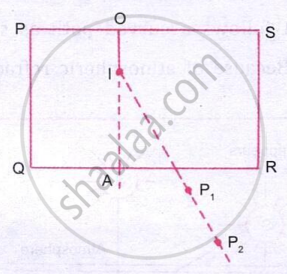
\(O A=\) Real depth (thickness) of the slab
\(I A=\) Apparent depth (thickness) of the slab
\[ \begin{aligned} \text { Refractive index }(\mu) & =\frac{\text { Real depth }}{\text { Apparent depth }} \\ & =\frac{O A}{I A} \end{aligned} \]
Frank solutions for फिज़िक्स पार्ट [अंग्रेजी] कक्षा १० आईसीएसई 2 Light Graded Assignment 2.1 [Pages 115 - 116]
State Snell'S Law.
-
- the angle of refraction and
- the angle of deviation for the ray?
Plot a graph between
Angle of incidence versus angle of reflection,
Plot a graph between
Sine of angle of incidence versus sine of angle of refraction,
Plot a graph between
Angle of incidence versus angle of refraction.
How is the refractive index of a medium related to the speed of light in it?
The refractive index of water with respect to air is 1.3. Calculate the refractive index of air with respect to water.
Define the term refractive index of a medium. What do you understand by the statement 'the refractive index of glass is 1.5 for white light'?
Define the term angle of deviation.
Which of the following has the highest refractive index?
Glass
Water
Diamond
Ruby
If a light ray does not undergo, refraction at the boundary between two media, the angle of incidence is:
0°
45°
60°
90°
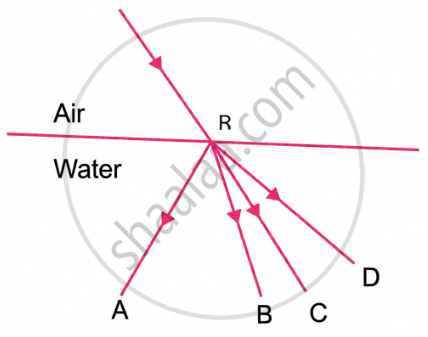
A ray of light passes from air to water. In fig., which of the ray A, B, C and D is the correct refracted ray?
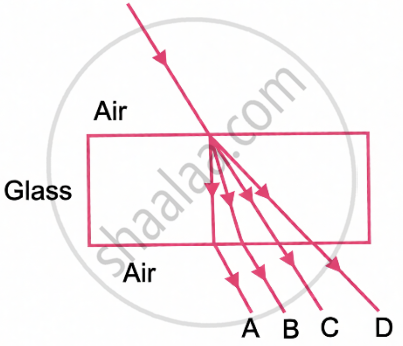
In the fig. name the ray which represents the correct path of light while passing through a glass block.
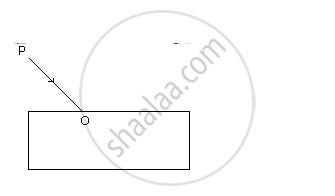
In the fig., PO is a ray of light incident on a rectangular glass block.
(a) Complete the path of the ray through the block.
(b) In the diagram, mark the angle of incidence (i) and the angle of refraction (r) at the first interface. How is the refractive index of glass related to the angles I and r?
(c) Mark angle of emergence by the letter e. How are the angles i and e related?
(d) Which two rays are parallel to each other? Name them.
(e) Indicate in the diagram the lateral displacement between the emergent ray and the incident ray.
- red light,
- blue light?
Fill in the blank to complete the following sentence:
When light travels from a rarer to a denser medium, it bends ...........
When light travels from a denser to a rarer medium, it bends ______.
The refractive index of glass with respect to air is 3/2. The refractive index of air with respect to glass will be ______.
Draw an í- `delta` graph for a mono chromatic raY through a glass prism of a plane and mark
(i) `delta` m, the angle of mínimum devíation
(íí) Any two values of i for which value of `delta` ís same.
Select the most appropriate word from the given box and fill in the following blanks.
| normal 48.6° ray red refractive index vacuum 41° refraction 2.3 |
When a ray of light travels from one optical medium to another optical medium normally, it suffers no ______.
Select the most appropriate word from the given box and fill in the following blanks.
| normal 48.6° ray red refractive index vacuum 41° refraction 2.3 |
The speed of light is maximum in ______.
Select the most appropriate word from the given box and fill in the following blanks.
| normal 48.6° ray red refractive index vacuum 41° refraction 2.3 |
The critical angle for glass is ______ and for water is ______.
Select the most appropriate word from the given box and fill in the following blanks.
| normal 48.6° ray red refractive index vacuum 41° refraction 2.3 |
The ratio of real depth to apparent depth is called ______.
Select the most appropriate word from the given box and fill in the following blanks.
| normal 48.6° ray red refractive index vacuum 41° refraction 2.3 |
The refractive index of diamond is ______.
Select the most appropriate word from the given box and fill in the following blanks.
| normal 48.6° ray red refractive index vacuum 41° refraction 2.3 |
The ______ colour has the longest wavelength.
Select the most appropriate word from the given box and fill in the following blanks.
| normal 48.6° ray red refractive index vacuum 41° refraction 2.3 |
The straight line path along which light travels is called ______ of light.
Select the most appropriate word from the given box and fill in the following blanks.
| normal 48.6° ray red refractive index vacuum 41° refraction 2.3 |
A ray of light in air enters glass and bends towards ______.
Frank solutions for फिज़िक्स पार्ट [अंग्रेजी] कक्षा १० आईसीएसई 2 Light Activity 2.2 [Pages 121 - 122]
To determine the focal length of a convex lens.
Arrange the apparatus as shown in Fig. (a). Choose a distant object (say a tree) outside the laboratory so that light rays from it may be regarded as a parallel beam of light. Adjust the position of the white screen until a sharp image (inverted and diminished) is formed on the screen. Measure the distance between the optical centre and the image (screen). This will be the approximate focal length ‘f’ of the lens. Repeat the experiment and find the average value for ‘f’.
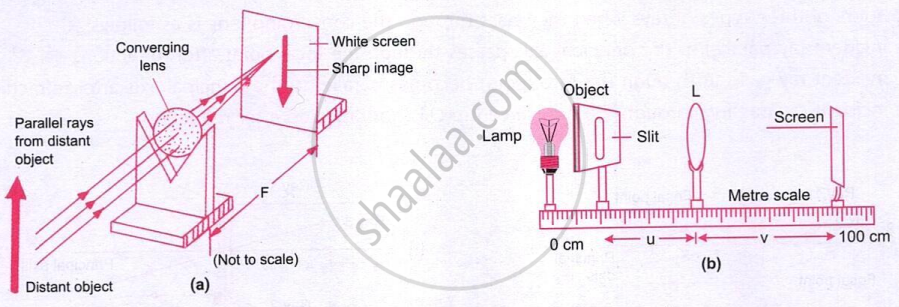
Determination of the focal length of a convex lens by \(u-v\) method. (Optional)
Set up a lamp, an object card (with a slit cut on it) and a white-paper screen on the table and place a metre scale by their side as shown in Fig. 9(b). Adjust the position of the lens so that a blurred image of the slit is obtained on the screen. An image on the screen may not be obtained if the slit is very near the lens. Having obtained a blurred image, move the screen back and forth till the image is sharply focussed on the screen. The slit and the lens must not be moved during this setting.
From the metre scale, measure the distance between the slit and the lens. This is the object distance \((u)\). Also measure the distance between the paper screen and the lens. This is the image distance \((v)\). Putting the values in the equation \[\frac{1}{v}+\frac{1}{u}=\frac{1}{f}\], the focal length \(f\) of the lens can be found out. The observations are to be repeated for different values of \(u\) and the mean value of \(f\) is to be found out.
Construction of ray diagrams.
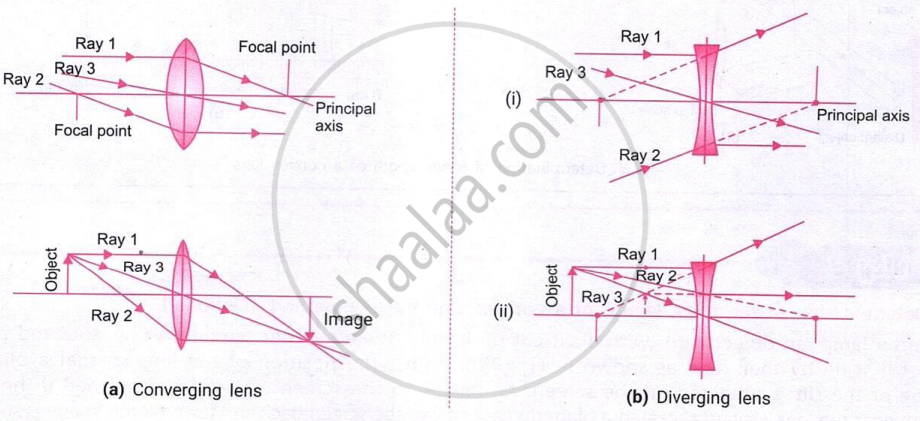
Three types of rays are considered for construction of ray diagrams. The behaviours of three types of rays, when they pass through the lens, which are used to locate the image formed by a converging lens and a diverging lens in geometrical construction, is illustrated in Fig.
The behaviours of three types of rays when they pass through the converging lens is as follows:
- The incident ray parallel to the principal axis passes through the focal point after refraction.
- The incident ray passing through the focal point becomes parallel to the principal axis after refraction.
- The incident ray passing through the optical centre \(O\) is not deviated after refraction.
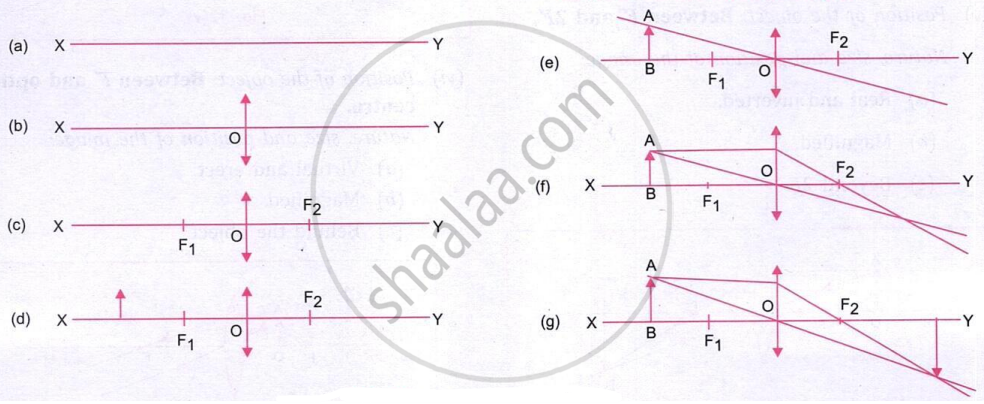
Steps for the Geometrical Construction
- Draw a line \(X Y\) on the paper to represent the principal axis [Fig. (a)].
- Mark the position of the lens by a vertical line drawn across the principal axis at \(O\) [Fig. (b)].
- Mark the two principal foci \(F_{2}, F_{1}\) equidistant from \(O\) [Fig. (c)].
- Draw an object \(A B\) [Fig. (d)].
- Draw one ray from the top of the object \(A B\) through the optical centre [Fig. (e)].
- Draw a second ray from the top of the object parallel to the axis \(X Y\). This ray is bent and passes through \(F_{2}\) [Fig. (f)].
- The image of the top of the object is at the point where these two rays meet. Draw the image at that point [Fig. (g)].
Frank solutions for फिज़िक्स पार्ट [अंग्रेजी] कक्षा १० आईसीएसई 2 Light Graded Assignment 2.2 [Pages 131 - 133]
Draw neat diagram to show the
Convergent action of a convex lens,
Draw neat diagram to show the
Divergent action of concave lens
Define the term principal axis of a lens.
State the condition of the following:
A lens has both its focal lengths equal.
State the condition of the following:
A ray passes undeviated through the lens.
Fig shows a lens as a combination of a glass block and two prisms.
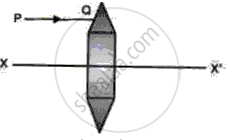
(i) Name the lens formed by the combination.
(ii) what is the XX' called?
(iii) Complete the ray diagram and show the path of the incident ray PQ after passing through the lens.
(iv) The final emergent ray will either meet XX' at a point or appear to come from a point on XX'. what is the point called?
Fig shows a lens as a combination of a glass block and two prisms.
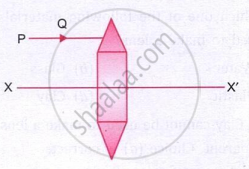
- Name the lens formed by the combination.
- What is the line XX' called?
- Complete the path of the incident ray PQ after passing through the lens.
- The final emergent ray either meets XX' at a point or appears to come from a point on XX'. Label it as F, What is this point called?
Fig shows an object PQ placed on the principle axis of a lens L. The two foci of the kens are F1 and f2. The image formed by the lens is erect, Virtual and dimnished.
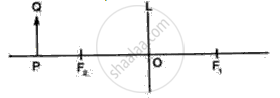
(i) Draw the outline ofthe lens L used and Named it.
(ii) Draw a ray of light starting from Q and passing through O. show the same ray after refraction by the lens.
(iii) Draw another ray from Q Which is incident parallel to the principle axis and show how it emerges after refraction from the lens.
(iv) Locate the final image formed.
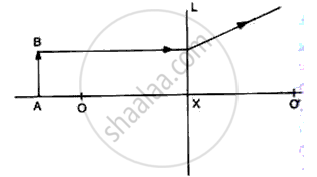
Refer to fig
(i) Name the lens L.
(ii) What are the points O, O' called?
(iii) Complete the diagram to form the image of the object AB.
(iv) Write three characteristics of the image.
Express power of a concave lens of focal length 50 cm with its sign.
The power of a lens is +2.0 D. Find its focal length and state the kind of lens.
Select the most appropriate word from the given box and fill in the following blanks.
| refracted diameter converging power convex small concave dioptre diverging focal length two aperture |
A concave lens is called a ______ lens and a convex lens is called a ______ lens.
Select the most appropriate word from the given box and fill in the following blanks.
| refracted diameter converging power convex small concave dioptre diverging focal length two aperture |
A lens has ______ surfaces.
Select the most appropriate word from the given box and fill in the following blanks.
| refracted diameter converging power convex small concave dioptre diverging focal length two aperture |
On passing through a lens, light is ______ twice, at the two surfaces of the lens.
Select the most appropriate word from the given box and fill in the following blanks.
| refracted diameter converging power convex small concave dioptre diverging focal length two aperture |
The ______ of a lens is the ______ of the circular edge of the lens.
Select the most appropriate word from the given box and fill in the following blanks.
| refracted diameter converging power convex small concave dioptre diverging focal length two aperture |
A ______ lens is thick at the centre and thin at the edges.
Select the most appropriate word from the given box and fill in the following blanks.
| refracted diameter converging power convex small concave dioptre diverging focal length two aperture |
A ______ lens is thin at the centre and thick at the edges.
Select the most appropriate word from the given box and fill in the following blanks.
| refracted diameter converging power convex small concave dioptre diverging focal length two aperture |
The degree of convergence or divergence of light rays is a measure of ______ of the lens.
Select the most appropriate word from the given box and fill in the following blanks.
| refracted diameter converging power convex small concave dioptre diverging focal length two aperture |
Power of a lens is the reciprocal of ______ of the lens.
Select the most appropriate word from the given box and fill in the following blanks.
| refracted diameter converging power convex small concave dioptre diverging focal length two aperture |
One ______ is the power of a lens of focal length one metre.
Select the most appropriate word from the given box and fill in the following blanks.
| refracted diameter converging power convex small concave dioptre diverging focal length two aperture |
For reacting small letters in a dictionary, we need to use a convex lens of ______ focal length.
Choose the correct choice.
Which one of the following materials cannot be used to make a lens?
Water
Glass
Plastic
Clay
The image formed by a concave mirror is observed to be virtual, erect and larger than the object. Where should be the position of the object?
Between the principal focus and the centre of curvature
At the centre of curvature
Beyond the centre of curvature
Between the pole of the mirror and its principal focus.
Between the focus and centre of curvature
Where should an object be placed in front of a convex lens to get a real image of the size of the object?
At the principal focus of the lens
At twice the focal length
At infinity
Between the optical centre of the lens and its principal focus
Which of the following lenses would you prefer to use while reading small letters found in a dictionary?
A convex lens of focal length 50 cm.
A concave lens of focal length 50 cm.
A convex lens of focal length 5 cm.
A concave lens of focal length 5 cm.
Frank solutions for फिज़िक्स पार्ट [अंग्रेजी] कक्षा १० आईसीएसई 2 Light Activity 2.3 [Page 136]
Darken a room and pass a narrow beam of light through a prism. Allow the emerging light to fall on a screen or a wall (Fig.). Note the colours you see.
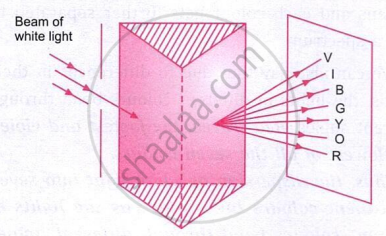
Now, place another prism upside down in the path of the dispersed light. What do you observe now? Do you see a patch of light?
Frank solutions for फिज़िक्स पार्ट [अंग्रेजी] कक्षा १० आईसीएसई 2 Light Graded Assignment 2.3 [Pages 140 - 141]
Name the radiations of wavelength longer than 8 × 10⁻⁷ m.
Name the radiations of wavelength shorter than 4 × 10⁻⁷ m.
Fig shows a thin beam of white light from a source S striking on one face of a prism.

- Complete the diagram to show the effect of the prism on the beam and to show what is seen on the screen.
- If a slit is placed in between the prism and the screen to pass only the light of green colour, what will you then observe on the screen?
- What conclusion do you draw from the observation in part (b) above?
If a monochromatic beam of light undergoes minimum deviation through an equiangular prism, how does the beam pass through the prism, with respect to its base?
If white light is used in same way what change is expected in the emergent beam?
Draw a diagram to show the splitting of white light into its constituent colours.
Draw another diagram to show how the colours of spectrum of white light can be combined to give the effect of white light.
Complete the ray diagram given below to show the nature of light produced on the screen.
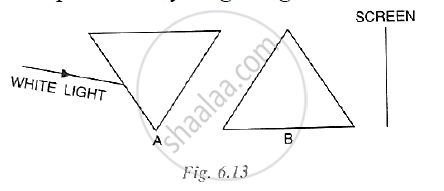
Name the scientist who discovered
X-rays
Name the scientist who discovered Visible light
Name the scientist who discovered Microwaves
Name the scientist who discovered radio waves
Name the scientist who discovered Infra-red waves
Name the scientist who discovered Ultraviolet rays
The wavelengths for the light of red and blue colours are nearly 7·8 × 10-7 m and 4·8 × 10-7 m respectively.
Which colour has greater speed in glass?
State whether the following statement is True or False.
Light energy is an invisible energy which is electromagnetic in nature.
State whether the following statement is True or False.
Electromagnetic radiations require a material medium for their propagation.
State whether the following statement is True or False.
Electromagnetic radiations which can excite our retina have wavelengths between 8500 Å to 4500 Å.
State whether the following statement is True or False.
Velocity of e.m. waves in vacuum is \(3 \times 10^{5}\) \(\mathrm{kms}^{-1}\).
State whether the following statement is True or False.
White light is polychromatic light and has all the seven wavebands present in it.
State whether the following statement is True or False.
The velocity of light is maximum in case of red and least in case of violet in air.
State whether the following statement is True or False.
Ultraviolet radiations when absorbed by the skin, stimulate the body to produce vitamin E.
State whether the following statement is True or False.
Velocity of infrared radiations is \(3 \times 10^{8} \mathrm{~ms}^{-1}\).
State whether the following statement is True or False.
X-rays are are also known as microwaves.
State whether the following statement is True or False.
The wavelength of microwaves lies between 1 cm to 1 mm.
Frank solutions for फिज़िक्स पार्ट [अंग्रेजी] कक्षा १० आईसीएसई 2 Light Frequently Asked Questions in Board Examination [Pages 151 - 157]
The ray diagram below illustrates the experimental set up for the determination of the focal length of a converging lens using a plane mirror.
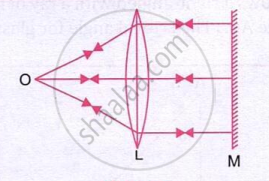
- State the magnification of the image formed.
- Write two characteristics of the image formed.
- What name is given to the distance between the object and the optical centre in the diagram above?
An object is placed in front of a convex lens such that the image formed has the same size as that of the object. Draw a ray diagram to illustrate this.
PQ and PR are two light rays emerging from the object as shown in the figure below:

(i) What is the special name given to the angle of incidence (∠PQN) of ray PQ?
(ii) Copy the ray diagram and complete it to show the position of the image of the object P when seen obliquely from above.
(iii) Name the phenomenon that occurs if the angle of incidence ∠PQN is increased still further.
A postage stamp appears raised by 7.00 mm, when placed under a glass block of refractive index 1.5. Find the thickness of the block.
What is meant by the term ‘critical angle’?
Fig. shows a path of ray AB through an isosceles right angled prism. What is the magnitude of the angle of incidence on (i) face PR (ii) PQ?
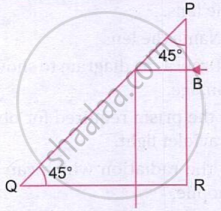
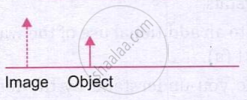
Fig. shows the position of an object and its image. Copy the diagram and then by drawing two rays locate the position of the lens and its focus, showing clearly the kind of lens used.
A boy uses the blue colour of light to find the refractive index of glass. He then repeats the experiment using the red colour of light. Will the refractive index be the same or different in the two cases? Give a reason to support your answer.
Copy the diagram given below and complete the path of the light ray till it emerges out of the prism. The critical angle of glass is 42°. In your diagram mark the angles wherever necessary.

State the dependence of angle of deviation on the refractive index of the material of the prism.
State the dependence of angle of deviation on the wavelength of light
Write a relationship between the angle of incidence and angle of refractions for a given pair of media.
When a ray of light enters from one medium to another having different optical densities it bends. Why does this phenomenon occur?
Write one condition where it does not bend when entering a medium of different optical density.
A lens produces a virtual image between the object and the lens.
- Name the lens.
- Draw a ray diagram to show the formation of this image.
Name the material prism required for obtaining the spectrum of ultraviolet light.
Name the radiation which can be detected by a thermopile.
Why is the colour red used as a sign of danger?
Why does sun appear red at sunrise and sunset?
Name the subjective property of light related to its wavelength.
- Name the high energetic invisible electro-magnetic wave which helps in the study of structure of crystals.
- State one more use of the wave named in part (a).
What do you understand by the term Scattering of light?
Which color of white light is scattered the least and why?
A glass slab is placed over a page on which the word VIBGYOR is printed with each letter in its corresponding colour.
- Will the image of all the letters be in the same place?
- If not, the state which letter will be raised to the maximum. Give a reason for your answer.
Give one use of electromagnetic radiation in Microwaves.
Give one use of electromagnetic radiation in Ultraviolet radiation.
Give one use of electromagnetic radiations in Infrared radiation.
Give reason for the following:
Infrared radiations are used for photography in fog.
Suggest one way, in each case, by which we can detect the presence of Infrared radiations.
Suggest one way, in each case, by which we can detect the presence of Ultraviolet radiation.
Give one use of infrared radiations.
What is meant by the dispersion of light?
In the atmosphere which colour of light gets scattered the least?
Name the radiations that are used for photography at night.
Name the radiations used for the detection of fracture in bones.
Name the radiations whose wavelength range is from 100 Å to 4000 Å (or 10 nm to 400 nm).
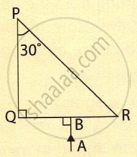
Fig. shows a right-angled with a ray of light incident on the side AB. (The critical angle for glass is 42°)
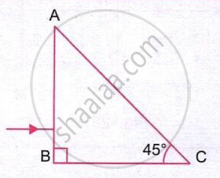
- Copy the diagram and complete the path of the ray of light in and out of the glass prism.
- What is the value of the angle of deviation shown by the ray?
With the help of a well-labelled diagram show that the apparent depth of an object, such as a coin, in water is less than its real depth.
How are the refractive index of water-related to the real depth and the apparent depth of a column of water?
A monochromatic beam of light of wavelength λ passes from air into a glass block. Write an expression to show the relation between the speed of light in air and the speed of light in glass.
As the ray of light passes from air to glass, state how the wavelength of light changes. Does it increase, decrease or remain constant?
Draw a ray diagram to illustrate the determination of the focal length of a convex lens using an auxiliary plane mirror.
Draw a labelled ray diagram to illustrate critical angle.
Draw a labelled ray diagram to illustrate total internal reflection for a ray of light moving from one medium to another.
Write a formula to express the relationship between the refractive index of the denser medium with respect to the rarer medium and its critical angle for that pair of media.
(i) The diagram shows a ray of light incident on an equilateral glass prism placed in minimum deviation position.
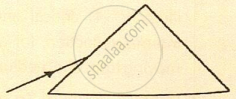
Copy the diagram and complete it to show the path of the refracted ray and the emergent ray.
(ii) How are angle of incidence and angle of emergence related to each other in this position of the prism?
Light passes through a rectangular glass slab and through a triangular glass prism. In what way does the direction of the two emergent beams differ and why?
Ranbir claims to have obtained an image twice the size of the object with a concave lens. Is he correct? Give a reason for your answer.
A lens forms an erect, magnified and virtual image of an object, Name the lens.
A lens forms an erect, magnified and virtual image of an object,
Draw a labelled diagram to show the formation of the image.
Define the power of a lens.
A lens mentioned in convex lens has a focal length of 25 cm. Calculate the power of the lens.
Name one factor that affects the lateral displacement of light as it passes through a rectangular glass slab.
The speed of light in glass is 2 × 10⁵ km/s. What is the refractive index of glass?
Where should an object be placed so that a real and inverted image of the same size as the object is obtained using a convex lens?
Draw a ray diagram to show the formation of the image of the same size as the object is obtained using a convex lens?
Jatin puts a pencil into a glass container having water and is surprised to see the pencil in a different state.
- What change is observed in the appearance of the pencil?
- Name the phenomenon responsible for the change.
- Draw a ray diagram showing how the eye sees the pencil.
A linear object is placed on the axis of a lens. An image is formed by refraction in the lens. For all positions of the object on the axis of the lens, the positions of the image are always between the lens and the object.
- Name the lens.
- Draw a ray diagram to show the formation of the image of an object placed in front of the lens at any position of your choice except infinity.
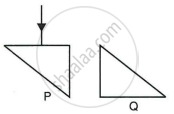
Two isosceles right-angle glass prisms P and Q are placed near each other as shown in Fig. Complete the path of the light ray entering the prism P till it emerges out of the prism Q.
A ray of light is moving from a rarer medium to a denser medium and strikes a plane mirror placed at 90° to the direction of the ray as shown in the diagram.
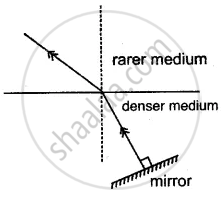
(i) Copy the diagram and mark arrows to show the path of the ray of light after it is reflected from the mirror.
(ii) Name the principle you have used to mark the arrows to show the direction of the ray.
The refractive index of glass with respect to air is 1.5. What is the value of the refractive index of air with respect to glass?
A ray of light is incident as a normal ray on the surface of separation of two different media. What is the value of the angle of incidence in this case?
Can the absolute refractive index of a medium be less than one?
A coin placed at the bottom of a beaker appears to be raised by 4.0 cm. If the refractive index of water is 4/3, find the depth of the water in the beaker.
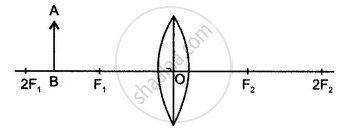
An object AB is placed between 2F1 and F1 on the principal axis of a convex lens as shown in the diagram. Copy the diagram and using three rays starting from point A, obtain the image of the object formed by the lens.
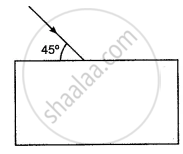
Draw the diagram given below and clearly show the path taken by the emergent ray.
A ray of light passes from water to air. How does the speed of light change?
Which colour of light travels fastest in any air?
Name the factors affecting the critical angle for the pair of media.
An electromagnetic radiation is used for photography in fog. [2]
(i) Identify the radiation.
(ii) Why is this radiation mentioned by you, ideal for this purpose ?
(i) What is the relation between the refractive index of water with respect to air `("_aμ_\text(w))` and the refractive index of air with respect to water `("_\text(w)μ_ a)` .
(ii) If the refractive index of water with respect to air `("_aμ_\text(w))` is`5/3`. Calculate the refractive index of air with respect to water `("_\text(w)μ_ a)` .
How does the angle of deviation produced by a prism change with increase in the angle of incidence. Draw a curve showing the variation in the angle of deviation with the angle of incidence at a prism surface.
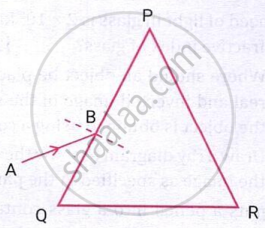
Complete the path of the monochromatic light ray AB incident on the surface PQ of the equilateral glass prism PQR till it emerges out of the prism due to refraction.
A virtual diminished image is formed when an object is placed between the optical centre and the principal focus of a lens.
- Name the type of lens which forms the above image.
- Draw a ray diagram to show the formation of the image with the above stated characteristics.
An object is placed at a distance 24 cm in front of a convex lens of focal length 8 cm.
(i) What is the nature of the image so formed?
(ii) Calculate the distance of the image from the lens.
(iii) Calculate the magnification of the image.
Where should an object be placed in front of a convex lens in order to get an enlarged real image?
Where should an object be placed in front of a convex lens in order to get an enlarged virtual image?
A pond appears to be 2.7 m deep. If the refractive index of water is `4/3`, find the actual depth of the pond.
The wavelengths for the light of red and blue colours are nearly 7·8 × 10-7 m and 4·8 × 10-7 m respectively.
Which colour has greater speed in glass?
Is it possible for a concave lens to form an image of size two times that of the object? Write Yes or No.
What will happen to the focal length of the lens if a part of the lens is covered with an opaque paper?
A convex lens of focal length 10 cm is placed at a distance of 60 cm from a screen. How far from the lens should an object be placed so as to obtain a real image on the screen?
A coin kept inside water [µ = 4/3] when viewed from air in a vertical direction appears to be raised by 3.0 mm. Find the depth of the coin in water.
How is the critical angle related to the refractive index of a medium?
Infrared radiations are used in warfare. Explain with reason, why?
A ray of light is incident at 45° on an equilateral prism in the diagram below.

- Name the phenomenon exhibited by the ray of light when it enters and emerges out of the prism.
- State the cause of the above phenomenon mentioned by you.
The diagram below shows the ray OP travelling through an equilateral prism of a certain material.
- Calculate the value of i2, if the angle of deviation is 43°.
- What is the ray QS called?

Copy the diagram given below and complete the path of the light ray PQ, as it emerges out of the prism by necessary angles. The critical angle of glass is 42°:

The diagram below shows two parallel rays A (Orange) & B (Blue) incident from air, on air-glass boundary.

- Copy and complete the path of the rays A and B.
- How do the speeds of these rays differ in glass?
- Are the two refracted rays in glass parallel? Give a reason.
The image of a candle flame placed at a distance of 36 cm from a spherical lens, is formed on a screen placed at a distance of 72 cm from the lens. Calculate the focal length of the lens and its power.
Below is an incomplete table showing the arrangement of electromagnetic spectrum in the increasing order of their wavelength. Complete the table:
| Gamma ray | X - ray | UV rays | Visible rays | Infrared | A | Radio waves |
- Identify the radiation A.
- Name the radiation used to detect fracture in bones.
- Name one property common to both A and Radio waves.
Why do we use red colour as a danger signal on the top of a skyscraper?
The diagram below shows the path of a blue ray through the prism:
- Calculate the critical angle of the material of the prism for blue colour.
- What is the measure of the angle of this prism (A)?
- Which colour should replace the blue ray, for the ray to undergo Total Internal Reflection?

- Refractive index of glass with respect to water is `9/8`. Find the refractive index of water with respect to glass.
- Name the principle used to find the value in part (a).
- If we change the temperature of water, then will the ratio `9/8` remain the same? Write Yes or No.
Light travels a distance of '10x' units in time 't1' in vacuum and it travels a distance of 'x' units in time 't2' in a denser medium. Using this information answer the question that follows:
'Light covers a distance of '20x' units in time 't1' in diamond'. State true or false.
True
False
Light travels a distance of '10x' units in time 't1' in vacuum and it travels a distance of 'x' units in time 't2' in a denser medium. Using this information answer the question that follows:
Calculate the refractive index of the medium in terms of 't1' and 't2'.
A monochromatic ray of light is incident on an equilateral prism placed at minimum deviation position with an angle of incidence 45° as shown in the diagram?
- Copy the diagram and complete the path of the ray PQ.
- State two factors on which the angle of deviation depends.

A diver in water looks obliquely at an object AB in air.
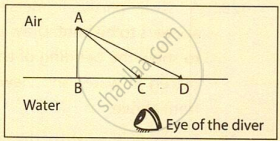
- Does the object appear taller, shorter or of the same size as the diver?
- Show the path of two rays AC and AD starting from the tip of the object as it travels towards the diver in water and hence obtain the image of the object.
Complete the path of the ray AB through the glass prism in PQR till it emerges out of the prism. Given, the critical angle of glass is 42°.
Frank solutions for फिज़िक्स पार्ट [अंग्रेजी] कक्षा १० आईसीएसई 2 Light Exercises (Cumulative Revision) [Pages 159 - 170]
Make the correct choices in the following items :
A magnified erect image is obtained when an object is positioned in front of a converging lens. The distance of the object from the lens would be
Greater than three focal lengths
Equal to two focal lengths
Between one and two focal lengtghs
equal to one focal length
Less than one focal length
Make the rrect choices in the following items :
An object is placed 50 cm from a connverging lens of focal length 30 cm. The image produced would be
lnverted and same size as the obíect
lnverted and diminished
lnverted and magnified
Erect and diminished
Erect and magnified
In fig., a real image of a point objert O is formed, Which of the following statements is true about each of the arrangements?
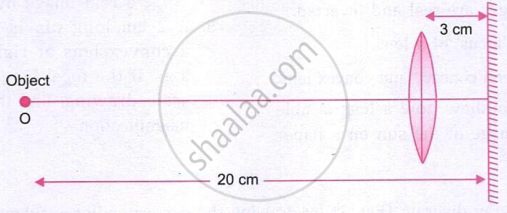
- The object is at the principle focus of the lens.
- The focal length of the lens is 17 cm.
- If the mirror is moved so that it is 6 cm from the lens image will also move.
(i) alone
(ii) alone
(i) and (ii) only
(ii) and (iii) only
(i), (ii) and (iii)
A lens used as a magnifying glass
- is a diverging lens
- produces a virtual image
- is placed with the object nearer the lens than the principal focus
(i) alone
(ii) alone
(i) and (ii) only
(ii) and (iii) only
(i), (ii) and (iii)
Make the correct choices in the following items:
lf the image can be focused on a screen it must be
errect
virtual
real
upright
coloured
Make the correct choices in the following items :
The image formed by a diverging lens, shown in fig, , is
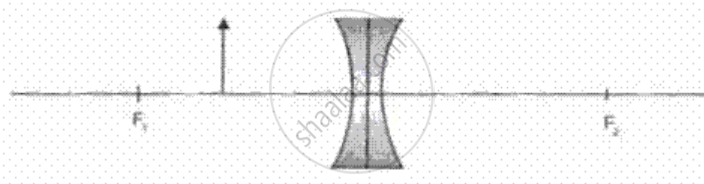
Virtual, erect, magnified
Virtual, erect, diminished
Virtual, inverted, magnified
Real, inverted, diminished
Real, upright, magnified
Make the correct choices in the following items :
A converging lens B has the same focal length as a converging lens A, but only half the diameter, Both lens are used, separately, to form two images of building on a screen. which one of the follwing statements about the images is correct?
The image B formed is closer to the lens than the image formed by A.
The image B formed is bigger than the image formed by A.
The image B formed is not as sharply focused as the image formed by A
The image are of the same brightness
Both the image are real and inverted
Define the term focus of a lens.
Distinguish between concave and convex lens.
(a) Draw a sketch to show how a lens is able to produce an image of the sun on a paper screen.
(b)(i) Would you regard the rays from the sun as being divergent, parallel or convergent?
(ii) What is the name given to the point where such rays meet after they have passed through the lens?
(iii) How does the image of the sun sometimes burn a paper screen?
(a) What type of a lens can be used as a magnifying glass?
(b) Show by a ray diagram the formation of a real image by simple magnifying lens.
A pin 2 cm long is placed 12 cm away from a convex lens at right angles to the principal axis. If the focal length of the lens is 20 cm, by scale drawing find the size of the image and its magnification.
Complete the following ray diagram (Fig.) by drawing the corresponding incident ray.
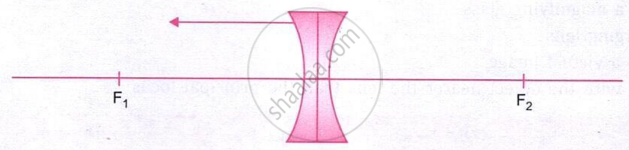
What is meant by the power of accommodation produced?
How is accommodation produced?
What type of lenses are used in spectacles worn by an old lady for knitting?
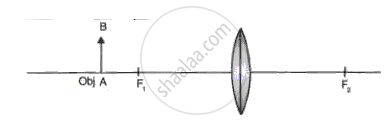
An object AB is placed in front of a convex lens as shown in fig. 4. Complete the ray diagram and obtain the image formed and state the nature of the image.
An object is placed in front of a converging lens and in front of a diverging lens as in fig.
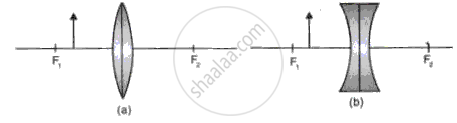
(a)Complete the ray diagram to obtain an image.
(b)Compare the nature of image formed by both the lenses in the above case.
In the following diagram ., the object and the image formed by the respective lenses are shown. Complete the ray diagram, and locate the focus. Find the focal length of the lens.
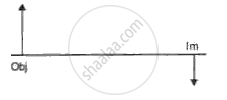
In the following diagram the object and the image formed by the respective lenses are shown. Complete the ray diagram, and locate the focus. Find the focal length of the lens.
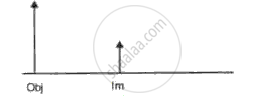
In the following diagram , the object and the image formed by the respective lenses are shown. Complete the ray diagram, and locate the focus. Find the focal length of the lens.
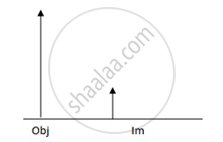
In the following diagram , the object and the image formed by the respective lenses are shown. Complete the ray diagram, and locate the focus. Find the focal length of the lens.
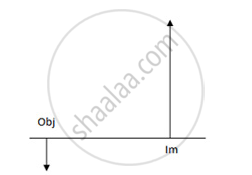
| Gamma rays | D | C | Visible light | B | A |
The above table shows different parts of the electromagnetic spectrum.
(a) Identify the parts of the spectrum marked as A, B, C and D.
(b) Which of the radiations A or B has the higher frequency?
(c) State two properties which are common to all parts of the electromagnetic spectrum.
(d) Name one source of each of the radiation of electromagnetic spectrum.
(e) Name one detector for each of the radiation.
(f) Name one use of each of the radiation.
The speed of light is 3 × 10⁸ ms−1. Calculate the frequency of yellow light of wavelength 6 × 10⁻⁷ m.
Make the correct choice for each of the following:
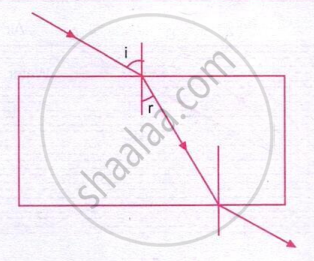
Which one of the following Fig correctly shows the path of the ray through the glass block?
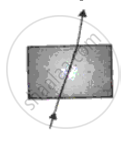
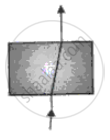
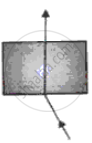
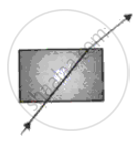
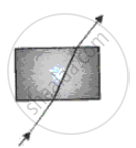
Make the correct choices for each of the following :
Total Internal reflection takes place when
(where ∠i = angle of incidence, ∠r = angle of refraction, ∠C = critical angle)
Light is going from glass to air and ∠I < ∠C
Light is going from air to glss and ∠i < ∠C
Light is going from glass to air and ∠i > ∠C
Light is going from air to glss and ∠i > ∠C
Light is going from glass to air and ∠i = ∠r
Make the correct for each of the following :
With reference to the fig, the refractive index of the glass block is
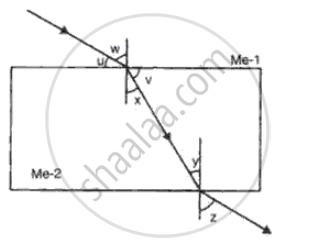
`"sin w"/"sin z"`
`"sin x"/"sin w"`
`"sin u"/"sin v"`
`"sin u"/"sin x"`
`"sin w"/"sin x"`
Fig illustrates an experiment to determine the refractive index of glass. Which one of the following graphs would give a straight line through the origin?
∠i plotted against ∠r.
sin i plotted against ∠r.
∠i plotted against sin D.
sin i plotted against sin r.
`1/(∠"i") " plotted against" 1/(∠"r")`.
Make the correct choice for each of the following :
Which one of the five diagrams represents the path of a ray of light through a periscope?
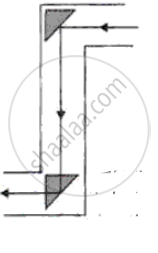
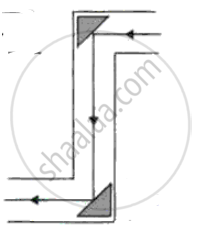
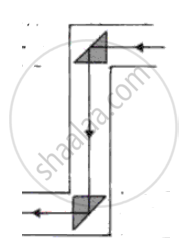
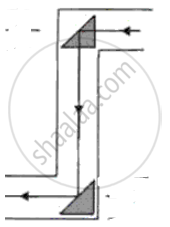
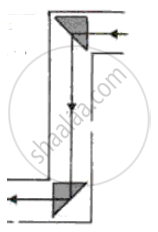
Fig. shows two rays of light Op and OQ coming from an object at the bottom of a pond, incident on the water surface.
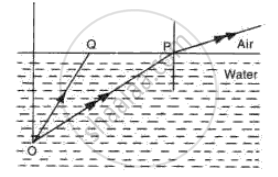
(a) Mark on the diagram
(i) The angle of incidence of ray OP,
(ii) The angle of refraction of ray Op,
(iii) The position of image of the object as seen from above.
(iv) An approximate path of the ray OQ.
(b) Explain, why do the rays of light change directions on passing from water to air.
(c) A fish in water sees everything outside the water by rays of light entering its eye in a small cone of light. Draw a diagram and explain how does this happen.
(a)A ray of light is incident at 45° on the face of
(i) A rectangular block of glass.
(ii) A 600 glass prism.
(b) Draw a sketch showing how the ray of monochromatic ray of light passes through glass in each case.
(c) With the aid of a diagram, explain how the face of a right angled prism may totally reflect incident on it.
(d) A thick plane mirror produces several faint images in addition to a prominent one. Draw a ray diagram showing how reflection and refraction produce all these images.
(e) Fig. represents a stone S at the bottom of a pond of water. Using the two rays, as shown, complete the ray diagram to show where the image of the stone appears when viewed from E.
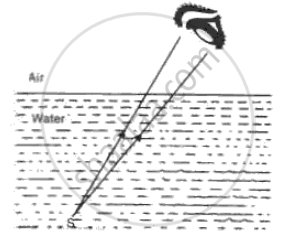
(f) What is a''mirage'? Explain with the help of a diagram.
(g) A man observes the bottom of a swimming pool of 3 m depth. If the refractive index of water is 1.3, what is the apparent depth of water?
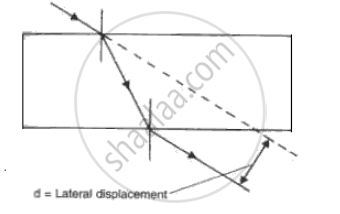
(h) When a ray of light undergoes refraction through a glass slab and when it emerges it is displaced laterally (Fig). What are the factors on which the lateral displacement depends?
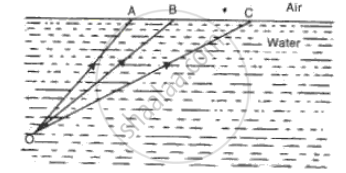
(i) Fig. shows three rays of light OA, OB and OC passing from water to air, making angles 490, 410 and 350 with the horizontal surface respectively. Draw an approximate path of the emergent ray for each. (Critical angle of water is 490.)
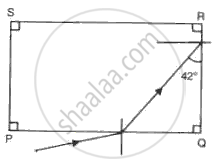
(a) A ray of monochromatic light enters glass PQRS as shown in the fig. Complete the path of ray till it emerges from the glass. (Critical angle of glass is 420).
(b) Draw diagram of a prism periscope.
(c) What are the advantages of total internal reflecting prism over plane mirror?
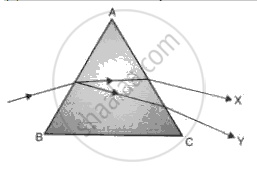
Fig. shows a ray of white light that passes through a prism and produces a spectrum.
(a) Name the phenomenon that is taking place.
(b) What colour would you see at X and Y?
(c) What radiation would you detect above X and below Y?
Two waves A and B have wavelength 0.01 Å and 9000 Å respectively.
Name the two waves. compare the speeds of these waves when they travel in vacuum.
Complete the path of the ray of monochromatic light in the following cases.
The critical angles of the prisms are as shown in Fig.
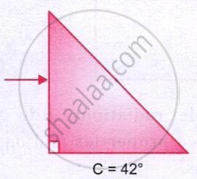
Complete the path of the ray of monochromatic light in the following cases.
The critical angles of the prisms are as shown in Fig.
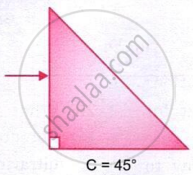
Complete the path of the ray of monochromatic light in the following cases.
The critical angles of the prisms are as shown in Fig.
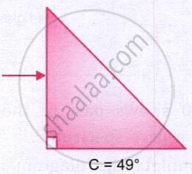
Complete the path of the ray of monochromatic light in the following cases:
The critical angle of the prism shown in Fig. is 42°.
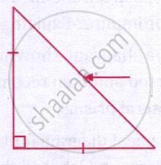
Complete the path of the ray of monochromatic light in the following cases:
The critical angle of the prism shown in Fig. is 42°.
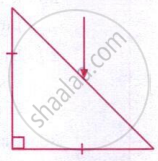
Complete the path of the ray of monochromatic light in the following cases:
The critical angle of the prism shown in Fig. is 42°.
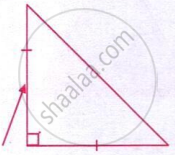
Complete the path of the ray of monochromatic light in the following cases:
The critical angle of the prism shown in Fig. is 42°.
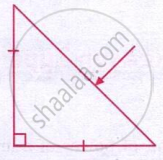
Complete the path of the ray of monochromatic light in the following cases:
The critical angle of the prism shown in Fig. is 42°.
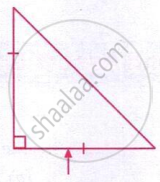
Complete the path of the ray of monochromatic light in the following cases:
The critical angle of the prism shown in Fig. is 42°.
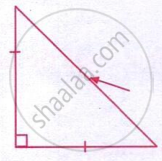
Figure show certain light rays incident on different surfaces. Draw and label the rays which are reflected or transmitted.
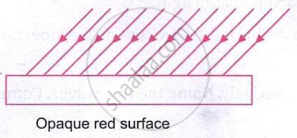
Figure show certain light rays incident on different surfaces. Draw and label the rays which are reflected or transmitted.
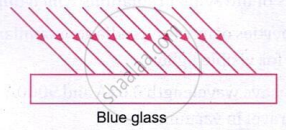
Figure show certain light rays incident on different surfaces. Draw and label the rays which are reflected or transmitted.
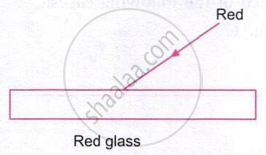
Figure show certain light rays incident on different surfaces. Draw and label the rays which are reflected or transmitted.
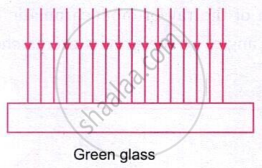
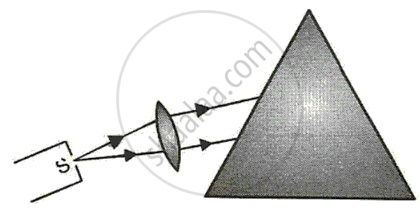
Fig shows part of the arrangement for obtaining pure spectrum.
(a) Complete thediagram and show how to obtain a pure spectrum.
(b) What are the conditions necessary for obtaining a pure spectrum?
-
- Calculate the speed of the wave.
- Name the medium through which it is traveling.
Is the spectrum obtained by an equilateral glass prism pure or impure? Explain your answer.
Draw a diagram showing that white light can be dispersed and then recombined by using two similar equilateral prisms.
Draw a neat diagram for the dispersion of white light by a prism and label all the colours of the spectrum.
Frank solutions for फिज़िक्स पार्ट [अंग्रेजी] कक्षा १० आईसीएसई 2 Light Multiple Choice Questions and Assertion-Reason Type Questions [Pages 166 - 173]
Multiple Choice Questions Choose the correct answers to the questions from the given options.
Most of the refraction of light takes place in the ______.
pupil
cornea
iris
none of these
For a normal eye, the far point is at ______.
25 cm
25 m
infinity
none of these.
The unit of power of lens is ______.
Centimetre
Dioptre
Watt
Metre
Dyne
None of these
The least distance of distinct vision for a person with normal vision is about ______.
1 m
0.5 m
0.25 m
none of these
The focal length of a lens is 50 cm. Its power would be ______.
50 dioptres
2 dioptres
20 dioptres
none of these
The unit of refractive index is ______.
metre
degree
dioptre
it has no units
A simple magnifying glass consists of a ______.
concave lens
convex lens of large focal length
convex lens of small focal length
plane mirror only
The power of a lens being +4 dioptres suggests that it is a ______.
convex lens
plano-convex lens
concave lens
none of these.
When an object moves towards a convex lens, the size of the image ______.
decreases
increases
first decreases then increases
remains the same
When an object approaches a convex lens from infinity, the image formed by it shifts ______.
away from the lens
towards the lens
first away and then towards the lens
none of these
The angle of incidence for which the angle of refraction is X is called the critical angle. Then X equals ______.
90°
60°
45°
30°
The critical angle for diamond is about ______.
42°
30°
24°
10°
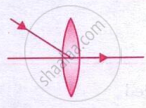
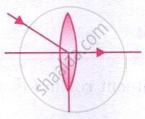
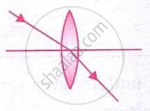
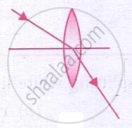
Which of the following diagrams correctly represents the ray of light passing through the optical centre of a convex lens?
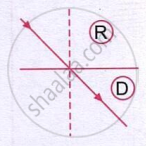
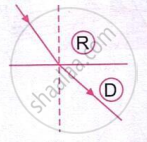
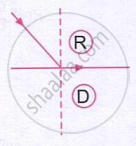
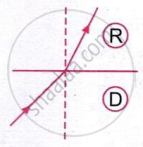
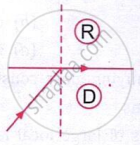
Which of the following shows the bending of light from rarer (R) to denser (D) medium?
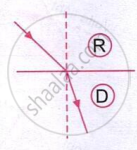
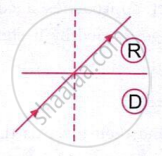
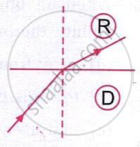
Which of the following shows the bending of light from a denser (D) medium into a rarer (R) medium?
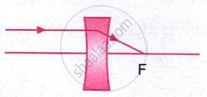
Which of the following diagrams shows the refraction of a ray of light through a concave lens?
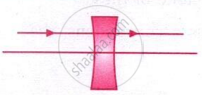
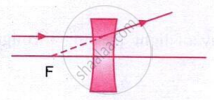
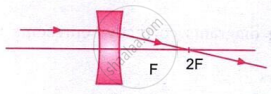
The process of splitting white light into its seven constituent colours is called ______.
reflection
refraction
scattering
dispersion
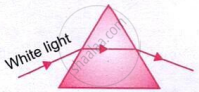
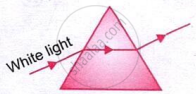
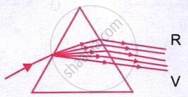
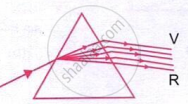
Which of the following in Fig. correctly represents the passage of white light through a prism?
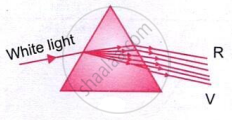
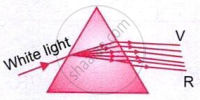
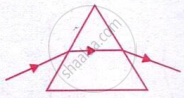
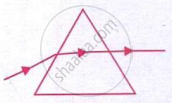
Which of the following in Fig. is correct when a monochromatic light passes through a prism?
The speed of light in vacuum is ______.
$$3 \times 10^6\text{ ms}^{-1}$$
$$3 \times 10^7\text{ ms}^{-1}$$
$$3 \times 10^8\text{ ms}^{-1}$$
$$3 \times 10^10\text{ ms}^{-1}$$
The distance between the principal focus and optical centre is called ______.
displacement
radius of curvature
focal length
light year
The SI unit of focal length of a concave lens is ______.
meter
-metre
dioptre
metre per second
The image produced by a lens is virtual, erect and smaller than the object in size. Then the lens must be ______.
convex
concave
cylindrical
any one of the above
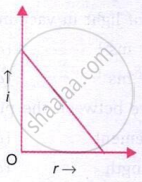
Which of the following correctly represents the graphical variation between the angle of incidence (i) and angle of reflection (r)?
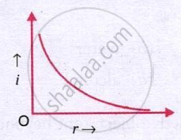
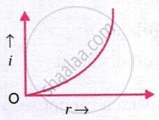
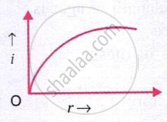
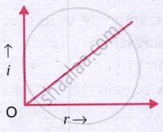
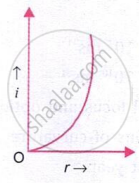
If i and r respectively denote angle of incidence and angle of refraction then which of the following graphical variation is correct?
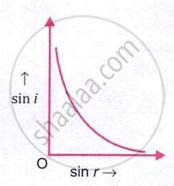
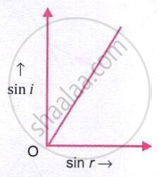
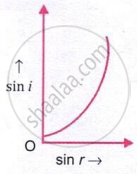
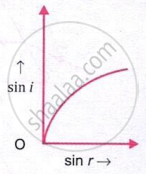
If i and r respectively denote angle of incidence and angle of refraction. If the angles are small, then the correct graph between i and r is shown by:
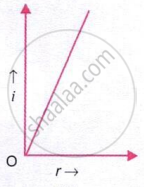
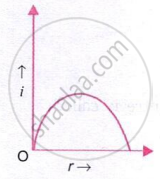
The term ‘bending of light’ when it passes from one medium into another medium of different refractive index is called ______.
dispersion
reflection
refraction
scattering
Who discovered radio waves?
Marconi
Hershell
Newton
Ritter
Who discovered microwaves?
Hertz
Roentgen
Newton
Maxwell
The commonly used unit for the wavelength of light is ______.
angstrom
metre
light year
none of these.
\(10 \AA\) equals ______.
10 nm
100 nm
1000 nm
\[\frac{1}{1000} \mathrm{~nm}\]
1 D equals ______.
1 m
1 cm
\(1 \mathrm{~m}^{-1}\)
\(10 \mathrm{~m}^{-1}\)
Light year is the unit of ______.
distance
time
density
Both length and time
When white light passes through a prism, the colour that undergoes maximum deviation is ______.
red
yellow
violet
green
Which of the following has minimum refractive index?
air
water
diamond
alcohol
A person cannot see distinctly objects kept beyond 2 m. This defect can be corrected by using a lens of power
+ 0.5 D
– 0.5 D
+ 0.2 D
– 0.2 D
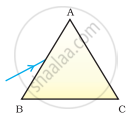
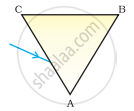
A prism ABC (with BC as base) is placed in different orientations. A narrow beam of white light is incident on the prism as shown in Figure . In which of the following cases, after dispersion, the third colour from the top corresponds to the colour of the sky?
 |
 |
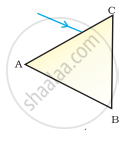 |
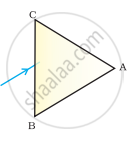 |
| (i) | (ii) | (iii) | (iv) |
(i)
(ii)
(iii)
(iv)
At noon the sun appears white as
light is least scattered
all the colours of the white light are scattered away
blue colour is scattered the most
red colour is scattered the most
The phenomena of light involved in the formation of rainbow are ______.
Reflection, refraction and dispersion
Refraction, dispersion and total internal reflection
Refraction, dispersion and internal reflection
Dispersion, scattering and total internal reflection
Twinkling of stars is due to atmospheric ____________.
dispersion of light by water droplets
refraction of light by different layers of varying refractive indices
scattering of light by dust particles
internal reflection of light by clouds
The clear sky appears blue because
blue light gets absorbed in the atmosphere
ultraviolet radiations are absorbed in the atmosphere
violet and blue lights get scattered more than lights of all other colours by the atmosphere
light of all other colours is scattered more than the violet and blue colour lights by the atmosphere
Which of the following statements is correct regarding the propagation of light of different colours of white light in air?
Red light moves fastest
Blue light moves faster than green light
All the colours of the white light move with the same speed
Yellow light moves with the mean speed as that of the red and the violet light
The danger signals installed at the top of tall buildings are red in colour. These can be easily seen from a distance because among all other colours, the red light ____________.
is scattered the most by smoke or fog
is scattered the least by smoke or fog
is absorbed the most by smoke or fog
moves fastest in air
Which of the following phenomena contributes significantly to the reddish appearance of the sun at sunrise or sunset?
Dispersion of light
Scattering of light
Total internal reflection of light
Reflection of light from the earth
The bluish colour of water in deep sea is due to ____________.
the presence of algae and other plants found in water
reflection of sky in water
scattering of light
absorption of light by the sea
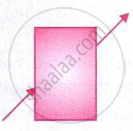
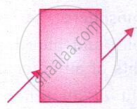
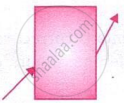
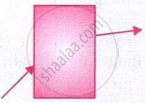
Four students showed the following traces [Fig.] of the path of a ray of light passing through a rectangular glass slab.
The trace most likely to be correct is that of student:
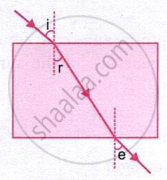
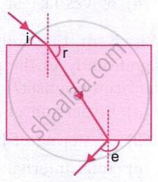
In an experiment to trace the path of a ray [Fig.] of of light passing through a rectangular glass slab, the correct measurement of angles of incidence (i), refraction (r) and emergence (e) is shown in figure:
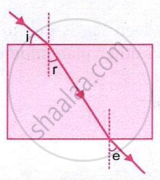
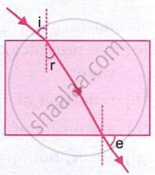
Assertion and Reason Type Questions Choose the correct answers to the questions froт the given options.
Assertion: The optical density of a transparent material has nothing to do with hardness or weight.
Reason: It is a measure of the speed of light through a transparent medium.
If both Assertion and Reason are true and the Reason is correct explanation of the Assertion.
If both Assertion and Reason are true, but Reason is not correct explanation of the Assertion.
If Assertion is true, but the Reason is false.
If Assertion is false, but the Reason is true.
Assertion: When a ray of light is normally incident on a shiny glass surface, it retraces its path.
Reason: In case of normal incidence, the angle of reflection is 0°, hence the reflected say retraces its path along the normal.
If both Assertion and Reason are true and the Reason is correct explanation of the Assertion.
If both Assertion and Reason are true, but Reason is not correct explanation of the Assertion.
If Assertion is true, but the Reason is false.
If Assertion is false, but the Reason is true.
Assertion: Materials with smaller angles of refraction are optically denser materials.
Reason: Smaller the angle of incidence, lesser the ray refracted up to a limit.
If both Assertion and Reason are true and the Reason is correct explanation of the Assertion.
If both Assertion and Reason are true, but Reason is not correct explanation of the Assertion.
If Assertion is true, but the Reason is false.
If Assertion is false, but the Reason is true.
Assertion: The speed of light in different transparent media is different.
Reason: The speed of light in a medium changes with change in temperature of the medium.
If both Assertion and Reason are true and the Reason is correct explanation of the Assertion.
If both Assertion and Reason are true, but Reason is not correct explanation of the Assertion.
If Assertion is true, but the Reason is false.
If Assertion is false, but the Reason is true.
Assertion: On passing through a rectangular glass slab, a ray of light suffers two refractions.
Reason: Light emerges from a rectangular glass slab in a direction parallel to that in which it entered the glass slab.
If both Assertion and Reason are true and the Reason is correct explanation of the Assertion.
If both Assertion and Reason are true, but Reason is not correct explanation of the Assertion.
If Assertion is true, but the Reason is false.
If Assertion is false, but the Reason is true.
Assertion: Total internal reflection occurs when the rays of light strike at an angle less than the critical angle.
Reason: There is no absorption of light during total internal reflection.
If both Assertion and Reason are true and the Reason is correct explanation of the Assertion.
If both Assertion and Reason are true, but Reason is not correct explanation of the Assertion.
If Assertion is true, but the Reason is false.
If Assertion is false, but the Reason is true.
Assertion: A lens with a focal length of 50 cm has a power of 2 dioptres.
Reason: The power of a lens is the reciprocal of its focal length in metres.
\[ \text { Power }=\frac{1}{\text { Focal length }(\mathrm{m})}\]
If both Assertion and Reason are true and the Reason is correct explanation of the Assertion.
If both Assertion and Reason are true, but Reason is not correct explanation of the Assertion.
If Assertion is true, but the Reason is false.
If Assertion is false, but the Reason is true.
Assertion: The degree of convergence or divergence of light rays is a measure of the power of the lens.
Reason: Power of a lens is the reciprocal of focal length of the lens.
If both Assertion and Reason are true and the Reason is correct explanation of the Assertion.
If both Assertion and Reason are true, but Reason is not correct explanation of the Assertion.
If Assertion is true, but the Reason is false.
If Assertion is false, but the Reason is true.
Assertion: Intensity of scattered light varies inversely as the fourth power of the wavelength of incident light.
Reason: \[\lambda_{\mathrm{r}}: \lambda_{\mathrm{b}}\] is almost 2 : 1. Hence, blue is more prominent than red and the sky appears blue.
If both Assertion and Reason are true and the Reason is correct explanation of the Assertion.
If both Assertion and Reason are true, but Reason is not correct explanation of the Assertion.
If Assertion is true, but the Reason is false.
If Assertion is false, but the Reason is true.
Assertion: The basic cause of refraction is the change in speed of light in going from one medium to the other.
Reason: No refraction occurs when refractive indices of the two media in contact are equal.
If both Assertion and Reason are true and the Reason is correct explanation of the Assertion.
If both Assertion and Reason are true, but Reason is not correct explanation of the Assertion.
If Assertion is true, but the Reason is false.
If Assertion is false, but the Reason is true.
Assertion: A coin in a glass beaker appears to rise as the beaker is slowly filled with water.
Reason: A ray of light starting from the coin goes from water to air and bends away from normal. Therefore, the bottom of the beaker on which the coin lies appears to be raised.
If both Assertion and Reason are true and the Reason is correct explanation of the Assertion.
If both Assertion and Reason are true, but Reason is not correct explanation of the Assertion.
If Assertion is true, but the Reason is false.
If Assertion is false, but the Reason is true.
Assertion: Light travels faster in a rarer medium than in a denser medium.
Reason: Refractive index of a medium is inversely proportional to the velocity of light in the medium.
If both Assertion and Reason are true and the Reason is correct explanation of the Assertion.
If both Assertion and Reason are true, but Reason is not correct explanation of the Assertion.
If Assertion is true, but the Reason is false.
If Assertion is false, but the Reason is true.
Assertion: The frequency of violet colour of wavelength \(4000 \AA\) is \(7.5 \times 10^{14} \mathrm{~Hz}\).
Reason: \(\mathrm{C}=v \lambda\)
\[\text{or } \nu = \frac{c}{\lambda}\]
\[= \frac{3 \times 10^{8}}{4000 \times 10^{-10}}\]
= 7.5 × 10¹⁴ Hz
If both Assertion and Reason are true and the Reason is correct explanation of the Assertion.
If both Assertion and Reason are true, but Reason is not correct explanation of the Assertion.
If Assertion is true, but the Reason is false.
If Assertion is false, but the Reason is true.
Assertion: Refractive index of free space (air or vacuum) is maximum.
Reason: Glass is optically denser than both air and water.
If both Assertion and Reason are true and the Reason is correct explanation of the Assertion.
If both Assertion and Reason are true, but Reason is not correct explanation of the Assertion.
If Assertion is true, but the Reason is false.
If Assertion is false, but the Reason is true.
Assertion: Frequency of light does not change during refraction.
Reason: No refraction occurs when light is incident normally on a boundary of two media.
If both Assertion and Reason are true and the Reason is correct explanation of the Assertion.
If both Assertion and Reason are true, but Reason is not correct explanation of the Assertion.
If Assertion is true, but the Reason is false.
If Assertion is false, but the Reason is true.
Solutions for 2: Light
Frank solutions for फिज़िक्स पार्ट [अंग्रेजी] कक्षा १० आईसीएसई chapter 2 - Light
Shaalaa.com has the CISCE Mathematics फिज़िक्स पार्ट [अंग्रेजी] कक्षा १० आईसीएसई CISCE solutions in a manner that help students grasp basic concepts better and faster. The detailed, step-by-step solutions will help you understand the concepts better and clarify any confusion. Frank solutions for Mathematics फिज़िक्स पार्ट [अंग्रेजी] कक्षा १० आईसीएसई CISCE 2 (Light) include all questions with answers and detailed explanations. This will clear students' doubts about questions and improve their application skills while preparing for board exams.
Further, we at Shaalaa.com provide such solutions so students can prepare for written exams. Frank textbook solutions can be a core help for self-study and provide excellent self-help guidance for students.
Concepts covered in फिज़िक्स पार्ट [अंग्रेजी] कक्षा १० आईसीएसई chapter 2 Light are Refraction of Light, Speed of Light in Different Media, Refraction of Light Through a Rectangular Glass Block, Prism, Principle of Reversibility of the Path of Light, Refraction Laws & Glass Index, Critical Angle, Relationship between Critical Angle and Refractive Index, Total Internal Reflection in a Prism, Refraction of Light through a Prism, Multiple Images in a Thick Mirror, Real and Apparent Depth, Apparent Bending of a Stick Under Water, Consequences of Refraction of Light, Transmission of Light From a Denser Medium to a Rarer Medium, Total Internal Reflection, Use of a Total Internal Reflecting Prism in Place of a Plane Mirror, Consequences of Total Internal Refraction, Light: Reflection and Refraction, Laws of Refraction, Total Internal Reflection Through a Right-Angled Isosceles Prism, Total Internal Reflection Through an Equilateral Prism, Total Internal Reflection Through Right-angled prism, Total Internal Reflection vs Reflecting from a Plane Mirror, Deviation Produced by a Triangular Prism, Dispersion of Light Through a Prism, Electromagnetic Spectrum, Colour in White Light with Their Wavelength and Frequency Range, Properties and Uses of Different Radiations of the Electromagnetic Spectrum, Scattering of Light-Rayleigh's Law, Applications of Scattering of Light, Distinction between Ultraviolet, Visible, and Infrared Radiations, Concept of Lenses, Action of a Lens as a Set of Prisms, Technical Terms Related to a Lens, Lens Formula and Magnification, Sign Convention, Power of a Lens, Images Formed by Convex Lenses, Construction of a Ray Diagram for a Lens, Refraction of Light Through an Equi-Convex Lens and an Equi-Concave Lens, Principal Rays for Ray Diagrams, Linear Magnification, Magnifying Glass Or Simple Microscope, Application of Lenses, Experimental Determination of Focal Length of Convex Lens, Convex Lens vs Concave Lens, Convex Lens vs Concave Lens, Real Image vs Virtual Image, Images Formed by Concave Lenses, Refraction of Light, Speed of Light in Different Media, Refraction of Light Through a Rectangular Glass Block, Prism, Principle of Reversibility of the Path of Light, Refraction Laws & Glass Index, Critical Angle, Relationship between Critical Angle and Refractive Index, Total Internal Reflection in a Prism, Refraction of Light through a Prism, Multiple Images in a Thick Mirror, Real and Apparent Depth, Apparent Bending of a Stick Under Water, Consequences of Refraction of Light, Transmission of Light From a Denser Medium to a Rarer Medium, Total Internal Reflection, Use of a Total Internal Reflecting Prism in Place of a Plane Mirror, Consequences of Total Internal Refraction, Light: Reflection and Refraction, Laws of Refraction, Total Internal Reflection Through a Right-Angled Isosceles Prism, Total Internal Reflection Through an Equilateral Prism, Total Internal Reflection Through Right-angled prism, Total Internal Reflection vs Reflecting from a Plane Mirror, Concept of Lenses, Action of a Lens as a Set of Prisms, Technical Terms Related to a Lens, Lens Formula and Magnification, Sign Convention, Power of a Lens, Images Formed by Convex Lenses, Construction of a Ray Diagram for a Lens, Refraction of Light Through an Equi-Convex Lens and an Equi-Concave Lens, Principal Rays for Ray Diagrams, Linear Magnification, Magnifying Glass Or Simple Microscope, Application of Lenses, Experimental Determination of Focal Length of Convex Lens, Convex Lens vs Concave Lens, Convex Lens vs Concave Lens, Real Image vs Virtual Image, Images Formed by Concave Lenses, Deviation Produced by a Triangular Prism, Dispersion of Light Through a Prism, Electromagnetic Spectrum, Colour in White Light with Their Wavelength and Frequency Range, Properties and Uses of Different Radiations of the Electromagnetic Spectrum, Scattering of Light-Rayleigh's Law, Applications of Scattering of Light, Distinction between Ultraviolet, Visible, and Infrared Radiations.
Using Frank फिज़िक्स पार्ट [अंग्रेजी] कक्षा १० आईसीएसई solutions Light exercise by students is an easy way to prepare for the exams, as they involve solutions arranged chapter-wise and also page-wise. The questions involved in Frank Solutions are essential questions that can be asked in the final exam. Maximum CISCE फिज़िक्स पार्ट [अंग्रेजी] कक्षा १० आईसीएसई students prefer Frank Textbook Solutions to score more in exams.
Get the free view of Chapter 2, Light फिज़िक्स पार्ट [अंग्रेजी] कक्षा १० आईसीएसई additional questions for Mathematics फिज़िक्स पार्ट [अंग्रेजी] कक्षा १० आईसीएसई CISCE, and you can use Shaalaa.com to keep it handy for your exam preparation.
