Advertisements
Chapters
2: Marketing mix - 4 P's
3: Advertising and Brand Promotion
4: Sales and Selling Process
5: Generally Accepted Accounting Principles (GAAP)
6: Financial Accounting and Reporting
7: Banking and Bank Transactions
8: Fundamental Concepts of Cost
9: Importance of Human Resources
▶ 10: Recruitment, Selection and Training
11: Public Relations
12: Issues of the Environment
![Goyal Brothers Prakashan solutions for कमर्शियल एप्लिकेशन्स [अंग्रेजी] कक्षा १० आईसीएसई chapter 10 - Recruitment, Selection and Training - Shaalaa.com](/images/commercial-applications-english-class-10-icse_6:24f6f4a7b9ed4bc7bafe97f5daf365e6.jpg "Goyal Brothers Prakashan solutions for कमर्शियल एप्लिकेशन्स [अंग्रेजी] कक्षा १० आईसीएसई chapter 10 - Recruitment, Selection and Training")
Advertisements
Solutions for Chapter 10: Recruitment, Selection and Training
Below listed, you can find solutions for Chapter 10 of CISCE Goyal Brothers Prakashan for कमर्शियल एप्लिकेशन्स [अंग्रेजी] कक्षा १० आईसीएसई.
Goyal Brothers Prakashan solutions for कमर्शियल एप्लिकेशन्स [अंग्रेजी] कक्षा १० आईसीएसई 10 Recruitment, Selection and Training EXERCISES [Pages 162 - 169]
OBJECTIVE TYPE QUESTIONS.
The process of searching the prospective employees is known as ______.
Recruitment
Selection
Staffing
Training
The process of eliminating unqualified and unfit job seekers based on the information supplied by them in their application is called ______.
Reference checks
Preliminary screening
Selection decision
Training
ABC Business House approached Juveriya’s educational institute for recruitment. Juveriya got job even before she left the institution. Identify the type of Recruitment:
- Campus Interviews
- Recommendations
- Internal
- External
i & iii
ii & iii
i & iv
ii & iv
It is said that selection is a negative process whereas recruitment is a positive process.
True
False
As the HR of Zoya Garments, how would you articulate the benefits of external recruitment in terms of bringing fresh perspectives, diverse skill sets, and driving innovation within the company?
The injection of new perspectives can foster creativity and lead to better problem-solving and decision making processes.
External recruitment can be a time-consuming process as it involves various stages.
Leading to decreased morale and employee retention challenges.
There is always an element of uncertainty.
______ is not an internal source of recruitment.
Promotion
Transfer
Job rotation
Departmental exam
The main advantage of advertising job vacancies is that it brings in a flood of applications, many of which may be from unqualified candidates.
True
False
Observe the image and identify the external source of recruitment.

Advertisements
Campus Interviews
Employment Exchanges
Placement Agencies
It refers to assigning specific jobs to the selected candidates.
Placement
Induction
Training
Development
______ is a horizontal shifting of employees.
Promotion
Transfer
Casual callers
None of these
There are two statements given below, marked as Assertion(A) and Reason (R). Read the statements and choose the correct option.
Assertion (A): Recruitment is the process of attracting a pool of potential candidates for a job vacancy.
Reasoning (R): It is important for organizations to have a wide range of qualified candidates to choose from during the selection process.
A is true but R is false.
A is false but R is true.
Both A and R are true and R explains A.
Both A and R are true but R does not explain А.
Promotion motivates the employees if it is ______ based.
Time
Function
Performance
Training
Industrial and factory workers are recruited through ______.
Campus recruitment
Placement agencies
Labour contractors
None of these
There are two statements given below, marked as Assertion (A) and Reason (R). Read the statements and choose the correct option.
Assertion (A): Tests are more useful in identifying and eliminating unsuitable candidates.
Reasoning (R): Tests are fully reliable and they do not involve time and money.
A is true and R is the correct explanation for A.
A is true and R is not the correct explanation for A.
A is true, but R is false.
A is false, but R is true.
These tests are designed to measure the applicant’s level of knowledge and skill already achieved in a particular trade or occupation.
Personality test
Trade test
Dexterity test
Intelligence test
Assertion (A): Internal recruitment refers to the process of hiring candidates from inside the organization to fill specific job positions.
Reasoning (R): Internal recruitment is usually a faster and more cost-effective method compared to external recruitment.
A is true but R is false.
A is false but R is true.
Both A and R are true and R explains A.
Both A and R are true but R does not explain А.
Which is not an advantage of internal Source of recruitment?
Time saving
New blood
Less expensive
Increased cost
Campus selection is a ______ source of recruitment.
Fresh
Modern
Internal
External
When the Principal of a school retires, the vice - principal is given her place. Identify which of the following will be true in this context.
- The vice-principal is being transferred
- The vice-principal will be getting a higher salary
- The vice-principal is getting promoted
- The vice-principal will be getting the same salary but her designation will change
I and II are true
III and IV are true
II and III are true
I and IV are true
Identifying the ______ candidates and ______ them to apply for the job is called Recruitment.
Available, insisting
Available, making
Potential, Attracting
Potential, insisting
Observe the given image and identify the type of training shown.
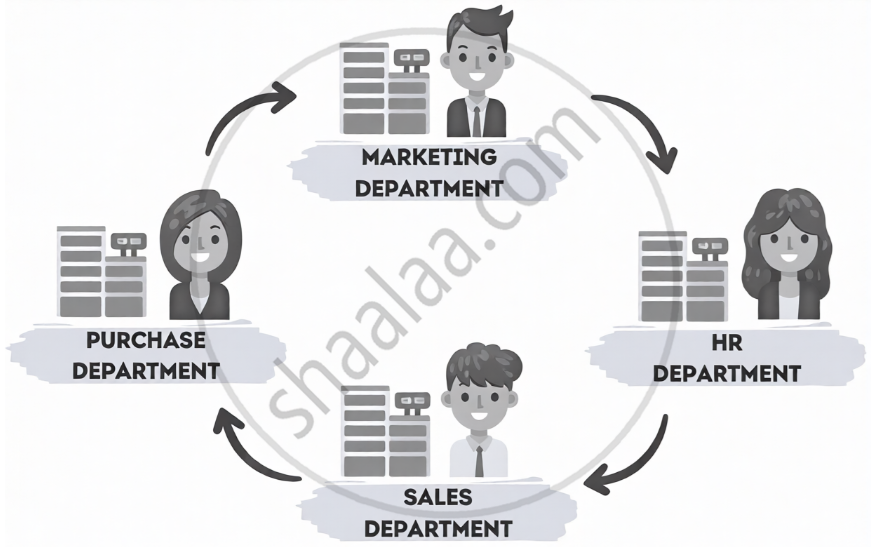

Vestibule Training
Apprenticeship Training
Job Rotation
Simulation Exercises
While choosing the right source of recruitment, the following factors should be considered:
Number of persons to be recruited.
Type of staff to be recruited and the nature of the job to be filled in.
Time available for recruitment.
All of these
Which of the following are the advantages of internal sources of recruitment?
Internal recruitment helps to minimise labour turnover and absenteeism. People wait for promotion and the work-force is more satisfied.
It is an expensive source of recruitment.
Internal candidates may not give a new outlook and fresh ideas to business.
Unsuitable candidates may be promoted to positions of higher responsibility.
Arrange the following steps of staffing in correct sequence.
- Preliminary interview
- Application form
- Tests
- Interview
i, ii, iii, iv
iv, iii, i, ii
i, iv, ii, iii
iii, ii, i, iv
Mr. ‘P’ has been selected for a mission to go to the moon. Before be goes into space he is trained to survive in ‘Zero Gravity’ Identity the training used.
Job rotation
Apprenticeship
Classroom
Vestibule
Observe the image and identify the step of selection.

Group Discussion
Checking References
Medical or Physical Examination
Selection or Final Interview
This method is used in technical trades and crafts in which a long period (ranging from two to seven years) is required to become proficient. The worker is attached to an experienced or senior employee.
Apprenticeship
Vestibule training
Induction training
None of these
______ is one of the internal sources of recruitment.
Advertisements
Transfers
Gate hirings
Education institutes
______ is an elimination process.
Recruitment
Selection
Training
Education
An example of Direct method of recruitment is ______.
Advertisements
Tele Recruitment
Placement agencies
Jobbers and contractors
______ training is also called as ‘process of socializing’.
Induction
Refresher
Safety
Job
Off-the-job training method is ______.
Role play
Job rotation
Mentoring
Under study
______ are also known as ‘casual callers’.
Gate Hiring
Advertisement
Placement Agencies
Unsolicited Applicants
Which of the following is set up by the Government to recruit semi-skilled and unskilled personnel?
Placement agencies
Educational institutions
Employment exchanges
Advertising agencies
The following passage is excerpted from the “High-Tech High-Touch Recruiting” written by Barbara Bruno, president of Good as Gold Training and HR Search. In her latest book, Bruno provides recruiters with an end-to-end process for recruiting in-demand talent, selecting the right candidates and engaging them to become long-term employees.
Based on the information provided in the passage, which of the following statements best describes the difference between Recruitment and Selection?
Recruitment is the second stage of hiring and selection is the first stage of hiring.
Recruitment is the first stage of hiring and selection is the second stage of hiring.
Both Recruitment and Selection start and end together.
Both Recruitment and Selection are involved in choosing the right candidates for the job.
______ means assigning suitable jobs to the selected candidates in the organisation and choosing the most appropriate people.
Selection
Recruitment
Placement
Orientation
The vertical movement or advancement of an employee is known as ______.
Promotion
Demotion
Transfer
Inbreeding
The process of assigning specific work to new employees is called ______.
Recruitment
Selections
Interview
Placement
With reference to methods of training, identify the correct statement:
- On-the-Job training is also known as 'learning by doing'.
- On-the-Job training is given to an employee who is trained outside the job.
- On-the-Job training is the process of judging the suitability of applicants in the light of job requirements.
- On-the-Job training is the process of searching for and identifying the prospective employees.
2 and 3
1 and 4
Only 1
Only 2
Which of the following can be best identified as a demerit to Internal source of recruitment?
It has limited choice of candidates.
It is easy to evaluate the employees since they are from the same organisation.
It is very economical.
The organisation does not have to provide training to the employees.
With reference to ‘On-the-job training’, which statement is/are correct?
- It is also known as ‘learning by doing’.
- It focuses on learning only.
- It is step-by-step learning and the worker contributes towards production in the course of learning.
- It imparts theoretical knowledge about the job.
Only 1 is correct.
1 & 3 are correct.
2 & 4 are correct.
3 & 4 are correct.
Selection means assigning suitable jobs to the selected candidates in the organisation and choosing the most appropriate candidates.
True
False
Which of the following statement best describes Selection?
It is a positive process.
It is the first stage of hiring.
It succeeds recruitment.
It encourages people to apply for the job.
______ is a method of training, used in technical trades and crafts, in which a long period is required to become proficient.
Under study
Job rotation
Mentoring
Apprenticeship
‘T-Group Training’ is also known as ______.
Internship Training
Vestibule Training
Sensitivity Training
Refresher Training
______ training makes employees proficient in handling machines and equipment.
Safety
Job
Refresher
Promotional
Mr. Ajay, an executive of an organisation, should undergo which of the following methods of training to learn from the board of directors, how they take decisions, interact with each other and develop problem solving skills?
Job rotation
Under study
Committee Membership
Apprenticeship Training
Mr. John wanted to apply for an Accountant post in a Government office. Which external source of recruitment should he choose?
Gate Hiring
Jobbers
Contractors
Employment Exchange
SHORT - ANSWER QUESTIONS
How is recruitment different from selection?
Why are interviews an essential part of the selection procedure?
State any two merits/advantages of external recruitment.
"Vestibule training is better than on-the-job training.” Justify for or against.
What is meant by gate hiring in recruitment?
Write a note on guidelines for conducting effective interviews.
“Recruitment is a positive process.” Justify for or against by giving two reasons.
Explain two main differences between Apprenticeship and Internship.
Explain the two methods of Training. Give an example for each.
“Selection is a negative process.” Give two reasons for or against.
Give one difference between promotion and transfer.
Give two differences between recruitment and training.
“Selection is a process of elimination.” Justify.
“There is no difference between Training and Development.” Justify either for or against.
“On the job training includes practical and theoretical learning.” Justify either for or against.
“Training is related to improving skills for performing a job.” Justify either for or against.
Give one difference between Orientation training and Refresher training.
Give one difference between promotion and transfer.
Discuss the merits of Internal Sources of recruitment.
Justify a reason either for or against each of the following:
Recruitment is a process of elimination.
Justify the following sentence for or against and give a reason:
Training reduces employee turnover.
State one difference between employment exchanges and placement agencies.
What do you mean by walk-In-Interviews.
Write about any two direct methods of Recruitment.
Internal Source is an incomplete source of recruitment. Justify.
Justify the following sentence for or against and give a reason:
Training reduces employee turnover.
Define the term recruitment.
“Internal source of recruitment is not economical.” Justify for or against and give a reason.
“Selection is a positive process.” Justify.
Justify the following sentence for or against and give a reason:
Interview provides an opportunity to improve, a potential employee's experience and skills.
‘Internal recruitment is a complete source.’ Justify for or against and give reason.
Justify the following sentence for or against and give a reason:
Walk-in interview is a direct method of recruitment.
LCING-ANSWER QUESTIONS.
An organisation has decided to follow a three-tier selection process of appointing Executive Trainees: Aptitude Test (A.T.), Group Discussion (G.D.), and Final Interview (F.I.). Outline the details of this process stating clearly the tasks involved at each stage.
Explain any two types of employment tests which are conducted to select employees for an enterprise.
“Training is beneficial to both employers and employees.” Explain.
Explain any two types of employment tests which are conducted to select employees for an enterprise.
Mention any four sources of external recruitment.
Describe the importance of training.
|
The system of Teacher Education holds the key responsibility in the making of professionally qualified and competent teachers. An effective teacher must have a positive attitude towards teaching as a profession, commitment, and dedication towards teaching as a function. A profession is a specialized occupation involves specific orientation and training. The purpose of a code of professional ethics for academic staff is to provide guidance in exercising the ethical responsibilities inherent in a profession. |
- State and explain any two external ethics for academic of recruitment.
- Suggest any two types of training to enhance teacher’s proficiency.
- Suggest any two primary professional obligations of school teachers towards students.
Mention any four sources of external recruitment.
Mention any four sources of external recruitment.
Explain any five steps generally involved in the selection of employees.
Explain any two types of interviews conducted by an enterprise in the selection of its employees.
Name and explain any three types of interviews.
Explain any five steps generally involved in the selection of employees.
Mention any four sources of external recruitment.
Explain any five steps generally involved in the selection of employees.
Explain any five steps generally involved in the selection of employees.
Give any two methods used for on-the-job training.
Mention any four sources of external recruitment.
Mention any four sources of external recruitment.
| A leading Human Resource Consultancy group has received a number of applications for the post of an analyst for its Hyderabad office. But the person finally selected had no prior experience for work in the same industry. The administrative manager feels that with proper training the selected person will turn out to be an asset to the organisation. Although he feels that on-the-job training will be the most appropriate, other members of the selection committee recommended Internship training and Role Playing methods of training. |
- What is employee selection? Mention any three benefits of employee selection.
- Explain internship training and Role Playing methods of training.
- Explain any two internal sources of recruitment.
What is vestibule training?
Explain lecture method of training.
Explain any two types of interviews conducted by an enterprise in the selection of its employees.
What is group interview?
Explain the following:
Stress Interview
| Urban Company is Asia’s Largest online home service platform. Launched in 2014, Urban Company today operates in India, Australia, Singapore, the UAE and the Kingdom of Saudi Arabia. The platform helps customers book reliable and high-quality services-beauty treatments, massages, haircut, home cleaning, handymen, appliance repair, painting, pest control and more-delivery by trained professionals conveniently at home. Urban Company’s vision is to empower millions of professionals worldwide to deliver services at home like never experienced before. Urban Company provides a platform that allows skilled and experienced professionals to connect with users looking for specific services. All the professionals, though experienced and skilled, undergo intensive training modules before being allowed to list their services on the platform. Once on the platform, Urban Company’s match-making algorithm identifies professionals who are closest to the users’ requirements and available at the requested time and data. |
In reference to the above case, answer the following question:
- What type of Bank account does Urban Company have? Why?
- Explain how, the professionals are recruited by Urban Company.
- Write about any three External sources of Recruitment.
- What services does the Urban Comany offer?
Discuss the merits of Internal Sources of recruitment.
A new company wants to train its employees on latest development in work method and procedures. Explain any two types of training suitable for existing employees.
Case Study
|
Julian Richer (born 1959) is the Managing Director and founder of Richer Sounds, a hi-fi and home cinema retailer specialising in audio equipment such as LCD televisions, DVD players and amplifiers. In 1978, aged just nineteen, Richer opened his first store in London Bridge. The company has 53 retail outlets throughout UK. In 1994, his flagship store in London Bridge set a new Guinness World Record for the highest sales per square meter of any retail outlets in the world- a staggering £195426 ($322450) per square meter- a record held for over two decades. Richer Sounds has also won many awards, including Which? magazine’s Best Retailer Award and Sunday Times award for Britain best employer. The company is also one of the UKs most generous donors, allocating 15% of its annual profits to charitable organisations. Richer believes it is vital that his staff have fun and enjoy their work. He is renowned for empowering staff to make a difference to the company. Each week, he looks at employee suggestions and awards up to £ 20,000 ($ 33,000) for an idea. Each month, the top three sales people get to use his personal Bentley or Rolls-Royce for a weekend. He only promotes people internally. Richer argues that businesses with demotivated staff face lower productivity due to higher absenteeism, labour turnover, theft and customer complaints. |
With reference to above case study answer the following questions:
- Examine how motivation can lead to improved productivity of his Organisation.
- With reference to features of Human Resource Management, explain:
- Staff function
- Pervasive function.
- What are the advantages of internal sources of recruitment?
Explain need and the importance of Training.
Describe the five various internal sources of recruitment.
Case study
|
British carmaker MG has confirmed the launch of a new affordable Electric Vehicle (EV) in India in the first half of 2023. The brand also revealed that this newly developed EV will come with an affordable price tag of around Rs 7-8 lakh. Although the firm has not yet disclosed the details of the EV’s body style, this new pure-electric offering will most probably compete against the Tata Nexon EV. Besides this the MG's upcoming EV will utilise a new platform and could offer a sub-300 km of travel range on a single charge. MG Motor has also announced that it will invest in nurturing young talents through its initiatives like the MG Nurture program. The carmaker plans to collaborate with 50 institutes through the program to train one lakh students on the latest technologies regarding EVs. Electric cars produce zero exhaust emissions, which means they do not emit any harmful exhaust gases into the air. This can benefit the environment as exhaust gases can negatively impact various health conditions and also have an impact on climate change. EVs are more efficient, and that combined with the electricity cost is cheaper than filling petrol or diesel for your travel requirements. Using renewable energy sources can make the use of EVs more eco-friendly They mainly reduce noise levels which are hazardous to human health. |
With reference to the case study answer the following question:
Which type of training can be undertaken by MG Motors to train its employees? Briefly explain.
Dr. Seema is a reputed senior surgeon who believes in training her junior doctors in the actual operation theatre itself. Identify and explain the method of training undertaken by Dr. Seema. Discuss any two methods of training.
Write short notes on refresher training.
Write short notes on apprenticeship training.
What is the indirect method of recruitment?
Explain any three indirect methods of recruitment.
Goyal Brothers Prakashan solutions for कमर्शियल एप्लिकेशन्स [अंग्रेजी] कक्षा १० आईसीएसई 10 Recruitment, Selection and Training QUESTION BANK [Pages 169 - 171]
“Internal sources of recruitment restrict the choice available to the management.” Justify this statement giving one reason.
Distinguish between internal and external sources of recruitment.
What is group interview?
Reference checks do not provide reliable information about the candidate.
What is vestibule training?
Distinguish between training and education.
Distinguish between training and development.
Explain the importance of careful selection of employees.
| The file on Mr. Verma's (the Manager of Clairmont Hotel) desk containing customer complaints was bulging with letters received over the last few weeks. As he was short staffed, unsuitable recruits who could not be trained, were hired and asked to take on responsible jobs. The result - Hotel rooms were over-booked, cold food was being served by the waiters and cleanliness could not be maintained. The rate of labour turnover and absenteeism was also very high. Mr. Verma had suggested a year ago that a separate Human Resource Department had to be created. The owners, however, had tried to save additional costs and had not acted on his suggestion. |
In the light of the above case:
- Highlight the importance of training.
- Outline the procedure to be followed for the selection of waiters for the hotel.
- How would a professional Human Resource Manager have tackled the situation?
Distinguish between Apprenticeship training and Internship training.
“Interview is an essential part of selection procedure.” Suggest five guidelines for making interview effective.
Give one difference between promotion and transfer.
Give one difference between Orientation training and Refresher training.
Solutions for 10: Recruitment, Selection and Training
Goyal Brothers Prakashan solutions for कमर्शियल एप्लिकेशन्स [अंग्रेजी] कक्षा १० आईसीएसई chapter 10 - Recruitment, Selection and Training
Shaalaa.com has the CISCE Mathematics कमर्शियल एप्लिकेशन्स [अंग्रेजी] कक्षा १० आईसीएसई CISCE solutions in a manner that help students grasp basic concepts better and faster. The detailed, step-by-step solutions will help you understand the concepts better and clarify any confusion. Goyal Brothers Prakashan solutions for Mathematics कमर्शियल एप्लिकेशन्स [अंग्रेजी] कक्षा १० आईसीएसई CISCE 10 (Recruitment, Selection and Training) include all questions with answers and detailed explanations. This will clear students' doubts about questions and improve their application skills while preparing for board exams.
Further, we at Shaalaa.com provide such solutions so students can prepare for written exams. Goyal Brothers Prakashan textbook solutions can be a core help for self-study and provide excellent self-help guidance for students.
Concepts covered in कमर्शियल एप्लिकेशन्स [अंग्रेजी] कक्षा १० आईसीएसई chapter 10 Recruitment, Selection and Training are Aspects of Staffing > Recruitment, Sources of Recruitment, Methods of Recruitment, Advantages and Disadvantages of Recruitment, Methods of Selection, Types of Interviews, Nature of Recruitment, Importance of Employee Selection, Interviews, Importance of Training, Types of Training, Methods of Training, Training.
Using Goyal Brothers Prakashan कमर्शियल एप्लिकेशन्स [अंग्रेजी] कक्षा १० आईसीएसई solutions Recruitment, Selection and Training exercise by students is an easy way to prepare for the exams, as they involve solutions arranged chapter-wise and also page-wise. The questions involved in Goyal Brothers Prakashan Solutions are essential questions that can be asked in the final exam. Maximum CISCE कमर्शियल एप्लिकेशन्स [अंग्रेजी] कक्षा १० आईसीएसई students prefer Goyal Brothers Prakashan Textbook Solutions to score more in exams.
Get the free view of Chapter 10, Recruitment, Selection and Training कमर्शियल एप्लिकेशन्स [अंग्रेजी] कक्षा १० आईसीएसई additional questions for Mathematics कमर्शियल एप्लिकेशन्स [अंग्रेजी] कक्षा १० आईसीएसई CISCE, and you can use Shaalaa.com to keep it handy for your exam preparation.
