Topics
Exploration: Entering the World of Secondary Science
World of Living
Matter in Our Surroundings
- Matter (Substance)
- Characteristics of Particles (Molecules) of Matter
- The Solid State
- The Liquid State
- The Gaseous State
- Plasma
- Bose-einstein Condensate
- Change of State
- Concept of Evaporation
- Concept of Melting (Fusion)
- Vaporisation or Boiling
- Sublimation
- Concept of Freezing (Solidification)
- Concept of Condensation (Liquefaction)
- Concept of Desublimation (Deposition)
Is Matter Around Us Pure
- Matter (Substance)
- Natural substances
- Mixture
- Types of Mixtures
- Introduction to Solutions
- Concentration of a Solution
- Suspension Solution
- Colloidal Solution
- Evaporation Method
- Solvent Extraction (Using a Separating Funnel Method)
- Sublimation
- Chromatography Method
- Simple Distillation Method
- Fractional Distillation Method
- Crystallisation Method
- Classification of Change: Physical Changes
- Pure Substances
- Compound
- Elements
Matter - Its Nature and Behaviour
Cell: The Building Block of Life
Motion, Force, Work and Sound
Tissues in Action
Atoms and Molecules
- History of Atom
- Laws of Chemical Combination
- Law of Conservation of Mass
- Law of Constant Proportions (Law of Definite Proportions)
- Dalton's Atomic Theory
- Atoms: Building Blocks of Matter
- Symbols Used to Represent Atoms of Different Elements
- Atomic Mass
- Relative Atomic Mass (RAM)
- Molecules
- Classification of Molecules
- Difference Between Atoms and Molecules
- Ions (Radicals) and Its Types
- Chemical Formula or Molecular Formula
- Molecular Mass
- Formula Unit Mass
- Mole Concept
- Atoms and Molecules Numericals
Earth as a system
Reproduction: How Life Continues
Structure of the Atom
- Existence of Charged Particles in Matter
- Atoms: Building Blocks of Matter
- Discovery of Charged Particles in Matter
- Protons
- Electrons
- Neutrons
- J. J. Thomson’s Atomic Model
- Advantage and Limitations of Thomson’s Atomic Model
- Rutherford’s Atomic Model
- Limitations of Rutherford’s Atomic Model
- Neils Bohr’s Model of an Atom
- Electronic Configuration of Atom
- Periodic Trends in the Modern Periodic Table
- Different Ways to Determine Valency
- Atomic Number (Z) and Mass Number (A)
- Atomic Mass
- Uses of Radioactive Isotopes
- Isotopes
- Atoms and Molecules Numericals
Patterns in Life: Diversity and Classification
The Fundamental Unit of Life
- The Invention of the Microscope and the Discovery of Cell
- Cell Theory
- Prokaryotic and Eukaryotic Cell
- Cell Organelles
- Structure of the Cell > Plasma Membrane / Cell Membrane
- Structure of the Cell > Cell Wall: “Supporter and Protector”
- Structure of the Cell > Nucleus: “Brain” of the Cell
- Structure of the Cell > Cytoplasm: “Area of Movement”
- Endoplasmic Reticulum (ER)
- Golgi Apparatus - "The delivery system of the cell"
- Lysosome - “Suicidal Bag”
- Mitochondria - “Power House of the Cell”
- Plastids
- Non-living Substances Or Cell Inclusion
- Plant Cell Vs Animal Cell
- Cell Division: an Essential Life Process
Exploring Mixtures and their Separation
Tissues
- Tissues - “The Teams of Workers”
- Plant and Animals Tissue
- Plant Tissues
- Meristems or Meristematic Tissues
- Permanent Tissue
- Simple Permanent Tissues (Supporting Tissue)
- Complex Permanent Tissues
- Complex Permanent Tissue: Xylem Structure and Function (Conducting Tissue)
- Complex Permanent Tissue: Phloem Structure and Function (Conducting Tissue)
- Animal Tissues
- Epithelial Tissue
- Connective Tissue
- Muscular Tissue
- Nervous Tissue
Journey Inside the Atom
Diversity in Living Organisms
- Introduction of Biological Classification
- Classification of Living Organisms
- Taxonomic Hierarchy of Living Organisms: Unit of Classification
- Five Kingdom Classification
- Kingdom Monera
- Kingdom Protista
- Kingdom Fungi
- Kingdom Plantae
- Kingdom Animalia
- Differences Between Plantae (Plants) and Animalia (Animals)
- Kingdom Plantae
- Sub-division Algae
- Kingdom Plantae: Thallophyta (Fungi)
- Cryptogams > Division II- Bryophytes
- Cryptogams > Division III- Pteridophytes
- Phanerogams > Division I-Gymnosperms
- Phanerogams > Division II- Angiosperms
- Kingdom Animalia
- Phylum: Porifera
- Phylum: Cnidaria/Coelenterata
- Phylum: Platyhelminthes
- Invertebrate: Phylum Nematoda
- Phylum: Annelida
- Phylum: Arthropoda
- Phylum: Mollusca
- Phylum: Echinodermata
- Subphylum: Prochordata
- Subphylum: Vertebrata/Craniata
- Invertebrata and Vertebrata
- Taxonomy and Systematics
- Nomenclature
Motion
- Describing Motion
- Motion Along a Straight Line
- Types of Motion
- Measuring the Rate of Motion - Speed with Direction
- Rate of Change of Velocity
- Distance and Displacement
- Displacement - Time Graph Or Distance - Time Graph
- Velocity - Time Graphs
- Equations of Motion by Graphical Method
- Derivation of Velocity - Time Relation by Graphical Method
- Derivation of Displacement - Time Relation by Graphical Method
- Derivation of Displacement - Velocity Relation by Graphical Method
- Uniform Circular Motion (UCM)
- Motion (Numerical)
Atomic Foundations of Matter
Force and Laws of Motion
Describing Motion Around Us
Gravitation
Work and Energy
How Forces Affect Motion
Sound
- Sound Waves
- Production of Sound
- Propagation of Sound
- Sound Need a Medium to Travel
- Sound Waves Are Longitudinal Waves
- Characteristics of Sound
- Speed of Sound (Velocity of Sound)
- Reflection of Sound Waves
- Echo
- Reverberation
- Uses of Multiple Reflection of Sound
- Range of Hearing in Humans
- Ultrasonic Sound Or Ultrasound
- SONAR
- Sound (Numerical)
Work, Energy, and Simple Machines
Improvement in Food Resources
- Improvements in Food Resources
- Improvement in Crop Yields
- Crop Variety Improvement
- Crop Production Improvement
- Crop Protection Management
- Methods to Replenish Nutrients in Your Soil
- Manuring (Biomanuring)
- Fertilizers
- Improved methods of agriculture
- Agricultural Assistance Programme
- Animal Husbandry (Livestock) > Poultry Farm Management
- Animal Husbandry (Livestock) > Pisciculture (Fish Farming)
- Animal Husbandry (Livestock) > Apiculture (Bee Farming)
Sound Waves: Characteristics and Applications
Why Do We Fall ill
- Categories of Disease
- Acute and Chronic Diseases
- Causes of Disease
- Infectious Agents
- Manifestation of Diseases
- Modes of Transmission of Diseases
- Organ-specific and Tissue-specific Manifestations
- Principles of Prevention of Diseases
- Principles of Treatment of Diseases
Earth as a System: Energy, Matter, and Life
Natural Resources
- Introduction
- Experiment
Introduction:
These are eukaryotic organisms with cell walls made up of chitin. They do not perform photosynthesis (heterotrophs). They may be unicellular (yeast) or filamentous (most fungi). They feed on decaying organic materials. Such a mode of nutrition is called saprophytic. Some fungi live in a symbiotic relationship with other organisms (lichens), while some are parasites as well.
Examples: mushrooms (Agaricus), green mould (Penicillium), and smut (Aspergillus).
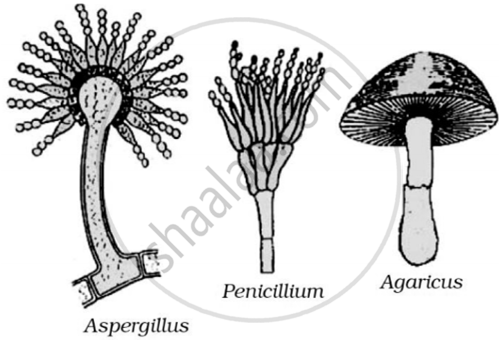
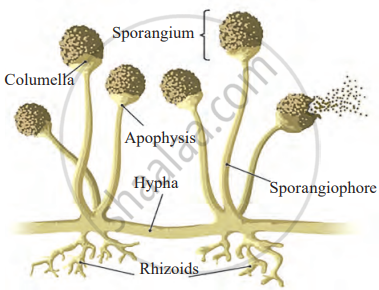
Fungi
Experiment
1. Aim: To observe the growth and structure of fungi on a moist piece of bread or bhakri over a few days and study it under a microscope.
2. Requirements: A moist piece of bread or bhakri, a clean, airtight container with a lid, a microscope, glass slides and cover slips, a dropper, water, forceps, and stain (such as lactophenol cotton blue).
3. Procedure
- Preparation: Place a moist piece of bread or bhakri in a clean, airtight container, ensuring it remains moist but not overly wet.
- Incubation: Seal the container and leave it undisturbed in a warm spot for 2-3 days.
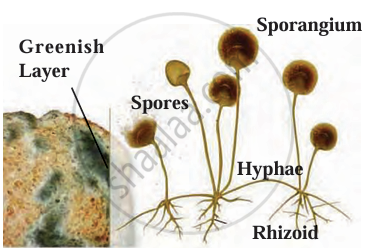
- Growth Observation: Check for cotton-like tufts of fungal growth on the bread surface after 2-3 days.
- Sample Collection: Use forceps to gently extract a few threads of fungal mycelium.
- Slide Preparation: Put the mycelium on a glass slide, add a drop of water or stain, and cover with a slip, avoiding air bubbles.
- Microscope Observation: View under the microscope, starting with low magnification and increasing to examine the structure of hyphae and spores.
4. Conclusion: The experiment shows that fungi, like mould, thrive on moist bread or bhakri in warm, humid conditions. Under a microscope, the fungi appear as fine, thread-like structures called hyphae, with visible spores. This highlights the growth and structure of common bread mould.
Key Points: Kingdom Fungi
1. Meaning - Heterotrophic organisms; body made of thread-like hyphae; network of hyphae = mycelium; cell wall made of chitin; grow in warm and humid places; except yeasts, all are multicellular.
2. Nutrition - Can be saprophytic (feed on dead matter), parasitic or symbiotic (as lichens and mycorrhiza).
3. Reproduction - Asexual by spores (conidia, zoospores, aplanospores); sexual reproduction involves 3 steps - plasmogamy → karyogamy → meiosis; Ascomycetes and Basidiomycetes undergo a dikaryotic stage.
4. 4 Classes of Fungi:
- Phycomycetes - Mycelium aseptate, coenocytic; spores endogenous in sporangium. e.g. Rhizopus, Albugo
- Ascomycetes (Sac fungi) - Asexual spores = conidia; sexual spores = ascospores in ascus. e.g. Aspergillus, Neurospora
- Basidiomycetes - No asexual spores; sexual spores = basidiospores (exogenous). e.g. Agaricus, Ustilago, Puccinia
- Deuteromycetes (Imperfect Fungi) - Sexual form unknown; saprophytic/parasitic. e.g. Alternaria, Colletotrichum
5. Classification basis - Based on morphology, mode of spore formation and fruiting bodies.
6. Important examples - Puccinia (wheat rust), Penicillium (antibiotic), Agaricus (mushroom), Neurospora (genetic research).
Shaalaa.com | Kingdom Fungi
Related QuestionsVIEW ALL [20]
Match items of column (A) with items of column (B)
| (A) | (B) | ||
| (a) | Naked seed | (A) | Angiosperms |
| (b) | Covered seed | (B) | Gymnosperms |
| (c) | Flagella | (C) | Bryophytes |
| (d) | Marchantia | (D) | Euglena |
| (e) | Marsilea | (E) | Thallophyta |
| (f) | Cladophora | (F) | Pteridophyta |
| (g) | Penicillium | (G) | Fungi |
