Topics
Cell - The Structural and Functional Unit of Life
- Cell: Structural and Functional Unit of Life
- Organisms Show Variety in Cell Number, Shape and Size
- Structure of the Cell > Plasma Membrane / Cell Membrane
- Structure of the Cell > Cell Wall: “Supporter and Protector”
- Structure of the Cell > Cytoplasm: “Area of Movement”
- Structure of the Cell > Nucleus: “Brain” of the Cell
- Cell Organelles
- Endoplasmic Reticulum (ER)
- Mitochondria - “Power House of the Cell”
- Golgi Apparatus - "The delivery system of the cell"
- Ribosomes - "The sites of protein synthesis"
- Lysosome - “Suicidal Bag”
- Centrosome and Centrioles
- Plastids
- Non-living Substances Or Cell Inclusion
- Plant Cell Vs Animal Cell
- Microscopic Examination of Onion Peel
Basic Biology
Structure of Chromosomes, Cell Cycle and Cell Division
- Chromatin
- Deoxyribonucleic Acid (DNA)
- Histone Proteins
- Genes and Genetic
- Need for New Cells
- Cell Cycle - "Divide, Grow and Redivide"
- Interphase
- Cell Division: an Essential Life Process
- Mitosis > Karyokinesis (Division of Nucleus)
- Mitosis > Karyokinesis (Division of Nucleus)
- Mitosis > Cytokinesis (Division of Cytoplasm)
- Significance of Mitosis
- Comparison of Mitosis in Plant and Animal Cells
- Mitochondria and Chloroplasts in Cell Division
- Meiosis: Reduction Division
- Stages of Meiosis: Meiosis I
- Stages of Meiosis: Meiosis II
- Significance of Meiosis
- Mitosis Vs Meiosis
Plant Physiology
Human Anatomy and Physiology
Genetics: Some Basic Fundamentals
- Gregor Johann Mendel – Father of Genetics
- Genes and Genetic
- Inheritance in Humans
- Autosomes and Sex Chromosomes
- Sex Determination
- Genes and their Alleles
- Genotype and Phenotype
- Inheritance of Human Traits and Their Genetic Basis
- Sex-Linked Inheritance in Human Beings
- Monohybrid Cross
- Applications and Beyond Mendel's Laws
Absorption by Roots: The Processes Involved
- Plant Physiology
- Concept of Absorption by the Roots
- Need of Water and Minerals for Plants
- Characteristics of Roots for Absorbing Water
- Absorption and Conduction of Water and Minerals
- Imbibition
- Diffusion
- Osmotic Pressure
- Active Transport
- Passive Transport
- Turgidity and Flaccidity (Plasmolysis)
- Uses of Turgidity to Plants
- Comparison of Diffusion, Osmosis and Active Transport
- Root Pressure
- Importance of Root Hairs and Upward Transport
- Experiments on Absorption and Conduction of Water in the Plants
- Forces Contributing to Ascent of Sap
Population
Human Evolution
Transpiration
- Demonstration of Transpiration
- Measurement of Transpiration > Weighing Method
- Measurement of Transpiration > Potometer Method
- Types of Transpiration > Stomatal Transpiration
- Types of Transpiration > Cuticular Transpiration
- Types of Transpiration > Lenticular Transpiration
- Factors Affecting the Rate of Transpiration
- Plant Adaptations to Reduce Transpiration
- Significance of Transpiration
- Guttation and Bleeding
- Traspiration Vs Bleeding
Photosynthesis
- Concept of Photosynthesis
- Chlorophyll: The Vital Plant Pigment
- Regulation of Stomatal Opening for Carbon Dioxide Intake
- Opening and Closing of Stomata
- Process of Photosynthesis
- Light Reaction
- Light-Independent Phase of Photosynthesis
- Adaptations in Leaves to Perform Photosynthesis
- Products of Photosynthesis
- Factors Affecting Photosynthesis
- Experiments on Photosynthesis
- Significance of Photosynthesis
- Carbon Cycle
Pollution
Chemical Coordination in Plants
Physical Health and Hygiene
Health Organisations
- International Bodies: WHO (World Health Organisation)
- Common Health Problems in India
Aids to Health
- First Aid and Emergency Action
- Antiseptics and Disinfectants
- Antibiotics
The Circulatory System
- Need for Transport in the Body
- Fluids in Our Body
- Blood
- Functions of Blood
- Plasma (The Liquid Portion of Blood)
- Erythrocytes vs Leukocytes vs Thrombocytes – A Comparative Overview
- Blood Circulatory System
- Blood Vessels Entering and Leaving The Heart
- Valves of the Heart
- Circulation of Blood in the Heart (Functioning of Heart)
- Heart Beat
- Pacemaker
- Arteries Vs Veins
- Pulmonary and Systemic Circulation (Double Circulation)
- Hepatic Portal System
- The Pulse
- Tissue Fluid (Or Intercellular Fluid)
- The Spleen
The Excretory System
The Nervous System
- Human Nervous System
- Transmission and Generation of Nerve Impulse
- Synapse
- Kinds of Nerves
- Types of Neurons
- Major Division of the Nervous System
- Nerves
- The Human Brain
- Parts of the Brain > Cerebrum
- Parts of the Brain > Cerebellum
- Parts of the Brain > Medulla Oblongata
- Primary Regions of the Brain
- The Spinal Cord
- Peripheral Nervous System (PNS)
- Autonomic Nervous System (ANS)
- Reflex Action
- Involuntary Actions Vs Voluntary Actions
- Types of Reflexes
- Pavlov's Experiment on a Dog
- Reflexes in Humans
- Nervous Pathways in Reflexes
- Reflex Arc
- Complex Reflex Action
Sense Organs
- Concept of Sense Organs
- Sensory Receptors
- Human Eye
- Structure of the Eyeball
- Yellow Spot and Blind Spot
- Rods Vs Cones
- Eye Donation
- Lens
- Light and Dark Adaptation
- Colour Vision
- Defects of Vision and Their Corrections > Myopia
- Defects of Vision and Their Corrections > Hypermetropia
- Defects of Vision and Their Corrections > Presbyopia
- Eye Defect and Its Correction: Astigmatism
- Common Defects of the Eye
- Stereoscopic (Binocular) Vision
- Colour Blindness Assessment
- After-Images and Visual Illusions of Vision
- Human Ear
- Functions of the Ear
The Endocrine System
- Human Endocrine System
- Hormonal Control Vs Nervous Control
- Concept of Hormone
- General Properties of Hormones
- Adrenal Gland (Suprarenal Gland)
- Pancreas (Islets of Langerhans)
- Thyroid Gland
- Pituitary Gland or Hypophysis Gland
- Control of Hormonal Secretions
- Summary of Hormones and Their Actions
The Reproductive System
Population: The Increasing Numbers and Rising Problems
- Rising Population - A Global Threat
- World Population Through the Ages
- Rapid Rise in Population
- Population Explosion- A Serious Global Concern
- Simplified Model Of Population Growth
- Concept of Population in India
- Factors Responsible For The Population Explosion In India
- Rising Population - Pressure on Natural Resources
- Population Growth And Urbanisation: Pressure On Resources
- Need To Reduce Population Growth Rate
- Need For Adopting Control Measures
- Population Education And Population Control
Human Evolution
- Evolution
- Theories of Biological Evolution
- Evidences of Evolution > Vestigial Organs
- Lamarck's Theory Vs Darwin's Theory
- Human Ancestors
- Homo Sapiens Sapiens (Modern Man)
Pollution: A Rising Environmental Problem
- Waste
- Pollution
- Soil Pollution
- Sources of Soil Pollution
- Radiation
- Noise Pollution
- Sources of Noise Pollution
- Acid Rain
- Greenhouse Effect and Global Warming
- Ozone Layer Depletion
- Effects on Human Health
- Control of Pollution
- Swachh Bharat Abhiyan (Clean India Movement)
- Plastic Pollution
- Introduction
- Functions of Lysosomes
- Key Points: Lysosomes
Maharashtra State Board: Class 8
Introduction:
Lysosomes are membrane-bound sacs filled with digestive enzymes. It breaks foreign materials entering the cell, such as bacteria, food, and old organelles, into small pieces. Lysosomes digest the waste.
- It contains powerful digestive enzymes, which are made in RER.
- During the disturbance in cellular metabolism, such as when the cell gets damaged, lysosomes may burst, and the enzymes digest their own cell. Therefore, lysosomes are also known as the suicide bag of a cell.

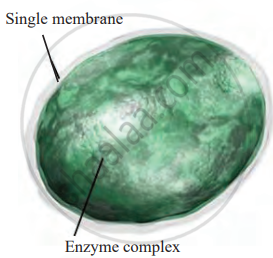
Lysosomes
Maharashtra State Board: Class 8
Functions of Lysosomes:
- Lysosomes help destroy harmful viruses and bacteria that attack the cell.
- They act as "demolition squads" by breaking down worn-out cellular parts and organic debris.
- When a cell is old or damaged, lysosomes burst, releasing enzymes that digest the cell itself (suicide bags).
- During starvation, lysosomes break down stored proteins and fats to provide energy for the body.
CISCE: Class 10
Key Points: Lysosomes
- Lysosomes are membranous sacs formed from the Golgi body.
- They contain around 40 different types of digestive enzymes.
- Responsible for intracellular digestion and destruction of foreign substances.
- Help break down worn-out organelles—hence known as "suicide bags".
- Aid in digesting cartilage during bone formation.
Shaalaa.com | Lysosomes
to track your progress
Related QuestionsVIEW ALL [10]
Match the following A and B
| (A) | (B) | ||
| (a) | Smooth endoplasmic reticulum | (i) | Amoeba |
| (b) | Lysosome | (ii) | Nucleus |
| (c) | Nucleoid | (iii) | Bacteria |
| (d) | Food vacuoles | (iv) | Detoxification |
| (e) | Chromatin material and nucleolus | (v) | Suicidal bag |
