Topics
Cell - The Structural and Functional Unit of Life
- Cell: Structural and Functional Unit of Life
- Organisms Show Variety in Cell Number, Shape and Size
- Structure of the Cell > Plasma Membrane / Cell Membrane
- Structure of the Cell > Cell Wall: “Supporter and Protector”
- Structure of the Cell > Cytoplasm: “Area of Movement”
- Structure of the Cell > Nucleus: “Brain” of the Cell
- Cell Organelles
- Endoplasmic Reticulum (ER)
- Mitochondria - “Power House of the Cell”
- Golgi Apparatus - "The delivery system of the cell"
- Ribosomes - "The sites of protein synthesis"
- Lysosome - “Suicidal Bag”
- Centrosome and Centrioles
- Plastids
- Non-living Substances Or Cell Inclusion
- Plant Cell Vs Animal Cell
- Microscopic Examination of Onion Peel
Basic Biology
Structure of Chromosomes, Cell Cycle and Cell Division
- Chromatin
- Deoxyribonucleic Acid (DNA)
- Histone Proteins
- Genes and Genetic
- Need for New Cells
- Cell Cycle - "Divide, Grow and Redivide"
- Interphase
- Cell Division: an Essential Life Process
- Mitosis > Karyokinesis (Division of Nucleus)
- Mitosis > Karyokinesis (Division of Nucleus)
- Mitosis > Cytokinesis (Division of Cytoplasm)
- Significance of Mitosis
- Comparison of Mitosis in Plant and Animal Cells
- Mitochondria and Chloroplasts in Cell Division
- Meiosis: Reduction Division
- Stages of Meiosis: Meiosis I
- Stages of Meiosis: Meiosis II
- Significance of Meiosis
- Mitosis Vs Meiosis
Plant Physiology
Human Anatomy and Physiology
Genetics: Some Basic Fundamentals
- Gregor Johann Mendel – Father of Genetics
- Genes and Genetic
- Inheritance in Humans
- Autosomes and Sex Chromosomes
- Sex Determination
- Genes and their Alleles
- Genotype and Phenotype
- Inheritance of Human Traits and Their Genetic Basis
- Sex-Linked Inheritance in Human Beings
- Monohybrid Cross
- Applications and Beyond Mendel's Laws
Absorption by Roots: The Processes Involved
- Plant Physiology
- Concept of Absorption by the Roots
- Need of Water and Minerals for Plants
- Characteristics of Roots for Absorbing Water
- Absorption and Conduction of Water and Minerals
- Imbibition
- Diffusion
- Osmotic Pressure
- Active Transport
- Passive Transport
- Turgidity and Flaccidity (Plasmolysis)
- Uses of Turgidity to Plants
- Comparison of Diffusion, Osmosis and Active Transport
- Root Pressure
- Importance of Root Hairs and Upward Transport
- Experiments on Absorption and Conduction of Water in the Plants
- Forces Contributing to Ascent of Sap
Population
Human Evolution
Transpiration
- Demonstration of Transpiration
- Measurement of Transpiration > Weighing Method
- Measurement of Transpiration > Potometer Method
- Types of Transpiration > Stomatal Transpiration
- Types of Transpiration > Cuticular Transpiration
- Types of Transpiration > Lenticular Transpiration
- Factors Affecting the Rate of Transpiration
- Plant Adaptations to Reduce Transpiration
- Significance of Transpiration
- Guttation and Bleeding
- Traspiration Vs Bleeding
Photosynthesis
- Concept of Photosynthesis
- Chlorophyll: The Vital Plant Pigment
- Regulation of Stomatal Opening for Carbon Dioxide Intake
- Opening and Closing of Stomata
- Process of Photosynthesis
- Light Reaction
- Light-Independent Phase of Photosynthesis
- Adaptations in Leaves to Perform Photosynthesis
- Products of Photosynthesis
- Factors Affecting Photosynthesis
- Experiments on Photosynthesis
- Significance of Photosynthesis
- Carbon Cycle
Pollution
Chemical Coordination in Plants
Physical Health and Hygiene
Health Organisations
- International Bodies: WHO (World Health Organisation)
- Common Health Problems in India
Aids to Health
- First Aid and Emergency Action
- Antiseptics and Disinfectants
- Antibiotics
The Circulatory System
- Need for Transport in the Body
- Fluids in Our Body
- Blood
- Functions of Blood
- Plasma (The Liquid Portion of Blood)
- Erythrocytes vs Leukocytes vs Thrombocytes – A Comparative Overview
- Blood Circulatory System
- Blood Vessels Entering and Leaving The Heart
- Valves of the Heart
- Circulation of Blood in the Heart (Functioning of Heart)
- Heart Beat
- Pacemaker
- Arteries Vs Veins
- Pulmonary and Systemic Circulation (Double Circulation)
- Hepatic Portal System
- The Pulse
- Tissue Fluid (Or Intercellular Fluid)
- The Spleen
The Excretory System
The Nervous System
- Human Nervous System
- Transmission and Generation of Nerve Impulse
- Synapse
- Kinds of Nerves
- Types of Neurons
- Major Division of the Nervous System
- Nerves
- The Human Brain
- Parts of the Brain > Cerebrum
- Parts of the Brain > Cerebellum
- Parts of the Brain > Medulla Oblongata
- Primary Regions of the Brain
- The Spinal Cord
- Peripheral Nervous System (PNS)
- Autonomic Nervous System (ANS)
- Reflex Action
- Involuntary Actions Vs Voluntary Actions
- Types of Reflexes
- Pavlov's Experiment on a Dog
- Reflexes in Humans
- Nervous Pathways in Reflexes
- Reflex Arc
- Complex Reflex Action
Sense Organs
- Concept of Sense Organs
- Sensory Receptors
- Human Eye
- Structure of the Eyeball
- Yellow Spot and Blind Spot
- Rods Vs Cones
- Eye Donation
- Lens
- Light and Dark Adaptation
- Colour Vision
- Defects of Vision and Their Corrections > Myopia
- Defects of Vision and Their Corrections > Hypermetropia
- Defects of Vision and Their Corrections > Presbyopia
- Eye Defect and Its Correction: Astigmatism
- Common Defects of the Eye
- Stereoscopic (Binocular) Vision
- Colour Blindness Assessment
- After-Images and Visual Illusions of Vision
- Human Ear
- Functions of the Ear
The Endocrine System
- Human Endocrine System
- Hormonal Control Vs Nervous Control
- Concept of Hormone
- General Properties of Hormones
- Adrenal Gland (Suprarenal Gland)
- Pancreas (Islets of Langerhans)
- Thyroid Gland
- Pituitary Gland or Hypophysis Gland
- Control of Hormonal Secretions
- Summary of Hormones and Their Actions
The Reproductive System
Population: The Increasing Numbers and Rising Problems
- Rising Population - A Global Threat
- World Population Through the Ages
- Rapid Rise in Population
- Population Explosion- A Serious Global Concern
- Simplified Model Of Population Growth
- Concept of Population in India
- Factors Responsible For The Population Explosion In India
- Rising Population - Pressure on Natural Resources
- Population Growth And Urbanisation: Pressure On Resources
- Need To Reduce Population Growth Rate
- Need For Adopting Control Measures
- Population Education And Population Control
Human Evolution
- Evolution
- Theories of Biological Evolution
- Evidences of Evolution > Vestigial Organs
- Lamarck's Theory Vs Darwin's Theory
- Human Ancestors
- Homo Sapiens Sapiens (Modern Man)
Pollution: A Rising Environmental Problem
- Waste
- Pollution
- Soil Pollution
- Sources of Soil Pollution
- Radiation
- Noise Pollution
- Sources of Noise Pollution
- Acid Rain
- Greenhouse Effect and Global Warming
- Ozone Layer Depletion
- Effects on Human Health
- Control of Pollution
- Swachh Bharat Abhiyan (Clean India Movement)
- Plastic Pollution
- Introduction
- Definition: Cytosol
- Key Points: Cytoplasm
Maharashtra State Board: Class 8
Introduction:
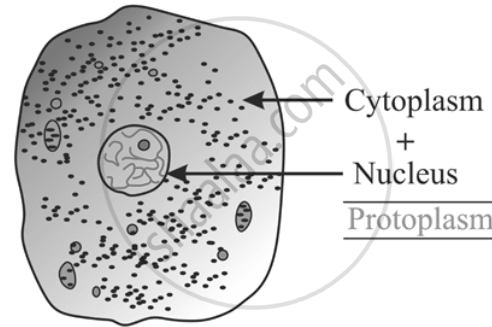
The cytoplasm is the fluid content inside the plasma membrane with cell organelles embedded into it. The jelly-like fluid between the plasma membrane and nucleus, where many organelles float. It enables cellular chemical reactions and helps move materials around the cell.
- The cytoplasm helps in the exchange of material between cell organelles. It acts as a store of vital chemicals such as glucose, vitamins, etc.
- The part of the cytoplasm without organelles that stores essential substances like amino acids, glucose, and vitamins is known as the cytosol.
- The cytoplasm is all the contents inside the cell membrane, excluding the nucleus. And protoplasm includes the cytoplasm and the nucleus of the cell.
- In animal cells, the cytoplasm is thicker and denser, while in plant cells, it is thinner and pushed to the edges due to the central vacuole.
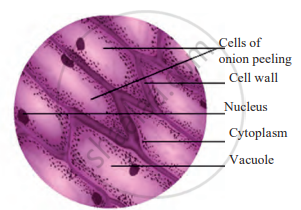
Onion peeling
CISCE: Class 10
Definition: Cytosol
The part of the cytoplasm other than the organelles (mitochondria, etc.) is called cytosol, which constitutes mainly the liquid medium.
CISCE: Class 10
Key Points: Cytoplasm
- Cytoplasm lies between the cell membrane and the nucleus, excluding the nucleus itself.
- It is a semi-liquid medium containing water, solutes, and various organelles.
- The cytosol is the fluid part of the cytoplasm, excluding organelles.
- Site of all metabolic activities, including enzyme-catalyzed reactions.
- It supports the functions of organelles and is the medium for glycolysis (anaerobic respiration phase).
Shaalaa.com | Cytoplasm
to track your progress
