Topics
Number System (Including Estimation and Approximation)
Theme 1 : Numbers
Number System(Consolidating the Sense of Numberness)
Number System
Numbers in Indian and International Systems (With Comparison)
Estimation
Theme 2 : Ratio, Proportion and Arithmetic Problems
Ratio and Proportion
Algebra
Natural Numbers and Whole Numbers (Including Number Line and Patterns)
Theme 3 : Algebra
Numbers in India and International System (With Comparison)
Theme 4 : Geometry
Negative Numbers and Integers
Place Value
Geometry
Mensuration
Natural Numbers and Whole Numbers (Including Patterns)
Theme 5 : Mensuration
Sets
Data Handling
Negative Numbers and Integers
Fractions
Theme 6 : Statistics
Decimal Fractions
Number Line
HCF and LCM
Playing with Numbers (Including H.C.F. and L.C.M.)
Ratio and Proportion (Including Unitary Method)
Playing with Numbers
- Simplification of Brackets
- Finding Factors Using Rectangular Arrangements and Division
- Factors and Common Factors
- Multiples and Common Multiples
- Concept of Even and Odd Number
- Tests for Divisibility of Numbers
- Divisibility by 2
- Divisibility by 4
- Divisibility by 8
- Divisibility by 3
- Divisibility by 6
- Divisibility by 9
- Divisibility by 5
- Divisibility by 11
Sets
Percent (Percentage)
Ratio
Idea of Speed, Distance and Time
Fundamental Concepts (With operations on Algebraic Expressions)
Proportion (Including Word Problems)
Framing Algebraic Expressions (Including Substitution and Linear Equations)
Unitary Method
Fractions
- Concept of Fraction
- Types of Fractions
- Concept of Proper and Improper Fractions
- Concept of Mixed Fractions
- Like and Unlike Fraction
- Concept of Equivalent Fractions
- Conversion between Improper and Mixed fraction
- Conversion between Unlike and Like Fractions
- Simplest Form of a Fractions
- Comparing Fractions
- Addition of Fraction
- Subtraction of Fraction
- Multiplication of Fraction
- Division of Fractions
- Using Operator 'Of' with Multiplication and Division
- BODMAS Rule
- Problems Based on Fraction
Fundamental Concepts (Including Angles and their Properties)
Triangles (Including Types and Properties of Triangles)
Decimal Fractions
Percent (Percentage)
Quadrilaterals
Idea of Speed, Distance and Time
Circles
Constructions
Symmetry
Fundamental Concepts
Fundamental Operations (Related to Algebraic Expressions)
Recognition of Solids
Substitution (Including Use of Brackets as Grouping Symbols)
Perimeter and Area of Plane Figures
Framing Algebraic Expressions (Including Evaluation)
Data Handling (Including Mean and Median)
Simple (Linear) Equations (Including Word Problems)
Fundamental Concepts
Angles (With Their Types)
Properties of Angles and Lines (Including Parallel Lines)
Triangles (Including Types, Properties and Constructions)
Quadrilateral
Polygons
The Circle
Symmetry (Including Constructions on Symmetry)
Recognition of Solids
Perimeter and Area of Plane Figures
Data Handling (Including Pictograph and Bar Graph)
Mean and Median
- Introduction
- Flat Surfaces (Planes)
- Curved Surfaces
- Key Points Summary
Introduction
A surface is the outer boundary that separates a solid object from the space around it.
Imagine your textbook. The outer covers and pages are the surfaces that separate the paper inside from the air in the room!
A surface has two main measurements:
-
Length
-
Width (or Breadth)
It has ZERO thickness or depth. Mathematically, a surface is a two-dimensional (2D) object.
Flat Surfaces (Planes)
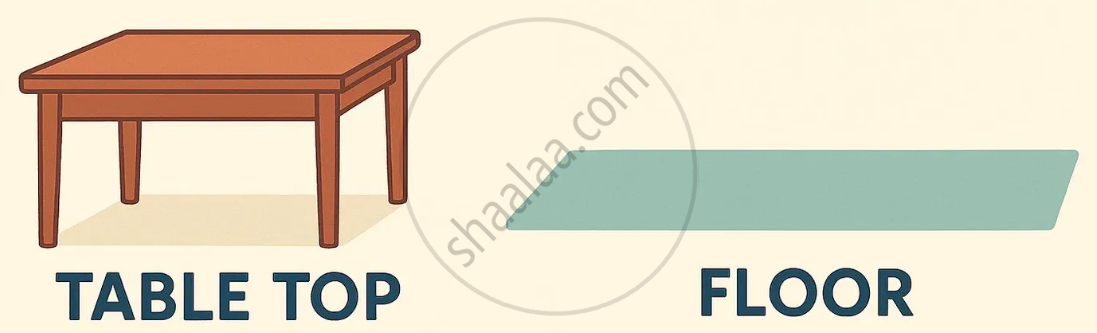
A flat surface is perfectly smooth and level. In geometry, we call a flat surface a Plane.
Real-Life Examples:
-
A classroom blackboard or whiteboard.
-
The top of a dining table.
-
The surface of a wall or floor.
Curved Surfaces
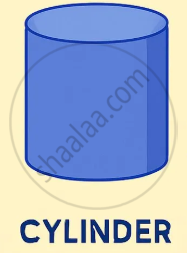
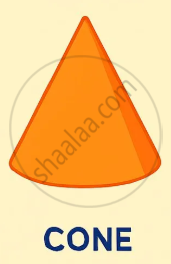
A curved surface is one that is bent or rounded and is not a plane.
Real-Life Examples:
-
The outer skin of a cricket ball or an orange.
-
The surface of a water bottle or glass.
-
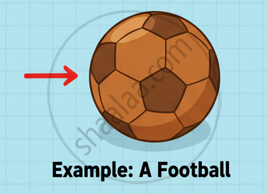
The surface of a football or globe.
Key Points Summary
Surface
- The outer boundary of a 3D solid.
- 2D (Length and Width)
Flat Surface
- A smooth, level surface (called a Plane).
- Example: Top of a table.
Curved Surface
- A rounded or bent surface.
- Example: A football.
