Topics
Part 1
Fractions in Disguise
Rational Numbers
- Rational Numbers
- Closure Property of Rational Numbers
- Commutative Property of Rational Numbers
- Associative Property of Rational Numbers
- Distributive Property of Multiplication Over Addition for Rational Numbers
- Identity of Addition and Multiplication of Rational Numbers
- Negative Or Additive Inverse of Rational Numbers
- Concept of Reciprocals or Multiplicative Inverses
- Rational Numbers on a Number Line
- Rational Numbers Between Two Rational Numbers
- Multiples and Common Multiples
A Square and A Cube
Linear Equations in One Variable
- Constants and Variables in Mathematics
- Equation in Mathematics
- Expressions with Variables
- Word Problems on Linear Equations
- Solving Equations Which Have Linear Expressions on One Side and Numbers on the Other Side
- Some Applications Solving Equations Which Have Linear Expressions on One Side and Numbers on the Other Side
- Solving Equations Having the Variable on Both Sides
- Some More Applications on the Basis of Solving Equations Having the Variable on Both Sides
- Reducing Equations to Simpler Form
- Equations Reducible to Linear Equations
The Baudhayana-Pythagoras Theorem
Power Play
Part 2
Understanding Quadrilaterals
- Concept of Curves
- Different Types of Curves - Closed Curve, Open Curve, Simple Curve.
- Basic Concept of Polygons
- Classification of Polygons
- Properties of Quadrilateral
- Sum of Interior Angles of a Polygon
- Sum of Exterior Angles of a Polygon
- Quadrilaterals
- Properties of Trapezium
- Properties of Kite
- Properties of a Parallelogram
- Properties of Rhombus
- Property: The Opposite Sides of a Parallelogram Are of Equal Length.
- Property: The Opposite Angles of a Parallelogram Are of Equal Measure.
- Property: The adjacent angles in a parallelogram are supplementary.
- Property: The diagonals of a parallelogram bisect each other. (at the point of their intersection)
- Property: The diagonals of a rhombus are perpendicular bisectors of one another.
- Property: The Diagonals of a Rectangle Are of Equal Length.
- Properties of Rectangle
- Properties of a Square
- Property: The diagonals of a square are perpendicular bisectors of each other.
A Story of Numbers
Proportional Reasoning-2
Exploring Some Geometric Themes
Practical Geometry
- Geometric Tool
- Constructing a Quadrilateral When the Lengths of Four Sides and a Diagonal Are Given
- Constructing a Quadrilateral When Two Diagonals and Three Sides Are Given
- Constructing a Quadrilateral When Two Adjacent Sides and Three Angles Are Known
- Constructing a Quadrilateral When Three Sides and Two Included Angles Are Given
- Some Special Cases
Data Handling
Quadrilaterals
Tales by Dots and Lines
Squares and Square Roots
- Concept of Square Number
- Properties of Square Numbers
- Some More Interesting Patterns of Square Number
- Finding the Square of a Number
- Concept of Square Roots
- Finding Square Root Through Repeated Subtraction
- Finding Square Root Through Prime Factorisation
- Finding Square Root by Division Method
- Square Root of Decimal Numbers
- Estimating Square Root
Number Play
Algebra Play
Cubes and Cube Roots
We Distribute, Yet Things Multiply
Area
Proportional Reasoning-1
Comparing Quantities
- Ratio
- Increase Or Decrease as Percent
- Concept of Discount
- Estimation in Percentages
- Basic Concepts of Profit and Loss
- Calculation of Interest
- Concept of Compound Interest
- Deducing a Formula for Compound Interest
- Rate Compounded Annually Or Half Yearly (Semi Annually)
- Applications of Compound Interest Formula
Algebraic Expressions and Identities
- Algebraic Expressions
- Terms, Factors and Coefficients of Expression
- Classification of Terms in Algebra
- Addition of Algebraic Expressions
- Subtraction of Algebraic Expressions
- Multiplication of Algebraic Expressions
- Multiplying Monomial by Monomials
- Multiplying a Monomial by a Binomial
- Multiplying a Monomial by a Trinomial
- Multiplying a Binomial by a Binomial
- Multiplying a Binomial by a Trinomial
- Concept of Identity
- Expansion of (a + b)2 = a2 + 2ab + b2
- Expansion of (a - b)2 = a2 - 2ab + b2
- Expansion of (a + b)(a - b) = a2-b2
- Expansion of (x + a)(x + b)
Mensuration
Exponents and Powers
Visualizing Solid Shapes
Direct and Inverse Proportions
Factorization
- Factors and Common Factors
- Factorising Algebraic Expressions
- Factorisation by Taking Out Common Factors
- Factorisation by Regrouping Terms
- Factorisation Using Identities
- Factors of the Form (x + a)(x + b)
- Dividing a Monomial by a Monomial
- Dividing a Polynomial by a Monomial
- Dividing a Polynomial by a Polynomial
- Concept of Find the Error
Introduction to Graphs
Playing with Numbers
- Introduction
- Scale
- Example 1
- Example 2
- Key Points Summary
Introduction
Pictographs are a fun and visual way to show information using pictures or symbols instead of just numbers. Think of them as "picture stories" that tell you data at a quick glance!
Imagine you're watching a cricket match and want to show how many runs each batsman scored.
You could write: "Chandrakant: 18 runs, Ramakant: 20 runs, Ahmed: 12 runs." But what if you drew cricket balls instead? One cricket ball = 6 runs. Much easier to understand by just looking at the pictures, right?
Scale
The scale is the rule that tells you what each picture means.
Common scales:
-
1 picture = 1 unit (easiest to read)
-
1 picture = 2 units (good for medium numbers)
-
1 picture = 5 units (good for large numbers)
-
1 picture = 10 units (for very large numbers)
Why different scales?
If you had 1,000 students to show, you'd need 1,000 pictures! That's too much. Instead, use 1 picture = 100 students, and you only need 10 pictures.
Remember: All numbers in your data must divide evenly by your chosen scale. If your numbers are 24, 12, 20, and 16, you can use scale 4 (since all divide by 4), so "1 picture = 4 units."
Example 1
Question: The modes of travelling to school by 160 students are given below:
| Mode | By walking | On bicycle | By car | By bus |
| No. of students | 30 | 50 | 20 | 60 |
Draw a suitable pictograph.
Solution:
Step 1: Collect the data
Step 2: Choose a suitable symbol
Step 3: Decide on an appropriate scale
Step 4: Create a table with categories and pictures
Since every given number is completely divisible by 10, the scale will be = 10 students (walking)
 = 10 students (using bicycles)
 = 10 students (using a car)
 = 10 students (using bus)
The required pictograph will be as shown below:
| Mode | Number of students |
| By walking |  |
| On bicycles |  |
| By car |  |
| By bus |  |
Example 2
Nand Kishor asked children how often they sleep at least 9 hours each night. He showed the results using a pictograph.
Scale: Each triangle (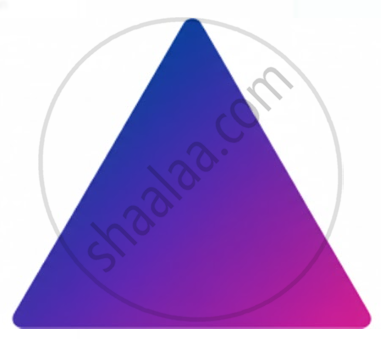 ) = 10 children
| Response | Number of Triangles | What it Means |
|---|---|---|
| Always |  |
5 × 10 = 50 children |
| Sometimes |  |
(2 × 10) + 5 = 25 children |
| Never |  |
4 × 10 = 40 children |
-
How many children always sleep at least 9 hours?
→ 50 children (because 5 symbols = 5 × 10) -
How many children sometimes sleep at least 9 hours?
→ 25 children (2 full = 20, half = 5 → total = 25) -
How many children never sleep for 9 hours or more?
→ 40 children (4 symbols × 10)
Key Points Summary
- Pictographs use pictures/symbols to show data instead of just numbers
- Scale: Each symbol represents a fixed number (e.g., 1 ball = 6 runs)
- How to choose scale: All data numbers must divide evenly by the scale number
- Half symbols: Use half symbols for remainders (e.g., ◐ for half)
Example Question 1
Total number of animals in five villages are as follows:
Village A: 80
Villages B: 120
Village C: 90
Village D: 40
Village E: 60
Prepare a pictograph of these animals using one symbol ⊗ to represent 10 animals and answer the following questions:
(a) How many symbols represent animals of village E?
(b) Which village has the maximum number of animals?
(c) Which village has more animals: village A or village C?
The pictograph for the given data can be drawn as follows.
|
Village |
Number of animals ⊗ − 10 animals |
|
Village A |
⊗⊗⊗⊗⊗⊗⊗⊗ |
|
Village B |
⊗ ⊗ ⊗ ⊗ ⊗ ⊗ ⊗ ⊗ ⊗ ⊗ ⊗ ⊗ |
|
Village C |
⊗ ⊗ ⊗ ⊗ ⊗ ⊗ ⊗ ⊗ ⊗ |
|
Village D |
⊗ ⊗ ⊗ ⊗ |
|
Village E |
⊗ ⊗ ⊗ ⊗ ⊗ ⊗ |
(a) 6 symbols will represent animals of village E as there were 60 animals in this village.
(b) Village B has the maximum number of animals i.e., 120.
(c) Village A and C have 80 and 90 animals in it. Clearly, Village C has more animals.
Test Yourself
Video Tutorials
Shaalaa.com | What Is Pictograph
Related QuestionsVIEW ALL [30]
The sale of vehicles, in a particular city, during the first six months of the year 2016 is shown below:
| Month | Jan | Feb | March | April | May | June |
| Number of vehicles sold | 3000 | 2500 | 4000 | 1000 | 1500 | 3500 |
Draw a pictograph to represent the above data.
The number of scouts in a school is depicted by the following pictograph:
| Class | Number of scouts  = 10 scouts = 10 scouts |
| VI |  |
| VII |  |
| VIII |  |
| IX |  |
| X |  |
Observe the pictograph and answer the following questions:
- Which class has the minimum number of scouts?
- Which class has the maximum number of scouts?
- How many scouts are there in Class VI?
- Which class has exactly four times the scouts as that of Class X?
- What is the total number of scouts in the Classes VI to X?
The following pictograph shows the number of watches manufactured by a factory, in a particular weeks.
| Day | Number of watches |
| Monday |       |
| Tuesday |            |
| Wednesday |       |
| Thursday |       |
| Friday |      |
| Saturday |         |
Scale:  = 100 watches
Find the total number of watches manufactured in the whole week?
Annual expenditure of a company in the year 2007-2008 is given below:
| Items | Expenditure (Rs in lakh) |
| Salaries of employees | 65 |
| Advertisement | 10 |
| Purchase of machinery | 85 |
| Electricity and water | 15 |
| Transportation | 25 |
| Other expenses | 30 |
Prepare a pictograph of the above data using an appropriate symbol to represent Rs 10 lakh.
The following table shows the weight of paddy cultivated in a particular village during the years 2010 to 2015
| Year | Paddy production |
| 2010 |  |
| 2011 |  |
| 2012 |  |
| 2013 |  |
| 2014 |  |
| 2015 |  |

Observe the pictograph and answer the following questions.
a) In which year paddy production was maximum?
b) In which year paddy production were equal?
c) Find the quantity of paddy production in 2015
d) Find the total quantity of paddy production particularly 2013, 2014, and 2015
The following pictograph shows the number of watches manufactured by a factory, in a particular weeks.
| Day | Number of watches |
| Monday | |
| Tuesday | |
| Wednesday | |
| Thursday | |
| Friday | |
| Saturday | |
Scale: = 100 watches
Find on which day was the least number of watches manufactured?
 to represent 100 Pupil and answer the following question: