Advertisements
Chapters
1: Reproduction in Organisms
2: Sexual Reproduction in Flowering Plants
3: Human Reproduction
4: Reproductive Health
UNIT 2 : GENETICS AND EVOLUTION
5: Principles of Inheritance and Variation
6: Molecular Basis of Inheritance
7: Origin of Life
8: Evidences and Theories of Biological Evolution
9: Human Evolution
UNIT 3 : BIOLOGY AND HUMAN WELFARE
▶ 10: Human Health and Diseases
11: Strategies for Enhancement in Food Production
12: Microbes in Human Welfare
UNIT 4 : BIOTECHNOLOGY AND ITS APPLICATIONS
13: Principles and Processes of Biotechnology
14: Biotechnology and Its Applications
UNIT 5 : ECOLOGY AND ENVIRONMENT
15: Organisms and Populations
16: Ecosystem
17: Biodiversity and Its Conservation
18: Environmental Issues
![Nootan solutions for Biology [English] Class 12 ISC chapter 10 - Human Health and Diseases - Shaalaa.com](/images/biology-english-class-12-isc_6:5d0f76efd5b64b75a3ef882e75824c08.png "Nootan solutions for Biology [English] Class 12 ISC chapter 10 - Human Health and Diseases")
Advertisements
Solutions for Chapter 10: Human Health and Diseases
Below listed, you can find solutions for Chapter 10 of CISCE Nootan for Biology [English] Class 12 ISC.
Nootan solutions for Biology [English] Class 12 ISC 10 Human Health and Diseases TEST YOUR PROGRESS [Pages 423 - 432]
OBJECTIVE TYPE QUESTIONS: Choose the correct answer from the alternatives given.
Which one of the following diseases is caused by a virus?
Diphtheria
Leprosy
Common cold
Acromegaly
Which of the following diseases is caused by a helminth?
Filariasis
Tetanus
Polio
Tuberculosis
Leukaemia is a cancer of ______.
liver
skin
blood
breast
Which of the following diseases is caused by a fungal infection?
Ringworm
Cancer
Filaria
Pneumonia
Typhoid is classified as a ______.
viral disease
genetic disorder
bacterial disease
fungal disease
Which one of the following is a bacterial disease of man?
Polio
Pyorrhoea
Diarrhoea
Elephantiasis
Cancer causing genes are called ______.
structural genes
expressor genes
oncogenes
regulatory genes
The disease ‘chikungunya’ is transmitted by ______.
female Anopheles
male Culex
Aedes mosquito
bed bug
In malignant tumors, the cells proliferate, grow rapidly and move to other parts of the body to form new tumors. This stage of disease is called ______.
metamorphosis
metagenesis
metastasis
mitosis
Which of the following is the causal organism for ringworm?
Microsporum
Trichophyton
Epidermophyton
All of these
The clinical test that is used for diagnosis of typhoid is ______.
ELISA
ESR
PCR
WIDAL
Which group of symptoms are indicative of pneumonia?
Difficulty in respiration, fever, chills, cough, headache
Nasal congestion, cough, constipation
Abdominal pain, cramps
High fever, loss of appetite, weakness
Which of the following diseases is not produced by viruses?
Polio
Smallpox
AIDS
Tuberculosis
Aedes aegypti is a vector of ______.
dengue fever
malaria fever
filariasis
kala-azar
The vector of chikungunya virus is ______.
Culex mosquito
Aedes mosquito
Anopheles mosquito
none of these
Vaccine for T.B. is known as ______.
PAS
OPV
DPT
BCG
Which one of the following cells is involved in defence mechanism of the body?
Lymphocytes
Neutrophils
Macrophages
All of these
The cells that actually release the antibodies are ______.
Helper T-cells
Cytotoxic T-cells
Plasma cells
None of these
The immunity developed after the body has recovered from a disease is called ______.
natural acquired active immunity
natural acquired passive immunity
artificial acquired active immunity
artificial acquired passive immunity
There is no immunization against ______.
measles
typhoid
smallpox
amoebiosis
Active immunity means ______.
resistance developed after disease
resistance developed before disease
increasing rate of heart beat
infection of AIDS virus
Which one of the following organs is not involved in the elicitation of immune responses?
Spleen
Thymus
Lymph nodes
Brain
The vaccination against small pox means the introduction of ______.
weakened germs
lymphocytes
leucocytes
antibodies
In our body, antibodies are formed against pathogens in ______.
liver by RBCs
blood by platelets
thymus by lymphocytes
brain by macrophages
Lysozyme kills by destroying ______.
cell walls
lipid bilayers
mitochondrial enzymes
DNA replication machinery
White blood cells (leucocytes) that are non-specific killers of microbes are ______.
phagocytes
B-cells
killer T-cells
helper T-cells
Which one of the following antibodies initiates an allergic reaction?
lgA
lgE
lgG
lgM
Lymphocytes that activate B-cells and T-cells are ______.
macrophages
cytotoxic T-cells
activator B-cells
helper T-cells
In the inflammatory response, the absence of which one of the following would prevent all the others from happening?
Release of histamine
Dilatation of arterioles
Increased population of phagocytes in the area
Increased permeability of blood vessels
Which of the following is not a part of the inflammatory response?
Antibodies
Swelling
Redness
Presence of histamine
Tears contain:
lgA
lgG
lysozyme
all of these
Both mast cells and basophils ______.
are phagocytic
circulate in the blood stream
are found primarily in lymph nodes
release histamine
lgA ______.
is present in milk and saliva
is involved in hay fever
activates complement by the classical pathway
crosses the placenta
Which of the following cell types is least effective against extracellular bacterial pathogens?
B-cells
Cytotoxic T-cells
Helper T-cells
Macrophages
HIV infects all of the following except:
monocytes
T-cells
macrophages
B-cells
Cell-mediated immune responses are ______.
enhanced by depletion of complement
suppressed by cortisone
enhanced by depletion of T-cells
suppressed by antihistamine
Which is not a function of the lymphatic system?
Delivers disease agents to disposal centers
Produces lymphocytes
Delivers oxygen to cells
Returns water and plasma proteins to blood
Which one of these does not pertain to B-cells?
Have passed through the thymus
Synthesize and liberate antibodies
Have antibody-mediated immunity
Have specific receptors
Which of the following pertains to T-cells?
Stimulate antibody production by B-cells
Have cell-mediated immunity
Have specific receptors
All of the above
Vaccines are ______.
treated bacteria or viruses or one of their proteins
MHC proteins
the same as monoclonal antibodies
all of the above
Antibodies combine with antigens ______.
at variable regions
at constant regions
only if macrophages are present
both at variable regions and only if macrophages are present
Which one of the following is mismatched?
Helper T-cells – help complement react
Memory T-cells – long-living line of T-cells
Suppressor T-cells – shut down the immune response
Cytotoxic T-cells – active in tissue rejection
Plasma cells are ______.
inactive T-cells carried in the plasma
B-cells that are actively secreting antibody
formed from blood plasma
the same as memory cells
For a T-cell to recognize an antigen, it must interact with ______.
complement
a macrophage
a B-cell
all of these
Which of the following molecules is incorrectly paired with its source?
Lysozyme - gastric juices
Histamine - injured cells
Interferons - virus infected cells
Immunoglobulins - plasma cells
Which of the following is not characteristic of the early stages of a localized inflammatory response?
Increased permeability of capillaries
Attack by cytotoxic T-cells
Release of histamine
Dilatation of blood vessels
The major difference between humoral immunity and cell-mediated immunity is that ______.
humoral immunity is non-specific, whereas cell-mediated immunity is specific for particular antigens
the agents of humoral immunity are carried in the bloodstream, whereas the cells of the latter are concentrated in lymph nodes
humoral immunity cannot function independently; it is always activated by cell-mediated immunity
humoral immunity acts against free-floating antigens, whereas cell-mediated immunity works against pathogens that have entered body cells
Monoclonal antibodies are ______.
produced by clones formed from memory cells
used to produce large quantities of interferon
produced by cultures of hybridoma cells
produced by clones of T-cells fused with tumour cells
Antigenic determinants bind to which of the following portions of an antibody?
Variable regions
Constant region
Only light chains
Only heavy chains
Which of the following molecules is incorrectly paired with its action?
Interleukin I - stimulates division of helper T-cells
Interferon - helps neighbouring cells to resist viral infection
Histamine - fights allergic reactions
Lysozyme - attacks bacterial cell walls
Which of the following cells is incorrectly paired with its function?
Plasma cell - produces antibodies
Helper T-cell - lyses foreign cells
Memory cell - rapidly proliferates into clones of effector cells when it encounters antigen
Macrophage - engulfs bacteria and viruses
The HIV virus compromises the immune system mainly by infecting ______.
cytotoxic T-cells
helper T-cells
suppressor T-cells
plasma cells
______ is the key feature of the genetic mechanism that allows production of the huge diversity of antibody molecules.
somatic recombination
operation of differentiation factors
presence in the genome of a huge array of structural genes, each coding for a different antibody protein
the operation of single-point mutations
Which of the following statements about antibody molecules is not true?
All are proteins.
All are immunoglobulins.
All have light and heavy chains.
All are produced by T-cells.
Which of the following are classified as cell-mediated immunological responses or activities except for:
production of lymphokines
production of antibody molecules
recognition of antigens as ‘self’ or ‘non-self’
production of monokines
Production of antibody molecules by plasma cells requires interactions of ______ and ______.
macrophages; plasma cells
T-helper cells; B-cells
stromal cells; B-cells
T-suppressor cells; plasma cells
Macrophages are derived from ______.
basophils
monocytes
neutrophils
eosinophils
______ are certain molecules that lymphocytes recognize as foreign and that elicit an immune response.
interleukins
antigens
antibodies
immunoglobulins
The immunoglobulins ______ increase antimicrobial activity in mucus-coated surfaces of some organ systems.
IgA
IgE
IgG
IgM
The most important antigens are ______.
nucleotides
steroids
triglycerides
proteins
______ would be a target of an effector cytotoxic T-cell.
extracellular virus particles in blood
a virus-infected body cell or tumour cell
parasitic flukes in the liver
bacterial cells in pus
Development of a secondary immune response is based on populations of ______.
memory cells
effector cytotoxic T-cells
mast cells
effector B-cells
Which of the following substances are produced by the body cells to protect uninfected cells from viral invasion?
Histamine
Complement
Natural killer cells
Interferons
Which of the following options is true regarding the B-cells?
They are incapable of leaving lymph tissue to directly confront a foreign antigen.
Antibodies produced by B-cells travel in lymph and blood to react with the foreign antigens.
Some may develop into plasma cells that secrete antibodies.
All of the above
The secondary response in antibody-mediated immunity ______.
is characterized by a slow rise in antibody levels and then a gradual decline
is an intense response by memory cells to produce antibodies when an antigen is contacted again
occurs when you first receive a vaccination against some disease
produces fewer but more responsive antibodies than occur during the primary response
The transfer of antibodies from a pregnant mother to her fetus is a type of ______.
naturally acquired passive immunity
artificially acquired active immunity
artificially acquired passive immunity
naturally acquired active immunity
The ability of the body’s immune system to recognize its own tissues is known as ______.
immunologic tolerance
autoimmunity
severe combined immunodeficiency disease
hypersensitivity
Which of the following statements is false?
Macrophages provide a vital defence for the body.
Fibroblasts manufacture fibres in connective tissue.
Mast cells produce histamine.
Elastic fibres are composed of the protein collagen.
Which of the following is not a function of skin?
Calcium production
Protection
Immunity
Vitamin D synthesis
Phagocytosis ______.
is carried by cells of the adaptive immune system
is restricted to macrophages
is important in bacterial infections
is a process that does not involve energy
T-cells in lymph nodes ______.
occur predominantly in the medullary region
are only of the cytotoxic type
are phagocytic
are absent in Di George syndrome
Newborns ______.
receive IgM antibodies from the mother through placental transfer
have virtually a full complement of maternal IgG antibodies
have very few lymphocytes in their circulation
receive maternal B-cells
IgE ______.
is bound together by J chain
binds to mast cells through its Fab region
differs from IgG antibody because of its different H chains
is present in high concentration in serum
Human IgM ______.
crosses the placenta
consists of 3 subunits linked together by a J chain
is largely restricted to the circulation
is the antibody produced by high affinity plasma cells
Immunosuppression is not induced by ______.
antihistamines
removal of lymphoid tissue
use of anti-lymphocyte antibodies
cytotoxic drugs
An antiviral protein released from infected and dying cells is ______.
antigen
antibody
antiserum
interferon
Antibodies are ______.
lipids
minerals
proteins
carbohydrates
Lymphocytes are produced in which of the following?
Lymph
Liver
Stomach
Kidney
The substance produced by a cell in viral infection that can protect other cells from further infection is ______.
histamine
acetylcholine
interferon
serotonin
Antibodies present in colostrum, which protect the newborn from certain diseases, are of ______.
IgG type
IgA type
IgD type
IgE type
Which of the following is not lymphoid tissue?
Spleen
Tonsils
Pancreas
Thymus
Among the following, which one is not a mode of transmission of HIV?
Shaking hands with infected persons
Sexual contact with infected persons
Sharing the infected needles
Transfusion of contaminated blood
Tobacco addiction causes:
Emphysema
Bronchitis
Gastric and duodenal ulcers
All of the above
The continuous and excessive intake of alcohol causes:
Fatty liver syndrome
Cirrhosis
Hypertension
All of the above
Excessive intake of alcohol damages ______.
liver
lung
kidney
heart
A type of mental illness in which patients lose touch with reality is ______.
neurosis
epilepsy
psychosis
sedative
The source of hashish is ______.
Cannabis sativa
Papaver somniferum
Nicotiana tabacum
Parthenium hysterophorus
When an apparently healthy person is diagnosed as unhealthy by a psychiatrist, the reason could be that he ______.
was not-efficient at his work
was not taking interest in studies
was not economically prosperous
shows behavioural and social maladjustment
Fill in the blanks with appropriate words.
Cancers of connective tissues are called ______.
Ringworm is a highly contagious fungus infection, known medically as ______.
The organisms which cause diseases in animals are called ______.
The humoral immunity is due to ______ lymphocytes.
B-cells and T-cells are ______ specific.
Histamine causes the ______ of blood vessels.
An allergic reaction is an over-reaction of the ______ to an environmental ______.
The symptoms of an allergic reaction develop in response to ______.
The regions of an antibody that make it distinct from all other kinds of antibodies are its ______ regions.
The humoral immune system defends mostly against bacteria and viruses in the ______.
Each antibody has the ability to ______ and ______ an antigen, as well as an effector mechanism, such as complement, to assist in ______ the microbe.
Excessive use of alcohol leads to ______ of liver.
______ can alter a person’s thoughts, feelings and perceptions.
Neuritis is the inflammation of ______.
Tobacco addiction is caused by the presence of ______ in it.
______ cancer is mainly caused due to cigarette smoking.
______ is an illness which is characterised by fits or convulsions.
Tobacco consumption stimulates secretion of adrenaline and nor-adrenaline. The component causing this could be ______.
‘Smack’ is a drug obtained from the latex of ______.
State whether the following statement is true or false.
Filariasis is caused by Taenia solium.
State whether the following statement is true or false.
Cancer causing agents are known as carcinogens.
State whether the following statement is true or false.
Cancer is a disorder of cell growth in a part of the body.
State whether the following statement is true or false.
Ascariasis is a highly prevalent disease caused by an intestinal tapeworm, Taenia solium.
State whether the following statement is true or false.
Elephantiasis is caused by a filarial worm, Wuchereria bancrofti.
State whether the following statement is true or false.
The sporozoites that cause infection when a female Anopheles mosquito bites a person are formed in gut of mosquito.
State whether the following statement is true or false.
Interferons are produced in response to antigens.
State whether the following statement is true or false.
Histamine released by the lymphocytes causes inflammatory response.
State whether the following statement is true or false.
Von Behring was awarded the Nobel Prize for the discovery of passive immunity.
State whether the following statement is true or false.
Skin secretes lysozyme alongwith sweat which prevents infection.
State whether the following statement is true or false.
Many allergic disorders are cured by giving antihistamines.
State whether the following statement is true or false.
Mouth cancer is mainly caused due to cigarette smoking.
State whether the following statement is true or false.
Neurosis is characterised by prolonged emotional reaction to a given stress.
State whether the following statement is true or false.
Amphetamines are used to reduce appetite and increase alertness and activity.
State whether the following statement is true or false.
Drugs can be taken only in the form of injections.
State whether the following statement is true or false.
Antihistamines interact with alcohol and cause marked drowsiness.
VERY SHORT ANSWER TYPE QUESTIONS
A woman travels in a crowded compartment alongwith people suffering from diabetes, influenza and amoebiasis. With which one of these disease she is most likely to be infected during this journey and why?
Which of the following diseases are caused by viruses?
Tuberculosis, cholera, influenza, chicken pox, filaria
What kind of immunity, active or passive, is provided by vaccination?
Name the diseases against which protection is provided by D.P.T. vaccine.
Classify the following diseases into communicable and non-communicable diseases:
- Tuberculosis
- Cancer
- Amoebiasis
- Pneumonia
Name any one carcinogen and its target tissue.
Name the disease caused by the following organism:
Plasmodium vivax
Name the disease caused by the following organism:
Wuchereria bancrofti
What term is used, when cancer cells spread to a distant site?
Name the scientists associated with malarial parasite.
Name the gene of a cancer causing virus responsible for transformation.
Tell the causative agent of Ascariasis.
Recently chikungunya cases were reported from various parts of the country. Name the vector responsible.
What causes swelling of the lower limbs in patients suffering from filariasis?
Give the scientific name of the parasite that causes malignant malaria in humans.
Write the scientific names of the two species of filarial worms causing filariasis.
Name the causative organisms for the following disease:
Elephantiasis
Name the causative organisms for the following disease:
Ringworm
Name the causative organisms for the following disease:
Amoebiasis
Name the causative organisms for the following disease:
Typhoid
How does haemozoin affect the human body when released in blood during malarial infection?
Name any two techniques that are useful in detecting cancers of internal organs.
Why are cancer patients often given α-interferon as part of the treatment?
Why is Gambusia introduced into drains and ponds?
Explain what causes chills in humans during malarial attack.
Name the causative organism of malignant malaria.
What is cancer?
Name two diseases whose spread can be controlled by the eradication of Aedes mosquitoes.
What is the role of thrombocytes in human blood?
What is the term used for the proteins that are released by the cells making them less susceptible to viral attack?
Predict what will happen to the body of an adult human being if spleen is removed.
Name the scientist associated with germ theory of disease.
Name the important contribution of Edward Jenner.
Name the type of virus that causes AIDS.
Elaborate the following:
AIDS
Name the cells that release antibodies.
Tell the contribution of Alexander Fleming.
Name the scientist associated with the cowpox vaccine.
Name the scientist associated with the discovery of penicillin.
State the contribution of Robert Koch.
What tissue contains stem cells that develop into lymphocytes?
Which lymphocytes mature in the thymus?
What happens to foreign substances in lymph that enter a lymph node?
Name the cells that are most actively phagocytic.
What causes the following symptom of inflammation?
Redness
What causes the following symptom of inflammation?
Pain
Name the cells of the immune system that are primarily depressed by AIDS.
Which antibodies are usually present in type O blood?
After birth, what is the main function of the spleen?
Which type of T-cell participates in both cell-mediated and antibody-mediated immune responses?
What is the function of reverse transcriptase?
What are stem cells?
What classes of stem cells are there?
Why do scientists want to use stem cell lines?
Mention the most significant function of lymphocytes.
Expand the term ‘SCID’.
Name the substance produced by the body cells to protect uninfected cells from viral invasion.
Name an allergen and write the response of the human body when exposed to it.
Why is secondary immune response more intense than the primary immune response in humans?
Give an example of a plant which came into India as a contaminant and is a cause of pollen allergy.
What is an autoimmune disease?
Give an example of an autoimmune disease.
Name the type of antibody present in colostrum.
Name the type of antibody produced in response to allergens in the human body.
Name the type of immunity provided to the newborn by the colostrum and vaccinations.
Given below are some human organs. Identify one primary and one secondary lymphoid organ:
Liver, Thymus, Stomach, Thyroid, Tonsils
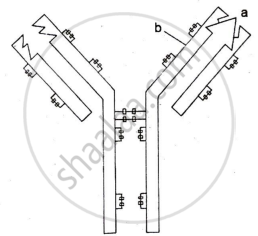
- What does the above diagram illustrate?
- Name the labelled ‘a’ and ‘b’.
- Name the type of cells that produces this molecule.
The barriers in the innate immunity are given in the following table. Identify a, b, c and d.
| Type of barrier | Barrier |
| (i) Physical | (a) Skin, a |
| (ii) Physiological | (b) b, in the eye |
| (iii) c | (c) Interferon |
| (iv) Cellular | (d) WBC, d |
Name the type of immunity that is provided by injecting microbes deliberately during immunization into the human body.
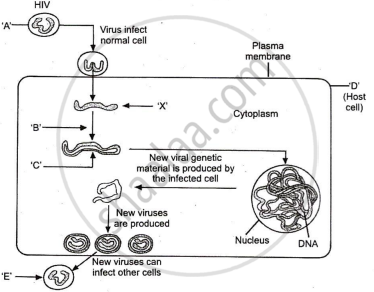
Study the diagram showing replication of HIV in humans and answer the following questions accordingly:
- Write the chemical nature of the coat ‘A’.
- Name the enzyme ‘B’ acting on ‘X’ to produce molecule ‘C’. Name ‘C’.
- Mention the name of the host cell ‘D’ the HIV attacks first when it enters into the human body.
- Name the two different cells the new viruses ‘E’ subsequently attack.
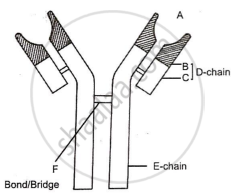
Identify A, D, E and F in the diagram of an antibody molecule given below:
Name the group of viruses responsible for causing AIDS in humans.
Name the two types of immune responses in humans.
Name the cells that act as HIV factory in humans when infected by HIV.
When does a human body elicit an anamnestic response?
Name any two types of cells that act as ‘cellular barriers’ to provide innate immunity in humans.
Why sharing of injection needles between two individuals is not recommended?
State two different roles of spleen in the human body.
How do cellular barriers and cytokine barriers provide innate immunity in humans?
Suggest a molecular diagnostic procedure that detects HIV in a suspected AIDS patient.
Mention one application for the following:
Passive immunization
Mention one application for the following:
Antihistamine
Mention one application for the following:
Colostrum
Mention one application for the following:
Cytokinin-barrier
Name the type of immunity the colostrum provides to a new-born baby. Write giving an example where this type of immunity should be provided to a person.
Suggest a molecular diagnostic procedure that detects HIV in a suspected AIDS patient.
Name two types of mental illness and give one symptom of each.
Due to consumption of alcohol over a long period of time a person suffers from the continuous mild pain in the stomach. Why this happens?
Mention some important reasons for drug addiction.
Enumerate any three causes of mental illness.
Name any three diseases which are usually caused due to tobacco addiction.
What happens due to the continuous and excessive intake of alcohol?
Name one plant and the addictive drug extracted from its latex. How does the drug affect the human body?
Name an opioid drug and its source plant.
How does the drug affect human body?
Name the plant source of ganja.
How does ganja affect the body of the abuser?
Write the source and the effect on the human body of the following drug:
Morphine
Write the source and the effect on the human body of the following drug:
Cocaine
Write the source and the effect on the human body of the following drug:
Marijuana
Name the plant source of the drug popularly called ‘smack’. How does it affect the body of the abuser?
How are morphine and heroin related?
Mention the effects of morphine on the human body.
Mention the effects of heroin on the human body.
Name the drug obtained from Erythroxylum coca and write its effects on the human body.
Name the antibody which is most effective in allergies.
SHORT/LONG ANSWER TYPE QUESTIONS
Name any one human bacterial disease. Give its biological name and one diagnostic feature.
What are carcinogens?
Give two examples of carcinogens.
Why the disease caused by carcinogens is so much dreaded?
How does human skin act as a chemical barrier against bacterial attacks?
Why is it unusual to get the same infectious disease more than once?
Why does a cut in the skin become red, swollen, warm, and painful?
What does the abbreviation AIDS stand for?
How is AIDS transmitted?
Give the preventive measures of AIDS.
List any three high-risk groups of people at risk for AIDS.
With reference to the immune system, there are two types of lymphocytes, T-cells and B-cells. Why are these so named?
What are the functions of T-cells?
What are the functions of B-cells?
Name the major cells of the immune system. Give a detailed account of their response to an antigen attack in humans.
Describe the various defence mechanism which are set off when you cut yourself with a dirty knife.
Write a short note on vaccination.
Write a short note on the inflammatory response.
Write a short note on allergy.
Write a short note on the immune response.
Write a short note on vaccination.
Write a short note on antibodies.
Write a short note on monoclonal antibodies.
Describe in chronological order the events that befall a microbe once it has gained access into the body of the host.
Give an account of the preventive measures taken to avoid the spread of contagious diseases.
Certain drugs when taken for a prolonged period cause addiction. Discuss the cause, withdrawal symptoms and prevention of addiction due to any one drug.
Milk or a fatty snack taken prior to the ingestion of alcohol decreases the rate of intoxication. What is the mechanism of this effect?
Write a short note on hallucinogens.
Write a short note on alcoholism.
Write a short note on addiction.
Write a short note on tranquillisers.
Write a short note on narcotics.
Write a short note on sedatives.
List four reasons to justify the ban on intake of cannabinoids by sports persons.
In your locality, if a person is addicted to alcohol, what kind of behavioural changes do you observe in that person? Suggest measures to over come the problem.
Drugs like LSD, barbiturates, amphetamines, etc., are used as medicines to help patients with mental illness. However, excessive doses and abusive usage are harmful. Enumerate the major adverse effects of such drugs in humans.
Nootan solutions for Biology [English] Class 12 ISC 10 Human Health and Diseases BOARD EXAMINATION QUESTIONS [Pages 432 - 433]
Name the causative agent for the following disease:
Malaria
Name the causative organisms for the following disease:
Elephantiasis
Name the causative agent for the following disease:
Typhoid
Name the causative organisms for the following disease:
Amoebiasis
Name the causative agent for the following disease:
Carcinoma
Name the causative agent for the following disease:
Ringworm
Name the causative agent for the following disease:
Dengue fever
Name the causative agent for the following disease:
Pneumonia
Name the symptoms for the following disease:
Malaria
Name the symptoms for the following disease:
Filaria (Elephantiasis)
Name the symptoms for the following disease:
Typhoid
Name the symptoms for the following disease:
Amoebiasis
Name the symptoms for the following disease:
Carcinoma
Name the symptoms for the following disease:
Ringworm
Name the symptoms for the following disease:
Dengue fever
Name the symptoms for the following disease:
Pneumonia
Name the cure for the following disease:
Malaria
Name the cure for the following disease:
Filaria (Elephantiasis)
Name the cure for the following disease:
Typhoid
Name the cure for the following disease:
Amoebiasis
Name the cure for the following disease:
Carcinoma
Name the cure for the following disease:
Ringworm
Name the cure for the following disease:
Dengue fever
Name the cure for the following disease:
Pneumonia
Mention any four methods involved in the treatment of cancer.
Define metastasis.
Suggest three early diagnostic symptoms or danger signals of cancer.
Distinguish between active immunity and passive immunity.
Write a short note on AIDS.
Write a short note on interferons.
Write a short note on vectors.
Write a short note on stem cells.
Give an account of the preventive measures taken to avoid the spread of contagious diseases.
Mention the factors influencing infections caused by diseases.
Give a brief account of the immune system.
How does the human body protect itself from infection?
Enlist the basic modes of transmission of AIDS.
Define organ transplantation.
Mention a precaution which must be taken for organ transplantation procedure.
What are Koch’s postulates?
Why are Koch’s postulates not applicable to viruses?
Explain the role of stem cells in medical treatment.
Explain the mechanism of action of T-cells to antigens.
Explain the structure of a typical antibody molecule.
Write a short note on epilepsy.
Write a short note on psychosis.
What are the activities of Community Health Services?
What is addiction?
List four reasons for drug addiction.
Briefly explain four main methods of treatment of mental illness.
What is mental illness?
Briefly explain four main methods of treatment of mental illness.
What are the activities of Community Health Services?
Give one significant difference between primary lymphoid organs and secondary lymphoid organs. Give one example of each.
Mention some important reasons for drug addiction.
Write the scientific name of the causative agent of the following disease:
Typhoid
Cancer causing agents are called ______.
A person in good health visits a garden where flowers are in bloom. While returning from the garden, he suddenly starts sneezing and wheezing.
- Name and define the response of the person’s immune system in the above case.
- State the type of antibody which is produced against such a response.
Nootan solutions for Biology [English] Class 12 ISC 10 Human Health and Diseases HIGHER ORDER THINKING SKILLS QUESTIONS (HOTS) [Pages 433 - 434]
Why mother’s milk is considered very essential for the newborn infant?
In cases of snakebites, what type of the injection is given to the patients?
Name the type of immunity that is present at the time of birth in humans. Explain any two ways by which it is accomplished.
If an individual failed to develop a thymus because of a genetic defect, what would happen to humoral and cell-mediated immunity?
Would you predict patients with AIDS to develop fever in response to an infection?
Why do we have running noses when we have colds?
What would happen to the immune system if the thymus gland is removed from the body of a person?
Identify A, B, C and D in the following table:
| Scientific name of the source plant | Drug | Harmful effects/Human body part affected |
| 1. Papaver somniferum | A | Depressant/slows body function |
| 2. Cannabis sativa | Cannabinoids | B |
| 3. Erythroxylum coca | C | D |
Why are tobacco, smoking associated with a rise in blood pressure and emphysema (oxygen deficiency in the body)? Explain.
Why do sports persons take the drugs, although they are ban to them?
Why is using tobacco in any form injurious to the health? Explain.
Why do sports persons often fall a victim to cocaine addiction?
Write the scientific name of the source plant of the drugs, marijuana and hashish and mention their effect on the human body.
What is ‘Withdrawal Syndrome’?
List any two symptoms that Withdrawal Syndrome is characterised by.
Nootan solutions for Biology [English] Class 12 ISC 10 Human Health and Diseases NCERT EXERCISES [Pages 434 - 435]
In which way has the study of biology helped us to control infectious diseases?
How does the transmission of the following disease take place?
Amoebiasis
How does the transmission of the following disease take place?
Malaria
How does the transmission of the following disease take place?
Ascariasis
How does the transmission of the following disease take place?
Pneumonia
How is a cancerous cell different from a normal cell?
Explain what is meant by metastasis.
What are the various public health measures, which you would suggest as safeguard against infectious diseases?
What measure would you take to prevent water-borne diseases?
Discuss with your teacher what does ‘a suitable gene’ means, in the context of DNA vaccines.
Name the primary lymphoid organs.
Name the secondary lymphoid organs.
The following is well-known abbreviation, which have been used in this chapter. Expand to its full form:
MALT
The following is well-known abbreviation, which have been used in this chapter. Expand to its full form:
CMI
The following is well-known abbreviation, which have been used in this chapter. Expand to its full form:
AIDS
The following is well-known abbreviation, which have been used in this chapter. Expand to its full form:
NACO
The following is well-known abbreviation, which have been used in this chapter. Expand to its full form:
HIV
Differentiate the following and give examples.
Innate and acquired immunity
Distinguish between active immunity and passive immunity.
Draw a well-labelled diagram of an antibody molecule.
What are the various routes by which transmission of human immunodeficiency virus takes place?
What is the mechanism by which the AIDS virus causes deficiency of immune system of the infected person?
List the harmful effects caused by alcohol/drug abuse.
Do you think that friends can influence one to take alcohol/drugs? If yes, how may one protect himself/herself from such an influence?
Why is it that once a person starts taking alcohol or drugs, it is difficult to get rid of this habit? Discuss it with your teacher.
In your view, what motivates youngsters to take to alcohol or drugs and how can this be avoided?
Nootan solutions for Biology [English] Class 12 ISC 10 Human Health and Diseases VALUE BASED QUESTIONS [Pages 435 - 439]
What are the various public health measures, which you would suggest as safeguard against infectious diseases?
A patient showed symptoms of sustained high fever, stomach pain and constipation, but no blood clot in stools. Name the disease and its pathogen. Write the diagnostic test for the disease. How does the disease get transmitted?
A patient showed symptoms of constipation, abdominal pain and stools with excess mucus and blood clots. Name the disease and its pathogen. Where do these pathogens live in the victim’s body? Name the mechanical carrier that transmits this parasite.
How are the symptoms of chikungunya different from malaria and dengue?
A heavily bleeding and bruised road accident victim was brought to a nursing home. The doctor immediately gave him an injection to protect him against a deadly disease.
- Write what did the doctor inject into the patient’s body.
- How do you think this injection would protect the patient against the disease?
- Name the disease against which this injection was given and the kind of immunity it provides.
Community Service department of your school plans a visit to a slum area near the school with an objective to educate the slum dwellers with respect to health and hygiene.
- Why is there a need to organize such visits?
- Write the steps you will highlight, as a member of this department, in your interaction with them to enable them to lead a healthy life.
The given table shows certain diseases, their causative organisms and symptoms. Fill the gaps:
| Name of Disease | Causative Organism | Symptoms |
| (i) Ascariasis | Ascaris | ... |
| (ii) ... | Trichophyton | Appearance of dry, scaly lesions on various parts of the body |
| (iii) Typhoid | ... | High fever, weakness, headache, stomach pain, constipation |
| (iv) Pneumonia | Streptococcus pneumoniae | ... |
| (v) Filariasis | ... | Inflammation in lower limbs |
| (vi) ... | Entamoeba histolytica | Profuse diarrhoea with blood and mucus; flatulence and abdominal cramping |
Name a human disease, its causal organism, symptoms (any three) and vector, spread by intake of water and food contaminated by human faecal matter.
Name the respective forms in which the malarial parasite gains entry into the human body.
Name the respective forms in which the malarial parasite gains entry into the body of female Anopheles.
Tell the different stages of the life cycle of the malarial parasite in the human body.
Name the hosts where the sexual and the asexual reproduction of malarial parasite occur respectively.
Why does the victim show symptoms of high fever?
More and more children in metro cities of India suffer from allergies and asthma. Why?
When you go to a new place and suddenly you started sneezing, wheezing for no explained reason, and when you went away, your symptoms disappeared. Why it is so?
A student on a school trip started sneezing and wheezing soon after reaching the hill station for no explained reasons. But, no return to the plains, the symptoms disappeared. What is such a response called? How does the body produce it?
A young boy when brought a pet dog home started to complain of watery eyes and running nose. The symptoms disappeared when the boy was kept away from the pet.
- Name the type of antibody and the chemicals responsible for such a response in the boy.
- Mention the name of any one drug that could be given to the boy for immediate relief from such a response.
A student on a school picnic to a park on a windy day started sneezing and having difficulty in breathing on reaching the park. The teacher enquired whether the student was allergic to something.
- What is an allergy?
- Write the two unique characteristics of the system involved in the response observed in the student.
HIV/AIDS infected persons are not isolated from family and society. A person in your colony has recently been diagnosed with AIDS. People residents in the colony want him to leave the colony for the fear of spread of AIDS.
- Write your view on the situation, giving reasons.
- List the possible preventive measures that you would suggest to the residents of your locality in a meeting organized by you so that they understand the situation.
- Write the symptoms and the causative agent of AIDS.
List any two situations when a medical doctor would recommend injection of pre-formed antibodies into the body of a patient. Name this kind of immunization and mention its advantages.
Name the kind of immunity attained when instead of antibodies weakened antigens are introduced into the body.
Why is it that the organs cannot be taken from just anybody? Why is that the doctors check?
A heavily bleeding and bruised road accident victim was brought to a nursing home. The doctor immediately gave him an injection to protect him against a deadly disease.
- Write what did the doctor inject into the patient’s body.
- How do you think this injection would protect the patient against the disease?
- Name the disease against which this injection was given and the kind of immunity it provides.
When my friend Dr. Ashok visited a slum area to guide the people residing there how to remain healthy, found a young person very weak. He diagnosed that immune system of the young one is suppressed. He advised him for ELISA test which was found positive to a pathogen. As a biology student can you answer the following questions:
- Name the disease the person is suffering from.
- What is the causative organism?
- Which cells of the body are affected by the pathogen?
Many microbial pathogens enter our gut along with food. In your opinion what are the preventive barriers to protect the body from such pathogens? What type of immunity do you observe in this case?
Ruma shows strong unusual hypersensitive reactions when exposed to certain substances present in the air. Can you identify the condition? Name the cells responsible for such reactions.
It is generally observed that the children who had suffered from chickenpox in their childhood may not contract the same disease in their adulthood. Explain, giving reasons, the basics of such immunity in an individual. Name this kind of immunity.
The immune system of a person is suppressed. In the ELISA test, he was found positive to a pathogen.
- Name the disease the patient is suffering from.
- What is the causative organism?
- Which cells of body are affected by the pathogen?
On a visit to a hill station, one of your friend suddenly became unwell and felt uneasy.
- List two symptoms you would look for to term it to be due to allergy.
- Explain the response of the body to an allergen.
- Name two drugs that can be recommended for immediate relief.
During a school trip to ‘Rohtang Pass’, one of your classmate suddenly developed ‘altitude sickness’. But, she recovered after sometime.
- Mention one symptom to diagnose the sickness.
- What caused the sickness?
- How could she recover by herself after sometime?
- What precaution(s) would you recommend to a patient requiring repeated blood transfusion?
- If the advise is not followed by the patient, there is an apprehension that the patient might contract a disease that would destroy the immune system of his/her body. Explain with the help of schematic diagram only how the immune system would get affected and destroyed.
In your view, what motivates youngsters to take to alcohol or drugs and how can this be avoided?
Why is there a fear amongst the guardians that their adolescent wards may get trapped in drug/alcohol abuse?
‘Prevention is better than cure’ is an apt slogan to safeguard adolescents from drug abuse. List any six steps that could be taken in this regard.
A team of students are preparing to participate in the interschool sports meet. During a practice session you find some vials with labels of certain cannabinoids.
- Will you report to the authorities? Why?
- Name of a plant from which such chemicals are obtained.
- Write the effect of these chemicals on human body.
Do you support ‘Dope’ test being conducted on sportspersons participating in a prestigious athletic meet? Give three reasons in support of your answer.
An active member of an awareness group conducts regular programmes to sensitise public against alcoholism amongst youth a serious health hazard in his locality. Identify the values, this member of the group is trying to propagate amongst the people in his locality.
Prior to a sports event, blood and urine samples of sports persons are collected for drug tests.
- Why is there a need to conduct such tests?
- Name the drugs the authorities usually look for.
- Write the generic names of two plants from which these drugs are obtained.
You have a friend whose parents are too indulgent in his/her daily affairs. They think him/her to be still young which makes him/her sad and is upset all the time. As he/she feels that the parents should give him/her opportunity to take independent decision on some issues.
- Would you support your friend and why?
- Write the characteristics of this age group.
- List two curative measures.
The outline structure of a drug is given below:

- Which group of drugs does this represent?
- What are the modes of consumption of these drugs?
- Name the organ of the body which is affected by consumption of these drugs.
A group of youth were having a ‘rave party’ in an isolated area and was raided by police. Packets of ‘smack’ and syringes with needles were found littered around.
- Why is taking ‘smack’ considered an abuse?
- Write the chemical name of ‘smack’ and the name of its source plant.
- Syringes and needles used by the youth for taking the drug could prove to be very fatal. Why?
Nootan solutions for Biology [English] Class 12 ISC 10 Human Health and Diseases DIFFERENTIATE BETWEEN [Page 440]
Distinguish between active immunity and passive immunity.
Differentiate between active acquired immunity and passive acquired immunity.
Differentiate between antibodies and interferons.
Differentiate between antigens and antibodies.
Differentiate between B-cells and T-cells.
Differentiate between a benign tumor and a malignant tumor.
Differentiate between cannabinoids and barbiturates.
Differentiate between carcinomas and sarcomas.
Differentiate between cellular immune response and humoral immune response.
Differentiate between communicable and non-communicable diseases.
Differentiate between humoral and cell-mediated immunity.
Differentiate between autoimmune disease and immunodeficiency disease.
Differentiate between narcotics and tranquillisers.
Differentiate between neuroses and psychoses.
Differentiate between non-specific and specific immunity.
Differentiate between tranquillisers and sedatives.
Solutions for 10: Human Health and Diseases
Nootan solutions for Biology [English] Class 12 ISC chapter 10 - Human Health and Diseases
Shaalaa.com has the CISCE Mathematics Biology [English] Class 12 ISC CISCE solutions in a manner that help students grasp basic concepts better and faster. The detailed, step-by-step solutions will help you understand the concepts better and clarify any confusion. Nootan solutions for Mathematics Biology [English] Class 12 ISC CISCE 10 (Human Health and Diseases) include all questions with answers and detailed explanations. This will clear students' doubts about questions and improve their application skills while preparing for board exams.
Further, we at Shaalaa.com provide such solutions so students can prepare for written exams. Nootan textbook solutions can be a core help for self-study and provide excellent self-help guidance for students.
Concepts covered in Biology [English] Class 12 ISC chapter 10 Human Health and Diseases are Health, Human Diseases > Communicable / Infectious Diseases, Modes of Transmission of Diseases through Pathogens, Diseases Caused by Bacteria > Typhoid, Diseases Caused by Bacteria > Pneumonia, Diseases Caused by Bacteria > Diphtheria, Diseases Caused by Bacteria > Plague, Diseases Caused by Viruses > Common Cold, Diseases Caused by Viruses > Dengue Fever, Diseases Caused by Viruses > Chikungunya, Diseases Caused by Protozoa > Malaria, Diseases Caused by Protozoa > Amoebiasis (Amoeboic dysentery), Diseases Caused by Helminths > Ascariasis, Diseases Caused by Helminths > Filariasis (Elephantiasis), Diseases Caused by Fungi > Ringworm, Human Diseases > Non-communicable or Non-infectious Diseases, Cancer, Types of Cancer, Causes of Cancer, Organs Commonly Affected by Cancer, Chemical Carcinogens and their Target Tissues, Symptoms and Diagnosis of Cancer, Prevention/Treatment of Cancer, Pathogens, Portals of Entry, Barriers to Invasion by Pathogens, The Body's Defence Mechanisms, Protective Surface Phenomenon, Non-Specific Cellular Responses, The Immune System, Lymphoid Organs, Production of Lymphocytes, Cellular Immune Response (Response of T-Cells to Antigens), Humoral Immune Response (Response of B-Cells to Antigens), Antigens, Antibodies, Adjunctive Functions of Antibodies, Mechanism of Action (Effector Mechanisms), Immunity, Types of Immunity > Innate Immunity, Types of Immunity > Acquired Immunity, Properties of the Human Immunoglobulins, Vaccines, Monoclonal Antibodies, Interferons, Autoimmunity, Immunodeficiency Disorders, Organ Transplants and Immunosuppression, Kidney Transplantation, Role of Stem Cells in Medical Treatment, Concept of Adolescence, Addiction, Tobacco, Health Hazards of Tobacco Smoking: Key Facts, Addiction > Alcohol, Common Misconceptions about Alcoholism, Impact of Alcohol Use and Abuse on Health, Major Risks of Alcoholism, Symptoms of Alcohol Intoxication, Cannabis/Cannabinoids, Drugs, Types and Effects of Psychoactive Drugs, Hallucinogens, Drug Abuse, Allergies, Acquired Immuno Deficiency Syndrome (AIDS).
Using Nootan Biology [English] Class 12 ISC solutions Human Health and Diseases exercise by students is an easy way to prepare for the exams, as they involve solutions arranged chapter-wise and also page-wise. The questions involved in Nootan Solutions are essential questions that can be asked in the final exam. Maximum CISCE Biology [English] Class 12 ISC students prefer Nootan Textbook Solutions to score more in exams.
Get the free view of Chapter 10, Human Health and Diseases Biology [English] Class 12 ISC additional questions for Mathematics Biology [English] Class 12 ISC CISCE, and you can use Shaalaa.com to keep it handy for your exam preparation.
