Topics
Sexual Reproduction in Flowering Plants
- Flower
- Pre-fertilisation in Flowering Plant: Structures and Events
- Structure and Development of Anther
- Microsporogenesis
- Structure and Development of Male Gametophyte
- Pollen Viability and Storage
- Structure and Development of Ovule
- Megasporogenesis
- Development of Female Gametophyte or Embryo Sac
- Pollination
- Autogamy
- Geitonogamy
- Cross-pollination
- Agents of Pollination
- Anemophily
- Hydrophily
- Animal-Mediated Pollination (Zoophily)
- Outbreeding Devices
- Pollen Pistil Interaction
- Artificial Hybridization or Artificial Fertilization
- Double Fertilization and Triple Fusion
- Events in Sexual Reproduction > Post-Fertilization Structures and Events
- Endosperm
- Dicotyledonous Embryo
- Monocotyledonous Embryo
- The Seed
- Apomixis
- Polyembryony
Reproduction
Reproduction in Organisms
Human Reproduction
- Human Reproduction
- The Male Reproductive System
- The Female Reproductive System
- Gametogenesis
- Spermatogenesis
- Structure of Sperm
- Spermiogenesis
- Oogenesis
- Menstrual Cycle (Ovarian Cycle)
- Major Events of Menstrual Cycle
- Menstrual Hygiene
- Fertilization in Human
- Implantation in Human
- Pregnancy and Embryonic Development
- Parturition (Birth) in Human
- Lactation in Human
Genetics and Evolution
Reproductive Health
- Concept of Reproductive Health
- Population Explosion and Control Measures
- Birth Control
- Natural Contraceptive Methods
- Artificial Contraceptive Methods
- Induced Abortion or Medical Termination of Pregnancy (MTP)
- Sexually Transmitted Diseases (STD) or Sexually Transmitted Infections (STI)
- Infertility
- Assisted Reproductive Technology (ART)
- Amniocentesis
- Genetic Counselling
Biology and Human Welfare
Environmental Issues
- Controlling Vehicular Air Pollution: a Case Study of Delhi
- Effects of Domestic Sewage and Industrial Effluents on Water
- Solid Wastes
- Radioactive Wastes
- Greenhouse Effect and Climate Change
- Ozone Depletion in the Stratosphere
- Degradation by Improper Resource Utilisation and Maintenance
- Radioactive Waste Management and E-waste
Principles of Inheritance and Variation
- Heredity and Variation
- Gregor Johann Mendel – Father of Genetics
- Mendel's Experiments on Inheritance
- Monohybrid Cross
- Punnett Square
- Back Cross and Test Cross
- Mendel's Laws > The Law of Dominance
- Mendel's Laws > The Law of Segregation (Law of Purity of Gametes)
- Exceptions to Mendel's Principles > Incomplete Dominance
- Exceptions to Mendel's Principles > Co-Dominance
- Dihybrid Cross
- Mendel's Laws > The Law of Independent Assortment
- Chromosomal Theory of Inheritance
- Linkage and Recombination
- Polygenic Inheritance
- Exceptions to Mendel's Principles > Pleiotropy
- Sex Determination
- Sex Determination in Humans
- Sex Determination in Honey Bees
- Mutations
- Pedigree Analysis
- Mendelian Disorders in Humans
- Chromosomal Disorders or Abnormalities
Biotechnology
Molecular Basis of Inheritance
- Deoxyribonucleic Acid (DNA)
- Structure of Polynucleotide Chain
- Packaging of DNA Helix
- Search for Genetic Material
- Griffith’s Experiment
- Avery, McCarty and MacLeod’s Experiment
- The Hershey-Chase Experiment
- Properties of Genetic Material
- The RNA World
- DNA Replication
- Conservative Replication
- Dispersive Replication
- Semi-Conservative Replication
- Meselson and Stahl’s Experiment
- Enzymes used in DNA Replication
- Mechanism of DNA Replication
- Protein Synthesis
- Reverse Transcription (Teminism)
- Transcription
- Transcription Unit and the Gene
- Process of Transcription in Bacteria
- Process of Transcription in Eukaryotes
- Genetic Code
- Characteristics of the Genetic Code
- Mutations and Genetic Code
- Transfer RNA (tRNA)
- Translation
- Regulation of Gene Expression
- The Lac Operon
- Human Genome Project
- DNA Fingerprinting
Ecology
Evolution
- Origin of Life on Earth
- Urey and Miller’s Experiment
- Evolution of Life Forms - a Theory
- Evidences Supporting the Theory of Evolution
- Adaptive Radiation
- Theories and Mechanism of Evolution
- Theories and Mechanism of Evolution
- Hardy Weinberg’s Principle
- Types of Selection
- Brief Account of Evolution
- Human Evolution
Human Health and Diseases
- Concept and Determinants of Health
- Modes of Transmission of Diseases through Pathogens
- Diseases Caused by Bacteria > Typhoid
- Diseases Caused by Bacteria > Pneumonia
- Diseases Caused by Viruses > Common Cold
- Diseases Caused by Protozoa > Malaria
- Diseases Caused by Protozoa > Amoebiasis (Amoeboic dysentery)
- Diseases Caused by Helminths > Ascariasis
- Diseases Caused by Helminths > Filariasis (Elephantiasis)
- Diseases Caused by Fungi > Ringworm
- Prevention and Control of Infectious Diseases
- Immunity
- Types of Immunity > Innate Immunity
- Types of Immunity > Acquired Immunity
- Vaccination and Immunization
- Allergies
- Autoimmunity
- The Immune System
- Acquired Immuno Deficiency Syndrome (AIDS)
- Cancer
- Causes of Cancer
- Symptoms and Diagnosis of Cancer
- Prevention/Treatment of Cancer
- Drugs and Alcohol Abuse
- Addiction and Dependence
- Effects of Drug and Alcohol Abuse
- Prevention and Control of Drugs and Alcohol Abuse
Strategies for Enhancement in Food Production
Microbes in Human Welfare
Biotechnology - Principles and Processes
Biotechnology and Its Application
Organisms and Populations
- Organisms and Their Environment
- Population and Population Attributes
- Population Growth
- Life History Variation
- Population Interactions
- Negative Interactions > Predation
- Negative Interactions > Competition
- Negative Interactions > Parasitism
- Positive Interactions > Commensalism
- Positive Interactions > Mutualism (Symbiosis)
Ecosystem
Biodiversity and Its Conservation
CISCE: Class 12
Introduction
The use of drugs and alcohol, especially among youth, is a cause of concern as it results in many harmful effects. Proper education and guidance enable youth to safeguard themselves against these dangerous behaviour patterns.
The drugs commonly abused are opioids, cannabinoids, and coca alkaloids. The majority are obtained from flowering plants; some are obtained from fungi.
CISCE: Class 12
Opioids
- Opioids are drugs that bind to specific opioid receptors present in the central nervous system and gastrointestinal tract.
- Heroin (commonly called smack) is chemically diacetylmorphine, a white, odourless, bitter crystalline compound.
- Heroin is obtained by acetylation of morphine, which is extracted from the latex of the poppy plant Papaver somniferum.
- Mode of intake: snorting and injection.
- Heroin is a depressant and slows down body functions.
- Morphine is a very effective sedative and painkiller, useful in patients who have undergone surgery.
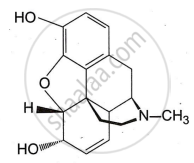
Morphine: chemical structure
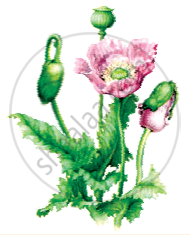
Opium poppy
CISCE: Class 12
Cannabinoids
- Cannabinoids are a group of chemicals that interact with cannabinoid receptors present principally in the brain.
- Natural cannabinoids are obtained from the inflorescences of the plant Cannabis sativa.
- The flower tops, leaves, and resin of the cannabis plant are used in various combinations to produce marijuana, hashish, charas, and ganja.
- Mode of intake: inhalation and oral ingestion.
- Known for their effects on the body's cardiovascular system.
- Cannabinoids are also being abused by some sportspersons.
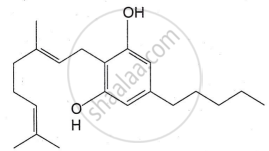
Structure of a Cannabinoid molecule

Leaves of Cannabis sativa
CISCE: Class 12
Coca Alkaloids (Cocaine)
- Cocaine is obtained from the coca plant, Erythroxylum coca, native to South America.
- It interferes with the transport of the neurotransmitter dopamine.
- Commonly called coke or crack, usually snorted.
- Has a potent stimulating action on the CNS, producing a sense of euphoria and increased energy.
- Excessive dosage causes hallucinations.
CISCE: Class 12
Hallucinogenic Plants
- Atropa belladonna and Datura are well-known plants with hallucinogenic properties.
- Several plants, fruits, and seeds with hallucinogenic properties have been used for hundreds of years in folk medicine, religious ceremonies, and rituals all over the globe.
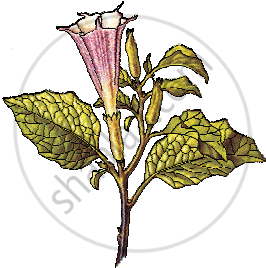
Flowering branch of Datura
CISCE: Class 12
Abused Medicinal Drugs
- Drugs such as barbiturates, amphetamines, benzodiazepines, lysergic acid diethylamide (LSD), and similar drugs, normally used to help patients cope with mental illnesses like depression and insomnia, are often abused.
- When these are taken for a purpose other than medicinal use, or in amounts/frequency that impair physical, physiological, or psychological functions, it constitutes drug abuse.
CISCE: Class 12
Misuse in Sports: Anabolic Steroids
Some sportspersons misuse narcotic analgesics, anabolic steroids, diuretics, and certain hormones to increase muscle strength, bulk, aggressiveness, and athletic performance.
Side Effects of Anabolic Steroids:
| In Males | In Females |
|---|---|
| Acne | Masculinisation |
| Increased aggressiveness | Increased aggressiveness |
| Mood swings, depression | Mood swings, depression |
| Reduction in size of testicles | Abnormal menstrual cycles |
| Decreased sperm production | Excessive hair on face and body |
| Gynaecomastia (breast enlargement) | Enlargement of clitoris |
| Premature baldness | Deepening of voice |
| Enlargement of prostate gland | — |
| Kidney and liver dysfunction | Kidney and liver dysfunction |
- Effects may be permanent with prolonged use.
- In adolescents (both sexes): severe acne + premature closure of growth plates → stunted growth.
CISCE: Class 12
Tobacco and Nicotine
Used by humans for over 400 years; consumed by smoking, chewing, or as snuff. Contains nicotine, an alkaloid.
Mechanism:
Nicotine stimulates the adrenal glands → releases adrenaline and noradrenaline → raises blood pressure and increases heart rate.
Effects of Smoking:
- Cancers of the lung, urinary bladder, and throat
- Bronchitis, emphysema, coronary heart disease, gastric ulcer
- Increases CO content in blood → reduces haemoglobin oxygen → oxygen deficiency
Effects of Tobacco Chewing:
Increased risk of cancer of the oral cavity
Note: Cigarette packets carry a statutory warning. Any addict requires counselling and medical help to quit.
CISCE: Class 12
Adolescence and Drug/Alcohol Abuse
- Smoking paves the way to hard drugs.
- Habits such as smoking, taking drugs, or drinking alcohol are more likely to be taken up during adolescence.
- Parenting that combines high levels of nurturance with consistent discipline has been associated with a lowered risk of substance abuse.
CISCE: Class 12
Key Points: Drugs and Alcohol Abuse
The use of drugs and alcohol, particularly among youth, poses significant health risks but can be mitigated through proper education and consistent, nurturing parenting.
- Opioids, such as heroin (derived from Papaver somniferum), bind to receptors in the central nervous system and gastrointestinal tract to act as depressants, while morphine is primarily used as a sedative and painkiller.
- Cannabinoids interact with receptors primarily in the brain and are obtained from Cannabis sativa; they are known to affect the cardiovascular system and are sometimes abused by sportspersons.
- Coca Alkaloids (Cocaine) interfere with dopamine transport and act as potent CNS stimulants, which can induce euphoria and, in excessive doses, hallucinations.
- Hallucinogenic plants like Atropa belladonna and Datura have been utilised for centuries in various cultural and medicinal contexts for their mind-altering properties.
- Abused Medicinal Drugs (e.g., barbiturates, benzodiazepines, and anabolic steroids) and Tobacco (which releases adrenaline and increases heart rate) are frequently misused, leading to severe physical, psychological, and physiological impairments.
