Advertisements
Online Mock Tests
Chapters
2: Unit-2: Children and Women in Sports
3: Unit-3: Yoga as Preventive Measure for Lifestyle Disease
4: Unit-4: Physical Education and Sports for CWSN
▶ 5: Unit-5: Sports and Nutrition
6: Unit-6: Test and Measurement in Sports
Chapter 7: Unit-7: Physiology and Injuries in Sports
Chapter 8: Unit-8: Biomechanics and Sports
Chapter 9: Unit-9: Psychology and Sports
Chapter 10: Unit-10: Training in Sports
Advertisements
Solutions for Chapter 5: Unit-5: Sports and Nutrition
Below listed, you can find solutions for Chapter 5 of CBSE Dr. Manu Sood for Physical Education [English] Class 12.
Dr. Manu Sood solutions for Physical Education [English] Class 12 5 Unit-5: Sports and Nutrition MULTIPLE CHOICE QUESTIONS [Pages 167 - 170]
Sugar, sweets, bread are rich sources of-
Carbohydrates
Fats
Proteins
Roughage
Sunlight is a source of-
Vitamin A
Vitamin B
Vitamin C
Vitamin D
'Vitamin K' is essential for-
Normal coagulation of blood
Providing nourishment to body
Prevention of disease
Metabolism of the body
Deficiency of Vitamin D causes-
Beri-Beri
Scurvy
Rickets
Night blindness
All over the world people engaging in hard physical work live mainly on:
carbohydrate-rich diet
fat-packed diet
protein diet
fat-free diet
Balanced diet is important for:
Disease Prevention
Meeting Nutritional Needs
Immune system
All the above
Fats and oils come under:
protective or regulatory foods
energy giving foods
bodybuilder group
routine foods
Which of the following is not a Macro nutrient?
Fats
Carbohydrates
Proteins
Minerals
Carbohydrates contain elements of:
Hydrogen and oxygen
carbon, hydrogen & oxygen
carbon and oxygen
Nitrogen, carbon & oxygen
Glucose is a type of:
Complex carbohydrates
Simple carbohydrates
Fats
Proteins
Starch in Potatoes is an example of:
Complex carbohydrates
Simple carbohydrates
Fats
Proteins
1 gram of fat provides:
3 Kcal
4 Kcal
5 Kcal
9 Kcal
They are called as building blocks of body:
Carbohydrates
Proteins
Vitamins
Fats
Which of the following is a water-soluble vitamin?
Vitamin A
Vitamin B
Vitamin D
Vitamin K
This vitamin is essential for good eyesight:
Vitamin A
Vitamin D
Vitamin K
Vitamin E
Lack of this vitamin affects the gums, can cause scurvy and swelling in joints:
Vitamin C
Vitamin D
Vitamin K
Vitamin E
This mineral is essential for health of bones and teeth:
Sodium
Potassium
Calcium
Phosphorus
Iron is a part of:
trace minerals
macro minerals
vitamins
carbohydrate
A balanced diet has proteins, fats and carbohydrates in a ratio of:
1 : 2 : 4
2 : 1 : 3
1 : 2 : 3
1 : 1 : 4
Which of the following is a macro mineral?
Iodine
Iron
Copper
Calcium
Which of the following is a Micro nutrient?
Carbohydrates
Fats
Water
Vitamins
Which is not a Micronutrient?
Minerals
Vitamins
Water
Protein
Which among the following is not a micronutrient?
Mineral
Vitamin
Protein
None of the above
The component present in sugar is ______.
Fat
Protein
Vitamin
Carbohydrate
Micronutrients include:
Vitamins
Minerals
Both Vitamins and Minerals
Carbohydrates
Riboflavin is the scientific name of which vitamin?
Vitamin B2
Vitamin C
Vitamin E
Vitamin D
Which of the followings is known as Pyridoxine?
Vitamin B1
Vitamin B2
Vitamin B3
Vitamin B6
Vitamin B Complex consists of:
8 Vitamins
10 Vitamins
3 Vitamins
2 Vitamins
Out of the following, choose the vitamin which is water soluble:
Vitamin A
Vitamin B
Vitamin E
Vitamin K
______ is the example of macro mineral.
Phosphorus
Copper
Iodine
Iron
Vitamin B1 is also known a ______.
Thiamine
Niacin
Biotin
None of these
Which of the followings is not Vitamin B complex?
Vitamin B1
Vitamin B9
Vitamin B6
Vitamin B8
What is the other name of vitamin B2?
Thiamine
Niacin
Riboflavin
Pantothenic acid
The deficiency of ______ may cause goitre.
iron
copper
iodine
magnesium
Glucose, fructose, sucrose and maltose are called ______ carbohydrates.
complex
simple
saturated
unsaturated
Fats contain carbon, oxygen and hydrogen in the percentage of ______, ______ and ______ respectively.
50, 40, 10
60, 32, 8
70, 18, 12
76, 12, 12
Which one of the following is not the example of macro minerals?
Sodium
Potassium
Iron
Calcium
Which disease is caused by the deficiency of vitamin B3?
Beri-beri
Pellagra
Rickets
Night blindness
Which one of the following vitamins is helpful in the clotting of blood?
Vitamin E
Vitamin K
Vitamin A
Vitamin C
Anthocyanins give colour to:
roots
coffee
wheat
grapes
Oxalates are present in:
green leafy vegetables
bajra
nuts
spices
BMI between 25.0–29.9 is ______.
under weight
normal
overweight
obese
Healthy weight helps in lowering which disease:
Risk of heart disease
Diabetes
High blood pressure
All of the above
What is the full form of BMI?
Body Measurement Index
Body Minimum Index
Body Mass Index
Body Mass Indication
Intensive exercise burns off:
A large number of calories
A small number of calories
A moderate number of calories
None of the above
BMI value is denoted as:
kg/m2
cm/m2
mm/m2
m/m2
Which of the followings is not symptom of food intolerance?
Stomach pain
Vomiting
Breathing difficulty
Low blood sugar level
How can you dispel any myth about food?
By following social media
On the basis of scientific knowledge
By following TV advertisements
By asking others
The amount of each food group depends on:
The type of sport we play
The type of our training
The time of our training
All of the above
Symptoms like headache, vomiting, stomach pain and loose motion can occur because of:
Dieting
Food intolerance
Back ache
Lack of vitamins
Obesity occurs when we:
eat foods high in nutrients
take in more calories by eating than we burn by exercising
engage in strenuous exercise
develop healthy eating habits
Carrot and orange come under:
energy giving foods
body building foods
protective or regulatory foods
Normal foods
Balanced diet is related to:
Consuming right amount of vitamins
Consuming correct ratio of carbohydrates and fats
Consuming all the nutrients in right amount
Consuming excess of protein and minerals
______ refers to inability to digest a particular kind of food.
Food Myths
Food Intolerance
Food Tolerance
Healthy Food
______ helps in smooth elimination of stool or faeces.
Carbohydrates
Roughage
Minerals
Vitamins
Following are energy giving food except:
Cereals
Sugar and Jaggery
Fats and Oil
Yellow and Orange Fruits
During the morning assembly in the school, Anu fell unconscious. She was taken to nearby doctor. The doctor declared her malnourished and advised her to take balanced diet everyday. Balance diet consists of :
Macro Nutrients
Micro Nutrients
Both Macro Nutrients and Micro Nutrients
Non-Nutritive component
In which of the following food groups "Sugar and jaggery" come under?
Protective or regulatory foods
Energy giving foods
Body building foods
Immunity boosters foods
Nutrient is a ______ substance.
Biological
Chemical
Energy
Mechanical
Role of water in the human body is to ______.
Regulate body temperature
Give energy
Repair cell
Protect from disease
Which of the following are water-soluble vitamins?
Vitamin D and K
Vitamin B and C
Vitamin A and E
Vitamin A and C
What is an ideal weight to be reduced in one week?
250 gms to 500 gms
500 gms to 1 kg
1kg to 1.5 kg
1 kg to 2 kgs
Range of protein intake is ______.
5g/kg body weight to 1 g/kg body weight
1g/kg body weight to 2 g/kg body weight
2g/kg body weight to 3 g/kg body weight
3g/kg body weight to 4 g/kg body weight
Approximately, how much carbohydrate is required for strength dominant sports?
40%
55%
70%
80%
One gram of carbohydrate contains ______ Calories.
2
3
4
5
Which of the following is not the cause of food intolerance?
Toxins formation due to food poisoning
Absence of an enzyme
Roughage
Gluten
Which of the following is a macro mineral?
Iodine
Copper
Iron
Sodium
Fat soluble vitamins include the following vitamins except ______.
Vitamin-B
Vitamin-D
Vitamin-A
Vitamin-E
Body Mass Index is one of the common ways of assessing healthy body weight. Which of the following BMI ranges is considered for healthy weight?
25.0 - 29.0
30.0 - 34.9
18.5 - 24.9
35.0 - 39.9
For developing muscles, which nutrients should be increased in the diet?
Vitamins
Protein
Minerals
Carbohydrates
Which of the following are fat-soluble vitamins?
Vitamin d and k
Vitamin b and c
Vitamin a and e
Vitamins d, k, a and e
The scientific name of Vitamin ‘C’ is ______.
Betadine acid
Ascorbic acid
Acetonic acid
Hydrochloric acid
The XYZ school conducted a research in their school and checked the BMI of all students and they have shared their findings as depicted in the figure.
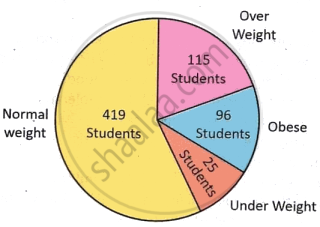
BMI between 25.0 to 29.9 is considered ______.
Normal weight
Obese-I
Obese
Overweight
Identify the type of deficiency/disease and write the name:

Anemia
Kwashiorkor
Beri-Beri
Obesity
Identify the type of deficiency/disease and write the name:
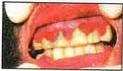
Cavities
Cracked Teeth
Tooth decay
Scurvy
Identify the type of deficiency/disease and write the name:
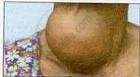
Goiter
Sore throat
Tonsillitis
Strep throat
Find the odd one out.
Calcium
Sulfur
Potassium
Iron
Dr. Manu Sood solutions for Physical Education [English] Class 12 5 Unit-5: Sports and Nutrition MATCH THE COLUMN [Pages 171 - 172]
Match List – I with List – II and select the correct answer from the code given below:
| LIST-I | LIST - II |
| Vitamin | Disease |
| (i) Vitamin A | 1. Pyorrhea |
| (ii) Vitamin B | 2. Rickets |
| (iii) Vitamin C | 3. Beriberi |
| (iv) Vitamin D | 4. Night Blindness |
(i) - 2, (ii) - 4, (iii) - 3, (iv) - 1
(i) - 1, (ii) - 2, (iii) - 4, (iv) - 3
(i) - 4, (ii) - 3, (iii) - 1, (iv) - 2
(i) - 3, (ii) - 1, (iii) - 2, (iv) - 4
Match List – I with List – II and select the correct option from the codes given below:
| LIST - 1 | LIST - II |
| (i) Iron | 1. Proper thyroid function |
| (ii) Sodium | 2. Development of strong bones |
| (iii) Phosphorus | 3. Functioning of nervous system |
| (iv) Iodine | 4. Formation of haemoglobin |
(i) - 1, (ii) - 2, (iii) - 3, (iv) - 4
(i) - 2, (ii) - 1, (iii) - 4, (iv) - 3
(i) - 3, (ii) - 4, (iii) - 1, (iv) - 2
(i) - 4, (ii) - 3, (iii) - 2, (iv) - 1
Match List – I with List – II and select the correct option from the codes given below:
| LIST - I | LIST - II |
| (i) Vitamin K | 1. Need for blood clotting |
| (ii) Vitamin D | 2. For protection of cell wall |
| (iii) Vitamin E | 3. For vision in dim light |
| (iv) Vitamin A | 4. For Absorption of calcium and phosphorus |
(i) - 1, (ii) - 4, (iii) - 3, (iv) - 2
(i) - 1, (ii) - 2, (iii) - 3, (iv) - 4
(i) - 2, (ii) - 4, (iii) - 3, (iv) - 1
(i) - 1, (ii) - 4, (iii) - 2, (iv) - 3
Match List – I with List – II and select the correct option from the codes given below:
| LIST - I | LIST - II |
| (i) Iron | 1. Found in red blood cell |
| (ii) Calcium | 2. Found in thyroid hormone |
| (iii) Sodium | 3. Needed for muscle contraction |
| (iv) Iodine | 4. For healthy bone and teeth |
(i) - 1, (ii) - 4, (iii) - 3, (iv) - 2
(i) - 1, (ii) - 4, (iii) - 2, (iv) - 3
(i) - 1, (ii) - 2, (iii) - 3, (iv) - 4
(i) - 1, (ii) - 2, (iii) - 4, (iv) - 3
Given below are the food groups in List-I with their functions in List-II.
| List-I (Food Group) |
List-II (Functions) |
||
| (a) | Protein | (i) | These are the main sources of energy |
| (b) | Carbohydrates | (ii) | It is a negligible source of energy |
| (c) | Fats | (iii) | Repair body cells |
| (d) | Roughage | (iv) | It helps in transporting fat-soluble vitamins |
Match the items of List-I with List-II and choose the correct option from the following:
(a) - (i), (b) - (ii) (c) - (iii), (d) - (iv)
(a) - (iv), (b) - (iii) (c) - (i), (d) - (ii)
(a) - (iii), (b) - (iv) (c) - (i), (d) - (ii)
(a) - (iii), (b) - (i) (c) - (iv), (d) - (ii)
Dr. Manu Sood solutions for Physical Education [English] Class 12 5 Unit-5: Sports and Nutrition CASE STUDY [Pages 172 - 174]
Apoorva is a student of class 12th. She is very good in sports. She wants to participate in district level competitions. Her Physical Education teacher has advised her to take balanced diet and practice regularly.
Based on this, answer the following questions:
1. Physical Education teacher has advised Apoorva to take a diet consisting of ______.
- micro nutrients
- macro nutrients
- Both micro nutrients and macro nutrients
- None of the above
2. Which of the following is required in large quantities in our diet?
- Micro nutrients
- Macro nutrients
- Additives
- Vitamins
3. Which of the following is not a macro nutrient?
- Vitamins
- Carbohydrates
- Fats
- Proteins
4. Proteins are known as the ______ of the body.
- Energy boosters
- Building blocks
- Protective coverings
- Heat regulators
Suraj has been asked by his class teacher to prepare a report on the importance of nutrients in our diet. He prepared a detailed chart about the nutrients, their functions, sources of food and the diseases caused by their deficiencies.
Based on this, answer the following questions:
1. Which of the following is not a fat-soluble vitamin?
- Vitamin A
- Vitamin B
- Vitamin D
- Vitamin K
2. Which of the following is a non-nutritive component of diet?
- Artificial sweeteners
- Carbohydrates
- Fats
- Proteins
3. Which macro nutrient is required for growth and maintenance of tissues?
- Water
- Fat
- Protein
- Vitamin
4. Deficiency of Vitamin D in the body may lead to which of the following diseases?
- Scurvy
- Rickets
- Beri-beri
- Night blindness
Rujaan, a student of class XII, has recently joined a gym near his house to get a toned and muscular body. He consults his gym trainer regarding his diet and is advised to increase the intake of protein in his diet.
Based on this, choose the correct options:
1. Proteins are also known as ______.
- Nitrogenous food
- Body building food
- Fatty food
- Both Nitrogenous food and Body building food
2. Deficiency of protein can cause ______.
- Rickets
- Kwashiorkor
- Scurvy
- Night blindness
3. Basic structure of protein is made up of:
- Carbon, oxygen, hydrogen and nitrogen
- Hydrogen and oxygen
- Carbon, hydrogen and oxygen
- Carbon and nitrogen
4. Which of the following is the main function of proteins in the human body?
- Providing instant energy
- Regulating body temperature
- Growth and repair of body tissues
- Preventing dehydration
Jahnvi, a student of class XII is struggling with obesity due to which she has low self-esteem and low confidence. As a result, she has started dieting to control her weight. But this dieting program is self-designed and lacks knowledge about nutrition.
Based on this, choose the correct options:
1. As a physical education student what do you feel will be the pitfalls of this dieting plan?
- Extreme weight loss
- Skipping of meals
- Deficiency of essential nutrients
- All of these
2. What will be your advice to Jahnvi to control her weight?
- Exercising
- Skipping meals
- Balanced diet
- Both Exercising and Balanced diet
3. What is the meaning of the term Pitfalls of dieting?
- Importance
- Hidden Danger
- Need
- Outcome
4. Which of the following is the most appropriate and healthy approach for Jahnvi to reduce obesity?
- Following crash diets for quick results
- Completely avoiding fats and carbohydrates
- Adopting a balanced diet along with regular physical activity
- Eating only once a day
Vitamins and minerals are essential nutrients which protect us from various diseases and are helpful for general development of the body.
1. ______ is a group of 8 water-soluble vitamins which are important for cellular metabolism.
- Vitamin A
- Vitamin K
- Vitamin B
- Vitamin D
2. ______ disease is caused due to lack of Vitamin B.
- Anemia
- Kwashiorkor
- Scurvy
- Beri Beri
3. Vitamin ______ is important for healthy bones and teeth.
- K
- A
- D
- C
4. Vitamin ______ is needed for blood clotting.
- A
- D
- K
- E
Dr. Manu Sood solutions for Physical Education [English] Class 12 5 Unit-5: Sports and Nutrition REASONING QUESTIONS [Pages 174 - 175]
Given below are the two statements labeled Assertion (A) and Reason (R).
Assertion (A): A balanced diet may be defined as that diet which contains all the nutrients in the correct amount as required by the body.
Reason (R): A diet which consists of all the essential food elements e.g. proteins, carbohydrates, vitamins, fats, minerals and water in correct proportion is essential for growth and maintenance of the body.
In the context of above two statements, which one of the following is correct?
Both (A) and (R) are true and (R) is the correct explanation of (A).
Both (A) and (R) are true, but (R) is not the correct explanation of (A).
(A) is true, but (R) is false.
(A) is false, but (R) is true.
Given below are two statements, one labelled as Assertion (A) and the other as Reason (R).
Assertion (A): Vitamins are compounds of carbon which are essential for the normal growth and working of the body.
Reason (R): Vitamins are required by our body in large quantities.
In the context of above two statements which one of the followings is correct:
Both (A) and (R) are true and (R) is the correct explanation of (A).
Both (A) and (R) are true but (R) is not the correct explanation of (A).
(A) is true but (R) is false.
(A) is false but (R) is true.
Given below are two statements, one is labelled as Assertion (A) and other is labelled as Reason (R).
Assertion (A): An obese person has BMI more than 30.
Reason (R): BMI indicates the flexibility of a person.
Find the correct answer from the following:
Both (A) and (R) are true, but (R) is not correct explanation of (A).
Both (A) and (R) are true and (R) is the correct explanation of (A).
(A) is true, but (R) is false.
(A) is false, but (R) is true.
Given below are the two statement labelled Assertion (A) and Reason (R):
Assertion (A): Food myths are traditional, conventional or common misconceptions about food.
Reason (R): People believe in these myths as they are followed by generations.
In the context of above two statements which one of the followings is correct:
Both (A) and (R) are true and (R) is the correct explanation of (A).
Both (A) and (R) are true but (R) is not the correct explanation of (A).
(A) is true but (R) is false.
(A) is false but (R) is true.
Given below are the two statement labelled Assertion (A) and Reason (R):
Assertion (A): Consuming food that are low in calories and fat, and increasing in physical activity will help in maintaining a healthy weight.
Reason (R): There are several ways of assessing a healthy body weight that include weight and height chart, Body Mass Index (BMI) or assessment of body fat percentage.
In the context of above two statements, which one of the following is correct
Both (A) and (R) are true and (R) is the correct explanation of (A).
Both (A) and (R) are true but (R) is not the correct explanation of (A).
(A) is true, but (R) is false.
(A) is false, but (R) is true.
Given below are two statements, one of which is labelled as Assertion (A) and the other is labelled as Reason (R).
Assertion: Scurvy is caused due to the deficiency of Vitamin C.
Reason: The disease sets in when the diet does not include fresh vegetables and fruits for a long time.
Which one of the following statements is correct?
Both (A) and (R) are true and (R) is the correct explanation of (A).
Both (A) and (R) are true but (R) is not the correct explanation of (A).
(A) is true, but (R) is false.
(A) is false, but (R) is true.
Assertion (A): The risk of cancer can be reduced by eating more colourful vegetables, fruits and other plant-foods that have certain phytochemicals in them.
Reason (R): Non-nutritive components of diet are part of balance diet.
In the context of the above two statements, which one of the following is correct?
Both Assertion (A) and Reason (R) are true and Reason (R) is the correct explanation of the Assertion (A).
Both Assertion (A) and Reason (R) are true, but Reason (R) is not the correct explanation of Assertion (A).
Assertion (A) is true, but Reason (R) is false.
Assertion (A) is false, but Reason (R) is true.
Dr. Manu Sood solutions for Physical Education [English] Class 12 5 Unit-5: Sports and Nutrition FIGURE/PICTURE BASED QUESTIONS [Pages 175 - 176]
Food is the basic requirement of every individual to fulfil the energy needs and to meet the development of the body. The nutritious diet directly affects the health of an individual. It contains various types of nutrients in it.
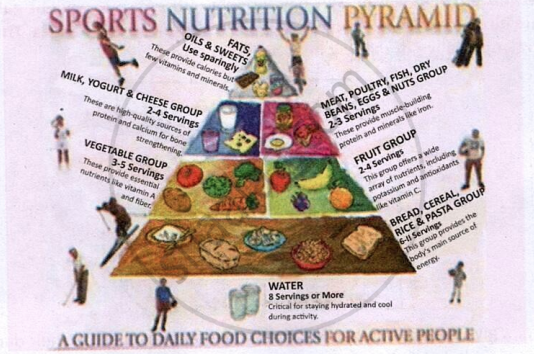
Based on this, choose the correct options:
1. The bottom most part of the food pyramid is occupied by ______ indicating large quantities of intake.
- carbohydrates
- vitamins
- minerals
- fats
2. Major portion of individual's diet is constituted by ______ nutrients.
- macro
- micro
- water
- roughage
3. Fat soluble vitamins are ______.
- Vit A & D
- Vit A & K
- Vit E & D
- Vit A, D, E & K
4. The body building nutrient is ______.
- Fat
- vitamin
- protein
- mineral
Or
Ghee, Butter, oils are rich sources of ______.
- Vitamins
- fats
- minerals
- proteins
Janmeet went out to eat at a new restaurant and experienced symptoms of food intolerance afterward. He experienced sweating, headache, digestive discomfort. He went to the doctor for medication.
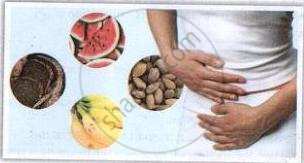
-
______ is caused by the absence of the lactase enzyme.
-
Some cheeses contain ______, which can trigger intolerance reactions in certain individuals.
-
Contaminated Peanuts and undercooked beans may contain ______, leading to severe digestive issues.
-
______ is a protein in cereals like wheat, barley and rye.
Or
______ like MSG are known to cause headaches and are commonly used as flavour enhancers in processed foods.
Naina visited the supermarket with her mother and was captivated by the variety of foods on display. Intrigued by what makes up a healthy diet beyond just nutrients, she sought guidance from her teacher about the non-nutritional aspects of food, such as additives and preservatives. This sparked her interest in understanding the importance of making healthy food choices.
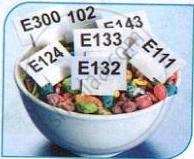
- ______ give grapes, blueberries, cranberries and raspberries their dark colour.
- Preservatives are added to foods to prevent undesirable chemical changes and ______ their shelf life.
- A ______ is a seed, fruit, root, bark or other plant substance primarily used for flavouring or colouring food.
- Coffee is a popular beverage made from the roasted seeds of ______ plants.
Or
______ are present in green leafy vegetables and some legumes.
Dr. Manu Sood solutions for Physical Education [English] Class 12 5 Unit-5: Sports and Nutrition VERY SHORT ANSWER TYPE QUESTIONS [Page 178]
Define balanced diet.
Define nutrition.
Mention the sources of carbohydrates in our diet.
List down simple types of carbohydrates.
State complex carbohydrate types.
How many amino acids are found in proteins?
Mention the sources of fats in our diet.
What are proteins?
Explain the importance of calcium for children.
Enlist two sources for calcium and iron separately.
Mention the sources of proteins in our diet.
Mention the sources of vitamin A in our diet.
Mention two diseases which come from deficiency of protein.
Name any two macro minerals which should be part of our diet.
Name the nutritive components of diet.
Name any two non-nutritive components of diet.
What is the main function of artificial preservation?
What is 'Healthy Weight'?
Name the basic components of diet.
Enlist the dangers of dieting.
Why do the weight lifters diet include lots of protein?
What are the Micro Nutrients?
What is Food Intolerance?
What is roughage or fibre in diet?
What do you mean by Dieting?
Enlist two sources of calcium.
Differentiate between Macro and Micro Nutrients.
Enlist the foods which are commonly associated with food intolerance.
Explain the importance of fluid intake during a competition.
Enlist four non-nutritive food items.
How we can say that protein is an essential component of diet?
What is known as balanced diet?
Explain the importance.
Balanced diet.
Dr. Manu Sood solutions for Physical Education [English] Class 12 5 Unit-5: Sports and Nutrition SHORT ANSWER TYPE QUESTIONS [Page 179]
What are carbohydrates?
Briefly explain the types of carbohydrates.
What are the sources of carbohydrate in our body?
What are the sources of carbohydrate in our body?
What are the functions of carbohydrates in human body?
Describe various types of Fats.
What are the different sources of fats?
How is water useful for us? Explain briefly.
Discuss briefly about the nutritive components of diet.
Discuss briefly about the nutritive components of diet.
What are the Non-nutritive components of diet? Explain.
Discuss briefly about the nutritive components of diet.
Briefly explain the functions and sources of the fat soluble vitamins.
Write the signs and symptoms of food intolerance.
What are the causes of food intolerance?
What are the causes of food intolerance?
Discuss about the management of food intolerance.
Write the difference between simple and complex carbohydrate.
In sports such as Boxing and Wrestling, the players tend to lose weight sharply. Explain the pitfalls of dieting.
What are the pitfalls of dieting?
In sports such as Boxing and Wrestling, the players tend to lose weight sharply. Explain the pitfalls of dieting.
In sports such as Boxing and Wrestling, the players tend to lose weight sharply. Explain the pitfalls of dieting.
"Dieting programmes having weight loss as an objective, are a failure." Justify this statement by highlighting the bad effects of such dieting.
What should be the basic nutrient in a weightlifter's diet? Why?
How obesity can be prevented? Give two ways.
What type of meal should we take before the competition?
Which type of food should we take during a competition?
Which type of food should we take after the competition?
Write briefly about protein as an essential component of diet.
Compare any three Micro minerals on the basis of their sources and benefits.
Compare any three Fat soluble vitamins on the basis of their sources and benefits.
Write the functions and sources of Vitamin D.
Write the functions and sources of Vitamin K.
Discuss the importance of Protein in regard to sportsperson.
What are the benefits of Non-Nutritive foods?
Discuss the importance of diet during competition in detail.
Differentiate between nutritive and nonnutritive components of a diet.
Describe three food myths and their related facts.
Describe three food myths and their related facts.
Discuss the importance of pre-competition diet in detail.
Discuss the importance of diet during competition in detail.
Discuss the importance of post-competition diet in detail.
Dr. Manu Sood solutions for Physical Education [English] Class 12 5 Unit-5: Sports and Nutrition LONG ANSWER TYPE QUESTIONS [Page 180]
What do you mean by balanced diet?
Explain the factors which affect the balanced diet.
What are fats?
Write a detailed note on types of fats.
Mention the functions of fats.
“Vitamins are essential for our metabolic process.” What happens if we devoid our diet of Vitamins?
Explain the effect of iron deficiency.
Explain the effect of calcium deficiency.
How can the deficiency of iron be prevented?
How can the deficiency of calcium be prevented?
What are the types of vitamins? Describe their sources and functions.
What are the types of vitamins? Describe their sources and functions.
Discuss briefly about the nutritive components of diet.
What are the Non-nutritive components of diet? Explain.
What is 'Healthy Weight'?
Explain the methods to control 'Healthy Body Weight to lead healthful-living'.
Write the signs and symptoms of food intolerance.
What are the causes of food intolerance?
Discuss about the management of food intolerance.
Explain macro-nutrients.
Explain macro-nutrients role in our diet.
Explain the sources and role of any two macro-nutrients.
Explain macro-nutrients.
Maulik is working on a project to collect data for students who are obese in his school. He plans to give students a detailed explanation on eating for weight control. List and explain the points that he can tell the students in his presentation.
Mridul is working on a project to collect data for students who are underweight and are doing some kind of dieting in her school. She plans to give students a detailed explanation on pitfalls of dieting. List and explain the points that she can tell the students in her presentation.
Devam is working on a project to collect questions from students regarding food which they eat and which they don't. He finds out that there are various myths regarding food in the mind of students. He plans to give students a detailed explanation on the topic of Myths related to food. List and explain the points that he can tell the students in his presentation.
How can you modify your diet for weight control?
What is known as balanced diet?
What is the significance of pre competition meals for an athlete? Explain.
What is the significance of post competition meals for an athlete? Explain.
Solutions for 5: Unit-5: Sports and Nutrition
Dr. Manu Sood solutions for Physical Education [English] Class 12 chapter 5 - Unit-5: Sports and Nutrition
Shaalaa.com has the CBSE Mathematics Physical Education [English] Class 12 CBSE solutions in a manner that help students grasp basic concepts better and faster. The detailed, step-by-step solutions will help you understand the concepts better and clarify any confusion. Dr. Manu Sood solutions for Mathematics Physical Education [English] Class 12 CBSE 5 (Unit-5: Sports and Nutrition) include all questions with answers and detailed explanations. This will clear students' doubts about questions and improve their application skills while preparing for board exams.
Further, we at Shaalaa.com provide such solutions so students can prepare for written exams. Dr. Manu Sood textbook solutions can be a core help for self-study and provide excellent self-help guidance for students.
Concepts covered in Physical Education [English] Class 12 chapter 5 Unit-5: Sports and Nutrition are .
Using Dr. Manu Sood Physical Education [English] Class 12 solutions Unit-5: Sports and Nutrition exercise by students is an easy way to prepare for the exams, as they involve solutions arranged chapter-wise and also page-wise. The questions involved in Dr. Manu Sood Solutions are essential questions that can be asked in the final exam. Maximum CBSE Physical Education [English] Class 12 students prefer Dr. Manu Sood Textbook Solutions to score more in exams.
Get the free view of Chapter 5, Unit-5: Sports and Nutrition Physical Education [English] Class 12 additional questions for Mathematics Physical Education [English] Class 12 CBSE, and you can use Shaalaa.com to keep it handy for your exam preparation.
