मराठी

Connecting Links

Advertisements

Topics

Estimated time: 12 minutes
Maharashtra State Board: Class 10
CISCE: Class 12

Definition: Connecting Link

An organism that exhibits morphological or anatomical characteristics of two different groups, indicating an evolutionary relationship between them, is called a connecting link.

or

Connecting links are organisms that possess characteristics of two different groups of animals and thus provide evidence that one group has evolved from the other.
CISCE: Class 12

Connecting Links

A connecting link (missing link) is an organism that shows characters of two different groups, indicating an evolutionary relationship between them.

Connecting links provide strong evidence for evolution, proving continuity and gradual change between major groups of organisms.

Types:

  1. Fossil connecting links: Extinct, known from fossils, show intermediate characters between two groups.
  2. Living connecting links: Present-day animals that possess characters of two groups and establish continuity.
CISCE: Class 12

Key Fossil Connecting Link

Archaeopteryx lithographica – fossil connecting link between reptiles and birds.

A crow-sized toothed bird found in Jurassic rocks of Germany shows both reptilian and avian features.

Reptilian characters:

  • Long tail, claws, scales on body.
  • Single-headed ribs; abdominal ribs resembling those of a crocodile.
  • Jaws with similar (homodont) teeth.
  • Sternum without keel; bones solid (non-pneumatic).
  • Hind limbs with four clawed digits.

Avian characters:

  • Feathery exoskeleton.
  • Forelimbs modified into wings.
  • Jaws modified into a beak; skull bones completely fused.
  • Large rounded cranium with big orbits and single occipital condyle.
  • Limb bones bird-like; hind limbs with four toes, first toe opposable.

Significance:

Clearly indicates that birds evolved from reptiles; Huxley called birds “glorified reptiles”.

CISCE: Class 12

Key Living Connecting Links

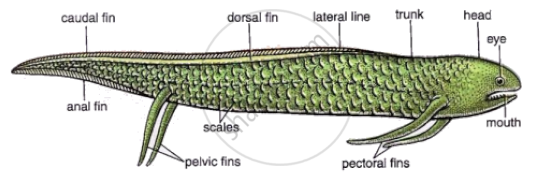
Lungfish (Protopterus) – connects fishes and amphibians.

  • Fish-like: paired fins, dermal scales, gills.
  • Amphibian-like: internal nares, three-chambered heart, lungs for air breathing.

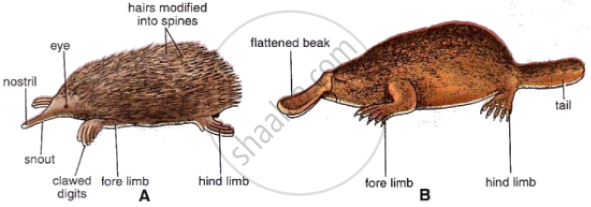
Egg-laying mammals – connect mammals and reptiles.

  • Spiny ant-eater (Tachyglossus) and duck-billed platypus (Ornithorhynchus).
  • Mammalian traits: hairs, mammary glands, diaphragm, and single aortic arch.
  • Reptilian traits: large coracoid in pectoral girdle, oviparous with large yolky eggs and shell (polylecithal), cloaca.

Other Examples:

  1. Chimaera (rabbit fish) – connecting link between cartilaginous and bony fishes.
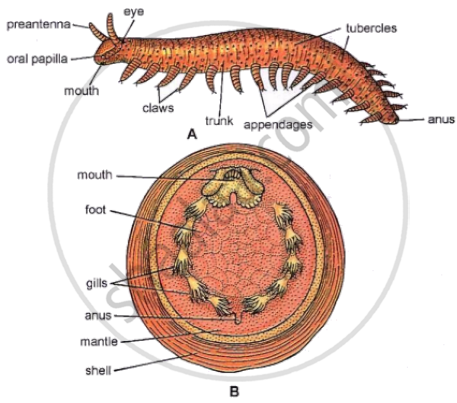
  2. Peripatus – connecting link between annelids and arthropods.
  3. Neopilina – connecting link between annelids and molluscs.
CISCE: Class 12

Visual Representation of Connecting Link

Protopterus: the African lung fish

A-B. Connecting links: A. Tachyglossus (spiny anteater); B. Ornithorhynchus (duck-billed platypus)

A-B. Connecting links: A. Peripatus; B Neopilina

Maharashtra State Board: Class 10
CISCE: Class 12

Key Points: Connecting Link

  • Connecting links are organisms that show features of two different groups, indicating evolutionary relationships.
  • Examples include lungfish (link between fishes and amphibians), duck-billed platypus (link between reptiles and mammals), and Peripatus (link between annelids and arthropods).
  • These organisms show transitional features, combining traits of both ancestral and descendant groups.
  • Connecting links provide strong evidence for evolution, proving continuity and gradual change between major groups of organisms.
Advertisements
Share
Notifications

Englishहिंदीमराठी


      Forgot password?
Use app×