Topics
Introduction to Book-Keeping and Accountancy
- Accounting
- Book-Keeping
- Accountancy
- Book-Keeping vs. Accountancy
- Basis (Methods) of Accounting System
- Qualitative Characteristics of Accounting Information
- Basic Terms in Accounting
- Transaction
- Capital and Drawings
- Debtors, Creditors and Bad Debts
- Expenditure and Its Types
- Discount and Its Types
- Solvent Person vs. Insolvent Person
- Accounting Year
- Trading Concerns vs. Not for Profit Concerns
- Concept of Goodwill
- Fundamentals of Business Earnings
- Concepts of Assets, Liabilities and Net Worth
- Accounting Principles
- Accounting Concepts
- Core Accounting Concepts
- Accounting Standards
Meaning and Fundamentals of Double Entry Book-Keeping
Journal
- Accounting Documents
- Goods and Service Tax(GST)
- Types of Accounting Documents
- Voucher
- Tax Invoice (Under GST)
- Credit Memo
- Receipt
- Cheque
- Types of Cheques
- Books of Accounts
- Books of Accounts > Journal
- Journal Entries
- Journal Entries > Goods Account
- Journal Entries > Recording Discount in Journal
- Journal Entries > Other Important Journal Entries
Ledger
Subsidiary Books
- Concept of Subsidiary Books
- Cash Book
- Cash Book > Simple Cash Book (Single Column Cash Book)
- Cash Book > Two Column Cash Book (With Cash and Bank Columns)
- Cash Book > Petty Cash Book
- Simple Petty Cash Book
- Analytical Petty Cash Book
- Purchase Book
- Purchase Return Book
- Sales Book
- Sales Return Book
- Journal Proper
Bank Reconciliation Statement
- Accounting Documents Used in Banking
- Accounting Documents Used in Banking
- Pay-in-Slip
- Withdrawal Slip
- Bank Pass Book
- Bank Statement
- Bank Advice
- Concept of Virtual Banking
- Bank Reconciliation Statement(BRS)
- Cash Book vs Pass Book : Causes of Differences
- Time Difference(Regarding BRS)
- Errors and Omission Made by Bank or Businessman
- Formats of BRS
- Preparation of BRS
- Cash Book and Pass Book Comparison for Common Period
- Cash Book and Pass Book Balances for Different Periods
- Bank Balance as per Cash Book (Favourable / Debit Balance)
- Bank Balance as per Pass Book (Favourable / Credit Balance)
- Overdraft as per Cash Book (Unfavourable / Credit Balance)
- Overdraft as per Pass Book (Unfavourable/Debit balance)
- Reconciliation of Debtors and Creditors
Depreciation
Rectification of Errors
Final Accounts of a Proprietary Concern
Single Entry System
- Concept of Single Entry System
- Single Entry System vs. Double Entry System
- Parts of Single Entry System
- Statements of Affairs
- Statement of Profit or Loss
- Statement of Profit or Loss > Net Worth Method
- Practical Problems on Single Entry System
- Definition: Petty Cash Book
- Need to Maintain
- Definition: Petty Cashier
- Responsibilities of Petty Cashier
- Types of Petty Cash Book
Definition : Petty Cash Book
A petty cash book is a type of cash book in accounting that records all minor, routine cash payments and receipts separately from the main cash book.
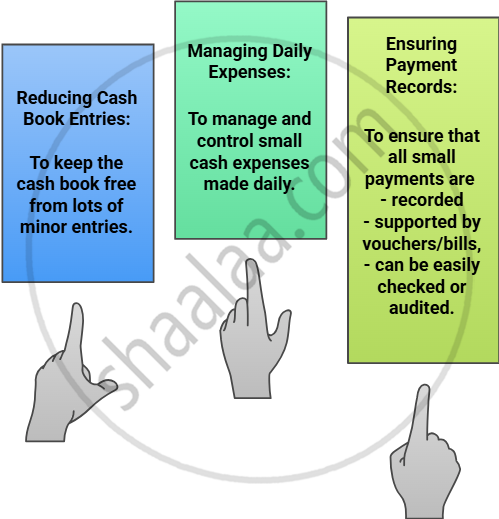
Need to Maintain
Definition : Petty Cashier
A petty cashier is responsible for handling petty cash and maintaining the petty cash book.
Responsibilities of Petty Cashier
The petty cashier:
-
Receives the fixed petty cash amount from the main cashier.
-
Pays for small expenses and records each transaction in the book, with a supporting voucher for every entry.
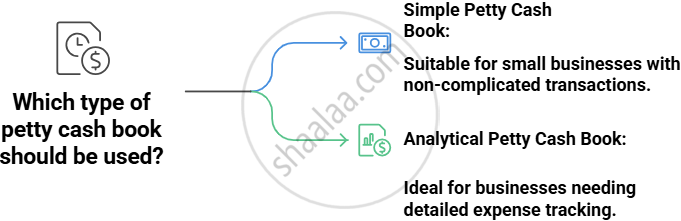
Types of Petty Cash Book
Related QuestionsVIEW ALL [32]
From the following information prepare Columnar Petty Cash Book kept on imprest system in the books of Manisha Books Stall, Beed.
| 2018 April | Amt (₹) | |
| 01 | Opening petty cash balance | 200 |
| 02 | Received a bearer cheque to make up the imprest amount | 1,200 |
| 03 | Gave a tips to peon | 40 |
| 04 | Purchased stationery | 150 |
| 05 | Paid Taxi Fare | 35 |
| 06 | Purchased Stamp pad | 140 |
| 07 | Paid Cartage | 40 |
| 08 | Paid Bus Fare | 30 |
| 11 | Paid to sweeper | 50 |
| 13 | Purchased a Box of pencils | 40 |
| 14 | Paid Mobile charges | 35 |
| 15 | Gave to Sohan on account | 250 |
| 19 | Paid for Refreshment to staff | 150 |
| 20 | Paid Railway Fare | 30 |
| 21 | Paid Carriage | 65 |
| Opening Petty Cash Balance | Petty Cash Received | Petty Expenses Paid | Closing Petty Cash Balance | |||
| 250 | + | 1,750 | - | ? | = | 420 |
| Opening Petty Cash | Petty Cash Received | Petty Expenses Paid | Closing Petty Cash Balance | |||
| 400 | + | ? | - | 1,800 | = | 250 |
From the following information prepare Columnar Petty Cash Book kept on imprest system in the books of Manisha Books Stall, Beed.
| 2018 April | Amt(₹) | |
| 01 | Opening petty cash balance | 200 |
| 02 | Received a bearer cheque to make up the imprest amount | 1,200 |
| 03 | Gave a tips to peon | 40 |
| 04 | Purchased stationery | 150 |
| 05 | Paid Taxi Fare | 35 |
| 06 | Purchased Stamp pad | 140 |
| 07 | Paid Cartage | 40 |
| 08 | Paid Bus Fare | 30 |
| 11 | Paid to sweeper | 50 |
| 13 | Purchased a Box of pencils | 40 |
| 14 | Paid Mobile charges | 35 |
| 15 | Gave to Sohan on account | 250 |
| 19 | Paid for Refreshment to staff | 150 |
| 20 | Paid Railway Fare | 30 |
| 21 | Paid Carriage | 65 |
From the following information prepare Columnar Petty Cash Book kept on imprest system in the books of Manisha Books Stall, Beed.
| 2018 April | Amt (₹) | |
| 01 | Opening petty cash balance | 200 |
| 02 | Received a bearer cheque to make up the imprest amount | 1,200 |
| 03 | Gave a tips to peon | 40 |
| 04 | Purchased stationery | 150 |
| 05 | Paid Taxi Fare | 35 |
| 06 | Purchased Stamp pad | 140 |
| 07 | Paid Cartage | 40 |
| 08 | Paid Bus Fare | 30 |
| 11 | Paid to sweeper | 50 |
| 13 | Purchased a Box of pencils | 40 |
| 14 | Paid Mobile charges | 35 |
| 15 | Gave to Sohan on account | 250 |
| 19 | Paid for Refreshment to staff | 150 |
| 20 | Paid Railway Fare | 30 |
| 21 | Paid Carriage | 65 |
From the following information prepare Columnar Petty Cash Book kept on imprest system in the books of Manisha Books Stall, Beed.
| 2018 April | Amount (₹) | |
| 01 | Opening petty cash balance | 200 |
| 02 | Received a bearer cheque to make up the imprest amount | 1,200 |
| 03 | Gave a tips to peon | 40 |
| 04 | Purchased stationery | 150 |
| 05 | Paid Taxi Fare | 35 |
| 06 | Purchased Stamp pad | 140 |
| 07 | Paid Cartage | 40 |
| 08 | Paid Bus Fare | 30 |
| 11 | Paid to sweeper | 50 |
| 13 | Purchased a Box of pencils | 40 |
| 14 | Paid Mobile charges | 35 |
| 15 | Gave to Sohan on account | 250 |
| 19 | Paid for Refreshment to staff | 150 |
| 20 | Paid Railway Fare | 30 |
| 21 | Paid Carriage | 65 |
