Topics
Introduction to Book-Keeping and Accountancy
- Accounting
- Book-Keeping
- Accountancy
- Book-Keeping vs. Accountancy
- Basis (Methods) of Accounting System
- Qualitative Characteristics of Accounting Information
- Basic Terms in Accounting
- Transaction
- Capital and Drawings
- Debtors, Creditors and Bad Debts
- Expenditure and Its Types
- Discount and Its Types
- Solvent Person vs. Insolvent Person
- Accounting Year
- Trading Concerns vs. Not for Profit Concerns
- Concept of Goodwill
- Fundamentals of Business Earnings
- Concepts of Assets, Liabilities and Net Worth
- Accounting Principles
- Accounting Concepts
- Core Accounting Concepts
- Accounting Standards
Meaning and Fundamentals of Double Entry Book-Keeping
Journal
- Accounting Documents
- Goods and Service Tax(GST)
- Types of Accounting Documents
- Voucher
- Tax Invoice (Under GST)
- Credit Memo
- Receipt
- Cheque
- Types of Cheques
- Books of Accounts
- Books of Accounts > Journal
- Journal Entries
- Journal Entries > Goods Account
- Journal Entries > Recording Discount in Journal
- Journal Entries > Other Important Journal Entries
Ledger
Subsidiary Books
- Concept of Subsidiary Books
- Cash Book
- Cash Book > Simple Cash Book (Single Column Cash Book)
- Cash Book > Two Column Cash Book (With Cash and Bank Columns)
- Cash Book > Petty Cash Book
- Simple Petty Cash Book
- Analytical Petty Cash Book
- Purchase Book
- Purchase Return Book
- Sales Book
- Sales Return Book
- Journal Proper
Bank Reconciliation Statement
- Accounting Documents Used in Banking
- Accounting Documents Used in Banking
- Pay-in-Slip
- Withdrawal Slip
- Bank Pass Book
- Bank Statement
- Bank Advice
- Concept of Virtual Banking
- Bank Reconciliation Statement(BRS)
- Cash Book vs Pass Book : Causes of Differences
- Time Difference(Regarding BRS)
- Errors and Omission Made by Bank or Businessman
- Formats of BRS
- Preparation of BRS
- Cash Book and Pass Book Comparison for Common Period
- Cash Book and Pass Book Balances for Different Periods
- Bank Balance as per Cash Book (Favourable / Debit Balance)
- Bank Balance as per Pass Book (Favourable / Credit Balance)
- Overdraft as per Cash Book (Unfavourable / Credit Balance)
- Overdraft as per Pass Book (Unfavourable/Debit balance)
- Reconciliation of Debtors and Creditors
Depreciation
Rectification of Errors
Final Accounts of a Proprietary Concern
Single Entry System
- Concept of Single Entry System
- Single Entry System vs. Double Entry System
- Parts of Single Entry System
- Statements of Affairs
- Statement of Profit or Loss
- Statement of Profit or Loss > Net Worth Method
- Practical Problems on Single Entry System
- Introduction
- Features
- Disadvantages
- Conventional System vs. Double‑Entry System
- Real-life Example
- Key Takeaways
Maharashtra State Board: Class 11
Introduction
-
What's it? A simple, old method of keeping business records.
-
Based on accounting conventions (practical rules followed for a long time by common agreement.)
-
Common in small shops and traders before modern accounting became common.
Maharashtra State Board: Class 11
Features
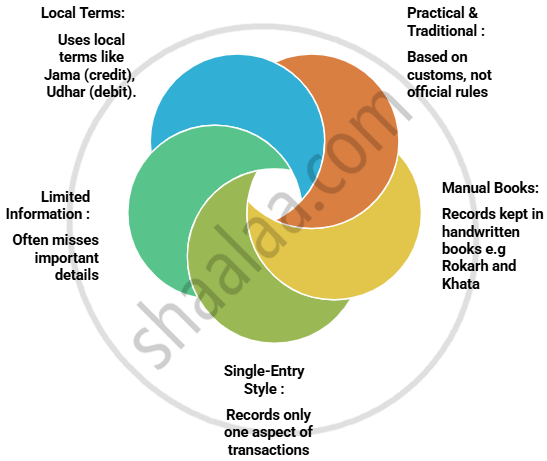
Maharashtra State Board: Class 11
Disadvantages
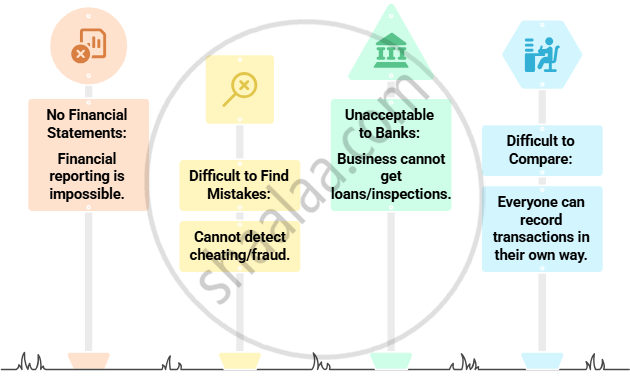
Maharashtra State Board: Class 11
Conventional System vs. Double‑Entry System
| Feature | Conventional System | Double‑Entry System |
|---|---|---|
| Basis of Recording | Practical customs | Accounting principles |
| Aspects in a Transaction | Single or partial | Always two (debit & credit) |
| Types of Accounts Covered | Cash, personal only | All (personal, real, nominal) |
| Financial Statements | Not possible | Easily prepared |
| Error Detection | Hard | Possible via trial balance |
| Users | Small traders | All organisations |
Maharashtra State Board: Class 11
Real-life Example
A kirana (grocery) shop owner writes in a notebook:
-
"Received ₹1,000 cash from sales"
-
But doesn’t record:
-
Which items were sold
-
How much stock reduced
-
Who the customer was
-
Result → Knows how much cash he has, but not the full profit made or stock left.
Maharashtra State Board: Class 11
Key Takeaways
-
The Conventional Accounting System is simple but incomplete.
-
Follows conventions (practical rules) rather than strict concepts.
-
Replaced by Double‑Entry System in all formal businesses.
