Topics
Applied History
Working of the Constitution
Historiography : Development in the West
Geographical discoveries and colonization
- Concept for Geographical Discoveries and Colonization
Africa
- Imperialism - Africa
Asia: India, China, Japan
- Concept for Asia: India, China, Japan
Historiography : Indian Tradition
Working of the Indian Constitution
The Electoral Process
Dictatorships in Europe, Second World War and world
- Concept on Dictatorships in Europe
- Second World War (1939-1945 C.E.)
First world war
The League of Nations
Russian Revolution
- Concept for Russian Revolution
United Nations Organization
- Concept for United Nations Organization
Political Parties
Applied History
Africa
- Emancipation of Africa
Asia
- Emancipation of Asia
Social and Political Movements
History of Indian Arts
Globalization
- Globalization After World War II
Scientific and Technological Progress
- Scientific and Technological Progress After World War II
Cold war
- Formation of the Cold War
Challenges Faced by Indian Democracy
Mass Media and History
Social Diversity and Democracy
- Social Diversity
- Coccept for Caste/Race and Democracy
- Concept for Language and Democracy
- Cocnept for Religion and Democracy
- Concept for Gender and Democracy
- Concept for Democracy and Diversity
Challenges to Democracy Remedial Measures to the Challenges
- Concept for Challenges to Democracy Remedial Measures to the Challenges
Internal work
Democracy
- Democracy - Meaning, Types and Characteristics
Political Parties and Types
- Political Parties
- Importance of Political Parties
- Major National and Regional Parties in India/ Types of Political Parties
Entertainment and History
Sports and History
Tourism and History
Heritage Management
History - Imperialism
History - 20th Century Age of conflict
History - Emancipation of Asia and Africa
History - World after World War 2
Political Science
Maharashtra State Board: Class 10
Definition: Mass Media
Mass media is a means of communication used to share information with a large number of people.
Notes
Mass Media:
 |
- The word Mass media is made up of two words i.e., Mass and Media. Mass means people in general whereas media means various modes of communication.
- Media exists to maintain the bridge between the government and the people.
- The press is also called the fourth pillar of democracy. Media acts as a watchdog of public interest in a democracy. India is one of the biggest democracies in the world and is ranked second in print media.
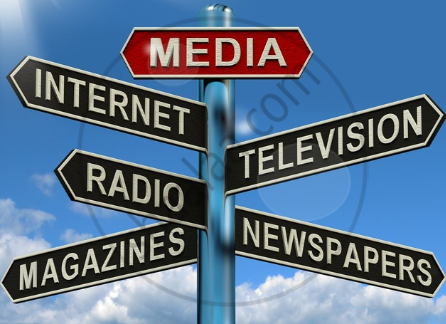
- Mass media is communication to a large group or groups of people in a short. This can be written, spoken, or broadcast communication. Some of the most popular forms of mass media are newspapers, magazines, radio, advertisements, social media, television, the Internet, and films/movies.
- Human beings exchanged news long before they could write. They spread the news by word of mouth at crossroads, at campfires, or at markets. Messengers raced back from battlefields with reports on victories or defeats. Criers walked through villages announcing births, deaths, marriages, and divorces.
Related QuestionsVIEW ALL [5]
Complete the following table chart.
| Radio | Television | |
| Background | ||
| Functions |
Complete the following concept chart.
| Newspapers | Radio | Television | |
| Beginning/ Background |
|||
| Nature of information/ programmes |
|||
| Functions |
