Advertisements
Chapters
2: Marketing and Sales
3: Advertising and Sales Promotion
4: Consumer Protection
5: E-Commerce
6: Capital and Revenue Expenditure/Income
7: Final Accounts of Sole Proprietorship
8: Fundamental Concepts of Cost
9: Budgeting
10: Sources of Finance
▶ 11: Recruitment, Selection and Trading
12: Industrial Relations, Trade Union and Social Security
13: Logistics and Insurance
14: Banking
15: Government Indicatives in Environment Protection
![Goyal Brothers Prakashan solutions for Commercial Studies [English] Class 10 ICSE chapter 11 - Recruitment, Selection and Trading - Shaalaa.com](/images/commercial-studies-english-class-10-icse_6:37e256b2e71b45edb2901d6e733a1c87.jpg "Goyal Brothers Prakashan solutions for Commercial Studies [English] Class 10 ICSE chapter 11 - Recruitment, Selection and Trading")
Advertisements
Solutions for Chapter 11: Recruitment, Selection and Trading
Below listed, you can find solutions for Chapter 11 of CISCE Goyal Brothers Prakashan for Commercial Studies [English] Class 10 ICSE.
Goyal Brothers Prakashan solutions for Commercial Studies [English] Class 10 ICSE 11 Recruitment, Selection and Trading EXERCISES [Pages 200 - 206]
OBJECTIVE TYPE QUESTIONS
The process of searching the prospective employees is known as ______.
Recruitment
Selection
Staffing
Training
The process of eliminating unqualified and unfit job seekers based on the information supplied by them in their application is called ______.
Reference checks
Preliminary screening
Selection decision
Training
______ is a negative process.
Education
Selection
Training
Recruitment
Staffing
______ is a positive process.
Recruitment
Selection
Staffing
Training
______ is the application form to be filled by the candidate when he goes for recruitment process in the organisation.
Job application
Formal application
Application blank
None of the above
______ is not an internal source of recruitment.
Promotion
Transfer
Job rotation
Departmental exam
______ is a selection test which judges the emotional ability which will help to judge work in group.
Personality test
Intelligence Test
Dexterity Test
None of the above
Such tests are designed to determine an individual’s capacity to use his hands and fingers in industrial work.
Personality test
Interest test
Dexterity test
Intelligence test
It refers to assigning specific jobs to the selected candidates.
Placement
Induction
Training
Development
______ is a horizontal shifting of employees.
Promotion
Transfer
Casual callers
None of these
______ is not an external source of recruitment.
Campus selection
Internal advertisement
Consultancy
Walk-in
Promotion motivates the employees if it is ______ based.
Time
Function
Performance
Training
Industrial and factory workers are recruited through ______.
Campus recruitment
Placement agencies
Labour contractors
None of these
It is the process of carefully screening the candidates to choose the most suitable persons for the job vacancies to be filled in.
Recruitment
Selection
Staffing
Training
These tests are designed to measure the applicant’s level of knowledge and skill already achieved in a particular trade or occupation.
Personality test
Trade test
Dexterity test
Intelligence test
Promotion is a ______ source Recruitment.
Internal
Higher
Suitable
External
Which is not an advantage of internal Source of recruitment?
Time saving
New blood
Less expensive
Increased cost
Campus selection is a ______ source of recruitment.
Fresh
Modern
Internal
External
Which is not an advantage of external source of recruitment?
New blood
More competition
Less expensive
Less partial
Identifying the ______ candidates and ______ them to apply for the job is called Recruitment.
Available, insisting
Available, making
Potential, Attracting
Potential, insisting
______ recruitment does not bring new employees into the organisation while ______ recruitment brings new employees into the organisation.
Internal, external
External, internal
Suitable, competitive
Potential, external
While choosing the right source of recruitment, the following factors should be considered:
Number of persons to be recruited.
Type of staff to be recruited and the nature of the job to be filled in.
Time available for recruitment.
All of these
Which of the following are the advantages of internal sources of recruitment?
Internal recruitment helps to minimise labour turnover and absenteeism. People wait for promotion and the work-force is more satisfied.
It is a cheaper source of recruitment.
Internal candidates may not give a new outlook and fresh ideas to business.
Unsuitable candidates may be promoted to positions of higher responsibility.
Arrange the following steps of staffing in correct sequence.
- Preliminary interview
- Application form
- Tests
- Interview
i, ii, iii, iv
iv, iii, i, ii
i, iv, ii, iii
iii, ii, i, iv
When vacancies at higher levels are filled by shifting people from lower levels to higher levels with increase in status and salary it is called ______.
Promotion
Transfer
Employment exchange
Placement agency
Advertisements, labour constractors, placement agencies etc. are examples of ______ recruitment.
Internal
External
In house
Selection
Individuals who are hired to do a specific job are known as ______.
Entrepreneurs
Retailers
Employers
Employees
______ is the process of carefully screening the candidates to choose the most suitable persons for the job.
Recruitment
Selection
Training
Development
When the CEO of a company retires, the Sales Manager is given her place. Identify which of the following will be true in this context.
- The Sales Manager is being transferred.
- The Sales Manager will be getting a higher salary.
- The Sales Manager is getting promoted.
- The Sales Manager will be getting the same salary.
(i) and (ii) are true
(iii) and (iv) are true
(ii) and (iii) are true
(ii) and (iv) are true
ASSERTION: In Apprenticeship Training method, classroom training is given first, and then the trainees try out the job under the guidance of a master worker.
REASONING: An apprenticeship programme may run from 2 to 5 years.
A is true, and R is the correct explanation for A.
A is true, and R is not the correct explanation for A.
A is true, but R is false.
A is false, but R is true.
ABC Business House approached Juveriya’s educational institute for recruitment. Juveriya got job even before she left the institution. Identify the type of Recruitment:
- Campus Interviews
- Recommendations
- Internal
- External
i & iii
ii & iii
i & iv
ii & iv
Cedric applied for the job of a typist. He was asked to type a page to judge his speed and accuracy. Name the type of test done.
Dexterity tests.
Personality tests.
Interest tests.
Trade tests.
Which of the following is NOT a method of Training?
Job Instruction Training
Job Rotation
Simulation Exercises
Transfers
It is said that selection is a negative process whereas recruitment is a positive process.
True
False
As the HR of Zoya Garments, how would you articulate the benefits of external recruitment in terms of bringing fresh perspectives, diverse skill sets, and driving innovation within the company?
The injection of new perspectives can foster creativity and lead to better problem-solving and decision making processes.
External recruitment can be a time-consuming process as it involves various stages.
Leading to decreased morale and employee retention challenges.
There is always an element of uncertainty.
The main advantage of advertising job vacancies is that it brings in a flood of applications, many of which may be from unqualified candidates.
True
False
When job vacancies are filled up from people already working in the organisation, it is called internal recruitment. The main advantage of internal recruitment is ______.
Limited Pool of Talent
Lethargic Employees
Restricted Choice
Retention of Talent
Observe the image and identify the external source of recruitment.

Advertisements
Campus Interviews
Employment Exchanges
Placement Agencies
Observe the given image and identify the type of training shown.
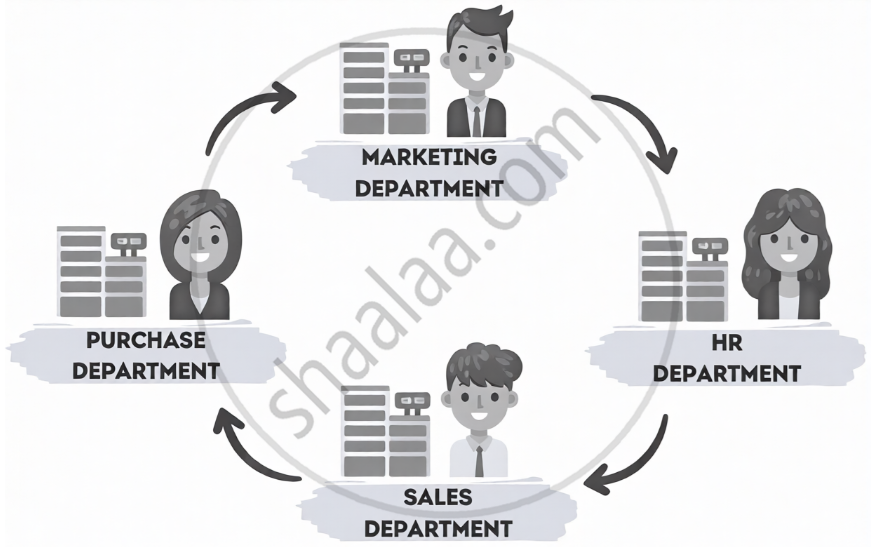
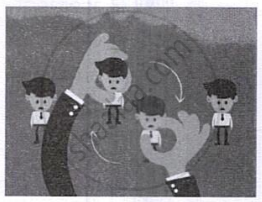
Vestibule Training
Apprenticeship Training
Job Rotation
Simulation Exercises
Simulation Exercises are usually short-structured learning experiences where individuals learn by participating.
True
False
People who want to enter skilled trades (such as welder, plumber, electrician, machinist) are required to undergo Job Rotation training.
True
False
Observe the image and identify the step of selection.

Group Discussion
Checking References
Medical or Physical Examination
Selection or Final Interview
Assertion (A): Tests are more useful in identifying and eliminating unsuitable candidates.
Reasoning (R): Tests are fully reliable and they do not involve time and money.
A is true and R is the correct explanation for A.
A is true and R is not the correct explanation for A.
A is true, but R is false.
A is false, but R is true.
Labour Contractors is also known as recruitment at factory gate.
True
False
Observe the image and identify source of recruitment.

Placement Agencies
Promotions
Campus Interviews
Transfers
ASSERTION: Promotion involves shifting an employee to a higher post carrying a higher status and higher salary.
REASONING: Promotion means shifting an employee from one factory, branch or office to fill a vacancy in another factory, branch or office of the company.
A is true, and R is the correct explanation for A.
A is true, and R is not the correct explanation for A.
A is true, but R is false.
A is false, but R is true.
Which of the following is NOT the merit of internal sources of recruitment?
- Provides wide choice of the required number of employees having desired qualifications.
- Provides people with new ideas and specialised skills required to cope with new challenges and to ensure growth of the organisation.
- Time and money need not be spent on advertising of vacancies, tests and interviews, checking references, etc.
- It is a cheaper source of recruitment.
I & II
II & III
III & IV
I, II & III
When the Principal of a school retires, the vice - principal is given her place. Identify which of the following will be true in this context.
- The vice-principal is being transferred
- The vice-principal will be getting a higher salary
- The vice-principal is getting promoted
- The vice-principal will be getting the same salary but her designation will change
I and II are true
III and IV are true
II and III are true
I and IV are true
Mr. ‘P’ has been selected for a mission to go to the moon. Before be goes into space he is trained to survive in ‘Zero Gravity’ Identity the training used.
Job rotation
Apprenticeship
Classroom
Vestibule
Which of the following is an example of Off-the-Job Training?
Job rotation
Mentoring
Apprenticeship
Classroom training
Which type of selection test helps to measure an applicant's level of knowledge and skill in a particular occupation?
Aptitude test
Interest test
Trade test
Dexterity test
Dexterity tests help to determine a candidate’s ______.
ability to learn new skills in the industry.
capacity to use hands and fingers in industrial work.
emotional balance and temperament.
knowledge in a particular occupation or trade already achieved.
Which one of these is NOT a method of External Recruitment?
Casual callers
Transfer
Placement agencies
Campus interviews
Identify the step of selection which helps to know from reliable sources about the background and character of the candidate.
Application blank
Medical examination
Checking references
Placement
SHORT ANSWER QUESTIONS
What is Recruitment?
Mention any four sources of external recruitment.
What is selection?
How is recruitment different from selection?
Selection is a negative process. Explain.
Mention any two objectives of training.
How do group discussions help in the selection process of suitable candidates for employment?
What is meant by induction training?
Briefly explain any two methods of off-the-job training.
Give any two methods used for on-the-job training.
Distinguish between internal recruitment and external recruitment.
List two main objectives of orientation training.
State any two uses of group discussion in selecting employees for a concern.
Name four important methods used for training.
Distinguish between on-the-job training and off-the-job training.
State any two disadvantages of internal recruitment.
Name and explain the type of training designed to correct mistakes.
Explain the two methods of Training. Give an example for each.
State two advantages of internal recruitment.
State two advantages of Campus Recruitment as an external source of recruitment.
Briefly explain any two types of Selection tests.
Briefly explain any two types of Selection tests.
Write a short note on Internal Recruitment.
Explain the Application Blank.
LONG ANSWER QUESTIONS
What is Recruitment?
Mention any four sources of external recruitment.
Compare the merits of internal and external sources of recruitment.
Compare the demerits of internal and external sources of recruitment.
An organisation has decided to follow a three-tier selection process of appointing Executive Trainees: Aptitude Test (A.T.), Group Discussion (G.D.), and Final Interview (F.I.). Outline the details of this process stating clearly the tasks involved at each stage.
What is training?
How does training differ from education?
How does training differ from development?
Describe the five various internal sources of recruitment.
What is the significance of staff training?
Name and explain any four types of training.
Name and explain any four types of training.
What is meant by induction training?
Is induction training the same as on-the-job training?
Explain the various steps involved in the preparation of a training programme for office staff.
Discuss various types of training.
Point out the merits of the main methods used in staff training.
Point out the demerits of the main methods used in staff training.
Explain any two types of employment tests which are conducted to select employees for an enterprise.
State two advantages of internal recruitment.
State any two disadvantages of internal recruitment.
Discuss any five techniques used by a company in the training of its employees.
Describe the importance of training.
How does training differ from education?
State the various stages in the selection process of workers.
Give any two methods used for on-the-job training.
Describe the five various internal sources of recruitment.
State the various stages in the selection process of workers.
Describe the importance of training.
Briefly explain any two methods of off-the-job training.
Write a short note on the following step of selection.
Medical/Physical examination
Write a short note on the following step of selection.
Group discussion
Mention any four sources of external recruitment.
| Mr. Francis is the Human Resource Manager of a private limited company. He has observed that the employee’s performance level has declined. As a result, efficiency is low, and has affected the organisational objectives. He is of the opinion that employees should be provided some training to enhance their performance. |
- Suggest on-the-job training by explaining its major techniques that could increase the level of productivity.
- Suggest any two evaluation systems that may be used to judge the performance of employers after training.
What is internal recruitment?
Discuss the merits of Internal Sources of recruitment.
Explain any three demerits of internal sources of recruitment.
Assignment/Project Work
Your class may meet the principal of your school. In the meeting, you may request the principal to tell you the methods used for selection of teaching and non-teaching staff in your school. What differences do you notice in the selection procedure used for two kinds of staff?
Visit the head of Personnel/Human Resource Department of a company. Find out the methods used by the company for training and appraisal of its managers. How much weightage is given to formal training programmes outside the job? How does the company evaluate the performance of its managers? Is there any linkage between training methods and appraisal methods used in the company?
Goyal Brothers Prakashan solutions for Commercial Studies [English] Class 10 ICSE 11 Recruitment, Selection and Trading QUESTION BANK [Pages 206 - 209]
Why is recruitment called a positive process?
Selection is a negative process. Explain.
Mention any four sources of external recruitment.
What is the purpose of Selection?
Briefly explain any two types of Selection tests.
Define Casual Callers.
Explain two effects of faulty selection of employees.
State any two uses of group discussion in selecting employees for a concern.
Who are Labour Contractors?
What are the points to be kept in mind while choosing the source of Recruitment?
State the various stages in the selection process of workers.
“Reference checks are not fully reliable”. Comment.
Explain five benefits of training to employees.
State the various stages in the selection process of workers.
It is said that training is a two-way process because there must be someone to learn and someone to teach. Explain the objectives of training.
What is meant by campus recruitment?
Why is internal recruitment alone insufficient for an enterprise, and why must it eventually turning to external recruitment? Discuss the concept of external recruitment and describe three key sources for finding external candidates.
Solutions for 11: Recruitment, Selection and Trading
Goyal Brothers Prakashan solutions for Commercial Studies [English] Class 10 ICSE chapter 11 - Recruitment, Selection and Trading
Shaalaa.com has the CISCE Mathematics Commercial Studies [English] Class 10 ICSE CISCE solutions in a manner that help students grasp basic concepts better and faster. The detailed, step-by-step solutions will help you understand the concepts better and clarify any confusion. Goyal Brothers Prakashan solutions for Mathematics Commercial Studies [English] Class 10 ICSE CISCE 11 (Recruitment, Selection and Trading) include all questions with answers and detailed explanations. This will clear students' doubts about questions and improve their application skills while preparing for board exams.
Further, we at Shaalaa.com provide such solutions so students can prepare for written exams. Goyal Brothers Prakashan textbook solutions can be a core help for self-study and provide excellent self-help guidance for students.
Concepts covered in Commercial Studies [English] Class 10 ICSE chapter 11 Recruitment, Selection and Trading are Types of Selection Tests, Aspects of Staffing > Recruitment, Sources of Recruitment, Advantages and Disadvantages of Recruitment, Methods of Selection, Training, Methods of Recruitment, Importance of Training, Types of Training, Preparation of Training Programme, Methods of Training, Steps in Employee Selection Process, Performance Appraisal, Difference Between Selection and Recruitment, Types of Selection Tests, Aspects of Staffing > Recruitment, Sources of Recruitment, Advantages and Disadvantages of Recruitment, Methods of Selection, Training, Methods of Recruitment, Importance of Training, Types of Training, Preparation of Training Programme, Methods of Training, Steps in Employee Selection Process, Performance Appraisal, Difference Between Selection and Recruitment.
Using Goyal Brothers Prakashan Commercial Studies [English] Class 10 ICSE solutions Recruitment, Selection and Trading exercise by students is an easy way to prepare for the exams, as they involve solutions arranged chapter-wise and also page-wise. The questions involved in Goyal Brothers Prakashan Solutions are essential questions that can be asked in the final exam. Maximum CISCE Commercial Studies [English] Class 10 ICSE students prefer Goyal Brothers Prakashan Textbook Solutions to score more in exams.
Get the free view of Chapter 11, Recruitment, Selection and Trading Commercial Studies [English] Class 10 ICSE additional questions for Mathematics Commercial Studies [English] Class 10 ICSE CISCE, and you can use Shaalaa.com to keep it handy for your exam preparation.
