Advertisements
Chapters
2: Marketing and Sales
3: Advertising and Sales Promotion
4: Consumer Protection
5: E-Commerce
6: Capital and Revenue Expenditure/Income
7: Final Accounts of Sole Proprietorship
8: Fundamental Concepts of Cost
9: Budgeting
10: Sources of Finance
11: Recruitment, Selection and Trading
12: Industrial Relations, Trade Union and Social Security
13: Logistics and Insurance
14: Banking
15: Government Indicatives in Environment Protection
![Goyal Brothers Prakashan solutions for Commercial Studies [English] Class 10 ICSE chapter 1 - Stakeholders in Commercial Organisations - Shaalaa.com](/images/commercial-studies-english-class-10-icse_6:37e256b2e71b45edb2901d6e733a1c87.jpg "Goyal Brothers Prakashan solutions for Commercial Studies [English] Class 10 ICSE chapter 1 - Stakeholders in Commercial Organisations")
Advertisements
Solutions for Chapter 1: Stakeholders in Commercial Organisations
Below listed, you can find solutions for Chapter 1 of CISCE Goyal Brothers Prakashan for Commercial Studies [English] Class 10 ICSE.
Goyal Brothers Prakashan solutions for Commercial Studies [English] Class 10 ICSE 1 Stakeholders in Commercial Organisations EXERCISES [Pages 6 - 11]
OBJECTIVE TYPE QUESTIONS:
Which of the following best defines the term ‘stakeholder’?
Anyone with shares in a company
Anyone with an interest in an organisation
Anyone who owns a business
Anyone who does not have interest in an organisation
Local community is an example of ______.
Internal stakeholders
External stakeholders
Primary stakeholders
None of these
As an external stakeholder, what interest would a company’s supplier have in a company?
The supplier would want to be paid for the purchases made by the company on a timely basis.
The supplier would want to know that employees will continue to have jobs.
The supplier would want to know how much it will receive in dividends.
The supplier would want to know how much it will make from its investment.
Which one is not a way to manage stakeholder expectations?
Avoid stakeholder input
Keep the stakeholder involved
Identify concerns
Act timely
Radhika decide to build a new factory in the local area, what stakeholders would have an influence on this?
Customers, employers and the local community
Banks, local community and government
Suppliers, banks and the local community
Customers, banks and the government
Which of the following statement is true?
Customer is not a stakeholder of firm
Customer is a stakeholder
Bank is an internal stakeholder
None of these
______ expect the business organization to follow the laws and regulations of the country.
Suppliers
Government
Associates
Owners
Stakeholders who contribute to the business enterprise from outside the organisation are known as ______.
External Stakeholder
Internal Stakeholder
General Public
Creditors
______ are people who provide money as loans to commercial organisation.
Suppliers
Creditors
Government
Employees
Individuals who provide physical and mental efforts for an organisation are known as ______.
Employers
Employees
Suppliers
Creditors
______ is an expectation of employers.
Safety of loans given by them to the enterprise
Fair and regular return on their capital
Avoid monopoly and concentration of economic power
Respect for intellectual property rights
To help the weaker sections of society by giving them preference in employment, to respect human rights including rights of women and children etc. are expectations of ______.
Employers
Employees
Society
Suppliers
Safety of capital of contributed is an expectation of ______.
Employees
Creditors
Society
Employers
Who among the following is not an internal stakeholder?
Employers
Shareholders
Employees
Creditors
The main expectation of a Creditor is ______.
Regular payment of interest according to credit terms
Prompt payment of all the taxes
To contribute to research and development
To ensure regular supply of goods
Match the Column I and Column II:
| Column - I | Column - II | ||
| (a) | Employees | i | Regular orders for supply |
| (b) | Government | ii | Protection of trade union rights |
| (c) | Society | iii | Protection of environment from pollution |
| (d) | Suppliers | iv | Avoid corrupting public servants |
(a) - i, (b) - ii, (c) - iv, (d) - iii
(a) - ii, (b) - iv, (c) - iii, (d) - i
(a) - ii, (b) - i, (c) - iii, (d) - iv
(a) - ii, (b) - iv, (c) - i, (d) - iii
Match the Column I and Column II:
| Column - I | Column - II | ||
| (a) | External stakeholder | i | Shareholders, employees |
| (b) | Government | ii | Creditors, suppliers |
| (c) | Internal stakeholders | iii | Pay taxes on time |
| (d) | Not the stakeholders | iv | Customers |
(a) - ii, (b) - iii, (c) - i, (d) - iv
(a) - i, (b) - ii, (c) - iv, (d) - iii
(a) - iii, (b) - i, (c) - ii, (d) - iv
(a) - iv, (b) - ii, (c) - iii, (d) - i
Match the Column I and Column II:
| Column - I | Column - II | ||
| (a) | Owners | i | May make decisions which affect the business |
| (b) | Suppliers | ii | Want product at good prices |
| (c) | Customers | iii | Want business to grow and make profits |
| (d) | Manager | iv | May increase their prices |
(a) - i, (b) - iv, (c) - iii, (d) - ii
(a) - iii, (b) - iv, (c) - ii, (d) - i
(a) - iv, (b) - i, (c) - ii, (d) - iii
(a) - i, (b) - ii, (c) - iii, (d) - iv
Match the Column I and Column II:
| Column - I | Column - II | ||
| (a) | Suppliers | i | Contribution of business to the local economy |
| (b) | Employees | ii | Provide capital |
| (c) | Shareholders | iii | Provide physical and mental efforts |
| (d) | General public | iv | Provide raw materials to the firm |
(a) - ii, (b) - i, (c) - iii, (d) - iv
(a) - iv, (b) - iii, (c) - ii, (d) - i
(a) - i, (b) - ii, (c) - iv, (d) - iii
(a) - iii, (b) - i, (c) - iv, (d) - ii
Match the Column I and Column II:
| Column - I | Column - II | ||
| (a) | Board of Directors | i | Reasonable return |
| (b) | Society | ii | Freedom to manage |
| (c) | Employees | iii | Help weaker section |
| (d) | Employers | iv | Fair remuneration |
(a) - ii, (b) - iii, (c) - iv, (d) - i
(a) - i, (b) - ii, (c) - iv, (d) - iii
(a) - ii, (b) - iv, (c) - iii, (d) - i
(a) - iv, (b) - i, (c) - iii, (d) - ii
Internal stakeholders do NOT consist of ______.
Suppliers
Employers
Employees
Shareholders
ASSERTION: Stakeholders is a much wider term than shareholders.
REASONING: The term shareholders is used only in connection with a joint stock company, but the term stakeholders is used in connection with all business enterprises
A is true, and R is the correct explanation for A.
A is true, and R is not the correct explanation for A.
A is true, but R is false.
A is false, but R is true.
Atif supplies raw materials to Aman group of organizations. His expectations from the organization are ____________.
regular orders for supply
return of loans on the expiry of the specified time period
to make proper use of scarce resources of the nation
to donate funds for charitable and public welfare activities.
Identify the expectation of the government depicted in the picture.
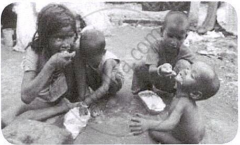
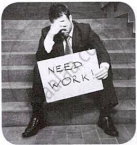
a fair remuneration in the form of wages and salaries
protection of trade union rights
safe and comfortable working environment
to assist in solving national problems like poverty, unemployment, unbalanced regional growth, etc.
Which of the following is NOT an example of a stakeholder?
managers
competitors
government
customer
Creditors have a legal claim to receive the amount owed and may enforce repayment terms or take legal action if the debt is not repaid as agreed.
True
False
As a general public, what are your expectations from the company?
reasonable terms of delivery and payment.
co-operation among competitors to ensure the growth of the entire industry.
security in the form of mortgage of assets or personal guarantee by owners of the enterprise.
to respect human rights including rights of women and children.
______ is an example of internal stakeholders.
Creditors
Suppliers
Dealers
Employees
Quick and fair redressal of grievances is the expectation of suppliers.
True
False
Identify the picture and write whose expectation is depicted in the picture:

Employer
Creditor
Supplier
Society
Stakeholders who are contributing to the business enterprise from outside the organisation are known internal stakeholders.
True
False
ASSERTION: Creditors are not stakeholders.
REASONING: A creditor is an individual, institution, or entity to whom money, goods, or services are owed by another person or business.
A is true, and R is the correct explanation for A.
A is true, and R is not the correct explanation for A.
A is true, but R is false.
A is false, but R is true.
Imagine you are an Employee of Shoe Game Company. What are your expectations from the company?
- safety of capital contributed by them
- safe and comfortable working environment
- a fair and regular return (in the form of dividend) on their capital
- opportunities for education, self-development, promotion and career growth
II & III
III & II
II & IV
I & IV
Observe the image and identify the expectation of government.
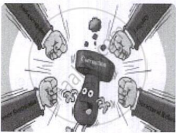
to avoid monopoly and concentration of economic power.
to make proper use of scarce resources of the nation.
to avoid corrupting public servants.
to assist in solving national problems like poverty, unemployment, unbalanced regional growth, etc.
ASSERTION: The government may influence business operations through policymaking, taxation, and economic incentives.
REASONING: To foster a stable and fair business environment that benefits both the economy and society.
A is true, and R is the correct explanation for A.
A is true, and R is not the correct explanation for A.
A is true, but R is false.
A is false, but R is true.
Jin & Co. is a competitor of Durf & Co. What expectations does Jin & Co have from Durf & Co?
- An atmosphere of healthy competition and ethical behaviour
- Timely payment of wages
- Fair trade practices regarding price, quality and service
- Safe working environment
1 and 3
2 and 3
3 and 4
2 and 4
Ramu is a labourer working in ‘ABC Constructions’. His expectations from his company are:
- Appreciation of Capital invested.
- Timely payment of wages.
- Timely payment of interest.
- Safe working environment.
1 and 4
2 and 3
3 and 4
2 and 4
If a stakeholder provides raw material to a firm, what does he expect in return?
Job security and continuity in service.
Atmosphere of healthy competition.
Safety of capital.
Fair and timely payments.
SHORT ANSWER QUESTIONS
Who are ‘stakeholders’?
Distinguish between ‘stakeholders’ and ‘shareholders’.
Who are Internal Stakeholders?
Give two examples of Internal Stakeholders.
What do you mean by external stakeholders?
State any two expectations of the Associates from a business enterprise.
State any two expectations of employers from a commercial organisation.
Mention any two expectations of Employees.
Write any two differences between Internal stakeholders and External stakeholders.
State any two expectations of competitors from a business concern.
Distinguish between a shareholder and a creditor.
Distinguish between shareholders and customers.
State any two expectations of the general public from a business organisation.
There are people who provide jobs to others. Identify them and give one expectation that they may have from a commercial organisation.
LONG ANSWER QUESTIONS
Explain the expectations of internal stakeholders in a commercial organisation.
Explain the expectations of the Government from a business organisation.
Discuss the expectations of customers and business associates.
Abhijeet is the owner of Trila group of companies. Explain his expectations from his business organisations.
Explain the conflicting needs of the stakeholders of a company.
Give any five points of difference between stakeholders and customers of a company.
Give any five expectations of employees from a business enterprise.
Distinguish between a shareholder and a creditor.
State any two expectations of the general public from a business organisation.
Give any five expectations of creditors from a business enterprise.
Explain any five expectations of suppliers from a business organisation.
Individuals or institutions provide money as a loan to commercial organisations and charge interest on it.
- Identify the above stakeholders.
- State any four expectations that the above may have from a business enterprise.
Assignment/Project Work:
The Chairman of Fine Textiles Corporation faces a serious dilemma. His employees are demanding an average wage increase of 10% over present wages. Since profits are expected to be very small even at present cost levels, the management would not accept another increase in costs unless prices are raised. Consumer groups, however, are pressing the firms to keep their prices at current levels. The Chairman wonders what to do in such circumstances. Advise him. What do you think should be the most socially responsible decision in this situation?
Goyal Brothers Prakashan solutions for Commercial Studies [English] Class 10 ICSE 1 Stakeholders in Commercial Organisations QUESTION BANK [Pages 12 - 13]
Who is a stakeholder in a Commercial Organisation?
Classify the six stakeholders of a firm into internal and external stakeholders.
Why customer is not a stakeholder in a firm?
Who are customers?
The customer is the foundation of business and keeps it in existence, but they are not the stakeholders of the firm. Why?
“Stakeholders can have both positive and negative impact on a commercial organisation.” Comment.
Explain the expectations of customers from a firm.
Explain the conflicting needs of the stakeholders of a company.
Distinguish between Primary stakeholders and Secondary stakeholders.
Explain the expectations of government from a business enterprise.
This group of people offer raw materials, finished products or various services to a business organisation.
- Identify this group of stakeholders.
- Give four expectations they may have from the business organisation.
Solutions for 1: Stakeholders in Commercial Organisations
Goyal Brothers Prakashan solutions for Commercial Studies [English] Class 10 ICSE chapter 1 - Stakeholders in Commercial Organisations
Shaalaa.com has the CISCE Mathematics Commercial Studies [English] Class 10 ICSE CISCE solutions in a manner that help students grasp basic concepts better and faster. The detailed, step-by-step solutions will help you understand the concepts better and clarify any confusion. Goyal Brothers Prakashan solutions for Mathematics Commercial Studies [English] Class 10 ICSE CISCE 1 (Stakeholders in Commercial Organisations) include all questions with answers and detailed explanations. This will clear students' doubts about questions and improve their application skills while preparing for board exams.
Further, we at Shaalaa.com provide such solutions so students can prepare for written exams. Goyal Brothers Prakashan textbook solutions can be a core help for self-study and provide excellent self-help guidance for students.
Concepts covered in Commercial Studies [English] Class 10 ICSE chapter 1 Stakeholders in Commercial Organisations are Distinction Between Stakeholders and Customers, Internal and External Stakeholders, Expectations of Stakeholders, Stakeholders Analysis, Meaning of Stakeholders, Distinction Between Stakeholders and Shareholders, Distinction Between Stakeholders and Customers, Internal and External Stakeholders, Expectations of Stakeholders, Stakeholders Analysis, Meaning of Stakeholders, Distinction Between Stakeholders and Shareholders.
Using Goyal Brothers Prakashan Commercial Studies [English] Class 10 ICSE solutions Stakeholders in Commercial Organisations exercise by students is an easy way to prepare for the exams, as they involve solutions arranged chapter-wise and also page-wise. The questions involved in Goyal Brothers Prakashan Solutions are essential questions that can be asked in the final exam. Maximum CISCE Commercial Studies [English] Class 10 ICSE students prefer Goyal Brothers Prakashan Textbook Solutions to score more in exams.
Get the free view of Chapter 1, Stakeholders in Commercial Organisations Commercial Studies [English] Class 10 ICSE additional questions for Mathematics Commercial Studies [English] Class 10 ICSE CISCE, and you can use Shaalaa.com to keep it handy for your exam preparation.
