Advertisements
Chapters
2: Marketing and Sales
3: Advertising and Sales Promotion
4: Consumer Protection
5: E-Commerce
6: Capital and Revenue Expenditure/Income
7: Final Accounts of Sole Proprietorship
▶ 8: Fundamental Concepts of Cost
9: Budgeting
10: Sources of Finance
11: Recruitment, Selection and Trading
12: Industrial Relations, Trade Union and Social Security
13: Logistics and Insurance
14: Banking
15: Government Indicatives in Environment Protection
![Goyal Brothers Prakashan solutions for Commercial Studies [English] Class 10 ICSE chapter 8 - Fundamental Concepts of Cost - Shaalaa.com](/images/commercial-studies-english-class-10-icse_6:37e256b2e71b45edb2901d6e733a1c87.jpg "Goyal Brothers Prakashan solutions for Commercial Studies [English] Class 10 ICSE chapter 8 - Fundamental Concepts of Cost")
Advertisements
Solutions for Chapter 8: Fundamental Concepts of Cost
Below listed, you can find solutions for Chapter 8 of CISCE Goyal Brothers Prakashan for Commercial Studies [English] Class 10 ICSE.
Goyal Brothers Prakashan solutions for Commercial Studies [English] Class 10 ICSE 8 Fundamental Concepts of Cost EXERCISES [Pages 149 - 153]
OBJECTIVE TYPE QUESTIONS
Indirect material scrap is adjusted along with ______.
Prime cost
Distribution cost
Factory cost
Production cost
Overheads are often related to accounting concepts such as fixed cost and ______ cost.
Direct
Indirect
Primary
Money
Variable cost is a cost that ______.
Changes with the level of output.
Remains same at all levels of output.
Either changes with the level of output or remains same at all levels of output.
None of these.
Total variable cost per unit increases ______.
When production grows
When demand decreases
Change in government rules
Change in availability of raw material
A typical factory overhead cost is ______.
Audit
Compensation of plant manager
Design distribution
Internal
______ means amount spent on production or to provide services.
cost
profit
revenue
expenditure
The cost remains same at all levels of output is called ______ cost.
variable
fixed
flexible
urgent
Which cost decreases with increase in the volume of output?
Variable cost
Fixed cost
Revenue cost
Smart cost
Which of the following cost is time based?
Fixed cost
Variable cost
Implicit cost
None of these
It refers to the expenses incurred on those items which are not directly chargeable to production. Salaries of timekeeper, foremen and watchmen are examples of this cost. This cost is incurred for the concern as a whole rather than a particular product.
Direct cost
Indirect cost
Selling cost
Advertising cost
Which definition best describes indirect costs?
Indirect costs are those costs which are not controlled directly by a manager.
Indirect costs are those costs which cannot be directly associated with a product or service.
Indirect costs are always fixed.
Indirect costs are always manufacturing overhead cost.
To control costs, it is essential to keep control on ______.
Prime cost
Overheads
Indirect materials and tools cost
All of these
Wages paid to a labour who was engaged in the production activities can be termed as ______.
Direct cost
Indirect cost
Sunk cost
Implicit cost
Which of the following best describes a fixed cost?
A cost that remains at the same level up to a particular level of output.
The cost changes with levels of output.
A cost that remains at the same level when output increases.
None of these.
“A fixed cost is a cost that a business must pay whether it produces one product or a million. Regardless of output, the business must pay the same,” amount spent to purchase a ______ is the example of fixed cost.
Raw material
Machinery
Stationary
None of these
Which of the following is overhead cost?
Amount spent on raw material.
Salary of the finishing cost centre supervisor.
Wages paid to labour.
None of these.
An example of a production overhead would be ______.
Material
Rent
Labour cost
Supervisory cost
Overhead is actually the total of ______.
Indirect materials
Indirect expenses
Indirect labour
All of these
Fixed cost is a cost which remains same at ______.
All levels of output
Even zero level of output
Both all levels of output and even zero level of output
Neither all levels of output nor even zero level of output.
Direct cost increases when ______.
Sales price of product increases
Cost of raw material increases
Tax increases
Subsidy increases
All indirect expenses are count under the head of ______.
Overheads
Total cost
Revenue
None of these
The cost which changes as per the levels of production is ______.
Variable cost
Fixed cost
Total cost
Implicit cost
Which of the following is related to office and administrative overheads?
Raw materials
Gatekeeper’s salary
Insurance
None of these
Cotton used in manufacturing cloth, sugarcane used in producing sugar, rubber used in producing shoes are examples of ______.
Labour
Materials
Cost
Goods
The cost which does not vary proportionately but do not remain constant with changes in the volume of output are known as ______ cost.
Variable
Semi-variable
Fixed
Routine
Which of the following is not the example of direct expense?
Fees paid to an architect of a building.
Salary of timekeeper.
Rent paid to hire special machine required for a particular contract.
Cost of defective work incurred in connection with a particular job.
Expenses may be direct or ______.
Indirect
Money
Real
Smooth
Cost of sugarcane in making sugar is an example of ______.
Direct
Variable
Indirect
Semi-variable
Telephone cost is an example of ______ cost.
Fixed
Variable
Semi-variable
Direct
Salary paid to a mill manager is an example of ______ cost.
Direct
Indirect
Fixed
Semi-Variable
______ cost is activity-based. It increases with increase in output.
Fixed
Variable
Semi-variable
Direct
Costs like rent, insurance etc. which do not change inspite of changes in the volume of output are ______ costs.
Direct
Indirect
Fixed
Variable
ASSERTION: Timekeeper’s salary is an example of direct labour.
REASONING: All material which becomes an integral part of the finished product, and which can be conveniently assigned to specific physical units of the finished product, is known as direct material.
A is true, and R is the correct explanation for A.
A is true, and R is not the correct explanation for A.
A is true, but R is false.
A is false, but R is true.
Which of the following is true regarding Variable Cost?
- Variable costs are fixed in total but vary per unit.
- Variable Costs vary in proportion to changes in the volume of output.
- Variable Costs are time-based.
- Variable Costs are activity-based.
I & II
II & III
II & IV
I & III
Which of the following is an example of Indirect Cost?
Officer’s salaries
Crude oil in making diesel
Raw materials
Raw cotton in a textile mill
Which of the following is NOT a fixed cost?
Lease costs
Loan repayments
Rent
Sales commission
Indirect costs refer to the expenses incurred on those items which are not directly chargeable production.
True
False
On the Basis of nature cost can be classified into ______.
Direct and Indirect costs
Direct, Variable and Indirect costs
Variable, Fixed and Semi-variable costs
Variable, Indirect and Semi-variable costs
A variable cost, also known as a mixed cost or a semi-fixed cost, it is an expense that contains both fixed and variable components.
True
False
Which of the following is incorrect for fixed cost?
Fixed costs are time-based.
Fixed costs are controllable in the short run.
Fixed costs are fixed in total but vary per unit.
Example of Fixed cost : Rent, insurance, salary.
Observe the image and state the type of cost.
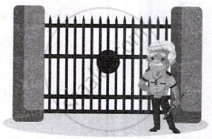
Direct Cost
Indirect Cost
Semi-variable Cost
Fixed Cost
Observe the given image and identify the element of cost shown.
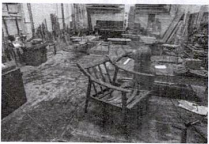
Indirect expenses
Indirect labour
Indirect material
Direct material
Wages of carpenter is an example of indirect cost.
True
False
In the running of a particular train, cost of railway station and railway staff are indirect costs.
True
False
Observe the image and identify the type of cost.
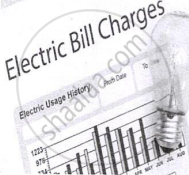
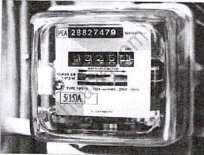
Fixed Cost
Variable Cost
Semi-variable Cost
Direct material
ASSERTION: Consumable stores, oil lubricants and cotton waste, printing and stationery material, nails, glue and polish used in making furniture, etc., are a few examples of indirect material.
REASONING: Such material may be used in the factory, office or selling and distribution division.
A is true, and R is the correct explanation for A.
A is true, and R is not the correct explanation for A.
A is true, but R is false.
A is false, but R is true.
In the production of an article, materials are purchased, wages are paid to workers, and certain other expenses are incurred directly. All these take an active and direct part in the manufacture of a product and are, therefore, called indirect costs.
True
False
ASSERTION: Variable costs are fixed per unit but vary in total.
REASONING: Variable costs decrease with Increase in the volume of output.
A is true, and R is the correct explanation for A.
A is true, and R is not the correct explanation for A.
A is true, but R is false.
A is false, but R is true.
SHORT ANSWER QUESTIONS
Define the term ‘cost’.
What is semi-variable cost?
Give one example of semi-variable cost.
What is Variable Cost?
Give one example of Variable cost.
What is Fixed Cost?
Give an example of a fixed cost.
Explain ‘Indirect cost’.
Distinguish between variable cost and semi-variable cost.
Distinguish between Direct Labour cost and Indirect Labour cost.
What do you mean by ‘Indirect Material’?
Give two examples of Indirect Material.
Define fixed cost. Give an example.
Write a short note on direct costs.
Distinguish between direct costs and indirect costs.
LONG ANSWER QUESTIONS
Explain the different elements of cost.
Distinguish between direct costs and indirect costs.
Explain the different components of direct costs.
Explain the different components of indirect costs.
Distinguish between Fixed cost and Variable cost.
Explain with an example the meaning of fixed costs.
Explain with an example the meaning of variable costs.
What do you understand by semi-variable cost? Explain with the help of an example.
“The interpretation of cost varies based on its context.” Discuss this notion in relation to significant cost related concepts.
Assignment/Project Work
Prepare a list of all the expenses which you have incurred on your studies during the last one year. Classify these expenses into direct and indirect categories. Which category is higher in amount and why?
Goyal Brothers Prakashan solutions for Commercial Studies [English] Class 10 ICSE 8 Fundamental Concepts of Cost QUESTION BANK [Pages 153 - 155]
Explain the different elements of cost.
Explain the different components of direct costs.
Explain the different components of indirect costs.
Define Direct Cost.
Describe cost on the basis of behaviour.
Distinguish between variable cost and semi-variable cost.
Cotton used in manufacturing cloth is an examples of direct material. Explain Direct material and give examples of it.
Material used in the office such as printing and stationery material, brooms and dusters, etc are examples of indirect costs. Explain why?
Salesman commission is a semi-variable cost, also known as a mixed cost. Explain with an example.
What is opportunity cost?
Give an example of opportunity cost.
Solutions for 8: Fundamental Concepts of Cost
Goyal Brothers Prakashan solutions for Commercial Studies [English] Class 10 ICSE chapter 8 - Fundamental Concepts of Cost
Shaalaa.com has the CISCE Mathematics Commercial Studies [English] Class 10 ICSE CISCE solutions in a manner that help students grasp basic concepts better and faster. The detailed, step-by-step solutions will help you understand the concepts better and clarify any confusion. Goyal Brothers Prakashan solutions for Mathematics Commercial Studies [English] Class 10 ICSE CISCE 8 (Fundamental Concepts of Cost) include all questions with answers and detailed explanations. This will clear students' doubts about questions and improve their application skills while preparing for board exams.
Further, we at Shaalaa.com provide such solutions so students can prepare for written exams. Goyal Brothers Prakashan textbook solutions can be a core help for self-study and provide excellent self-help guidance for students.
Concepts covered in Commercial Studies [English] Class 10 ICSE chapter 8 Fundamental Concepts of Cost are Elements of Cost, On the Basis of Nature, On the Basis of Behaviour, On the Basis of Control, Other Types of Cost, Money Cost Or Accounting Cost / Explicit Cost, Classification of Costs, Elements of Cost, On the Basis of Nature, On the Basis of Behaviour, On the Basis of Control, Other Types of Cost, Money Cost Or Accounting Cost / Explicit Cost, Classification of Costs.
Using Goyal Brothers Prakashan Commercial Studies [English] Class 10 ICSE solutions Fundamental Concepts of Cost exercise by students is an easy way to prepare for the exams, as they involve solutions arranged chapter-wise and also page-wise. The questions involved in Goyal Brothers Prakashan Solutions are essential questions that can be asked in the final exam. Maximum CISCE Commercial Studies [English] Class 10 ICSE students prefer Goyal Brothers Prakashan Textbook Solutions to score more in exams.
Get the free view of Chapter 8, Fundamental Concepts of Cost Commercial Studies [English] Class 10 ICSE additional questions for Mathematics Commercial Studies [English] Class 10 ICSE CISCE, and you can use Shaalaa.com to keep it handy for your exam preparation.
