Advertisements
Chapters
2: Marketing and Sales
3: Advertising and Sales Promotion
4: Consumer Protection
5: E-Commerce
6: Capital and Revenue Expenditure/Income
7: Final Accounts of Sole Proprietorship
8: Fundamental Concepts of Cost
9: Budgeting
10: Sources of Finance
11: Recruitment, Selection and Trading
12: Industrial Relations, Trade Union and Social Security
13: Logistics and Insurance
▶ 14: Banking
15: Government Indicatives in Environment Protection
![Goyal Brothers Prakashan solutions for Commercial Studies [English] Class 10 ICSE chapter 14 - Banking - Shaalaa.com](/images/commercial-studies-english-class-10-icse_6:37e256b2e71b45edb2901d6e733a1c87.jpg "Goyal Brothers Prakashan solutions for Commercial Studies [English] Class 10 ICSE chapter 14 - Banking")
Advertisements
Solutions for Chapter 14: Banking
Below listed, you can find solutions for Chapter 14 of CISCE Goyal Brothers Prakashan for Commercial Studies [English] Class 10 ICSE.
Goyal Brothers Prakashan solutions for Commercial Studies [English] Class 10 ICSE 14 Banking EXERCISES [Pages 268 - 275]
OBJECTIVE TYPE QUESTIONS
RBI is ______.
Commercial Bank
Central Bank
Specialised Bank
None of these
Which of the following is a Commercial Bank?
SBI
RBI
EXIM
None of these
A bank is an institution which accepts _____ from the public and advances ______.
Deposits, loans
Loans, deposits
Cash, cash
Loan, loan
The ______ of a country serves as the leader of the banking system and the money market.
Commercial Bank
Central Bank
Specialised Bank
None of these
It acts as the bankers' bank.
Commercial Bank
Central Bank
Specialised Bank
None of these
It carries out the country's monetary policy.
Commercial Bank
Central Bank
Specialised Bank
None of these
______ is the apex institution of the country's monetary and banking structure where as ______ is one of the organs of the money market.
Commercial Bank, central bank
Central Bank, commercial bank
Specialised Bank, central bank
Commercial bank, specialised bank
Central bank is owned by the ____ while commercial bank is owned by ______.
Shareholders, shareholders
Government, shareholders
Shareholders, government
None of these
Central bank is the ______ of the country's foreign currency reserves.
Dealer
Consumer
Custodian
User
Which of the following is/are the function(s) of central bank?
Banker’s bank
Provides overdraft facility to the public.
Receive deposits from the public and business firms.
Provide short-term and medium-term loans to customers.
It is a funds transfer system under which transfer of funds takes place from one bank to another on a real time and gross basis.
RTGS
NEFT
IMPS
Mobile wallet
It is a countrywide system by which an individual, firm or company can electronically transfer funds from any bank branch to another individual, firm or company having an account with any other bank branch in the country.
RTGS
NEFT
IMPS
Mobile wallet
IMPS stand for ______.
Immediate (Mobile) Payment Service
Intermediate (Mobile) Payment Service
Internal (Mobile) Payment Service
Internet (Mobile) Payment Service
It is a type of electronic card which is used for transactions made online through a computer or a smartphone.
E-wallet
Cheque
Bank draft
None of these
Electronic banking is a part of ______ banking.
Real
Image
Gross
Virtual
A customer can withdraw or deposit money with the help of this machine by inserting his/her card and typing his/her personal identity number.
RTGS
ATM
NEFT
IMPS
In case of ______ cardholder makes payment after using the card.
E-wallet
Debit card
Credit card
None of these
In case of ______ cardholder makes payment before using the card.
E-wallet
Debit card
Credit card
None of these
This fraud occurs when assets of a company are overstated or its liabilities are understated in order to make it appear financially stronger than what it is in reality.
Credit card fraud
false accounting fraud
insurance fraud
intellectual property fraud
Any action taken with the intention to obtain a fraudulent benefit from an insurance process is an fraud.
Credit card fraud
False accounting fraud
Insurance fraud
Intellectual property fraud
This is a fraud involving property that is protected under patent, trademark, copyright and trade secret laws.
Credit card fraud
False accounting fraud
Insurance fraud
Intellectual property fraud
This type of fraud involves a computer and a network.
Credit card fraud
Insurance fraud
Intellectual property fraud
Internet and cyber fraud
Which of the following is not a precaution to be used while using debit or credit cards?
Avoid using the ATM if suspicious individuals are standing nearby.
Only use ATMs with unusual signage, such as a command to enter your PIN twice to complete.
Only use secure websites when making online transactions.
If your card gets stuck in the machine, call your financial institution promptly to report the incident.
The ______ is the central bank of our country which has the authority to print currency notes.
ICICI
RBI
PNB
HDFC
The ______ function of the Central bank involves the settling claims of Commercial banks through a process of book entries.
The monopoly of note issue
Government’s bank
Clearing house
Developmental
The Chief of the Reserve Bank of India is called ______.
The Governor
The Chairman
The Finance Secretary
The President
The RBI settles claims of other commercial banks by a process of book entries. It helps to stabilize the banking system in the economy. Which function of the Central bank is explained here.
Monopoly of note issue
Government’s bank
Clearing house function
Developmental function
Which of the following banks regulate the supply of money in the economy?
Commercial banks
Indigenous banks
Central bank
Exchange banks
Assertion: Central banks control credit.
Reasoning: Commercial banks issue bank drafts.
A is true and R is the correct explanation for A
A is true but R is not the correct explanation for A
A is true, R is false
A is false, R is true
A false accounting fraud occurs when assets of a company are overstated or its liabilities are understated in order to make it appear financially stronger than what it is in reality. Which of the following is NOT the reason behind false accounting?
- Use unique identification and passwords to control access to systems and buildings.
- To attract customers by appearing more successful than reality.
- Make payments after multiple authority and signatures.
- To get loans from banks/financial institutions.
I & III
II & III
III & IV
I & IV
Which of the following is not true regarding RTGS?
There is no waiting period.
RTGS transactions are not processed immediately. It is done in batches.
The minimum amount in an RTGS transaction is two thousand. There is no upper ceiling for an RTGS transaction.
The fund transfer takes place among three parties.
Which of the following banks regulate the supply of money in the economy?
Commercial banks
Indigenous banks
Central bank
Exchange banks
IMPS stand for Immediate (Mobile) Payment Service. It was started in 2010. In order to use IMPS, you don’t have to register for mobile banking.
True
False
Imagine you are using this machine. What will you not do from the following?
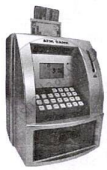
Avoid using it if suspicious individuals are standing nearby.
Watch out for ATMs that appear to have been altered.
Sign up for banking alerts.
Share card details such as the card number, CVV, PIN or OTP with anyone, including friends and family members.
Intellectual Property Fraud is a fraud involving property like house, land, mobile etc. it includes movable and immovable property.
True
False
Which of the following is NOT an example of Internet and Cyber Fraud:
Hacking
Copyright infringement
Unwarranted mass surveillance
Using false accounting to hide loss
Observe the image and state the type of fraud.
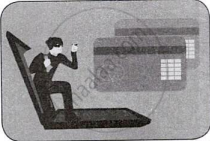
Cyber Fraud
Intellectual Property Fraud
Insurance Fraud
Credit Card Fraud
Identify the picture.
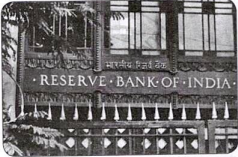
Central Bank
Commercial Bank
Industrial Bank
Indigenous Bank
Government grants the exclusive right to the central bank to issue notes on its behalf.
True
False
Observe the image and identify the function of Central Bank.
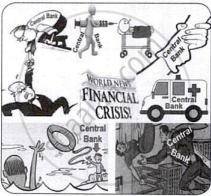
Custodian of Foreign Exchange
The Clearing House Function
Lender of the Last Resort
Monopoly of Note Issue
ASSERTION: The central bank is the sole custodian of gold and foreign currency reserves of the country.
REASONING: The ICICI carries out these settlements where the Reserve Bank of India has no office.
A is true, and R is the correct explanation for A.
A is true, and R is not the correct explanation for A.
A is true, but R is false.
A is false, but R is true.
The RBI settles claims of other commercial banks by a process of book entries. It helps to stabilize the banking system in the economy. Which function of the Central bank is explained here.
Monopoly of note issue
Government’s bank
Clearing house function
Developmental function
Observe the image and identify the function of Central Bank associated with it.



The central bank advises the Government to encourage exports and to restrict imports in such a way that the balance of payments may be favourable to the country.
The State Bank of India carries out these settlements where the Reserve Bank of India has no office.
The Reserve Bank of India creates special financial institutions for promoting economic development in different sectors of the economy - Development functions.
The central bank makes all possible efforts to maintain a stable exchange rate -Maintaining the Exchange Rate.
ASSERTION: There is a difference between a debit card and a credit card.
REASONING: A debit card card- holder must have money in his/her bank account. But in a credit card, the balance in the account is not necessary, as the cardholder is granted credit by the bank up to a specified limit.
A is true, and R is the correct explanation for A.
A is true, and R is not the correct explanation for A.
A is true, but R is false.
A is false, but R is true.
Which of the following is NOT an Insurance Fraud?
- An insurer knowingly denies a due benefit to the insured/beneficiary.
- Both employees of insurance companies and claimants indulge in insurance fraud.
- Fee Churning.
- Espionage.
I & II
II & III
I & III
Only IV
Faking accidents, faking death, concealing information for health care are examples of ______ fraud.
Insurance
False Accounting
Credit Card
Internet and Cyber
Identify the type of Fraud.
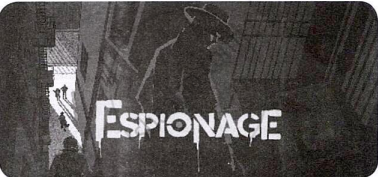
Cyber Fraud
Intellectual Property Fraud
Insurance Fraud
Credit Card Fraud
Which of the following is NOT true with reference to the Reserve Bank of India?
It is the sole custodian of foreign exchange reserves.
It extends loans to the general public.
It makes and receives payment on behalf ofthe government.
It has the monopoly of issuing currency notes.
Mohit goes to the bank with a credit instrument which is due three months later. The bank charges some commission and pays less than the face value of the instrument.
Identify the kind of loan granted by the commercial bank.
Term loan
Cash credit
Discounting of bills of exchange
Overdraft
Ram has a current account with State Bank of India. He issues a cheque of ₹ 55,000/- to his supplier, but the balance in his account was only ₹ 50,000/-. The cheque is cleared. The bank provides him:
Cash credit
Overdraft
Short-term loan
Discounting of bills
Assertion (A): The Central Bank is the sole custodian of foreign currency reserves.
Reason (R): The Central Bank has the monopoly of note issue.
Both (A) and (R) are true and (R) is the correct explanation of (A).
Both (A) and (R) are true but (R) is not the correct explanation of (А).
(A) is true and (R) is false.
Both (A) and (R) are false.
SHORT ANSWER TYPE QUESTIONS
Give two major functions of the central bank of our country.
“The central bank is a banker’s bank.” Explain.
Mention three credit control functions of the Reserve Bank of India.
What is meant by an overdraft facility given by a commercial bank?
What is meant by clearing house function of the RBI?
"The central bank is the lender of the last resort." Explain.
Write a Short note on IMPS.
State two advantages of travellers cheques.
Distinguish between the Central Bank and the Commercial Bank.
What is an ATM?
State any two precautions while using an 'ATM'.
What is a credit card?
What is a debit card?
Give the full form of RTGS.
Give the full form of IMPS.
Distinguish between a Debit card and a Credit card.
Distinguish between overdraft and cash credit.
Distinguish between saving account and current account.
What is ‘National Electronic Fund Transfer’?
What is meant by E-banking?
Give two agency functions of commercial banks.
What is false accounting?
Explain in brief Credit Card Fraud?
Describe Insurance Fraud.
What do you mean by Internet and Cyber Fraud?
Write a short note on Intellectual Property Fraud.
Write a short note on ‘RTGS’.
What is an overdraft?
Distinguish between NEFT and RTGS.
LONG ANSWER QUESTIONS
What is meant by the central bank of a country?
Explain in brief four methods usually adopted by the central bank to control credit in the country.
What is a Central Bank?
What are the important functions of Central Bank? Which of these functions are more important in a country like India?
Explain the 'Clearing House Function' of the central bank.
What are the important functions of Central Bank? Which of these functions are more important in a country like India?
Compare and contrast the features of RTGS and NEFT.
List any four features of NEFT.
Describe in brief various financial fraudulent practices.
What is Financial Accounting Fraud? State its motives.
What steps can be taken against financial accounting fraud?
Write a short note on Intellectual Property Fraud.
What steps can be taken to protect against Intellectual property Fraud?
What is an ATM?
What is ‘National Electronic Fund Transfer’?
Write a short note on ‘RTGS’.
State three precautions that must be taken while using credit or debit cards.
Assignment/Project Work
Visit the office of any commercial bank located near your school/residence. Meet in a group the manager of the bank branch. Enquire from him the functions and services which the bank offers to business firms. You may prepare a brief report on the basis of information collected from the manager. The report may be placed in the class for debate and discussion.
Visit any commercial bank in your city. Meet the staff and find out the procedure for opening a savings bank account. What facilities are available under such an account? How frequently can money be deposited and withdrawn from a savings account? What are the advantages of using a cheque for making payments?
Goyal Brothers Prakashan solutions for Commercial Studies [English] Class 10 ICSE 14 Banking QUESTION BANK [Pages 275 - 277]
What is a Bank Draft?
What is a Banker’s Cheque?
Write a short note on ‘RTGS’.
What is ‘National Electronic Fund Transfer’?
What is IMPS?
What are Mobile wallets?
Distinguish between the Central Bank and the Commercial Bank.
If you have a credit card with a ₹ 100,000 credit limit and you buy something worth ₹ 20000, your credit card balance will now be ₹ 20000. You can choose to pay this off immediately, or you can wait until your billing statement arrives. If you don’t pay the full ₹ 20000 by the due date, you’ll be charged interest on the remaining balance.
How is the increasing popularity of ATMs influencing consumer banking behaviour, and how can banks leverage this trend to improve customer service and operational efficiency?
Why is the Central Bank called the Government’s Bank?
Distinguish between a Debit card and a Credit card.
What is a Central Bank?
What is ‘National Electronic Fund Transfer’?
'Rita' was using a plastic card to withdraw money from a machine set up outside the bank.
- Identify the card.
- Write any four precautions that must be taken while using such a card.
Solutions for 14: Banking
Goyal Brothers Prakashan solutions for Commercial Studies [English] Class 10 ICSE chapter 14 - Banking
Shaalaa.com has the CISCE Mathematics Commercial Studies [English] Class 10 ICSE CISCE solutions in a manner that help students grasp basic concepts better and faster. The detailed, step-by-step solutions will help you understand the concepts better and clarify any confusion. Goyal Brothers Prakashan solutions for Mathematics Commercial Studies [English] Class 10 ICSE CISCE 14 (Banking) include all questions with answers and detailed explanations. This will clear students' doubts about questions and improve their application skills while preparing for board exams.
Further, we at Shaalaa.com provide such solutions so students can prepare for written exams. Goyal Brothers Prakashan textbook solutions can be a core help for self-study and provide excellent self-help guidance for students.
Concepts covered in Commercial Studies [English] Class 10 ICSE chapter 14 Banking are Types of Bank, Functions of a Central Bank, Control of Credit by Reserve Bank of India, Role of Banks in Economic Development, Advantages of Opening a Bank Account, Electronic Banking (E-Banking) - ATM, Credit and Debit Cards, Financial Fraudulent Practices, Banking, Types of Bank, Functions of a Central Bank, Control of Credit by Reserve Bank of India, Role of Banks in Economic Development, Advantages of Opening a Bank Account, Electronic Banking (E-Banking) - ATM, Credit and Debit Cards, Financial Fraudulent Practices, Banking.
Using Goyal Brothers Prakashan Commercial Studies [English] Class 10 ICSE solutions Banking exercise by students is an easy way to prepare for the exams, as they involve solutions arranged chapter-wise and also page-wise. The questions involved in Goyal Brothers Prakashan Solutions are essential questions that can be asked in the final exam. Maximum CISCE Commercial Studies [English] Class 10 ICSE students prefer Goyal Brothers Prakashan Textbook Solutions to score more in exams.
Get the free view of Chapter 14, Banking Commercial Studies [English] Class 10 ICSE additional questions for Mathematics Commercial Studies [English] Class 10 ICSE CISCE, and you can use Shaalaa.com to keep it handy for your exam preparation.
