Topics
Nature and Significance of Management
- Case Study: Tata Group – Excellence in Management
- Concept of Management
- Characteristics of Management
- Objectives of Management
- Importance of Management
- Nature of Management
- Management as an Art
- Management as a Science
- Management as a Profession
- Levels of Management
- Functions of Management
- Coordination as an Essence of Management
- Management in the Twenty-First Century
Principles and Functions of Management
Business Finance and Marketing
Principles of Management
- Case Study: Toyota's Guiding Principles of Management
- Evolution of Management Principles
- Concept of Management Principles
- Nature of Management Principles
- Significance of Management Principles
- Taylor's Scientific Management Theory
- Principles of Scientific Management
- Techniques of Scientific Management> Functional Foremanship
- Techniques of Scientific Management> Standardisation and Simplification of Work
- Techniques of Scientific Management> Differential Piece Wage System
- Fayol’s Principles of Management
- Comparison of Taylor's and Fayol’s Principles
Business Environment
- Case Study: Dharamveer Kamboj's Entrepreneurial Journey
- Concept of Business Environment
- Importance of Business Environment
- Dimensions of Business Environment
- External Factors> Economic Environment
- External Factors> Social Environment
- External Factors> Technological Environment
- External Factors> Political Environment
- External Factors> Legal Environment
- Economic Environment in India
- The 1991 Economic Crisis and Reforms
- Liberalisation
- Privatisation
- Globalisation
- Demonetisation
Planning
Organising
- Case Study: Wipro's Organisational Restructuring for Growth
- Organising
- Steps in the Process of Organising
- Importance of Organising
- Structure of Organisation
- Types of Organisation Structure > Functional Structure
- Types of Organisation Structure > Divisional Structure
- Comparison Between Functional Structure and Divisional Structure
- Formal Organisation
- Informal Organisation
- Comparison between Formal Organisation and Informal Organisation
- Concept of Delegation of Authority
- Concept of Decentralization
- Comparison Between Delegation and Decentralization
Staffing
- Case Study: Management of Human Resources at Infosys
- Staffing
- Staffing as Part of Human Resource Management
- Evolution of Human Resource Management
- Staffing Process
- Aspects of Staffing > Recruitment
- Sources of Recruitment
- Internal Sources
- External Sources
- Aspects of Staffing > Selection
- Aspects of Staffing > Training and Development
- Methods of Training
Directing
- Case Study: Leadership Development at Ford Motor Company
- Directing
- Principles of Directing
- Elements of Directing
- Supervision
- Motivation
- Motivation> Motivation Process
- Motivation> Importance of Motivation
- Motivation > Maslow’s Need Hierarchy Theory of Motivation
- Motivation> Financial and Non-Financial Incentives
- Leadership
- Communication
- Communication> Formal Communication
- Communication> Informal Communication or Grapevine
- Barriers to Communication
- Improving Communication Effectiveness
Controlling
Financial Management
- Case Study: Tata Steel–Corus Acquisition
- Concept of Business Finance
- Concept of Financial Management
- Financial Decisions> Investment Decision
- Financial Decisions> Financing Decision
- Financial Decisions> Dividend Decision
- Concept of Financial Planning
- Importance of Financial Planning
- Capital Structure
- Factors affecting the Choice of Capital Structure
- Fixed Capital
- Working Capital
Financial Markets
- Concept of Financial Market
- Money Market
- Capital Market
- Primary Market
- Secondary Market/Stock Exchange
- Distinction Between Capital Market and Money Market
- Distinction between Primary and Secondary Market
- Functions of Stock Exchange
- Trading Procedure of Stock Exchange
- Depository Services
- Demat System
- Securities and Exchange Board of India (SEBI)
Marketing
- Concept of Financial Market
- Types of Financial Market
- Money Market
- Capital Market
- Primary Market
- Secondary Market/Stock Exchange
- Securities and Exchange Board of India (SEBI)
- Distinction Between Capital Market and Money Market
- National Stock Exchange of India (NSE)
- Overview of Marketing
Marketing Management
- Concept of Marketing
- Concept of Marketing Management
- Marketing vs. Selling
- Marketing Management Philosophies
- Functions of Marketing
- Concept of Marketing Mix
- Marketing Mix> Product
- Classification of Products> Consumer Products
- Classification of Products> Industrial Products
- Branding
- Packaging
- Labelling
- Marketing Mix> Pricing
- Marketing Mix> Physical Distribution
- Marketing Mix> Promotion
- Promotion Mix
- Advertising
- Personal Selling
- Sales Promotion
- Public Relations
- Distinction Between Advertising and Personal Selling
Consumer Protection
- Case Study: Consumer Protection in Banking Services
- Concept of Consumer Protection
- Importance of Consumer Protection
- Consumer Protection Act, 2019
- Concept of Consumer
- Consumer Rights
- Responsibilities of Consumers
- Ways and Means of Consumer Protection
- Redressal Agencies Under The Consumer Protection Act
- Role of Consumer Organisations and NGO's
Definition: Financing Decision
The decision concerning how much long-term finance should be raised and the sources from which it should be raised is called a financing decision.
Introduction
A business must determine:
- The total amount of long-term finance required.
- The available sources of finance.
- The proportion to be raised from each source.
Short-term financing requirements are considered under working-capital management.
A financing decision affects the cost of capital, financial risk, control of existing owners, and the ability to meet fixed payments.
A financing decision determines both the sources and the proportion of finance raised from each source.
Definition: Shareholders’ Funds
Funds contributed by owners or retained from business profits are called shareholders’ funds.
Definition: Borrowed Funds
Funds raised through debentures or other forms of debt that create repayment obligations are called borrowed funds.
Definition: Retained Earnings
The part of profit kept within the business for future use is called retained earnings.
Debt and Equity
A firm must select a sensible combination of debt and equity. Debt may be cheaper, but it creates fixed payment commitments and increases financial risk. Equity does not require compulsory dividends or repayment of capital in the same manner.
| Basis | Debt | Equity |
|---|---|---|
| Nature | Borrowed funds | Owners’ funds |
| Return | Interest | Dividend |
| Payment | Interest is compulsory under the borrowing terms | Dividend is not compulsory |
| Repayment | Principal is repaid at the agreed time | No similar fixed repayment commitment |
| Financial risk | Higher due to fixed commitments | Lower for the business |
| Control | Normally does not dilute ownership control | A fresh issue may dilute control |
| General cost | Usually cheaper | Generally costlier than debt |
Important: Debt may be cheaper, but it is not automatically the best source. Cost must be balanced against risk and other factors.
Financial Risk
The possibility that a firm may fail to meet its fixed payment obligations is called financial risk.
Debt creates compulsory commitments:
- Interest must be paid according to the borrowing terms.
- Principal must be repaid at the specified time.
- These commitments continue even when profits are inadequate.
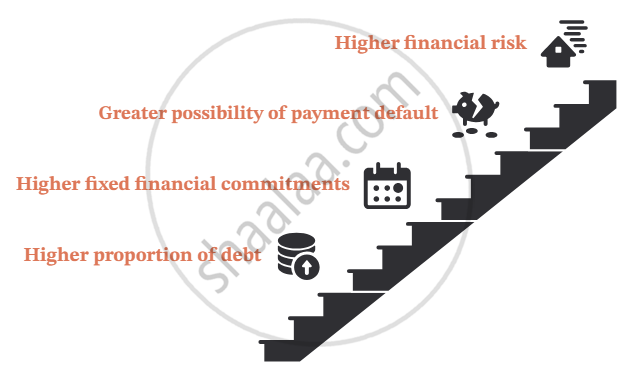
The overall financial risk generally rises as the proportion of debt in total capital increases.
Cost and Floatation
Every source of finance has a cost. Debt is generally considered cheaper, and interest is deductible while determining taxable profit. However, cost must always be considered together with risk.
- Floatation Cost: The expenditure incurred in raising funds from a particular source is called floatation cost.
- A source with a higher floatation cost becomes less attractive.
Factors Affecting Financing Decisions
| Factor | Key Consideration | Decision Cue (Impact on Choice) |
| 1. Cost | Different sources of finance have varying costs; cheaper options are generally preferred. | Lower cost makes a source more attractive. |
| 2. Risk | Debt involves fixed repayment obligations, whereas equity does not. | Higher financial risk reduces the suitability of taking on more debt. |
| 3. Floatation Costs | Expenses incurred while issuing or raising funds (e.g., brokerage, underwriting fees). | Higher floatation costs make a financing source less desirable. |
| 4. Cash-Flow Position | The company’s ability to generate steady cash to meet fixed financial obligations. | Strong cash flows support a greater capacity for debt. |
| 5. Fixed Operating Costs | Existing fixed business expenses (e.g., rent, insurance, salaries). | High fixed operating costs generally favour lower debt to avoid burden. |
| 6. Control Considerations | Issuing new equity dilutes the ownership and control of existing shareholders. | Desire to retain control favours debt financing. |
| 7. State of Capital Market | Investor sentiment during bullish (rising) or bearish (depressed) market conditions. | A favourable (rising) market supports issuing equity over debt. |
Key Points: Financing Decision
- Financing decision determines how much long-term finance to raise and from which sources.
- Sources include equity, debt, preference share capital, and retained earnings.
- Debt creates compulsory interest and repayment commitments.
- Possibility of failing to meet fixed obligations is called financial risk.
- Equity does not create the same compulsory commitments as debt.
- Financing mix affects cost of capital and financial risk.
- Seven factors: cost, risk, floatation costs, cash-flow position, fixed operating costs, control considerations, and state of capital market.
Cost → Risk → Floatation → Cash Flow → Fixed Costs → Control → Capital Market
