Topics
Gravitation
- Concept of Gravitation
- Force and Motion
- Circular Motion and Centripetal Force
- Kepler’s Laws
- Law of Orbit or Kepler's First Law
- Law of Areas or Kepler's Second Law
- Law of Periods or Kepler's Third Law
- Newton's Universal Law of Gravitation
- Uniform Circular Motion (UCM)
- Earth’s Gravitational Force
- Earth’s Gravitational Acceleration
- Mass and Weight
- Gravitational Waves
- Free Fall
- Gravitational Potential Energy
- Escape Velocity
- Weightlessness in Space
Periodic Classification of Elements
- Classification of Elements
- Dobereiner’s Triads
- Newland's Law of Octaves
- Mendeleev’s Periodic Table
- Insights into Mendeleev’s Periodic Table
- Modern Periodic Law
- Modern Periodic Table
- Structure of the Modern Periodic Table
- Modern Periodic Table and Electronic Configuration of Elements
- Groups and Electronic Configuration
- Periods and Electronic Configuration
- Periodic Trends in the Modern Periodic Table
- Atomic Size
- Metallic and Non-metallic Characters
- Gradation in Halogen Family
Chemical Reactions and Equations
- Chemical Reaction
- Chemical Equations
- Balancing Chemical Equation
- Types of Chemical Reactions > Combination Reaction
- Types of Chemical Reactions > Decomposition Reaction
- Types of Chemical Reactions > Single Displacement Reaction
- Types of Chemical Reactions > Double Displacement Reaction
- Endothermic and Exothermic Processes
- Rate of Chemical Reaction
- Types of Chemical Reactions > Oxidation and Reduction Reactions
- Corrosion of Metals
- Factors Affecting the Rate of a Chemical Reaction
- Rancidity
Effects of Electric Current
- Electric Circuit
- Heating Effect of Electric Current
- Magnetic Effect of Electric Current
- Right-hand Thumb Rule
- Applications of Biot-Savart's Law > Magnetic Field at the Axis of a Circular Current-carrying Loop
- Applications of Ampere’s Circuital Law > Magnetic Field of a Long Straight Solenoid
- Force on a Current-Carrying Conductor Placed in a Uniform Magnetic Field
- Fleming’s Left Hand Rule
- Electric Motor
- Introduction to Electromagnetic Induction
- Galvanometer
- Faraday's Laws of Electromagnetic Induction
- Fleming’s Right Hand Rule
- Alternating current (AC) and Direct Current (DC)
- Electric Generator
Heat
Refraction of Light
Lenses
- Concept of Lenses
- Images Formed by Convex Lenses
- Images Formed by Concave Lenses
- Sign Convention
- Lens Formula and Magnification
- Magnification
- Power of a Lens
- Combination of Lenses
- Human Eye
- Defects of Vision and Their Corrections > Myopia
- Defects of Vision and Their Corrections > Hypermetropia
- Defects of Vision and Their Corrections > Presbyopia
- Apparent Size of an Object
- Use of Concave Lenses
- Use of Convex Lenses
- Persistence of Vision
Metallurgy
- Physical Properties of Metal
- Physical Properties of Non-metal
- Chemical Properties of Metal
- Reactions of Metals
- Reactivity Series of Metals
- Chemical Properties of Non-metal
- Ionic Compounds
- Metallurgy
- Basic Principles of Metallurgy > Concentration of Ores
- Basic Principles of Metallurgy > Extraction of Metals
- Basic Principles of Metallurgy > Refining of Metals
- Corrosion of Metals
- Prevention of Corrosion
Carbon Compounds
- Bonds in Carbon Compounds
- Carbon: A Versatile Element
- Hydrocarbons
- Straight chains, Branched chains, and Rings of Carbon atoms
- Functional Groups in Carbon Compounds
- Nomenclature
- The IUPAC System of Nomenclature
- Homologous Series
- Chemical Properties of Carbon Compounds > Combustion
- Chemical Properties of Carbon Compounds > Oxidation
- Chemical Properties of Carbon Compounds > Addition Reaction
- Chemical Properties of Carbon Compounds > Substitution Reaction
- Ethanol
- Ethanoic Acid
- Macromolecules and Polymers
Space Missions
School of Elements
The Magic of Chemical Reactions
- Types of Chemical Reactions > Combination Reaction
- Types of Chemical Reactions > Decomposition Reaction
- Types of Chemical Reactions > Single Displacement Reaction
- Types of Chemical Reactions > Double Displacement Reaction
- Chemical Properties of Carbon Compounds > Oxidation
- Types of Double Displacement: Neutralization Reaction
The Acid Base Chemistry
The Electric Spark
All about Electromagnetism
- Magnetic force
- Bar Magnet and Solenoid Analogy
- Right-hand Thumb Rule
- Applications of Biot-Savart's Law > Magnetic Field at the Axis of a Circular Current-carrying Loop
- Applications of Ampere’s Circuital Law > Magnetic Field of a Long Straight Solenoid
- Force on a Current-Carrying Conductor Placed in a Uniform Magnetic Field
- Electric Motor
- Introduction to Electromagnetic Induction
- Alternating-Current Generator
- Simple D.C. Motor
- Household Electrical Circuits
Wonders of Light 1
Wonders of Light 2
Striving for better Environment 1
- Abatement of Pollution
- Sustainable Use of Resources
Introduction:
An electric motor is a device that converts electrical energy into mechanical energy using the principle of electromagnetism.
Working Principle: The electric motor operates on the principle that when a current-carrying conductor is placed in a magnetic field, it experiences a force that results in rotation.
This follows Fleming’s Left-Hand Rule, which states:
- Thumb → Direction of motion (force)
- Index Finger → Direction of the magnetic field (North to South)
- Middle Finger → Direction of current
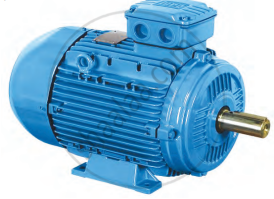
Electric motor in daily use
Construction and Working
Main Components of an Electric Motor:
- Rectangular Coil (ABCD): Conducts electric current and generates a magnetic field.
- Magnets (North and South Poles): Provide a strong magnetic field for interaction with current.
- Split rings (X and Y): Act as a commutator to reverse the direction of current after each half-rotation.
- Carbon Brushes (E and F): Maintain electrical contact between the coil and external circuit.
- Axle: Supports the coil and allows rotation.

Electric motor: Principle and Working
Working of an Electric Motor:
Step 1: Current Flow in the Coil
When the circuit is closed, electric current flows through the carbon brushes (E and F) and split rings (X and Y) into the rectangular coil (ABCD). The coil is placed between the north and south poles of a magnet, creating a magnetic field.
Step 2: Force on the Coil due to Magnetic Field
According to Fleming’s Left-Hand Rule:
- The AB arm experiences a downward force.
- The CD arm experiences an upward force.
These opposite forces create a torque that rotates the coil anticlockwise.
Step 3: Role of the Split Ring Commutator
After half a rotation, the split rings switch their contact with the carbon brushes. This reverses the direction of current in the coil, ensuring that the coil continues to rotate in the same direction.
Step 4: Continuous Rotation
As long as current flows, the coil keeps rotating, effectively converting electrical energy into mechanical energy. The rotation powers machines, fans, pumps, and other devices.
Application:
- It is used in fans, refrigerators, air conditioners, washing machines, and mixers.
- Essential in electric vehicles, trams, and locomotives.
- Applied in water pumps, compressors, and conveyor belts.
- It is used in industrial machines, robotic arms, and automation systems.
- Plays a key role in MRI scanners, ventilators, and surgical tools.
- Found in CNC machines, printers, and AI-driven systems.
- It is used in power tools, elevators, and escalators.
- Integral to wind turbines and hydroelectric power plants.
Definition: Electric Motor
A device changing electrical energy into mechanical energy is known as electric motor.
