Topics
Gravitation
- Concept of Gravitation
- Force and Motion
- Circular Motion and Centripetal Force
- Kepler’s Laws
- Law of Orbit or Kepler's First Law
- Law of Areas or Kepler's Second Law
- Law of Periods or Kepler's Third Law
- Newton's Universal Law of Gravitation
- Uniform Circular Motion (UCM)
- Earth’s Gravitational Force
- Earth’s Gravitational Acceleration
- Mass and Weight
- Gravitational Waves
- Free Fall
- Gravitational Potential Energy
- Escape Velocity
- Weightlessness in Space
Periodic Classification of Elements
- Classification of Elements
- Dobereiner’s Triads
- Newland's Law of Octaves
- Mendeleev’s Periodic Table
- Insights into Mendeleev’s Periodic Table
- Modern Periodic Law
- Modern Periodic Table
- Structure of the Modern Periodic Table
- Modern Periodic Table and Electronic Configuration of Elements
- Groups and Electronic Configuration
- Periods and Electronic Configuration
- Periodic Trends in the Modern Periodic Table
- Atomic Size
- Metallic and Non-metallic Characters
- Gradation in Halogen Family
Chemical Reactions and Equations
- Chemical Reaction
- Chemical Equations
- Balancing Chemical Equation
- Types of Chemical Reactions > Combination Reaction
- Types of Chemical Reactions > Decomposition Reaction
- Types of Chemical Reactions > Single Displacement Reaction
- Types of Chemical Reactions > Double Displacement Reaction
- Endothermic and Exothermic Processes
- Rate of Chemical Reaction
- Types of Chemical Reactions > Oxidation and Reduction Reactions
- Corrosion of Metals
- Factors Affecting the Rate of a Chemical Reaction
- Rancidity
Effects of Electric Current
- Electric Circuit
- Heating Effect of Electric Current
- Magnetic Effect of Electric Current
- Right-hand Thumb Rule
- Applications of Biot-Savart's Law > Magnetic Field at the Axis of a Circular Current-carrying Loop
- Applications of Ampere’s Circuital Law > Magnetic Field of a Long Straight Solenoid
- Force on a Current-Carrying Conductor Placed in a Uniform Magnetic Field
- Fleming’s Left Hand Rule
- Electric Motor
- Introduction to Electromagnetic Induction
- Galvanometer
- Faraday's Laws of Electromagnetic Induction
- Fleming’s Right Hand Rule
- Alternating current (AC) and Direct Current (DC)
- Electric Generator
Heat
Refraction of Light
Lenses
- Concept of Lenses
- Images Formed by Convex Lenses
- Images Formed by Concave Lenses
- Sign Convention
- Lens Formula and Magnification
- Magnification
- Power of a Lens
- Combination of Lenses
- Human Eye
- Defects of Vision and Their Corrections > Myopia
- Defects of Vision and Their Corrections > Hypermetropia
- Defects of Vision and Their Corrections > Presbyopia
- Apparent Size of an Object
- Use of Concave Lenses
- Use of Convex Lenses
- Persistence of Vision
Metallurgy
- Physical Properties of Metal
- Physical Properties of Non-metal
- Chemical Properties of Metal
- Reactions of Metals
- Reactivity Series of Metals
- Chemical Properties of Non-metal
- Ionic Compounds
- Metallurgy
- Basic Principles of Metallurgy > Concentration of Ores
- Basic Principles of Metallurgy > Extraction of Metals
- Basic Principles of Metallurgy > Refining of Metals
- Corrosion of Metals
- Prevention of Corrosion
Carbon Compounds
- Bonds in Carbon Compounds
- Carbon: A Versatile Element
- Hydrocarbons
- Straight chains, Branched chains, and Rings of Carbon atoms
- Functional Groups in Carbon Compounds
- Nomenclature
- The IUPAC System of Nomenclature
- Homologous Series
- Chemical Properties of Carbon Compounds > Combustion
- Chemical Properties of Carbon Compounds > Oxidation
- Chemical Properties of Carbon Compounds > Addition Reaction
- Chemical Properties of Carbon Compounds > Substitution Reaction
- Ethanol
- Ethanoic Acid
- Macromolecules and Polymers
Space Missions
School of Elements
The Magic of Chemical Reactions
- Types of Chemical Reactions > Combination Reaction
- Types of Chemical Reactions > Decomposition Reaction
- Types of Chemical Reactions > Single Displacement Reaction
- Types of Chemical Reactions > Double Displacement Reaction
- Chemical Properties of Carbon Compounds > Oxidation
- Types of Double Displacement: Neutralization Reaction
The Acid Base Chemistry
The Electric Spark
All about Electromagnetism
- Magnetic force
- Bar Magnet and Solenoid Analogy
- Right-hand Thumb Rule
- Applications of Biot-Savart's Law > Magnetic Field at the Axis of a Circular Current-carrying Loop
- Applications of Ampere’s Circuital Law > Magnetic Field of a Long Straight Solenoid
- Force on a Current-Carrying Conductor Placed in a Uniform Magnetic Field
- Electric Motor
- Introduction to Electromagnetic Induction
- Alternating-Current Generator
- Simple D.C. Motor
- Household Electrical Circuits
Wonders of Light 1
Wonders of Light 2
Striving for better Environment 1
- Abatement of Pollution
- Sustainable Use of Resources
Maharashtra State Board: Class 10
Introduction
Macromolecules are very large molecules composed of thousands to millions of atoms. They typically have a high molecular mass (ranging from 10¹ to 10¹²). Macromolecules are essential for biological functions, material production, and industrial applications. They can be natural (formed in living organisms) or synthetic (manmade).
- Polymers are a type of macromolecule made by linking many small, repeating units called monomers.
- The process of forming polymers is called polymerisation. Monomers can be identical (homopolymers) or different (copolymers).
- Polymers can have linear, branched, or cross-linked structures depending on how monomers are joined.
Maharashtra State Board: Class 10
Types of Macromolecules
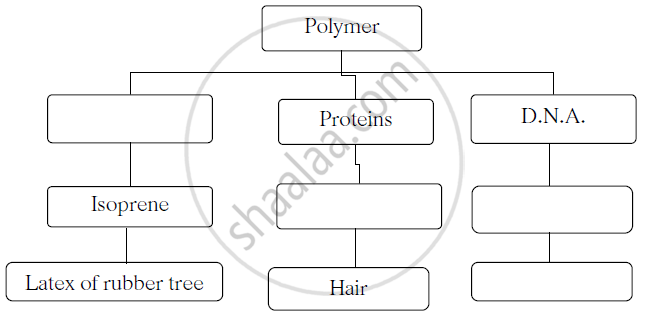
A. Natural Macromolecules: These occur in nature and are essential to life:
| Polymer | Monomer | Found In / Function |
|---|---|---|
| Polysaccharides | Glucose | Starch (plants), Cellulose (plant cell walls) |
| Proteins | Amino acids | Muscles, enzymes, skin, hair |
| DNA (Deoxyribonucleic acid) | Nucleotides (deoxyribose-phosphate) | Carries genetic information (chromosomes) |
| RNA (Ribonucleic acid) | Nucleotides (ribose-phosphate) | Helps in protein synthesis (cells) |
| Natural Rubber | Isoprene | Latex of rubber plants |
B. Synthetic (Manmade) Macromolecules: These are produced in labs and industries to mimic or improve natural materials:
| Polymer | Monomer | Structural Formula of the Polymer |
Uses |
|---|---|---|---|
| Polyethylene | Ethylene (CH₂=CH₂) | 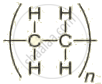 |
Plastic bags, packaging |
| PVC (Polyvinyl chloride) | Vinyl chloride (CH₂=CHCl) | 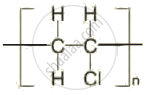 |
Pipes, window frames, hospital bags |
| Polystyrene |
Styrene (C₆H₅-CH=CH₂) |
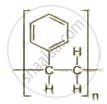 |
Thermocol, disposable containers |
| Polyacrylonitrile |
Acrylonitrile (CH₂=CH-C≡N) |
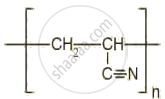 |
Wool-like fabric, sweaters |
| Teflon | Tetrafluoroethylene (CF₂=CF₂) | 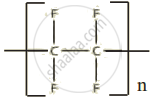 |
Non-stick cookware, insulation |
| Polypropylene | Propylene (CH₃-CH=CH₂) |
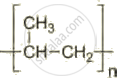 |
Furniture, containers, syringes |
Maharashtra State Board: Class 10
Key Points: Macromolecules and Polymers
- Macromolecules are large molecules made of many atoms; they include natural and manmade polymers.
- Natural macromolecules like starch, cellulose, proteins, and DNA are essential for life.
- Man-made macromolecules such as plastics, fibres, and rubber are used in daily life.
- Polymers are made by repeating small units called monomers through polymerization.
- Properties of polymers depend on the type of monomers and how they are arranged (straight, branched, or cross-linked).