Advertisements
Advertisements
प्रश्न
How would you say ‘a dilapidated drum’ in your language?
Advertisements
उत्तर
In Hindi, we would call ‘a dilapidated drum’ as ‘phata-hua dholak’.
(A model answer has been provided for students' reference. It is strongly recommended that students prepare the answer on their own in pertinence with the languages used by them.)
APPEARS IN
संबंधित प्रश्न
A1. Order
Arrange the following sentences in the chronological order as they appear in the passage:
(i) On celebrations, parents can invest Rs. 200 and plant a sapling of a tree representing the child’s birth star.
(ii) He wants to create Brihat Panchvati.
(iii) He has been able to increase the areas of the Pavitra VanaVana.
(iv) Plans are afoot to create a Saptaswara forest.
Today, Reddy is one of the most well - known environment specialists in India. With his influence, he has been able to increase the areas of the Pavitra Vana and has plans to bring about awareness of Puranic trees and flowers for the knowledge of the Indian citizen.
He wants to create near the Pavitra Vana, a Brihat Panchavati so that parents can show their children the forest where Shakuntala lived or Sita spent her final days. There will also be a hillock where people can meditate. Plans are also afoot create a Saptaswara forest, pertaining to different ragas in music. Scientists have found that certain plants react in a particular way to different ragas. So in such a forest, when a musician performs certain ragas, the plants will reach in such a manner that it will benefit the audience, the musician and the whole environment. The other idea is an ecopark for children. On celebrations, like birthdays, parents can invest Rs. 200 and plant a sapling of a tree representing the child's birth star. The plant will also carry the child's name. The Pavitra Vana also houses a garden of Prophet Mohammed, which has some plants mentioned in the Holy Quran. There is the date plant - sacred to Islam - and the Mimosops elengi, the latter a highly fragrant variety. There is also the garden of Eden for housing plants sacred to Christianity, but the Pavitra Vana authorities have to procure most of them in the new sections.
A2. Find specialities
Write down the specialities of the following:
(i) Brihat Panchavati: ........................ ..... . .
(ii) Saptaswara Forest: ..................... ..... .............. . .
(iii) Eco-park: ..................................... . .
(iv) A garden of Prophet Mohammed:
A3. Antonyms Find antonyms for the following words from the passage:
(i) same
(ii) decrease
(iii) destroy
(iv) lost
A4. Language study
(i) He wants to create near the Pavitra Vana, a Brihat Panchavati. [Pick out an infinitive from the given line and use it in your own sentence]
(ii) Reddy is one of the most well-known environment specialists in India. [Begin with: Very few ………]
A5. Personal Response
Do you think one person alone can create an awareness towards environment conservation ? Support, your answer with appropriate reasons.
What were Watson's observations on the stick left behind by Dr. Mortimer? How far did Sherlock Holmes prove him wrong? (in about 125 words)
Answer the following question in 120-150 words :
Nancy Lammeter is a typical country girl. Comment.
Answer any four of the following questions in 30 – 40 words each :
(a) After initial reluctance why did the lawyers tell Gandhiji that they were ready to follow him into jail?
(b) What is Mukesh's attitude towards the family business of making bangles?
(c) How does the poet show the futility of Aunt Jennifer's efforts?
(d) Stephen Spender in his poem, 'An Elementary School Classroom in a Slum' paints a dismal picture of poverty. Comment.
(e) Jackson went through the contents of Rev. McLeery's suitcase. Which object therein puzzled him sorely? What was his comment on that?
(f) How did the servants react when they realized that Dr. Sadao was going to save the life of an enemy?
Answer any four of the following questions in 30 - 40 words each :
(a) What kind of gold did the people of Seemapuri look for in the garbage ? (Lost Spring)
(b) Why did Gandhi tell the court that he was involved in a 'conflict of duties' ?
(c) How do we get joy from life which is otherwise full of sorrows ? (A Thing of Beauty)
(d) For Aunt Jennifer, what do the tigers symbolise ?
(e) What made the chief astrologer place his finger on his nose ? (The Tiger King)
(f) On the seventh day after the American soldier was found by Dr. Sadao two things happened. Why did Hana feel scared of the second ?
To what end have humans used their superior intelligence ?
The three stanzas depict three different phases. What are they?
Look at the words given in the box below
|
snigger |
wriggle |
sneak |
squeak |
|
squawk |
titter |
pant |
chuckle |
|
giggle |
jeer |
chortle |
guffaw |
|
sigh |
sidle |
boo |
shriek |
|
scramble |
croak |
straggle |
plod |
|
gasp |
|
|
|
Now classify them according to their closeness in meaning to the words given below
|
A |
B |
C |
D |
E |
|
snigger |
wriggle |
squeak |
jeer |
sigh |
We 'draw up a deed'. Complete the following phrase with an appropriate word.
________one's word
List the distinctive features of the tribal arts.
How does 'A Kondh Song' substantiate the tribal urge to gain domination over time by conversing with their dead ancestors?
How is colour highlighted in the poem and why? List all the words in the poem that suggest colour.
'There is no sophistry in my body' – this statement expresses the brutal frankness of the Hawk. Does the poet suggest something through this statement?
How did the author feel about her mother's passion to make her a dancer?
The significance of reading an autobiography lies in drawing lessons from another life. What is the significance of Kumudini's account for us as readers?
Think and write down how the following creature can be useful:
Dragon fly:
Answer the given question in your own words.
Where was the Happy Prince’s statue located?
Go through the poem and state whether the following statement is true or false.
Planners paint beautiful pictures of the upcoming changes in the city that charm the citizens.
Answer the following question in short.
What was Pundit Shahane’s claim as a scholar?
Discuss in groups and think about it.
Mention three occasions on which you have made someone else angry. What made that person angry? Can you avoid such things in the future?
Comment on the given statement after reading the given dialogue -
It’s a pity some honest man not to be better of that ________________________________________________.
Describe in your own words the incident when Hovstad's real intention to help Dr. Stockmann is exposed.
Who do you think benefits most from commercial advertisements?
Write a conversation between a donkey and a dog.
Find the meaning of the following word.
thee
Complete the following sentence with reference to the passage.
It is believed that _________ Homer, who __________ and who ________ to all who __________________.
There were no human settlements on the moon.
The Emperor says he had realised earlier that Abdul has great talent. Does this tally with his actions? Give your opinion.
Find out how the following game is played.
Table Tennis
Write slogans for the cleanliness drive in your area.
The poem has rhyming words at the end of the lines. Find and write the pairs of rhyming words in each stanza.
Write what you can do to welcome birds in your surroundings.
List the rhyming words in the (On the water) poem.
Identify the character or speaker.
He imprisoned the spirits in the bodies of large trees.
What do you infer about speaking with others from this poem?
Do you think this was a good idea?
Can a courageous man be defeated? Why?
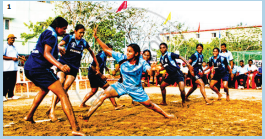
Identify and write the sport's name respectively.
- ______
- ______
- ______
- ______



The poor farmer’s crop was______.
In Mars ______ Earth days make a year.
The girl admitted to her brother that she was badly frightened.
Were the girl and her brother friendly with each other?
They ate a bowl of __________.
Who sews the cloth?
Every ______ they would go fishing.
Choose the correct answer.

Choose the correct answer.

The brown sparrow laid ________eggs.
Moles trap worms and store them.
Why did Manju’s parents leave the village?
What did Ani's parents teach her?
Many may lie and______.
Why did the greedy merchant get angry?
Write the word with same meaning.

Torch
Recite the poem The Painter with correct intonation.
What is the main idea of the story?
Replace the bold word/words with a word from the quiver and re-write the sentence –
In no time she hit the object she aimed at.
What was the most important thing that Helen finally understood?
Why did grandfather give the children money?
Based on the poet’s idea of true success, think of four people in your surroundings - your family, neighbours, friends, teachers, classmates, etc. who have achieved true success. Write, in short, what makes them successful.
