Advertisements
Advertisements
प्रश्न
What do you understand of Einstein’s nature from his conversations with his history teacher, his mathematics teacher and the head teacher?
Advertisements
उत्तर
A model answer has been provided for students' reference.
It is strongly recommended that students prepare the answer on their own.
Einstein’s behavior seemed to be extremely unruly. He didn't believe in the then prevailing system of education. His nature was a spontaneous one. He found memorising facts and dates quite useless. Ideas lured him more than facts because of which he had a heated argument on education with his history teacher. He was so restless and indifferent to the importance of attending school that he didn't mind not attending it at all. From his conversation with the Maths teacher, we come to know that he was a student who actually had some interest in mathematics, that being the only class in which he paid a lot of attention and never wasted his time. He wasn't open and outright in front of his Mathematics teacher. His behavior had turned mild before his teacher which showed his level of respect and obediance for elders. Later, when he confronts the headmaster, we find him defensive at the beginning and carefree at the end of the meeting.
संबंधित प्रश्न
Describe Miss Stapleton's first encounter with Sir Henry in about 125 words
Read the passage given below and answer the questions that follow:
1. Air pollution is an issue which concerns us all alike. One can willingly choose or reject a food, a drink or a life comfort, but unfortunately there is little choice for the air we breathe. All, what is there in the air is inhaled by one and all living in those surroundings.
2. Air pollutant is defined as a substance which is present while normally it is not there or present in an amount exceeding the normal concentrations. It could either be gaseous or a particulate matter. The important and harmful polluting gases are carbon monoxide, carbon dioxide, ozone and oxides of sulphur and nitrogen. The common particulate pollutants are the dusts of various inorganic or organic origins. Although we often talk of the outdoor air pollutions caused by industrial and vehicular exhausts, the indoor pollution may prove to be as or a more important cause of health problems.
3. Recognition of air pollution is relatively recent. It is not uncommon to experience a feeling of 'suffocation' in a closed environment. It is often ascribed to the lack of oxygen. Fortunately, however, the composition of air is remarkably constant all over the world. There is about 79 per cent nitrogen and 21 per cent oxygen in the air − the other gases forming a very small fraction. It is true that carbon dioxide exhaled out of lungs may accumulate in a closed and over-crowded place. But such an increase is usually small and temporary unless the room is really air-tight. Exposure to poisonous gases such as carbon monoxide may occur in a closed room, heated by burning coal inside. This may also prove to be fatal.
4. What is more common in a poorly ventilated home is a vague constellation of symptoms described as the sick-building syndrome. It is characterized by a general feeling of malaise, head-ache, dizziness and irritation of mucous membranes. It may also be accompanied by nausea, itching, aches, pains and depression. Sick building syndrome is getting commoner in big cities with the small houses, which are generally over-furnished. Some of the important pollutants whose indoor concentrations exceed those of the outdoors include gases such as carbon monoxide, carbon dioxide, oxides of nitrogen and organic substances like spores, formaldehydes, hydrocarbon aerosols and allergens. The sources are attributed to a variety of construction materials, insulations, furnishings, adhesives, cosmetics, house dusts, fungi and other indoor products.
5. By-products of fuel combustion are important in houses with indoor kitchens. It is not only the brining of dried dung and fuelwood which is responsible, but also kerosene and liquid petroleum gas. Oxides of both nitrogen and sulphur are released from their combustion.
6. Smoking of tobacco in the closed environment is an important source of indoor pollution. It may not be high quantitatively, but significantly hazardous for health. It is because of the fact that there are over 3000 chemical constituents in tobacco smoke, which have been identified. These are harmful for human health.
7. Micro-organisms and allergens are of special significance in the causation and spread of diseases. Most of the infective illnesses may involve more persons of a family living in common indoor environment. These include viral and bacterial diseases like tuberculosis.
8. Besides infections, allergic and hypersensitivity disorders are spreading fast. Although asthma is the most common form of respiratory allergic disorders, pneumonias are not uncommon, but more persistent and serious. These are attributed to exposures to allergens from various fungi, molds, hay and other organic materials. Indoor air ventilation systems, coolers, air-conditioners, dampness, decay, pet animals, production or handling of the causative items are responsible for these hypersensitivity − diseases.
9. Obviously, the spectrum of pollution is very wide and our options are limited. Indoor pollution may be handled relatively easily by an individual. Moreover, the good work must start from one’s own house
(Extracted from the Tribune)
(a) (i) What is an air pollutant? (1)
(ii) In what forms are the air pollutants present? (2)
(iii) Why do we feel suffocated in a closed environment? (1)
(iv) What is sick building syndrome? How is it increasing? (2)
(v) How is indoor smoking very hazardous? (1)
(vi) How can one overcome the dangers of indoor air pollution? (2)
(b) Find the words from the above passage which mean the same as the following: (3)
(i) giddiness (para 4)
(ii) constant (para 8)
(iii) humidity (para 8)
Attempt the following in 150-200 words.
What was the incident of the Frost King? How did it affect Helen?
Describe the shifts in the narration of the events as indicated in the three sections of the text. Give a subtitle to each section.
Look for a story, a poem and a newspaper article on environment conservation and see how the style of each is different from the other.
The following common word is used in a different sense in the poem. Guess what it means.
How does the poet juxtapose the human condition with the behaviour of the political class?
What does the reference to raw mythology imply?
Think and answer in your own words.
Does the poet really wish to become a hawker/gardener/watchman? Justify your response.
Write down any two Slogans on 'Gender Equality'.
Imagine that you are the peasant. Compose a short prayer to God, after having received the plate of gold. Write it using stylish handwriting.
'Uttarayana' starts from Makar Sankranti onwards.
The special thread for kite - flying is sharpened by adding sugar and glass pieces.
Read the story and choose the appropriate meaning.
Skeleton branches ____________.
Guess the meaning of the following words and phrases:
untold wealth, closest to the Emperor’s heart, grave offence, banish.
The whole world is happy because children are going to school. Why is it so? Discuss it in the classroom.
What did one of the fluttering creatures do?
The merchant ships brought spices and other treasures from India and other countries to Italy.
Shylock demanded a pound of Antonio’s flesh.
Antonio’s ships were lost at sea.
Visit a library:
Find and read the biography of your favourite scientist.
Try to write interesting time tables for imaginary people or creatures.
Correct the following sentence using facts from the passage.
The great heroes avoided one another.
Complete the following sentence with reference to the passage.
They may be composed and sung or recited for many years before __________________.
From any collection of classic poetry or the internet, find another famous poem by Robert Frost titled ‘Stopping by the Woods on a Snowy Evening’. Try to understand the symbolism used in that poem in 8-10 lines.
Do you know of similar stories in your mother tongue or in other languages? Narrate it in short.
Sit quietly for some time. Close your eyes and listen carefully to all the sounds that you hear. Can you guess what sounds they are, who or what is making that sound? Note down what you heard.
Choose a suitable heading for each announcement from those given below.
(Change in School Hours, Cleanliness, Story-telling Competition, Lost and Found, Warning, Football Match)
1.
|
6 July 2015 It has been observed by the Head Boy and Head Girl that certain classes do not clean up their classrooms before leaving. If any class is found untidy and littered after school, that class will be detained the next day after school hours up to 4 pm. Please take note of this. |
2.
| Tomorrow, that is, on the 10th of July, the school will close an hour earlier, as the teachers have to attend an important P. T. A. meeting. So please inform your parents to arrange to pick you up at 2 pm instead of 3 pm. |
3.
| On Sunday, 12th July 2015 there is a football match between classes VIII and IX, on the school ground. The match will begin at 9 am. All students are invited to come and cheer their favorite team. Please come on time, so that the players are not distracted. |
4.
|
The school has organized a Story-telling Competition for Classes V, VI, and VII from 21st to 25th of July. The competition will be held in the school hall at 10 in the morning. Children may select -
Three prizes will be given for each category. The time limit is 3-5 minutes. Those who wish to participate may contact Mrs. Sanjana Mohite for other details. They must register their names with her before the 16th of July. |
5.
|
Construction work to extend the school building will start next week. All students are cautioned not to cross over the fence at the construction site. It is dangerous and may cause you injury. Please stay away from that fence. |
6.
| A cycle key with a blue key chain has been found on the ground. Whoever has lost it can contact the clerk Mrs. Neena Pinto and see if it belongs to him/her. |
Guess the meaning of the following word.
pounced
List the rhyming words in the (On the water) poem.
Give an instance that shows the pathetic condition of the young bird.
____________ had provided Prospero formerly with books and provisions.
Who used the zither and how?
Why did Chulong catch the bird?
Read the incident again and answer the following question.
Why were the other passengers in the flight gazing at the writer?
Hamid thought that his grandma would be pleased if he bought______
How did Hamid’s friends enjoy the games in the fair?
What did Usha buy in the market? List them.
Which of these statements do you find in the speech?
- Inclusion is essential for us to do well in life.
- We should neglect others.
- Communicate politely with the less privileged.
- Teachers teach us to communicate well.
- Effective Communication is inessential to excel in life.
Why do we need trees? List four reasons that Grandfather gives.
Gulliver managed to reach the land as he was______.
Read the lines and answer the questions given below.
Summer comes
in a blaze of heat with
sunny smiles
and dusty feet
- Does the poet welcome the summer? How do you know?
- Which line tells you that there is no rain in summer?
In the Earth, we get water from ______.
What is a sol? How many sols make a year?
Imagine you are the girl and give a different ending to the story.
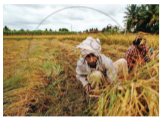
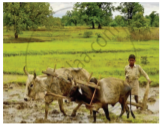
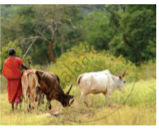
| Mr. Murugan is a farmer. He has a small piece of land and two bulls. He takes good care of his bulls as they help him in farming. Every morning, he takes the bulls for grazing. When it rains he ploughs the land with the bulls. As he has no one to help he starts sowing the seed before sunrise. He irrigates the crop till it grows. He reaps and binds the crop then takes it to thrash the paddy. Finally, with the help of the bulls, he takes the paddy to his house. |
Name the actions of Murugan.
 |
|
 |
|
 |
Did Tabaqui receive a warm welcome from the pack of wolves? How do you know?
Robot asked Vicky to sell him to an ______ master.
What would we do when we are happy or sad?
Identify the character/speaker.
He bought a new fish tank.
The official and his wife liked______.
Why should we close the tap after using it?
Kamali gave her savings to______.
Moles dig ______ to catch earth worms.
Kamali gave her savings to______.
Mugund learnt the art from his ______.
What is the main idea of the story?
Write about the places where the poet wants us to run.
The passage given below is on Kabbadi. Read the passage and complete the activities that follow.
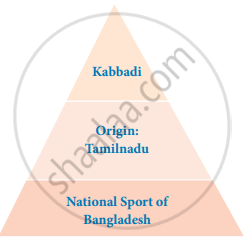
Kabbadi (கபடி - in Tamil) is a contact team sport that originated in Tamil Nadu, India. It is the national sport of Bangladesh. It is also popular in South Asia and is the state game of the Indian states of Tamil Nadu, Kerala, Andhra Pradesh, Bihar, Haryana, Karnataka, Maharashtra, Punjab, and Telangana.

Kabbadi is played between two teams of seven players: the objective of the game is for a single player on offence referred to as a 'raider', to run in to the opposing teams half of a court, tag out as many of their defenders as possible, and return to their own half of the court–all without being tackled by the defenders. Points are scored for each player tagged by the raider, while the opposing team earns a point for stopping the raider. Players are taken out of the game if they are tagged or tackled, but can be 'revived' for each point scored by their team from a tag or tackle. The raider should hold his breath and utter the words like 'kabbadi kabbadi, hututu hututu, chadu kudu' etc. while the opponents try to catch him. If he stops uttering these words, he is considered out.
The game is known by its regional names in different parts of the subcontinent, such as Kabbadi or Chedugudu in Andhra Pradesh, Kabbadi in Kerala and Telangana, Hadudu in Bangladesh, Bhavatik in Maldives, Kauddi or Kabbadi in the Punjab Region, Hu-Tu-Tu in Western India and Hu-Do-Do in Eastern India and Chadakudu in South India. The highest governing body of Kabbadi is the International Kabbadi Federation.
Given below is the visual presentation of the first paragraph.
i) Represent the other paragraphs in a visual form of your choice(flow chart, mind-map, pie-chart, etc.).
ii) Choose the correct option.
1. A contact sport usually involves a ______contact between players.
- violent
- gentle
- physical
2. Kabbadi is a game played between ______.
- seven teams of two players
- two teams of seven players
- four teams of seven players
3. A single ______.
- player on offence is referred to as a raider
- offence is referred to as a raider
- raider is an offence by the player
iii) Answer the following.
- How does a raider score points for his team?
- When does a raider concede a point to the opponent team?
- Can a player be revived when he/she is out of the game? Explain your answer.
- Kabbadi is called by different names in different parts of India. Do you know how Pallankuzhi is called in Karnataka, Andhra Pradesh and Kerala?
