Advertisements
Advertisements
Question
How would you say ‘a dilapidated drum’ in your language?
Advertisements
Solution
In Hindi, we would call ‘a dilapidated drum’ as ‘phata-hua dholak’.
(A model answer has been provided for students' reference. It is strongly recommended that students prepare the answer on their own in pertinence with the languages used by them.)
APPEARS IN
RELATED QUESTIONS
Anne describes herself as a 'little bundle of contradictions'. Why? Explain in your own words.
Read the follow ing extract and answer the questions given below:
Not gold but only men can make
A people great and strong;
Men who for truth and honor's sake
Stand fast and suffer long.
Brave men who work while others sleep,
Who dare while others fly...
They build a nation's pillars deep
And lift them to the sky.
(1) What makes a nation strong?
(2) According to you, what makes India a strong and powerful nation?.
(3) Write down the rhyme scheme used in the extract.
(4) What does the phrase 'others fly ... ' mean?
With reference to ‘The Story of My Life’, describe how a teacher can positively impact a child’s life ?
Read the following passage and complete the activities given below :
A1 Find out :
Find from the passage the related words to the sea and write them.

ON FIERCE monsoon nights, about one and a quarter-mile off the Mumbai harbor, there have been occasions when 52-year-old Bikaji Ramchandra Dhuri is the only man on the sea. From the watchtower of the Prongs Reef Lighthouse, which is surrounded on all sides by the Arabian Sea, he has heard the sea rage like a possessed spirit – the darkness dispelled only by the beam of light flung across the waters from the tower he mans.
Dhuri is one of the last breeds of lighthouse keepers on the Indian coast, as a majority of the 182 lighthouses in the country are now unmanned. Built-in 1871, the Prongs Reef lighthouse was modeled on Scotland’s Skerryvore Rocks Lighthouse and is located at a strategic spot on the western coast, marking the entrance to the busy Mumbai Harbour. It was meant to stem the number of shipwrecks off the harbor, which the lone Colaba lighthouse could not illumine on its own. “Even now, during nights, for fishing vessels without any gadgets, it’s the soft light from this tower which directs us to Mumbai,” says Vinayak Koli, a boatsman who helps ferry people and also goes on fishing expeditions.
Throughout the year, Dhuri lives in the lighthouse for 15 days at a stretch, when he is relieved by another keeper. In the monsoon, it becomes his home for three months. “We call it the Kalapana as we are alone in the middle of the sea for days, with basic supplies – and the revolving light that keeps the sea awake,” he says.
A2 Fill in the following information using words from the passage :
(i) The Prongs Reef lighthouse was modeled on _______.
(ii) Dhuri lives in the lighthouse for _______ at a stretch.
(iii) _______ is one of the last breeds of lighthouse keepers on the Indian coast.
(iv) The majority of the _______ lighthouses in the country are now unmanned.
| Violent | Scattered | Place of shelter for ships | Shine light |
A4
A5 Personal Response
Imagine you have to spend a night in a lighthouse. Narrate your experience.
Read the following extract of the poem and complete the activities given below :
B1 State which of the following statements are
True or False :
(i) The elderly are nearest to our own exalted personality.
(ii) The elderly are those persons whose growth is stunted.
(iii) We should know our elderly people well, in order to receive guidance.
(iv) The elderly hold on to the frivolous aspects of life.
Elderly people should be around us. Justify.
(b) abb
(c) abba
Answer the following question in 200-250 words:
"The best and most beautiful things in the world can't be seen or even touched. They must be felt with the heart." Justify the famous quote of Helen Keller.
Give reasons for the following statement.
The author thought that his positive thinking strategy worked well after all.
Tick the statement that is true.
The story is an account of real events.
What was the reason for the anxiety of Paul's mother as he grew older?
Why has he compared the three passions to great winds?
The Cloud ‘fuses together a creative myth, a scientific monograph, and a gay picaresque tale of cloud adventure': explain.
How did the author feel about her mother's passion to make her a dancer?
How does Kumudini Lakhia describe her guru Ramgopal's influence on her?
How does the banyan tree stand out as different from other trees? What details of the tree does the poet highlight in the poem?
How does the poet tossed back from ecstasy into despair?
The poem is a satire against the present political class. How effectively does it convey the anger and anguish of the common man trapped in the system?
Answer in your own words.
What message does the poem convey to all of us?
State whether the following statement is True or False. Correct the false statement by finding evidence from the poem to support your remark.
Birds and insects were benefitted from the tree.
Justify the verdict delivered in the poem.
I can support my answer with the help of the following suitable arguments:
- _______________________
- _______________________
- _______________________
Pick out three lines that create an image in your mind of bees busy at work.
Find at least two things from the poem that show the following:
The atmosphere is pleasant.
Find more information about other Param Vir Chakra awardees. Prepare a collage using photographs, pictures, and text matter written in beautiful handwriting.
State the difference between drama and novel.
Shakespeare is acknowledged as the greatest writer because he understood human nature better than anyone else. Explain the statement in the context of the play.
Write a recipe for the stone soup.
Read: ‘Last Chance to See’ by Douglas Adams and Mark Carwardine.
There were no human settlements on the moon.
Explain the use of the following property in the development of the play.
An envelope containing the letter
Find three lines, that contain images of nature in the autumn season.
During daytime
- _______________________
- _______________________
- _______________________
Often the brook speaks of itself as if it is human.
For example, 'I bicker down a valley.'
Find two other examples of the human activities of the brook.
Write in your own words.
Who does the poet invite to join him?
Read the word. Write the words that combine to make it.
gentle-hearted
Describe Gulliver’s walk around the city.
What is a password?
Identify the character or speaker
I must finish my task before I take my rest.”
Identify the speaker/character.
‘ It’s Somu’s thoughtless ways that reduce me to tears’
He decided to find his cousins’ home without their help. He asked the policeman for information in Italian because he.
Read the data below and answer the following question.
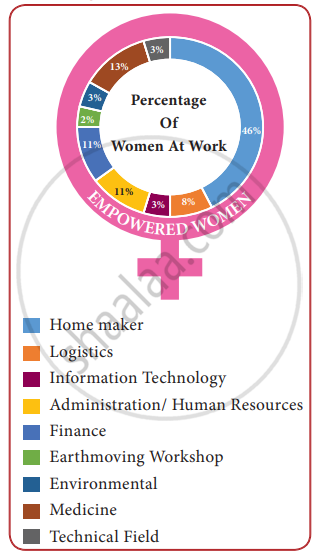
Choose the correct answer.
What is the data about?
‘My tongs are like a tiger among toys.’ It means ______
Fill in the blank.
______ is referred to as a festival of sacrifice.
What was the reaction of the inhabitants?
Why did the girls snigger?
Gulliver managed to reach the land as he was______.
The wild boar settled down scraping the hole into a ______ to have a good sleep.
He got _________ the disease.
Jaswant Singh Rawat was awarded ______.
The old man helped ______ and ______.
Look at the picture and Choose the correct word.

The bird-catcher had a pigeon in his _______.
______hem the border.
Recite the poem 'Treasure Trove' with the correct intonation.
What made him frightened?
Like whom did they want to do?
What was the message on the chit?
Who were the guest to Kani’s home?
Which quality makes 'world is one and human is one'?
Recite any 4 lines of the poem with intonation.
Write the rhyming word.
larder- ______.
Where did the rabbit go?
Being a bachelor, the stranger had no patience with children.
