Advertisements
Advertisements
प्रश्न
“One day back there in the good old days when I was nine and the world was full of every imaginable kind of magnificence, and life was still a delightful and mysterious dream. ” The story begins in a mood of nostalgia. Can you narrate some incident from your childhood that might make an interesting story?
Advertisements
उत्तर
APPEARS IN
संबंधित प्रश्न
The narrative has many phrases to describe the scenic beauty of the mountainside like:
A flawless half-moon flated in a perfect blue sky.
Scan the text to locate other such picturesque phrases.
|
The energy stored in coal and petroleum originally came to the earth from the sun. The bulk of the present-day supplies was laid down some 200 to 600 million years ago, when tropical conditions were widespread. Lush, swampy forests produced huge trees; warm coastal seas swarmed with microscopic forms of life. When these organisms died, much of their tissue was recycled as it is today — through scavenging and decay. But a significant amount of dead plant and animal material was covered with mud, which prevented complete decomposition. With the passage of time, layer upon layer of the fine sediment was deposited over the once-living material; the sheer weight turned the sediments to rock. Sandwiched between the layers, both coal and petroleum were produced and preserved under pressure. Coal was formed mostly of giant fern-like plants that have only small counterparts today. Coal may still be forming here and there on earth, but conditions are not right for the production of significant quantities. |
Combine related points.
What, according to Russell, is the importance of love in life?
How is the idyllic juxtaposed with the pedestrian in the poem?
Interpret these phrases in the context of the essay
- Mist of protection
- At a crossroads
- It came with strings attached
Answer in your own words.
What helped Revathi to claim her plants - her belief in magic or the belief in her convictions? Explain your choice.
Answer the given question in your own words.
Why was the Prince sad?
Make pair of sentences to show the difference between the meaning of the following Homograph from the story.
interest
Correct the following statement.
The last leaf was a real leaf that survived.
What is the Rhyme scheme of stanzas 1 to 3 and the last two stanzas?
How does it differ in the remaining stanzas 4 to 7?
Given below are various professions in column A and in column B, the nature of work in respective professions. Match the columns.
| A | B |
| (i) Anaesthetist | (a) Specialist in the treatment of problems concerning the position of teeth and jaws. |
| (ii) Pharmacist | (b) A person who designs buildings and supervises the process of constructing them. |
| (iii) Orthodentist | (c) A person who is in charge of a newspaper or of a part of a newspaper. |
| (iv) Dermitologist | (d) The medical study of the skin and its diseases. |
| (v) Architect | (e) A person who has been trained to prepare medicines and sell them to the public. |
| (vi) Chartered Accountant | (f) A person whose job is to give drugs which makes the person not feel pain especially in preparation for a medical operation. |
| (vii) Editor | (g) A person who is engaged in the profession of accounting and examining the statements and records of accounts. |
Write four reasons why animals in a zoo suffer more than those who live free in the wild.
Select any four zoo animals mentioned in the poem. Imagine they are able to talk in English. Compose a dialogue among the four animals discussing their discomfort and illnesses.
Pick out three lines that create an image in your mind of bees busy at work.
Answer the following question in short.
What was Pundit Shahane’s claim as a scholar?
State whether the following statement is True or False:
Both Demetrius and Lysander fight for Hermia.
Divide the story into different sections to show the different events and time periods in it. Give a suitable title to each section.
Read about the novel ‘Robinson Crusoe’ by Daniel Defoe and ‘Gulliver’s Travels’ by Jonathan Swift.
What themes would you like to add to the themes given in this passage?
Does the poet expect anything in return? What is the poet’s reward?
Discuss what makes the following sentences funny.
- Your wasted time will be refunded.
- There was no highway attached to the booth.
Correct the following sentence using facts from the passage.
Achilles was killed by an arrow that pierced his heart.
Write about how you take care of your books.
Find one example of the following given below from the poem: Metaphor
Which lines are repeated in the poem? What do they mean?
Rohan had finished ______ rounds of the tree before Mrs. Groover discovered him.
Describe Gulliver’s home in Lilliput.
Write what you can do to welcome birds in your surroundings.
Why does the poet say that the dewdrops greet the dawn?
How did Helen overcome her handicaps?
What are the common Rangoli designs or motifs?
What prompted the young seagull to fly finally?
Have you ever seen a bird making its first-ever attempt to fly?
Answer the following question in about 80 – 100 word.
Describe the journey of life as depicted in the poem by Henry Van Dyke.
What do you understand by the mother’s act of throwing the shoe?
Identify the speaker/character.
‘ Remember the tiny penknife he gave me last year’.
Complete the following table with information from the anecdote about Mr. Scotti’s short trip.
| Name | Nicholas Scotti |
| Occupation | |
| Reason for his trip | |
| Means of transport | |
| Destination |
Rearrange the jumbled sentences and write them in the correct order.
- But Hamid bought a pair of tongs.
- Granny Ameena felt proud of her grandson.
- Hamid’s friends bought different toys of their choice.
- Hamid proudly compared his tongs with a brave tiger.
- Hamid had less money than his friends.
- Granny Ameena was worried as he had to go to the Eidgah alone.
Work in pairs and answer the following.
Pick out the alliterated words.
Grandfather felt planting trees would help the forest because______.
Mithali is one of the women players to score seven consecutive 50s.
When did Usha Rani start playing Kabaddi?
The pit was comfortable for the wild boar to sleep in.
The wild boar settled down scraping the hole into a ______ to have a good sleep.
Vicky pleaded his father to buy a robot.
Name the character or speaker.
"Play me a pleasant song."
Where was the old man sleeping?
What was his master’s advice?
What did the archer want to show to the crowd?
Choose the correct answer.

Parents help us to overcome our______.
Kamali gave her savings to______.
What happened to Jayan?
In real, the test is for______.
Write the word with same meaning.

queue- ______
What does she paint?
What would you have done if your grandmother would have slipped?

Write the related words as shown in the example:
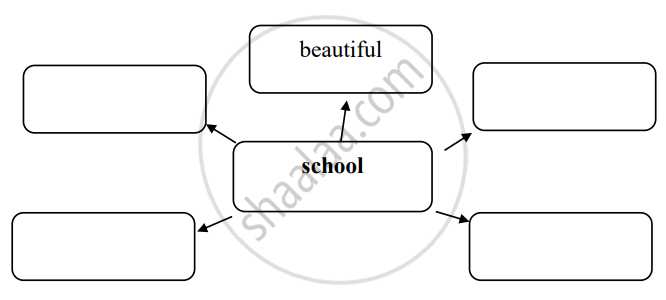
On the basis of your understanding of the given passage, make notes in any appropriate format.
The Sherpas were nomadic people who first migrated from Tibet approximately 600 years ago, through the Nangpa La pass and settled in the Solukhumbu District, Nepal. These nomadic people then gradually moved westward along salt trade routes. During 14th century, Sherpa ancestors migrated from Kham. The group of people from the Kham region, east of Tibet, was called “Shyar Khamba”. The inhabitants of Shyar Khamba, were called Sherpa. Sherpa migrants travelled through Ü and Tsang, before crossing the Himalayas. According to Sherpa oral history, four groups migrated out of Solukhumbu at different times, giving rise to the four fundamental Sherpa clans: Minyagpa, Thimmi, Sertawa and Chawa. These four groups have since split into the more than 20 different clans that exist today
Sherpas had little contact with the world beyond the mountains and they spoke their own language. AngDawa, a 76-year-old former mountaineer recalled “My first expedition was to Makalu [the world’s fifth highest mountain] with Sir Edmund Hillary’’. We were not allowed to go to the top. We wore leather boots that got really heavy when wet, and we only got a little salary, but we danced the Sherpa dance, and we were able to buy firewood and make campfires, and we spent a lot of the time dancing and singing and drinking. Today Sherpas get good pay and good equipment, but they don’t have good entertainment. My one regret is that I never got to the top of Everest. I got to the South Summit, but I never got a chance to go for the top.
The transformation began when the Sherpa Tenzing Norgay and the New Zealander Edmund Hillary scaled Everest in 1953. Edmund Hillary took efforts to build schools and health clinics to raise the living standards of the Sherpas. Thus life in Khumbu improved due to the efforts taken by Edmund Hillary and hence he was known as ‘Sherpa King’.
Sherpas working on the Everest generally tend to perish one by one, casualties of crevasse falls, avalanches, and altitude sickness. Some have simply disappeared on the mountain, never to be seen again. Apart from the bad seasons in 1922, 1970 and 2014 they do not die en masse. Sherpas carry the heaviest loads and pay the highest prices on the world’s tallest mountain. In some ways, Sherpas have benefited from the commercialization of the Everest more than any group, earning income from thousands of climbers and trekkers drawn to the mountain. While interest in climbing Everest grew gradually over the decades after the first ascent, it wasn’t until the 1990s that the economic motives of commercial guiding on Everest began. This leads to eclipse the amateur impetus of traditional mountaineering. Climbers looked after each other for the love of adventure and “the brotherhood of the rope” now are tending to mountain businesses. Sherpas have taken up jobs as guides to look after clients for a salary. Commercial guiding agencies promised any reasonably fit person a shot at Everest.
What should we do to ensure Safe Surfing?
