Advertisements
Advertisements
प्रश्न
Explain the associations that the colour 'white' has in the story.
Advertisements
उत्तर
White is the colour of light. However, the irony in the story The Lament is that it reflects the gloom portrayed in the story. In the beginning, to show the melancholy of Iona Potapov, the narrator says that he is so white that he looks like a phantom. His horse also appears quite white. Actually white is the colour of snow. And snow reflects despondency and lethargy of the season of winter and how the whole environment and atmosphere appears to be thrown into utter despair. The evening is setting in and everything seems so white and withered. The street lamps' light is also white, replacing the brighter rays. The whole setting, while laying stress on the white surroundings, project the solitude of the poor cab driver.
APPEARS IN
संबंधित प्रश्न
Notice these expression in the text. Infer their meaning from the context.
swathe
Give reasons for the following statement.
The author thought that his positive thinking strategy worked well after all.
Discuss the following statement in groups of two pairs, each pair in a group taking opposite points of view.
Reality is what is directly experienced through the senses.
'The author's treatment of the subject matter makes the readers identify themselves with the experience.' Comment on the statement.
What does the bird in the poem announce? How is this related to the title, ‘Coming’?
Certain words in the poem are in capital letters — why?
Name the world-famous personality who reached great heights despite of humble circumstances.
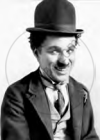
The writer of the story is William Blake.
Read other poems by Leigh Hunt, especially 'Abou Ben Adhem'.
Compare the messages in that poem with those in 'The Plate of Gold'. What do you observe?
The tone of the poet is sarcastic. When he writes ‘All spaces are gridded filled with permutations of possibilities’ he intends to indicate the efforts made by the planner to exploit every available piece of land without any consideration of harming nature or violating attachments of people to places. Make pairs/groups and find out some more sarcastic lines having the same effect.
India is famous for its handloom fabrics. Write the story of a handloom kurta in your own words.
Comment on the versatility and the aptness of the stage settings, as per the requirement of the play “A Midsummer-Night’s Dream!”
Discuss the following questions after you have seen a presentation of the ‘ad’.
Will you love your brother or sister only if she’s fair?
Form pairs. Complete the following table through discussions.
| Occupation | Necessary Qualities | Reasons |
| Student | ||
| Teacher | ||
| Housewife | ||
| Sportsman | ||
| Artist | ||
| Singer | ||
| Author | ||
| Umpire | ||
| Actor | ||
| Scientist |
Correct the following sentence using facts from the passage.
The great heroes avoided one another.
Read each invitation carefully, keeping in mind the list of eight questions given below. Note the answers in your notebook. Verify that the formal invitation ‘A’ covers all the eight points. Now see which of these eight points are covered in the other invitations ‘B’, ‘C’ and ‘D’. Put tickmarks against the points that are covered.
- A formal invitation
- An oral invitation
- A notice
- Another oral invitation
- Who is sending/giving the information?
- What is the programme?
- What is the name of the project?
- Who will inaugurate it?
- Who will preside over the function?
- What time will the function start?
- Where will it take place?
- How many names get mentioned in the invitation?
| Points | A | B | C | D |
| (1) | ✓ | |||
| (2) | ✓ | |||
| (3) | ✓ | |||
| (4) | ✓ | |||
| (5) | ✓ | |||
| (6) | ✓ | |||
| (7) | ✓ | |||
| (8) | 6 |
Complete the following sentence with reference to the passage.
It is believed that _________ Homer, who __________ and who ________ to all who __________________.
Choose the appropriate phrase to insert in the gap, to make the sentence meaningful. Use the appropriate form of the verb.
After I took the medicine, I ______ ______ the pain.
Using your imagination, write how the other pets in the house could have objected to Caesar living in their house.
Pick out three examples of interrogation (rhetorical questions) from the poem.
Explain in your own words the point that each one makes.
| Interrogation | Explanation |
| (1) | |
| (2) | |
| (3) |
Correct the following sentence and rewrite it.
By afternoon, Papa Panov had stopped looking out for Jesus.
Listen carefully and write all the words correctly.
You are right. Write it down in the right-hand corner.
Why did Marouckla’s stepmother hate her?
Form a group of 4 or 5. Make a ‘storyboard’ for the story ‘Three Sacks of Rice’.
Arrange the story in the form of a sequence of pictures.
Decide what you will show in each picture; what words/lines you will write with each picture to explain what happens in it.
You can also add ‘speech balloons’ for the people in the pictures.
List and say whether the following statement agrees with the passage or not.
When you want to make a speech, there’s no need to think about it in advance.
List the characters in the play.
Human characters
How was the young seagull’s first attempt to fly?
Read the following line from the poem and answer the question that follow.
So let the way wind up the hill or down, O'er rough or smooth, the journey will be joy: Still seeking what I sought when but a boy, New friendship, high adventure, and a crown,
- How is the way of life?
- How should be the journey of life?
- What did the poet seek as a boy?
Which gift did Anne value the most?
Write the name of the toys against each picture.

Tom lay thinking. Presently it occurred to him that he wished he was sick; then he could stay home from school. He examined himself. He found no symptoms or sickness, and he investigated again. This time he felt he had a stomach ache, but it soon grew feeble, and presently died wholly away. He reflected further.
What was the result of Tom’s self-examination?
What did Suresh ask Usha? Why?
“Was it just the wind?”– What do you think Usha thought it was? Why?
What is good or effective communication?
They may have______ in______.
- soft
- vain
- fear
- joy
- love
- heard
- toiled
- mild
- good
- sand
- life
- harsh
He exercised with Louise every day.
Identify the speaker/character.
He'll have to be given artificial respiration and kept warm.
Grandmother had wanted the peepul tree cut down because______.
What should we do to save the Earth?
Amuthan locked the door behind him.
_______ broke out in the near by villages.
What happened to the two girls at the end of the war?
The robot that sat on her shoulder was a______.
Choose the correct answer.

Circle and write the adverbs.
He laughed merrily ______.
Pick and write the adverbs to complete the sentence.
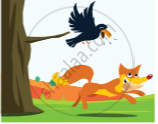
A jackal cheated the crow ______.
Find and write the clues.
Clue for lame ______.
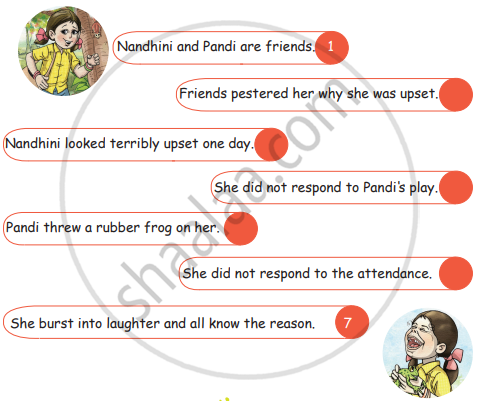
Number the actions of Pandi and Nandhini in order.
Tenzin is from ______.
Choose the correct one.
Rooster


Bihar people saved trees by______ painting.
Is there something that you will struggle for? why?
Do we worry when the progress is slow?
The pretty little fir tree was happy with gold leaves but______.
Write about the places where the poet wants us to run.
Choose the right word.
The tamarind tree grows over Tansen’s ______.
The passage given below is on Kabbadi. Read the passage and complete the activities that follow.
Kabbadi (கபடி - in Tamil) is a contact team sport that originated in Tamil Nadu, India. It is the national sport of Bangladesh. It is also popular in South Asia and is the state game of the Indian states of Tamil Nadu, Kerala, Andhra Pradesh, Bihar, Haryana, Karnataka, Maharashtra, Punjab, and Telangana.

Kabbadi is played between two teams of seven players: the objective of the game is for a single player on offence referred to as a 'raider', to run in to the opposing teams half of a court, tag out as many of their defenders as possible, and return to their own half of the court–all without being tackled by the defenders. Points are scored for each player tagged by the raider, while the opposing team earns a point for stopping the raider. Players are taken out of the game if they are tagged or tackled, but can be 'revived' for each point scored by their team from a tag or tackle. The raider should hold his breath and utter the words like 'kabbadi kabbadi, hututu hututu, chadu kudu' etc. while the opponents try to catch him. If he stops uttering these words, he is considered out.
The game is known by its regional names in different parts of the subcontinent, such as Kabbadi or Chedugudu in Andhra Pradesh, Kabbadi in Kerala and Telangana, Hadudu in Bangladesh, Bhavatik in Maldives, Kauddi or Kabbadi in the Punjab Region, Hu-Tu-Tu in Western India and Hu-Do-Do in Eastern India and Chadakudu in South India. The highest governing body of Kabbadi is the International Kabbadi Federation.
Given below is the visual presentation of the first paragraph.
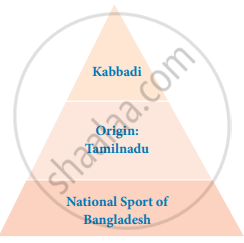
i) Represent the other paragraphs in a visual form of your choice(flow chart, mind-map, pie-chart, etc.).
ii) Choose the correct option.
1. A contact sport usually involves a ______contact between players.
- violent
- gentle
- physical
2. Kabbadi is a game played between ______.
- seven teams of two players
- two teams of seven players
- four teams of seven players
3. A single ______.
- player on offence is referred to as a raider
- offence is referred to as a raider
- raider is an offence by the player
iii) Answer the following.
- How does a raider score points for his team?
- When does a raider concede a point to the opponent team?
- Can a player be revived when he/she is out of the game? Explain your answer.
- Kabbadi is called by different names in different parts of India. Do you know how Pallankuzhi is called in Karnataka, Andhra Pradesh and Kerala?
Find words from the passage which mean the same as the following.
- a malevolent desire for revenge (para 1)
- tactful (para 2)
- despise (para 3)
