Advertisements
Advertisements
प्रश्न
How does G. N. Devy bring out the importance of the oral literary tradition?
Advertisements
उत्तर
G. N. Devy brings out the importance of the oral literary tradition by referring to the richness of the works of the tribals that have been handed down from one generation to the other orally. He tries to bring home the point that though the literary compositions have been transmitted orally yet thematically and ornamentally they are very rich. The stories and songs that have come down to the tribals through oral tradition are unique. These compositions present the exclusive world view of the tribals. He points out that the wealth and variety of these works is very enormous. In order to show the importance of the oral literary tradition, Devy throws light on the various characteristics of the tribal arts. He shows that one of the main characteristics of tribal arts is their distinct manner of constructing space and imagery, which might be described as hallucinatory. Playfulness is another dimension of this tradition. Devy advocates that proper recognition should be given to the oral literary tradition in view of its variety and richness.
APPEARS IN
संबंधित प्रश्न
Attempt the following in 150-200 words.
Bring out the importance of the diary in Anne's life.
Anne describes herself as a 'little bundle of contradictions'. Why? Explain in your own words.
Chimps making their own fishing rods is an indication that
Read the following passage carefully and complete the activities given below:
B.1) Order :
Rearrange the following sentences in proper order:
(i) Hanmant joined engineering.
(ii) Hanmant got his Diploma and secured a job in Philips.
(iii) Hanmant migrated to Pune when he was in class VI.
(iv) Hanmant took up a painting job to earn.
Hanmant Gaikwad was born in Koregaon in Satara district.
“My native place is Rahimatpur, around 10 km from Koregaon. My father was a clerk in the court and we lived in a small, rented house.”
Hanmant was a brilliant student especially good in mathematics. When he was in class six, the family shifted to Pune. They lived in Phugewadi near Dapodi in a tiny one-room house-10 by 10 feet. At this point, Hanmant realized the difference between himself and those who had money.
Hanmant was then studying at Modern High School. He needed one rupee to buy a bus ticket to and from the everyday. Even that was hard to come by.
Despite the hardships, Hanmant secured 88% in class 10. Hanmant completed his diploma and joined Philips as a trainee. But he wasn’t happy with the work he got there.
The natural choice for a diploma engineer is to go for a B.Tech. But engineering colleges charge hefty fees. At the time, the family’s only source of income was a teacher’s salary of Rs. 2,300 a month……….
And then I decided to also do some earning. “Khud Ka Kamana Chalu Kiya”.
Hanmant took up painting jobs and quickly discovered it was excellent business.
The young engineering student paid his own fees from the third year onwards. But his lifestyle remained frugal.
Life was getting better, but Hanmant had his sights set higher. In the final year of engineering, he was attracted to the writings of Swami Vivekananda.
“I felt Ki Kuch Alag Karna hai. What should I do, I did not know but in 1993 I formed an organization-Bharat Vikas Pratisthan.”
B.2) Complete :
|
Hardships faced by Hanmant Gaikwad |
B.3) Rewrite the following sentence choosing the appropriate word/s for the underlined word/s :
(i) His lifestyle remained frugal:
(a) simple
(b) meager
(c) extravagant
(ii) Despite hardships, Hanmant secured 88% in class X:
(a) In spite of
(b) Regarding
(c) Affected
(iii) Hanmant took up painting jobs:
(a) assumed
(b) to continue
(c) accepted
(iv) Hanmant had his sights set higher:
(a) looked ahead
(b) lofty ambitions
(c) looked above
B.4) Do as Directed
(i) Hanmant secured 88% in class X. ( Begin the sentence as-88%....................)
(ii) In the final year of engineering, he was attracted towards the writings of Swami Vivekananda. (Frame a ‘Wh-question’ to get the underlined part as the answer.)
B.5) “Today’s hardships lead to tomorrow’s success”-Justify.
Notice these expressions in the text. Infer their meaning from the context.
-
the thought was almost revolting
-
an expanse of pure white serenity
-
a turning-point
-
accepted her seclusion with resignation
-
a veritable bedlam of chirrupings
-
frivolous rebukes
-
the sagging skins of the dilapidated drum
Mention three ways in which the author’s grandmother spent her days after he grew up.
Give reasons for the following statement.
The author’s experience at Hor was in stark contrast to earlier accounts of the place.
We 'draw up a deed'. Complete the following phrase with an appropriate word.
________one's will
Explain the contradiction in the similies, ‘Like a child from the womb, like a ghost from the tomb’.
Which are the lines in the poem that impressed you the most and why?
What is the poetic technique used by the poet to convey the plaintive theme of the poem?
Name the world-famous personality who reached great heights despite of humble circumstances.

Think and answer in your own words.
Why is the street light compared to a one-red-eyed-giant?
complete the following sentence.
Ajoy reported about ________________.
Answer the given question in your own words.
Why was the Prince sad?
Read different stories about intelligent ministers of kings, whose judgments helped to bring about law and order in society. For example - Birbal, Tenalirama, etc. Write 5 such stories in your notebook.
Fill in the gap, choosing a word from the bracket to make an appropriate comparison.
(tall / quiet / humble / merry / busy / slippery / fast / sly / slow / big)
as ______ as a fox
Discuss with your teacher how/why are ‘stars’ given to a movie.
Read the passage and answer the following question:
What is 'Param Vir Chakra'?
The description of the character is given below. Identify the character from the play. Find some sentences which support your choice.
He is obedient and simple.
Prove with the theme of the play/extract that the deeper human emotion which profoundly interested Shakespeare was jealousy.
Read the given extract (Act III)
Match column A with column B.
| Sr.No. | A | B |
| 1. | Dr. Thomas Stockmann | Opportunist |
| 2. | Katherine | Vulnerable |
| 3. | Peter Stockmann | Honest and upright |
| 4. | Petra | Coward |
| 5. | Hovstad | timid but supportive |
| 6. | Billing | Cuinng and corrupt |
| 7. | Aslaksen | Courageous |
Where does the story take place?
Read the passage and name the following.
He was killed by a poisoned arrow that entered his heel.
Write the following:
The sights seen through a railway carriage mentioned in the first stanza.
Write the following:
The sights mentioned in the second stanza.
What changes do we see in the life of human beings when the season changes? Write with reference to their celebrations.
Do you know of similar stories in your mother tongue or in other languages? Narrate it in short.
Find out how the following game is played.
Hockey
Find out how rice is cultivated. Describe the process with the help of pictures or diagrams.
What methods did Anshuman's parents use to warn Anshuman about his bad habits?
What is ‘e-mail’ or electronic mail?
What does 'Rangaawali' mean?
How did Miranda feel when her father raised the storm to destroy the ship?
Look at the following situations the writer was in. He could have avoided the situation and saved himself. Glance through the write up again and comment on what the writer should have done in the following situations.
- Gilson asked the writer to bring a tie.
- On the day of arrival, the writer had no time to think about the tie.
- The writer remembered about the tie when the bus was leaving for the airport.
- The writer walked down in search of the shop.
- The writer rushed out with the tie in a paper bag.
Read the data below and answer the following question.
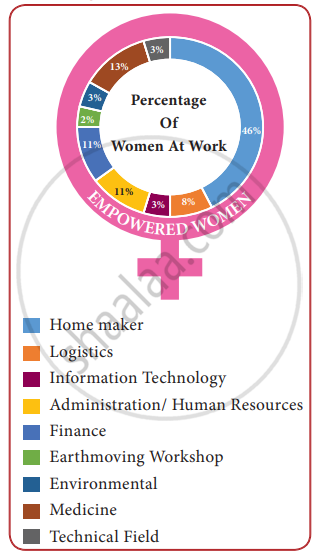
Choose the correct answer.
What is the data about?
With their treasure, the boys would buy ______ in Eidgah.
They may have______ in______.
- soft
- vain
- fear
- joy
- love
- heard
- toiled
- mild
- good
- sand
- life
- harsh
Look at the number pattern. Fill the blank in the middle of the series or end of the series.
SCD, TEF, UGH, ______, WKL
stained by - mark made on clothes or materials
The white washed walls were stained by many monsoons. ______
Turtles are sea animals.
Where did the boys and girls go?
We do not really see the landscape from a normal train because the______.
Read the lines and answer the questions given below.
Spring is pretty
but short and sweet
when you can smell the grass
from your garden seat
- How does the poet describe the spring season?
- Which line tells you that the garden is fresh?
- Who does ‘you’ refer to?
Name the character or speaker.
"The robot will do all your work."
Why did the bird catcher need fire?
What will you do if someone ensnares birds?
Name the character or speaker.
"Did someone scold you?"
Meena went to ______ her father.
Do you like this kind of world?
Write a paragraph on the topic ‘Park’.
Pick out the rhyming words and write.
| green | |
| human | |
| will | |
| welfare |
What will you do with your savings?
What would you like to learn in school? why?
The brush ______ to her will.
Read the passage and write the summary of it. Suggest a suitable title to your summary.
|
King Krishnadeva Raya would perform heavy exercises every morning. He regularly applied oil on his body and thereafter worked out till all the oil came out with the sweat. This was followed by a long ride on his horse. Once the king started leading a sedentary lifestyle, and he stopped exercising. He no longer went horse-riding either. The king overate and as a result grew fat and heavy. The king‟s temperament also underwent a sea change. Noticing this, the royal physicians cautioned the king against the ill effects of overeating and explained to him the risks posed by obesity. They advised the king to regulate his diet, exercise, and take care of his health. The repeated advice he got from the physicians to eat less made him so angry that one day he announced a reward for anyone who could find him an easy cure. But there was one condition: those who failed would have their heads off. None dared to advise the king in this regard. The situation became precarious and as usual Tenali Raman was approached by the courtiers for a remedy. Tenali heard the problem and assured the courtiers of a viable solution. The next day, an astrologer predicted that the king had only a month left to live. When the king came to know of this, he was furious. The astrologer was ordered by the king to be imprisoned for a month so that his prediction could be put to test and so the hapless forecaster was sent to prison. |
Who according to Gandhi, can fight against evil and how?
How can we identify insecure websites?
Pick out word which mean the same as
place or fix (para 2)
