Advertisements
Advertisements
प्रश्न
What is the poetic technique used by the poet to convey the plaintive theme of the poem?
Advertisements
उत्तर
Refugee Blues is a Blue Ballad. A form that defines his character. Ballads were popular in Ireland and Britain till the 18th century while Blues were popular in African-Americans that originated at the end of the 19th century. Auden, a British migrated to the USA, blends the two techniques to bring out this beauty that sings the sorrows and sufferings of Jewish Refugees. The metre used in the poem is the same he used in his poem 'Calypso', written around the same time, the 1930s. While Ballads were popular medieval forms of narrative verse while Blue is an African-American music genre that has a rigid pattern concerning the use of repetitions and a simple rhyme scheme. In the poem, the first two lines of every stanza rhyme with each other, a tercet, while the third line draws a repetitive pattern, with the phrase “my dear” being repeated in every third line giving a unique uniformity to the poem. It is interesting to note that the first word of every stanza is a verb. The poem is a first-person narrative, in a colloquial and informal language.
APPEARS IN
संबंधित प्रश्न
Read the passage given below and answer the questions that follow:
The term dietary fibres refers collectively to indigestible carbohydrates present in plant foods. The importance of these dietary fibres came into the picture when it was observed that the people having diet rich in these fibres, had low incidence of coronary heart disease, irritable bowel syndrome, dental caries and gall stones.
The foodstuffs rich in these dietary fibres are cereals and grains, legumes, fruits with seeds, citrus fruits, carrots, cabbage, green leafy vegetables, apples, melons, peaches, pears etc.
These dietary fibres are not digested by the enzymes of the stomach and the small intestine whereas most of other carbohydrates like starch and sugar are digested and absorbed. The dietary fibres have the property of holding water and because of it, these get swollen and behave like a sponge as these pass through the gastrointestinal tract. The fibres add bulk to the diet and increase transit time in the gut. Some of these fibres may undergo fermentation in the colon.
In recent years, it has been considered essential to have some amount of fibres in the diet. Their beneficial effects lie in preventing coronary heart disease, and decreasing cholesterol level. The fibres like gums and pectin are reported to decrease postprandial (after meals) glucose level in blood. These types of dietary fibres are recommended for the management of certain types of diabetes. Recent studies have shown that the fenugreek (Methi) seeds, which contain 40 per cent gum, are effective in decreasing blood glucose and cholesterol levels as compared to other gum containing vegetables.
Some dietary fibres increase transit time and decrease the time of release of ingested food in colon. The diet having less fibres is associated with colon cancer and the dietary fibres may play a role in decreasing the risk of it.
The dietary fibres hold water so that stools are soft, bulky and readily eliminated. Therefore high fibre intake prevents or relieves constipation.
The fibres increase motility of the small intestine and the colon and by decreasing the transit time there is less time for exposure of the mucosa to harmful toxic substances. Therefore, there is a less desire to eat and the energy intake can be maintained within the range of requirement. This phenomenon helps in keeping a check on obesity. Another reason in helping to decrease obesity is that the high-fibre diets have somewhat lower coefficients of digestibility.
The dietary fibres may have some adverse effects on nutrition by binding some trace metals like calcium, magnesium, phosphorus, zinc and others and therefore preventing their proper absorption. This may pose a possibility of nutritional deficiency especially when diets contain marginal levels of mineral elements. This may become important constraints on increasing dietary fibres. It is suggested that an intake of 40 grams dietary fibres per day is desirable.
(Extracted from ‘The Tribune’)
(a) On the basis of your reading of the above passage make notes on it in points only, using recognizable abbreviations wherever necessary. Also suggest a suitable title. (5)
(b) Write a summary of the above in about 80 words. (3)
Answer any four of the following questions in 30-40 words each:
(a) What did Franz wonder about when he entered the class that day?
(b) What shocking experience did Douglas have at YMCA pool?
(c) Why does Kamala Das compare her mother to 'a pale winter's moon'?
(d) What rich bountry has the heaven given us? (A Thing of Beauty)
(e) Why did the Maharaja have to pay a bill of three lakh rupees to the British jewellers?
(f) What problem did Roger Skunk face when he went to play with his friends. How did he solve it?
Complete the following table :
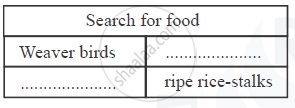
Write a summary of the above passage in about 100 words.
Does the poem have a consistent rhyme scheme?
Read the text below and summarise it.
The Great Desert Where Hippos Once Wallowed
The Sahara sets a standard for dry land. It’s the world’s largest desert. Relative humidity can drop into the low single digits. There are places where it rains only about once a century. There are people who reach the end of their lives without ever seeing water come from the sky.
Yet beneath the Sahara are vast aquifers of fresh water, enough liquid to fill a small sea. It is fossil water, a treasure laid down in prehistoric times, some of it possibly a million years old. Just 6,000 years ago, the Sahara was a much different place.
It was green. Prehistoric rock art in the Sahara shows something surprising: hippopotamuses, which need year-round water.
“We don’t have much evidence of a tropical paradise out there, but we had something perfectly liveable,” says Jennifer Smith, a geologist at Washington University in St Louis.
The green Sahara was the product of the migration of the paleo-monsoon. In the same way that ice ages come and go, so too do monsoons migrate north and south. The dynamics of earth’s motion are responsible. The tilt of the earth’s axis varies in a regular cycle — sometimes the planet is more tilted towards the sun, sometimes less so. The axis also wobbles like a spinning top. The date of the earth’s perihelion — its closest approach to the sun — varies in cycle as well.
At times when the Northern Hemisphere tilts sharply towards the sun and the planet makes its closest approach, the increased blast of sunlight during the north’s summer months can cause the African monsoon (which currently occurs between the Equator and roughly 17°N latitude) to shift to the north as it did 10,000 years ago, inundating North Africa.
Around 5,000 years ago the monsoon shifted dramatically southward again. The prehistoric inhabitants of the Sahara discovered that their relatively green surroundings were undergoing something worse than a drought (and perhaps they migrated towards the Nile Valley, where Egyptian culture began to flourish at around the same time).
“We’re learning, and only in recent years, that some climate changes in the past have been as rapid as anything underway today,” says Robert Giegengack, a University of Pennsylvania geologist.
As the land dried out and vegetation decreased, the soil lost its ability to hold water when it did rain. Fewer clouds formed from evaporation. When it rained, the water washed away and evaporated quickly. There was a kind of runaway drying effect. By 4,000 years ago the Sahara had become what it is today.
No one knows how human-driven climate change may alter the Sahara in the future. It’s something scientists can ponder while sipping bottled fossil water pumped from underground.
“It’s the best water in Egypt,” Giegengack said — clean, refreshing mineral water. If you want to drink something good, try the ancient buried treasure of the Sahara.
Staff Writer, Washington Post
Tick the statement that is true.
The places mentioned in the story are all imaginary.
Why is the quality of pity earth-bound while the other two passions are elevating?
What do you understand of the three voices in response to the question 'What does a novel do' ?
Read the following statement and mark those that apply to you.
I have a large group of friends but no best buddy.
The best punishment is ‘forgiveness’. Discuss the sentence in light of the text you have read. You can make use of the following points.
(a) Forgiveness provides an opportunity to change the behaviour.
(b) Forgiveness leads to repentance.
(c) A person may commit a mistake/crime impulsively or under the force of strong emotions.
(d) ________________________
(e) ________________________
Read the story and choose the appropriate meaning.
Masterpiece ____________.
Given below are some words from legal terminology used in court affairs. Discuss and complete the table accordingly.
| Sr. No | Legal Terminology | Description |
| 1. | Affidavit | A written statement confirmed by oath or affirmation for use as evidence in court. |
| 2. | Argument | |
| 3. | Consent | |
| 4. | Counsel | |
| 5. | Judgement | |
| 6. | Trial | |
| 7. | Verdict | |
| 8. | Contempt of Court | |
| 9. | Notice | |
| 10. | Stay order |
How do we realize that animals are not feeling well?
Answer the following question in short.
What was Pundit Shahane’s claim as a scholar?
Write a sentence each about three of your friends. Each time you should say what your friend cannot do, and yet, pay a compliment to your friend.
Answer the following question in one sentence.
What would he do if he had the power to do it?
Apart from the stone, how many things go into the soup?
Antonio had gone on a long voyage.
Hold a mock trial for the following offence. There should be a complainant, a defendant, and lawyers to argue the case on behalf of them. The whole class can vote to pass the judgment. On what occasions will you plead for justice? What punishment will you suggest? When will you plead for mercy?
A very poor and honest servant has broken a vase while cleaning it. The vase was valuable and the employer liked it very much.
Who is the speaker in the poem?
Form groups of five and discuss:
There are many things that seem small, minor, or insignificant to some people but the same may be the cause of great pain, suffering for others. Can you list such things? What can you do to provide help on those occasions?
Recite the poem with proper rhythm and intonation.
Write one line about the following with the help of the poem.
wind in the autumn evening
Think and answer:
Why are the sights said to ‘fly’?
Explain the use of the following property in the development of the play.
An envelope containing the letter
Complete the following diagram.

Form groups of 5-8. This passage tells us only what the compère says. Try to visualize and write what the other people on the dais must have said in their speeches (Write only the main points.)
- The School Principal
- The Chief Guest
- The Art teacher who offered a vote of thanks
Where does the brook join the river?
Read the poem aloud using proper intonation.
What does the poet want to know from the goldfish?
What is a website?
Guess the meaning of dreary.
____________ had provided Prospero formerly with books and provisions.
Who is wise according to you?
Who am I?
Who Am I? is a guessing game where players use ‘yes’ or ‘no’ questions to guess the identity of a famous person. Questions are based upon the traits and characteristics of a person everyone will be able to identify.
Divide the class into groups. One group should decide the personality while the other group should ask ‘yes’ or ‘no’ type questions. To win the game, a team needs to find out the person within 10 clues.
Sample questions to ask. Answers must be ‘yes’ or ‘no’ only
- Are you a male (female)?
- Are you a famous personality?
- Are you a singer (dancer, actor)?
- Are you a historical figure?
- Are you young (old)?
- Are you alive now?
- Does your name start with ‘___’?
- Is he/she ____ ?
Read the incident again and answer the following question.
What is the humour element in the above incident?
Find a sentence/word from the text which express the following.
One of the qualities of the teacher.
What should we learn from our teachers?
Read Section – III (para 1 and 4) and answer the following questions.
Paragraph 1
1. Who listened to the chipping sound of the chisel? ______
2. Who was working with the hammer and chisel? ______
Paragraph 4
1. Who was staring? ______
2. Who was the young stone carver? ______
3. What was he working on? ______
According to the author the tendril was moving towards grandfather because it______.
What word could best replace ‘charges’ in the poem - marches, rushes or pushes?
One of the Lilliputians gave a ten minutes talk in Gulliver’s language.
Why did the crowd gather by the side of the pond?
| Mr. Murugan is a farmer. He has a small piece of land and two bulls. He takes good care of his bulls as they help him in farming. Every morning, he takes the bulls for grazing. When it rains he ploughs the land with the bulls. As he has no one to help he starts sowing the seed before sunrise. He irrigates the crop till it grows. He reaps and binds the crop then takes it to thrash the paddy. Finally, with the help of the bulls, he takes the paddy to his house. |
Choose the main idea of the passage.
The villagers, built a _______ on his memory.
Read scene I of the play carefully and answer the questions below.
Tabaqui acts as ______ to the pack of wolves.
Vicky was an active boy.
What will you do if someone ensnares birds?
Who was Akilan’s inspiration?
What was the message on the chit?
Why was the teacher annoyed?
Amir realised his mistakes.
What will help you say the truth?
What subject did he like the most?
Why should a fisher wait?
What was the event Megala participated?
The pretty little fir tree was happy with gold leaves but______.
Now read the following article on the emerging career options in the modern era and answer the questions that follow.
The students at the higher secondary level in schools start thinking of suitable courses to take up at the university level based on their aptitude, ability, and interests. While considering the higher education options, they should also plan the career path they wish to take. In today’s complex job scenario, there is a mismatch between demand and supply. On one hand, we have qualified professionals desperately trying to find a job, while on the other hand, there are many professions that need suitable talented employees. But such skilled employees are unavailable. Therefore, the need of the hour is that students have an understanding of the emerging career options. and globalisation has widened the scope of career options in the twenty–first century. Let us consider some popular careers.
Fashion Designing
The current cosmopolitan and fashion–conscious wave that has taken over our country has opened up a huge arena for careers in fashion. These careers encompass designing clothes, costumes, jewellery, footwear, wardrobe, cosmetics, accessories and the like.
Culinary Arts
With food and cookery shows being a major trend across the world, culinary arts, a sub-domain of the hospitality sector, has now become the most sought-after career.
Paramedical sciences
In recent times, there has been a great demand in the health care industry. Paramedical professionals who support medical practitioners in areas such as optometry, pathology, nursing, physiotherapy, and dentistry are much sought after.
Media, Journalism and Advertising
In this information era, print and entertainment media have become a force to reckon with. This arena has become a huge career playground because youngsters are attracted to it as the exposure and reach are greater through such mass media. We notice that radio and TV channels, internet companies, and advertising agencies are increasingly recruiting qualified professionals.
Hotel Management
The hotel industry is the fastest-growing industry in India. The number of international travellers (both for business and leisure) is increasing. The hospitality and service industry offers career options such as house keeping, front-desk executives, tourism management, etc.
Sports Management
With multinational companies supporting sports, careers in sports offer enormous scope. One need not be a player or an athlete to shine in a sports career because the field of sports offers various career options such as technical trainers, commentators, sports journalists, dieticians, referees, etc. Conducting sports events successfully, organizing the event laudably, preparing the ground for the event are all part of sports management.
- When do students start thinking about their career path?
- How can students build a strong career?
- What are the integral aspects of a successful career?
- What is meant by ‘culinary art’?
- Why is media a popular career option?
- Name some paramedical courses mentioned in the passage.
- Why is the hotel industry seen as the fastest growing in India?
- Does one have to be a player to opt for a career in the field of sports? Answer giving reasons.
- Pick one word from the passage which is the opposite of ‘modern’.
- Which word in the passage means ‘composed of people from many parts of the country’?
Arrange a ‘Jokes’ session in the classroom where each student tells a joke. The jokes must be told in English.
