Advertisements
Advertisements
प्रश्न
List the distinctive features of the tribal arts.
Advertisements
उत्तर
According to the essayist G. N. Devy, the tribal arts display many distinctive features.
One of the distinctive features of tribal arts is their distinct manner of constructing space and imagery, which might be described as 'hallucinatory'. In both oral and visual forms of representation, tribal artists seem to interpret verbal or pictorial space as demarcated by an extremely flexible 'frame'. The boundaries between art and non art become almost invisible. In a tribal Ramayana, an episode from the Mahabharata makes a sudden and surprising appearance; tribal paintings contain a curious mixture of traditional and modern imagery.
The tribal arts follow strict convention. Every tribal performance and creation has, at its back, another such performance or creation belonging to a previous occasion. The creativity of the tribal artist lies in adhering to the past while, at the same time, slightly subverting it.
Playfulness is the soul of tribal arts. The tribal arts rarely assume a serious or pretentious tone. The tribal arts are relaxed and never tense.
The tribal oral stories and songs employ bilingualism in a complex manner.
APPEARS IN
संबंधित प्रश्न
Read the following passage and do the activities:
B1 Match:
Match the areas given in Column ‘A’ with the description of Mehendi design given in Column ‘B’:
| 'A' | 'B" | ||
| (i) | North African | (a) | A mix of Indo-Pakistani and Arabic design |
| (ii) | Indian | (b) | Delicate loops and curves, paisleys, teardrops |
| (iii) | Arabic | (c) | Geometrical images |
| (iv) | South Asian | (d) | Local textiles, paintings, and architecture |
Henna comes from the leaves of the plant Lawsonia inertias. The plant grows in hot and dry climes and is native to North Africa, the Indian subcontinent and the Middle East. The leaves of the plant are dried and crushed to powder. Various additives such as coffee decoction, tea, lime juice, Mehendi and eucalyptus oil are mixed with the henna powder to increase the potency of the dry, this also helps to bind the powder to a paste-like consistency. The mixture is applied through cones in intricate patterns depending on the region of use.
Album of Patterns
Four major styles can be found in the vast dictionary of Mehendi designs. Earlier the application was restricted to hand and feet, but the adoption of Mehendi by different cultures throughout the world has seen experimentation on different body parts including the neck naval and back.
North African patterns rely on geometrical images to trace the shape of hands and feet, Arabic designs borrow heavily from local textiles, paintings, and architecture. These are more spaced out, to allow the design to stand out boldly from the skin parts left untouched by henna. The Indian style comprises of delicate loops and curves, paisleys, teardrops and flowers that give a dainty filigreed glow-like effect. Though intricate patterning is the name of the game today, this trend took off in India only during the 20th century. The patterns preferred by the South Asian countries are mixed with Indo-Pakistani and Arabic design schemes. Chinese and Celtic symbols now find a place in the vast repertoire of Mehendi designs as well.
B2 Complete:
Complete the following and write:
(i) The procedure before applying henna _______
(ii) The reasons for using additives _______
(iii) The suitable climatic conditions for the henna plant _______
(iv) Mehendi is used on _______
B3 Find words:
Look at the following description and find out proper words from the passage and write:
(i) Existing naturally in the place : - n _______
(ii) Consist of something: - c _______
(iii) Delicate decoration made from gold, silver and copper wire: - f _______
(iv) Substance that is added in small quantity : - a _______
B4 Language study:
Fill in the blanks with suitable subordinators given in the box:
| as well as, so that, however, which |
(i) The mixture is applied through cones in intricate patterns _______ depend on the region of use.
(ii) The intricate pattern is the name of the game of today _______, this trend took off in India, recently.
(iii) North African pattern relies on geometrical images ______ they can trace the shape of hands and feet.
(iv) The patterns preferred by the South Asian countries are mixed with Indo-Pakistani _______ Arabic design schemes.
B5 Personal Response:
Which Mehendi design do you like? Why?
Answer the following in 200-250 words :
Describe the relationship between Anne and Margot?
What has not changed over the years? Does this suggest something to you?
Look for a story, a poem and a newspaper article on environment conservation and see how the style of each is different from the other.
Why does Russell call the three passions 'simple'?
What does the line 'I never writ, nor no man ever loved' imply?
Notice these expressions in the poem and guess their meaning from the context:
| rancid breath | squelching tar |
| spectroscopic flight of fancy | |
| rearing on the thunderclap | brunette |
| peroxide blonde | clinical assent |
| raven black |
What were the lessons of life learnt in her younger days that Kumudini carried into her adult life?
Distinguish between the following pairs of words
| Incredulous | - | Incredible |
| Suspicious | - | Susceptible |
| Sensitivity | - | Sentimentality |
| Successive | - | Successful |
Say why the speaker of the poem wishes to be a-
hawker
A small thought, put in action, led to a great achievement. Pick out the lines from the beginning and end of the poem and explain their significance.
Read the story and choose the appropriate meaning.
Skeleton branches ____________.
Discuss in your class.
What are the advantages of learning science?
Wash your handkerchief clean. Hang it with a peg to dry in the wind. Watch how it flutters.
Discuss in groups and think about it.
Mention three occasions on which you have made someone else angry. What made that person angry? Can you avoid such things in the future?
Enlist a few reasons for watching a drama live on the stage.
Now, talk to your friends or elders; refer to books and read about all the objects on which wheels are used. List them. (How many did you miss out on in your first list? Why?)
Write about the various wheel-like objects you see at home, in school, and on the road.
Form a pair. Write at least one short dialogue for the following expression.
I agree.
Write a short note on the following:
Veterinary Science in Ancient India.
Find the pairs of rhyming words used at the end of the lines in the poem.
Complete the following sentence with reference to the passage.
They may be composed and sung or recited for many years before __________________.
A parody is a playful, comic imitation of a writer’s style. A parody is like a verbal cartoon. Compare the original poem and its parody given on page 35 using the following points:
|
How doth the little busy bee |
How doth the little crocodile (parody) |
| Choice of a subject (an animal) | __________________ |
| __________________ | __________________ |
| Number of lines and stanzas | __________________ |
| __________________ | __________________ |
| Same or similar constructions | __________________ |
| __________________ | __________________ |
| Tone of the poem | __________________ |
| __________________ | __________________ |
Find from the Internet and write down.
From which play is this song extracted?
Form groups of five. Discuss how you can complete the rest of the story without referring to Part II of the story.
Fill in the blank choosing the appropriate word/idiom from the lesson.
He was dizzy and he ______ the room.
Write what you can do to welcome birds in your surroundings.
Your parents sometimes behave like the young bird’s parents. They may seem cruel and unrelenting. Does it mean that they do not care for you? Explain your views about it with reference from the story
____________ had provided Prospero formerly with books and provisions.
And whether their station be high or humble,…
Pick out the alliteration from the above line.
Why did Shepherd-Barron reduce the PIN number from six digits to four?
‘ If only her son were there, it would have been a different kind of Eid’! What had happened to her son?
Hamid thought that his grandma would be pleased if he bought______
How did Hamid’s friends enjoy the games in the fair?
Why does the poet tell us to speak gently to young children?
| soft | vain | fear | joy | love | heard | toiled | mild | good | sand | life | harsh |
The ______, the______, which it may bring.
drenched – thoroughly wet
He is drenched to the skin. ______
Work in pairs and answer the following.
Write the rhyme scheme of the poem.
The captain presented a gift to Vasantha because ______
Turtles are sea animals.
Identify and write the sport's name respectively.
- ______
- ______
- ______
- ______
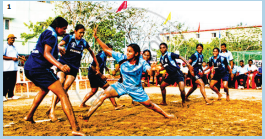
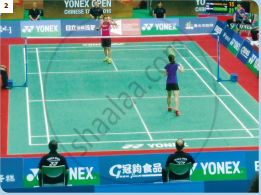
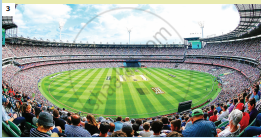
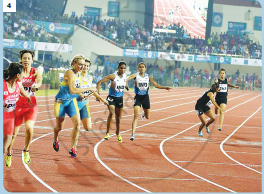
What made the trip a memorable one?
Why did the family move to Patna?
We don’t use _________ in the soil.
What did the first daughter do?
Karmugilan went to __________ for higher studies.
Where was the old man sleeping?
Who will be the fortunate?
Name the character or speaker.
“Learn well, live well!”
Recite the poem 'Treasure Trove' with the correct intonation.
The villagers took oath not to harm the _______.
Savings is done after fulfilling the______.
What should we do for success?
What did he learn about the birds?
What did he claim to know?
Where did they go to buy books?
Now, read the following passage on “Laughter Therapy” and answer the questions that follow.

- Laughing is an excellent way to reduce stress in our lives; it can help you to cope with and survive a stressful life. Laughter provides full-scale support for your muscles and unleashes a rush of stress-busting endorphins. Since our bodies cannot distinguish between real and fake laughter, anything that makes you giggle will have a positive impact.
- Laughter Therapy aims to get people laughing, in groups and individual sessions and can help reduce stress, make people and employees happier and more committed, as well as improve their interpersonal skills. This laughter comes from the body and not the mind.
- Laughter Yoga (Hasya yoga) is a practice involving prolonged voluntary laughter. It aims to get people laughing in groups. It is practiced in the early mornings in open-parks. It has been made popular as an exercise routine developed by Indian physician Madan Kataria, who writes about the practice in his 2002 book ‘Laugh for no reason'. Laughter Yoga is based on the belief that voluntary laughter provides the same physiological as well as psychological benefits as spontaneous laughter.
- Laughter yoga session may start with gentle warm-up techniques which include stretching, chanting, clapping, eye contact and body movements to help break down inhibitions and encourage a sense of playfulness. Moreover, laughter is the best medicine. Breathing exercises are used to prepare the lungs for laughter followed by a series of laughter exercises that combine a method of acting and visualization techniques. Twenty minutes of laughter is sufficient to augment physiological development.
- A handful of small-scale scientific studies have indicated that laughter yoga has some medically beneficial effects, including cardiovascular health and mood. This therapy has proved to be good for depressed patients. This laughter therapy also plays a crucial role in social bonding.
Answer the following.
a. How does laughter help one to cope with stress?
b. Which word in the text (para 2) means the same as ‘dedicated'?
c. Why do you think voluntary laughter provides the same physiological as well as psychological benefits as spontaneous laughter?
d. ‘Laughter is the best medicine’. Explain.
e. Given below is a set of activities. Which of these are followed in the ‘Laughter Yoga’ technique?
- sitting on the ground with legs crossed
- body movements
- clapping
- closed eyes
- breathing exercises
- chanting
- stretching of arms and legs
- bending backwards
- running/jogging
- eye contact
f. ‘Laughter therapy also plays a crucial role in social bonding’. How?
Should children be discouraged from playing online games?
Read the given sentence and underline the 'no' word.
Nobody is at home.
