Topics
Gravitation
- Concept of Gravitation
- Force and Motion
- Circular Motion and Centripetal Force
- Kepler’s Laws
- Law of Orbit or Kepler's First Law
- Law of Areas or Kepler's Second Law
- Law of Periods or Kepler's Third Law
- Newton's Universal Law of Gravitation
- Uniform Circular Motion (UCM)
- Earth’s Gravitational Force
- Earth’s Gravitational Acceleration
- Mass and Weight
- Gravitational Waves
- Free Fall
- Gravitational Potential Energy
- Escape Velocity
- Weightlessness in Space
Periodic Classification of Elements
- Classification of Elements
- Dobereiner’s Triads
- Newland's Law of Octaves
- Mendeleev’s Periodic Table
- Insights into Mendeleev’s Periodic Table
- Modern Periodic Law
- Modern Periodic Table
- Structure of the Modern Periodic Table
- Modern Periodic Table and Electronic Configuration of Elements
- Groups and Electronic Configuration
- Periods and Electronic Configuration
- Periodic Trends in the Modern Periodic Table
- Atomic Size
- Metallic and Non-metallic Characters
- Gradation in Halogen Family
Chemical Reactions and Equations
- Chemical Reaction
- Chemical Equations
- Balancing Chemical Equation
- Types of Chemical Reactions > Combination Reaction
- Types of Chemical Reactions > Decomposition Reaction
- Types of Chemical Reactions > Single Displacement Reaction
- Types of Chemical Reactions > Double Displacement Reaction
- Endothermic and Exothermic Processes
- Rate of Chemical Reaction
- Types of Chemical Reactions > Oxidation and Reduction Reactions
- Corrosion of Metals
- Factors Affecting the Rate of a Chemical Reaction
- Rancidity
Effects of Electric Current
- Electric Circuit
- Heating Effect of Electric Current
- Magnetic Effect of Electric Current
- Right-hand Thumb Rule
- Applications of Biot-Savart's Law > Magnetic Field at the Axis of a Circular Current-carrying Loop
- Applications of Ampere’s Circuital Law > Magnetic Field of a Long Straight Solenoid
- Force on a Current-Carrying Conductor Placed in a Uniform Magnetic Field
- Fleming’s Left Hand Rule
- Electric Motor
- Introduction to Electromagnetic Induction
- Galvanometer
- Faraday's Laws of Electromagnetic Induction
- Fleming’s Right Hand Rule
- Alternating current (AC) and Direct Current (DC)
- Electric Generator
Heat
Refraction of Light
Lenses
- Concept of Lenses
- Images Formed by Convex Lenses
- Images Formed by Concave Lenses
- Sign Convention
- Lens Formula and Magnification
- Magnification
- Power of a Lens
- Combination of Lenses
- Human Eye
- Defects of Vision and Their Corrections > Myopia
- Defects of Vision and Their Corrections > Hypermetropia
- Defects of Vision and Their Corrections > Presbyopia
- Apparent Size of an Object
- Use of Concave Lenses
- Use of Convex Lenses
- Persistence of Vision
Metallurgy
- Physical Properties of Metal
- Physical Properties of Non-metal
- Chemical Properties of Metal
- Reactions of Metals
- Reactivity Series of Metals
- Chemical Properties of Non-metal
- Ionic Compounds
- Metallurgy
- Basic Principles of Metallurgy > Concentration of Ores
- Basic Principles of Metallurgy > Extraction of Metals
- Basic Principles of Metallurgy > Refining of Metals
- Corrosion of Metals
- Prevention of Corrosion
Carbon Compounds
- Bonds in Carbon Compounds
- Carbon: A Versatile Element
- Hydrocarbons
- Straight chains, Branched chains, and Rings of Carbon atoms
- Functional Groups in Carbon Compounds
- Nomenclature
- The IUPAC System of Nomenclature
- Homologous Series
- Chemical Properties of Carbon Compounds > Combustion
- Chemical Properties of Carbon Compounds > Oxidation
- Chemical Properties of Carbon Compounds > Addition Reaction
- Chemical Properties of Carbon Compounds > Substitution Reaction
- Ethanol
- Ethanoic Acid
- Macromolecules and Polymers
Space Missions
School of Elements
The Magic of Chemical Reactions
- Types of Chemical Reactions > Combination Reaction
- Types of Chemical Reactions > Decomposition Reaction
- Types of Chemical Reactions > Single Displacement Reaction
- Types of Chemical Reactions > Double Displacement Reaction
- Chemical Properties of Carbon Compounds > Oxidation
- Types of Double Displacement: Neutralization Reaction
The Acid Base Chemistry
The Electric Spark
All about Electromagnetism
- Magnetic force
- Bar Magnet and Solenoid Analogy
- Right-hand Thumb Rule
- Applications of Biot-Savart's Law > Magnetic Field at the Axis of a Circular Current-carrying Loop
- Applications of Ampere’s Circuital Law > Magnetic Field of a Long Straight Solenoid
- Force on a Current-Carrying Conductor Placed in a Uniform Magnetic Field
- Electric Motor
- Introduction to Electromagnetic Induction
- Alternating-Current Generator
- Simple D.C. Motor
- Household Electrical Circuits
Wonders of Light 1
Wonders of Light 2
Striving for better Environment 1
- Abatement of Pollution
- Sustainable Use of Resources
Maharashtra State Board: Class 10
India’s Mars Mission (Mangalyaan)
| After exploring the Moon, India set its sights on Mars — the next closest planet to Earth. The Indian Space Research Organisation (ISRO) launched its first Mars mission, called Mangalyaan, or the Mars Orbiter Mission (MOM), on 5 November 2013. This mission was a significant milestone in India’s space journey. |
|
Mars Orbitor Mission: Mangalyaan |
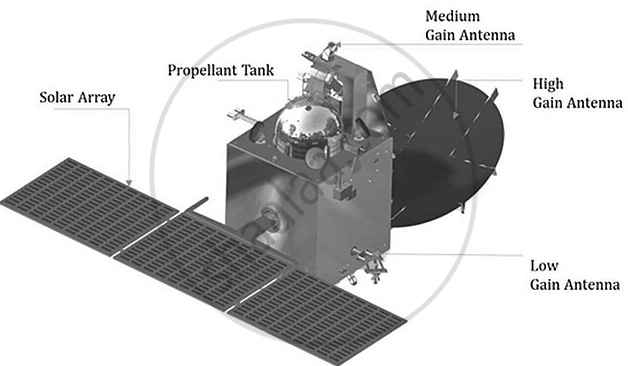
What made Mangalyaan especially remarkable was that it was developed on a very low budget — around ₹450 crore (~US$74 million), making it one of the most cost-effective interplanetary missions ever.
- Despite the challenges — as nearly half of all Mars missions by other countries had failed — ISRO succeeded in its very first attempt.
- The spacecraft was launched aboard a PSLV-C25 rocket from Satish Dhawan Space Centre, and it entered Mars orbit on 24 September 2014.
- With this success, India became the first Asian nation to reach Mars orbit and the first in the world to do so on its maiden attempt.
- The main goals of the mission were to collect data about the Martian surface, mineral composition, atmosphere, and morphology.
- Mangalyaan operated well beyond its expected 6-month lifespan, sending valuable information for over seven years before the mission concluded in 2022.
India's Mars mission was a proud moment for the nation and showcased ISRO’s ability to achieve complex space goals with efficiency, innovation, and limited resources.
Maharashtra State Board: Class 10
Indian-Origin Astronauts and Space Heroes
| Name | Rakesh Sharma | Kalpana Chawla | Sunita Williams |
| Photograph | 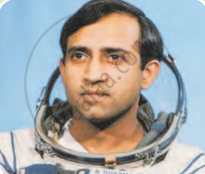 |
 |
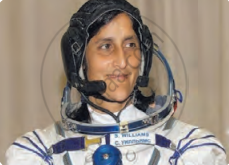 |
| Key Identity | First Indian in space | First Indian-origin woman in space | Indian-origin NASA astronaut |
| Education | Trained as a test pilot; Wing Commander in Indian Air Force | B.E. in Aeronautical Engineering (Punjab Engineering College); M.S. & PhD (University of Colorado) | B.S. in Physical Science (U.S. Naval Academy); M.S. in Engineering Management (Florida Institute of Technology) |
| Space Missions & Details | Flew aboard Soyuz T-11 on 3 April 1984 under the Indo-Soviet programme; spent 8 days aboard Salyut 7 space station. |
First mission: STS-87 (1997); second mission: STS-107 (2003); total time in space: 336 hours (14 days). |
First mission: STS-116 (2006–2007); Second: Expedition 32/33 (2012); Total time in space: 195 days. Performed 7 spacewalks, 50+ hrs. |
| Notable Achievements | First Indian to travel to space. Famous quote: “Saare Jahan Se Accha” from space. | First Indian-origin woman in space. Died in the Columbia shuttle disaster (2003). | Held the world record (at the time) for most spacewalks by a woman. Worked 29 hours outside ISS. |
Maharashtra State Board: Class 10
Key Points: Mars Missions
- Mars Mission (Mangalyaan) by ISRO was launched in 2013 and successfully entered Mars orbit in 2014.
- It was a low-cost mission that provided important data on Mars' surface and atmosphere.
- Rakesh Sharma was the first Indian in space (1984), and stayed 8 days under the Indo-USSR program.
- Kalpana Chawla spent 336 hours in space but died in 2003 during the Columbia shuttle disaster.
- Sunita Williams worked 29 hours outside the space station and spent 192 days in space, setting a record.
