- Carbon forms many compounds, from simple ones like methane to complex ones like DNA, due to its bonding versatility.
- Catenation allows carbon to form long chains or rings by bonding with itself.
- Carbon forms single, double, and triple covalent bonds, leading to saturated and unsaturated compounds.
- Being tetravalent, carbon forms four strong covalent bonds with elements like H, O, N, and Cl.
- Isomerism increases the number of carbon compounds by allowing different structures with the same molecular formula.
Topics
Gravitation
- Concept of Gravitation
- Force and Motion
- Circular Motion and Centripetal Force
- Kepler’s Laws
- Law of Orbit or Kepler's First Law
- Law of Areas or Kepler's Second Law
- Law of Periods or Kepler's Third Law
- Newton's Universal Law of Gravitation
- Uniform Circular Motion (UCM)
- Earth’s Gravitational Force
- Earth’s Gravitational Acceleration
- Mass and Weight
- Gravitational Waves
- Free Fall
- Gravitational Potential Energy
- Escape Velocity
- Weightlessness in Space
Periodic Classification of Elements
- Classification of Elements
- Dobereiner’s Triads
- Newland's Law of Octaves
- Mendeleev’s Periodic Table
- Insights into Mendeleev’s Periodic Table
- Modern Periodic Law
- Modern Periodic Table
- Structure of the Modern Periodic Table
- Modern Periodic Table and Electronic Configuration of Elements
- Groups and Electronic Configuration
- Periods and Electronic Configuration
- Periodic Trends in the Modern Periodic Table
- Atomic Size
- Metallic and Non-metallic Characters
- Gradation in Halogen Family
Chemical Reactions and Equations
- Chemical Reaction
- Chemical Equations
- Balancing Chemical Equation
- Types of Chemical Reactions > Combination Reaction
- Types of Chemical Reactions > Decomposition Reaction
- Types of Chemical Reactions > Single Displacement Reaction
- Types of Chemical Reactions > Double Displacement Reaction
- Endothermic and Exothermic Processes
- Rate of Chemical Reaction
- Types of Chemical Reactions > Oxidation and Reduction Reactions
- Corrosion of Metals
- Factors Affecting the Rate of a Chemical Reaction
- Rancidity
Effects of Electric Current
- Electric Circuit
- Heating Effect of Electric Current
- Magnetic Effect of Electric Current
- Right-hand Thumb Rule
- Applications of Biot-Savart's Law > Magnetic Field at the Axis of a Circular Current-carrying Loop
- Applications of Ampere’s Circuital Law > Magnetic Field of a Long Straight Solenoid
- Force on a Current-Carrying Conductor Placed in a Uniform Magnetic Field
- Fleming’s Left Hand Rule
- Electric Motor
- Introduction to Electromagnetic Induction
- Galvanometer
- Faraday's Laws of Electromagnetic Induction
- Fleming’s Right Hand Rule
- Alternating current (AC) and Direct Current (DC)
- Electric Generator
Heat
Refraction of Light
Lenses
- Concept of Lenses
- Images Formed by Convex Lenses
- Images Formed by Concave Lenses
- Sign Convention
- Lens Formula and Magnification
- Magnification
- Power of a Lens
- Combination of Lenses
- Human Eye
- Defects of Vision and Their Corrections > Myopia
- Defects of Vision and Their Corrections > Hypermetropia
- Defects of Vision and Their Corrections > Presbyopia
- Apparent Size of an Object
- Use of Concave Lenses
- Use of Convex Lenses
- Persistence of Vision
Metallurgy
- Physical Properties of Metal
- Physical Properties of Non-metal
- Chemical Properties of Metal
- Reactions of Metals
- Reactivity Series of Metals
- Chemical Properties of Non-metal
- Ionic Compounds
- Metallurgy
- Basic Principles of Metallurgy > Concentration of Ores
- Basic Principles of Metallurgy > Extraction of Metals
- Basic Principles of Metallurgy > Refining of Metals
- Corrosion of Metals
- Prevention of Corrosion
Carbon Compounds
- Bonds in Carbon Compounds
- Carbon: A Versatile Element
- Hydrocarbons
- Straight chains, Branched chains, and Rings of Carbon atoms
- Functional Groups in Carbon Compounds
- Nomenclature
- The IUPAC System of Nomenclature
- Homologous Series
- Chemical Properties of Carbon Compounds > Combustion
- Chemical Properties of Carbon Compounds > Oxidation
- Chemical Properties of Carbon Compounds > Addition Reaction
- Chemical Properties of Carbon Compounds > Substitution Reaction
- Ethanol
- Ethanoic Acid
- Macromolecules and Polymers
Space Missions
School of Elements
The Magic of Chemical Reactions
- Types of Chemical Reactions > Combination Reaction
- Types of Chemical Reactions > Decomposition Reaction
- Types of Chemical Reactions > Single Displacement Reaction
- Types of Chemical Reactions > Double Displacement Reaction
- Chemical Properties of Carbon Compounds > Oxidation
- Types of Double Displacement: Neutralization Reaction
The Acid Base Chemistry
The Electric Spark
All about Electromagnetism
- Magnetic force
- Bar Magnet and Solenoid Analogy
- Right-hand Thumb Rule
- Applications of Biot-Savart's Law > Magnetic Field at the Axis of a Circular Current-carrying Loop
- Applications of Ampere’s Circuital Law > Magnetic Field of a Long Straight Solenoid
- Force on a Current-Carrying Conductor Placed in a Uniform Magnetic Field
- Electric Motor
- Introduction to Electromagnetic Induction
- Alternating-Current Generator
- Simple D.C. Motor
- Household Electrical Circuits
Wonders of Light 1
Wonders of Light 2
Striving for better Environment 1
- Abatement of Pollution
- Sustainable Use of Resources
Maharashtra State Board: Class 9
Introduction
Carbon was discovered by Antoine Lavoisier and is one of the most abundant elements on Earth. It exists in both free form and in combination with other elements. Unlike most elements, carbon can bond with itself and other elements to create simple molecules like methane and complex structures like DNA. All living structures are carbon-based.
- Symbol of carbon: C
- Atomic number: 6
- Atomic mass: 12
- Electron configuration: 2, 4
- Valency: 4
- Non-metallic element
Carbon is found in the earth's crust in the form of carbonate, coal, and petroleum, which contribute around 0.27%. Carbon dioxide is approximately 0.03% of the atmosphere's carbon. Some marine plants convert dissolved carbon into calcium carbonate, contributing to oceanic carbon storage.
Maharashtra State Board: Class 9
Occurrence of Carbon
The German chemist Wohler synthesised an organic compound (urea) from an inorganic compound (ammonium cyanate). Ever since then, many organic compounds have been made from inorganic compounds. Carbon was found to be the main element in all these compounds. Hence, organic chemistry is also referred to as the chemistry of carbon compounds.
\[\mathrm{NH}_4^+\mathrm{CNO}^-\xrightarrow{\mathrm{Heat}}\mathrm{NH}_2\mathrm{CONH}_2\]
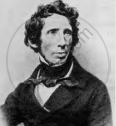
Wohler
The name ‘carbon’ is derived from the Latin word ‘carbo,’ meaning coal. It ranks 17th in terms of abundance in the earth's crust. Carbon is found in nature in free as well as compound states.
Free state: Found as diamond and graphite
Combined state:
- As carbon dioxide and in the form of carbonates such as calcium carbonate, marble, and calamine (ZnCO₃)
- Fossil fuels: coal, petroleum, natural gas
- Carbonaceous nutrients: carbohydrates, proteins, fats
- Natural fibres: cotton, wool, silk
Maharashtra State Board: Class 10
Characteristics of Carbon
1. Catenation Power
- Carbon can form strong covalent bonds with other carbon atoms, creating long chains or ring structures.
- Chains can be open (straight or branched) or closed (cyclic rings). This ability leads to the formation of millions of carbon compounds.
2. Molecular Mass Variation
Carbon compounds range from small molecules (e.g., methane, CH₄) to extremely large ones (e.g., DNA).
Examples of Carbon Compound Molecular Mass:
| Carbon Compound | Molecular Mass |
|---|---|
| Methane (CH₄) (The smallest carbon compound) | 16 |
| Cooking gas (C₃H₈ + C₄H₁₀) | 44/58 |
| Benzene (C₆H₆) | 78 |
| Camphor (C₁₀H₁₆O) | 152 |
| Penicillin (C₁₆H₁₈N₂O₄S) | 334 |
| Sugar (C₁₂H₂₂O₁₁) | 342 |
| Sodium dodecyl benzene sulfonate (a detergent) | 347 |
| Fat | ~ 700 |
| Starch | ~ 10³ |
| Cellulose | ~ 10⁵ |
| Protein | ~ 10⁶ |
| Polyethylene | ~ 10⁶ |
| D.N.A. | ~ 10¹² |
3. Bonding Capability (Tetravalency):
Carbon has four valence electrons and forms covalent bonds with up to four other atoms. It bonds with elements like hydrogen, chlorine, oxygen, nitrogen, sulphur, and phosphorus, creating a vast variety of compounds.
Example: Carbon and chlorine form different compounds based on the number of chlorine atoms attached: CH₄, CH₃Cl, CH₂Cl₂, CHCl₃, CCl₄.
4. Multiple Bond Formation:
Carbon atoms can form single, double, or triple covalent bonds, increasing the diversity of carbon compounds.
Examples:
- Single bond: Ethane (CH₃-CH₃)
- Double bond: Ethene (CH₂=CH₂)
- Triple bond: Ethyne (CH≡CH)
5. Isomerism:
Carbon compounds exhibit isomerism, where molecules with the same molecular formula have different structures and properties. This further increases the number of possible carbon compounds.
CISCE: Class 10
Definition: Tetravalency of Carbon
The characteristic of the carbon atom, by virtue of which it forms four covalent bonds, is called the tetravalency of carbon.
CISCE: Class 10
Definition: Catenation
The property of self-linking of atoms of an element through covalent bonds in order to form straight chains, branched chains and cyclic chains of different sizes is known as catenation.
CBSE: Class 10
Maharashtra State Board: Class 10
Maharashtra State Board: Class 10
Key Points: Carbon: A Versatile Element
Video Tutorials
Shaalaa.com | Carbon and Compounds part 21 (Examples)
to track your progress
Related QuestionsVIEW ALL [135]
Match the colunm
| column A | column B |
| 1. A product of incomplete burning | a. Hopcolite |
| 2. Nature of carben monoxide | b. Combustible gas |
| 3. A compound formed by the combination of haemoglobin and carbon monoxide | c. carboxy-haemoglobin |
| 4. A mixture of metallic oxides | d. Carbon monoxide |
| 5. Carbon monoxide | e. Highly poisonous |
