Topics
Basic Concepts in Economics
- Branches of Science
- Natural Science
- Social Science
- Concept of Economics
- Kautilya's Views on Economics
- Types of Economic Systems
- Capitalism
- Socialism
- Mixed Economy
- Introduction to Microeconomics and Macroeconomics
- Microeconomics
- Basic Concepts of Microeconomics > Want
- Basic Concepts of Microeconomics > Goods and Services
- Basic Concepts of Microeconomics > Utility
- Basic Concepts of Microeconomics > Value
- Basic Concepts of Microeconomics > Wealth
- Microeconomics > Personal Income
- Basic Concepts of Microeconomics > Personal Disposable Income
- Microeconomics > Economic Activity
- Types of Income
- Concept of Economic Good
- Macroeconomics
- Cyclical Unemployment
- Difference Between Economic Growth and Economic Development
Money
Partition Values
The Economy of Maharashtra
- Formation and Economic Progress of Maharashtra
- Administrative Divisions of Maharashtra
- Important Features of the Economy of Maharashtra
- Economic Development of Maharashtra
- Agricultural Sector
- Industrial Growth in Maharashtra
- Service Sector
- Core Areas of Service Sector
- Economic Infrastructure of Maharashtra
- Social Infrastructure of Maharashtra
- Measures for Social Infrastructure: Education
- Measures for Social Infrastructure: Health Services
- Co – operative Movement in Maharashtra
- Symbols of Educational Schemes in India
- Tourism in Maharashtra
- Hospitality
- Entertainment Industry
Rural Development in India
Population in India
- Concept of Population in India
- Trends in Population Growth
- Theories of Population Growth
- Population Explosion in India
- Types of Population Based on Resource Availability
- Birth Rate
- Death Rate
- Survival Rate
- Legal Age of Marriage for Males and Females in Different Countries
- The Population as a Human Resource
- Role of Human Resources in Economic Development
Unemployment in India
- Concept of Unemployment
- Important Terms of Employment and Unemployment
- Types of Unemployment
- Rural Unemployment
- Urban Unemployment
- Extent of Unemployment in India
- State-Wise Unemployment Rates in India
- Causes of Unemployment
- General Measures to Reduce Unemployment
- Effects of Unemployment
- Government Measures for Employment Generation
Poverty in India
- Concept of Poverty in India
- Prof. Amartya Sen’s Views on Poverty
- Multi-dimensional Poverty
- Key Concepts of Poverty
- Countries with Highest Extreme Poverty Rates
- Poverty Line
- Informal Sector and Related Activities
- Income Pyramid
- Types of Poverty
- Extent of Poverty in India
- Estimates of Poverty
- Causes of Poverty
- Effects of Poverty
- Sustainable Development Goals
- Understanding Maharashtra’s Tri Colour Family Ration Cards
- Eradication of Poverty
- Poverty Alleviation Programmes and Their Target Sectors
- Tracking Anti-Poverty Efforts
Economic Policy of India since 1991
- Economic Transition of India
- Main Objectives of the Economic Policy of 1991
- Features of the Economic Policy of 1991
- Public Bank Vs Private Banks Vs Foreign Banks
- Components of New Economic Policy
- Liberalisation
- Privatisation
- Globalisation
- Evaluation of the Economic Policy of 1991
- Corporate Social Responsibility
Economic Planning in India
- India’s Planning Commission
- Economic Planning in India
- Overview of the Bombay, People’s, and Gandhian Plans
- Features of Economic Planning
- Five Year Plans (FYP)
- 12th Five Year Plan (2012-2017)
- Levels of National Family Health Survey (NFHS)
- NITI Aayog (National Institution for Transforming India)
- Planning Commission VS NITI Aayog
- Definition: Rural Poverty
- Definition: Urban Poverty
- Features
- Effects
- Real-Life Application
- Key Point Summary
Maharashtra State Board: Class 11
Definition: Rural Poverty
Not enough income or resources to meet basic needs (food, clothing, housing, education, healthcare) among people in villages mainly affects small/marginal farmers, landless labourers, and agricultural workers.

Maharashtra State Board: Class 11
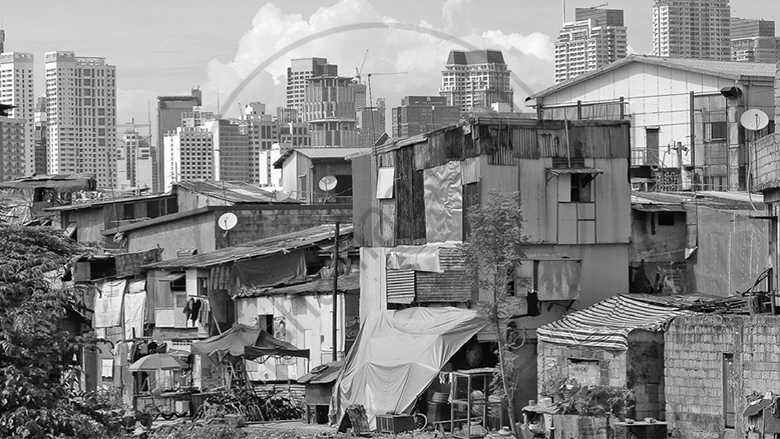
Definition: Urban Poverty
Lack of basic needs among groups living in cities and towns, such as rural migrants, slum dwellers, and the informally employed.
Maharashtra State Board: Class 11
Features
Rural Poverty
- Found in villages/districts
- Mostly affects small/marginal farmers, landless labourers, and contractual workers
- Problems: low farm output, droughts, poor roads, limited jobs, heavy debts, and illiteracy
Urban Poverty
- Found in towns/cities/slums.
- Affects migrants, slum dwellers, and informal workers.
- Problems: migration from villages, expensive housing, few secure jobs, poor water and sanitation, slow industrial growth, and illiteracy.
Maharashtra State Board: Class 11
Effects
| Aspect | Rural Poverty | Urban Poverty |
|---|---|---|
| Location | Villages, rural districts | Cities, towns, and slums |
| Major Groups | Farmers, landless labourers | Migrants, slum dwellers, and the informal sector |
| Main Causes | Low agricultural output, drought, and debt | Migration, cost of living, and limited jobs |
| Impact | Hunger, illiteracy, migration | Slums, unemployment, and poor health |
Maharashtra State Board: Class 11
Real-Life Application
-
Rural Example:
Ramesh, a marginal farmer in Odisha, faces crop loss due to drought. His family often skips meals, and his children cannot afford school books. -
Urban Example:
Saira’s family moved from a village to Mumbai, now living in a slum. Her parents work as daily wage earners, with no job security and poor sanitation in their home.
Maharashtra State Board: Class 11
Key Point Summary
- Both rural and urban poverty involve not having enough for a decent life.
- Rural poverty often pushes people to migrate, which increases urban poverty.
- Solving poverty means improving education, infrastructure, job opportunities, and access to basic services.
