Topics
Basic Concepts in Economics
- Branches of Science
- Natural Science
- Social Science
- Concept of Economics
- Kautilya's Views on Economics
- Types of Economic Systems
- Capitalism
- Socialism
- Mixed Economy
- Introduction to Microeconomics and Macroeconomics
- Microeconomics
- Basic Concepts of Microeconomics > Want
- Basic Concepts of Microeconomics > Goods and Services
- Basic Concepts of Microeconomics > Utility
- Basic Concepts of Microeconomics > Value
- Basic Concepts of Microeconomics > Wealth
- Microeconomics > Personal Income
- Basic Concepts of Microeconomics > Personal Disposable Income
- Microeconomics > Economic Activity
- Types of Income
- Concept of Economic Good
- Macroeconomics
- Cyclical Unemployment
- Difference Between Economic Growth and Economic Development
Money
Partition Values
The Economy of Maharashtra
- Formation and Economic Progress of Maharashtra
- Administrative Divisions of Maharashtra
- Important Features of the Economy of Maharashtra
- Economic Development of Maharashtra
- Agricultural Sector
- Industrial Growth in Maharashtra
- Service Sector
- Core Areas of Service Sector
- Economic Infrastructure of Maharashtra
- Social Infrastructure of Maharashtra
- Measures for Social Infrastructure: Education
- Measures for Social Infrastructure: Health Services
- Co – operative Movement in Maharashtra
- Symbols of Educational Schemes in India
- Tourism in Maharashtra
- Hospitality
- Entertainment Industry
Rural Development in India
Population in India
- Concept of Population in India
- Trends in Population Growth
- Theories of Population Growth
- Population Explosion in India
- Types of Population Based on Resource Availability
- Birth Rate
- Death Rate
- Survival Rate
- Legal Age of Marriage for Males and Females in Different Countries
- The Population as a Human Resource
- Role of Human Resources in Economic Development
Unemployment in India
- Concept of Unemployment
- Important Terms of Employment and Unemployment
- Types of Unemployment
- Rural Unemployment
- Urban Unemployment
- Extent of Unemployment in India
- State-Wise Unemployment Rates in India
- Causes of Unemployment
- General Measures to Reduce Unemployment
- Effects of Unemployment
- Government Measures for Employment Generation
Poverty in India
- Concept of Poverty in India
- Prof. Amartya Sen’s Views on Poverty
- Multi-dimensional Poverty
- Key Concepts of Poverty
- Countries with Highest Extreme Poverty Rates
- Poverty Line
- Informal Sector and Related Activities
- Income Pyramid
- Types of Poverty
- Extent of Poverty in India
- Estimates of Poverty
- Causes of Poverty
- Effects of Poverty
- Sustainable Development Goals
- Understanding Maharashtra’s Tri Colour Family Ration Cards
- Eradication of Poverty
- Poverty Alleviation Programmes and Their Target Sectors
- Tracking Anti-Poverty Efforts
Economic Policy of India since 1991
- Economic Transition of India
- Main Objectives of the Economic Policy of 1991
- Features of the Economic Policy of 1991
- Public Bank Vs Private Banks Vs Foreign Banks
- Components of New Economic Policy
- Liberalisation
- Privatisation
- Globalisation
- Evaluation of the Economic Policy of 1991
- Corporate Social Responsibility
Economic Planning in India
- India’s Planning Commission
- Economic Planning in India
- Overview of the Bombay, People’s, and Gandhian Plans
- Features of Economic Planning
- Five Year Plans (FYP)
- 12th Five Year Plan (2012-2017)
- Levels of National Family Health Survey (NFHS)
- NITI Aayog (National Institution for Transforming India)
- Planning Commission VS NITI Aayog
- Introduction
- Value-in-use
- Value in Exchange
- Water-Diamond Paradox
- Real-Life Application
- Key Point Summary
Maharashtra State Board: Class 11
Introduction
Economics studies how people value resources and goods. Two important approaches to value are value-in-use and value-in-exchange.
Maharashtra State Board: Class 11
Value-in-use
- Meaning – Value-in-use is the usefulness or utility a good provides to people
- Explanation: Some goods are vital for daily life but are freely available, so they do not command a price.
- Example: Sunshine is essential for life (high value-in-use), yet it is free of cost.
- Type of Good: Free Good (highly useful, no price)
Maharashtra State Board: Class 11
Value in Exchange
- Meaning: Value-in-exchange refers to what a good can be traded or sold for, usually measured in money.
- Explanation: Some goods are not essential but are rare or desirable, so they fetch a price in the market.
- Example: Diamonds are not necessary for life (low value-in-use) but are expensive (high value-in-exchange).
- Type of Good: Economic Good (commands a price)
Maharashtra State Board: Class 11
Water-Diamond Paradox
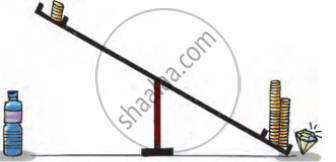 Fig: Water-Diamond Paradox
- Explanation: Some goods (like water) have high value-in-use but low exchange value because they are abundant. Others (like diamonds) have low value-in-use but high exchange value because they are rare and in demand.
Maharashtra State Board: Class 11
Real-Life Application
- High value-in-use, low price: Air, sunlight, public park access.
- Low value-in-use, high price: Luxury handbags, collectibles, rare minerals.
Maharashtra State Board: Class 11
Key Point Summary
- Value-in-use = usefulness or utility to people; often not linked with price.
- Value-in-exchange = what something can be traded for; determines the market price.
- A good may have high value-in-use but little or no exchange value, and vice versa.
- Scarcity and exchangeability, not just usefulness, influence market value.
