Topics
Basic Concepts in Economics
- Branches of Science
- Natural Science
- Social Science
- Concept of Economics
- Kautilya's Views on Economics
- Types of Economic Systems
- Capitalism
- Socialism
- Mixed Economy
- Introduction to Microeconomics and Macroeconomics
- Microeconomics
- Basic Concepts of Microeconomics > Want
- Basic Concepts of Microeconomics > Goods and Services
- Basic Concepts of Microeconomics > Utility
- Basic Concepts of Microeconomics > Value
- Basic Concepts of Microeconomics > Wealth
- Microeconomics > Personal Income
- Basic Concepts of Microeconomics > Personal Disposable Income
- Microeconomics > Economic Activity
- Types of Income
- Concept of Economic Good
- Macroeconomics
- Cyclical Unemployment
- Difference Between Economic Growth and Economic Development
Money
Partition Values
The Economy of Maharashtra
- Formation and Economic Progress of Maharashtra
- Administrative Divisions of Maharashtra
- Important Features of the Economy of Maharashtra
- Economic Development of Maharashtra
- Agricultural Sector
- Industrial Growth in Maharashtra
- Service Sector
- Core Areas of Service Sector
- Economic Infrastructure of Maharashtra
- Social Infrastructure of Maharashtra
- Measures for Social Infrastructure: Education
- Measures for Social Infrastructure: Health Services
- Co – operative Movement in Maharashtra
- Symbols of Educational Schemes in India
- Tourism in Maharashtra
- Hospitality
- Entertainment Industry
Rural Development in India
Population in India
- Concept of Population in India
- Trends in Population Growth
- Theories of Population Growth
- Population Explosion in India
- Types of Population Based on Resource Availability
- Birth Rate
- Death Rate
- Survival Rate
- Legal Age of Marriage for Males and Females in Different Countries
- The Population as a Human Resource
- Role of Human Resources in Economic Development
Unemployment in India
- Concept of Unemployment
- Important Terms of Employment and Unemployment
- Types of Unemployment
- Rural Unemployment
- Urban Unemployment
- Extent of Unemployment in India
- State-Wise Unemployment Rates in India
- Causes of Unemployment
- General Measures to Reduce Unemployment
- Effects of Unemployment
- Government Measures for Employment Generation
Poverty in India
- Concept of Poverty in India
- Prof. Amartya Sen’s Views on Poverty
- Multi-dimensional Poverty
- Key Concepts of Poverty
- Countries with Highest Extreme Poverty Rates
- Poverty Line
- Informal Sector and Related Activities
- Income Pyramid
- Types of Poverty
- Extent of Poverty in India
- Estimates of Poverty
- Causes of Poverty
- Effects of Poverty
- Sustainable Development Goals
- Understanding Maharashtra’s Tri Colour Family Ration Cards
- Eradication of Poverty
- Poverty Alleviation Programmes and Their Target Sectors
- Tracking Anti-Poverty Efforts
Economic Policy of India since 1991
- Economic Transition of India
- Main Objectives of the Economic Policy of 1991
- Features of the Economic Policy of 1991
- Public Bank Vs Private Banks Vs Foreign Banks
- Components of New Economic Policy
- Liberalisation
- Privatisation
- Globalisation
- Evaluation of the Economic Policy of 1991
- Corporate Social Responsibility
Economic Planning in India
- India’s Planning Commission
- Economic Planning in India
- Overview of the Bombay, People’s, and Gandhian Plans
- Features of Economic Planning
- Five Year Plans (FYP)
- 12th Five Year Plan (2012-2017)
- Levels of National Family Health Survey (NFHS)
- NITI Aayog (National Institution for Transforming India)
- Planning Commission VS NITI Aayog
- Introduction
- About the Statistician P. C. Mahalanobis
- Mahalanobis Achievements
- Key Concepts
- Reason Behind June 29
- Importance
- Key Point Summary
Maharashtra State Board: Class 11
Introduction
Statistics Day is celebrated on 29th June every year in India to honour the birth anniversary of Prof. Prasanta Chandra Mahalanobis, a pioneer in statistics and economic planning.
Maharashtra State Board: Class 11
About the Statistician P.C. Mahalanobis
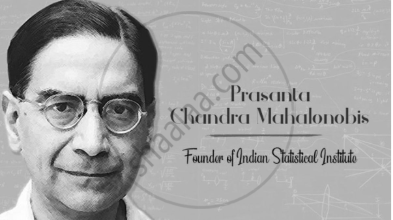
- Born: 29th June 1893, Kolkata.
- Founder: Indian Statistical Institute (ISI), 1931.
- Contributions: Revolutionised how India collects and analyses data and planned its economy.
Maharashtra State Board: Class 11
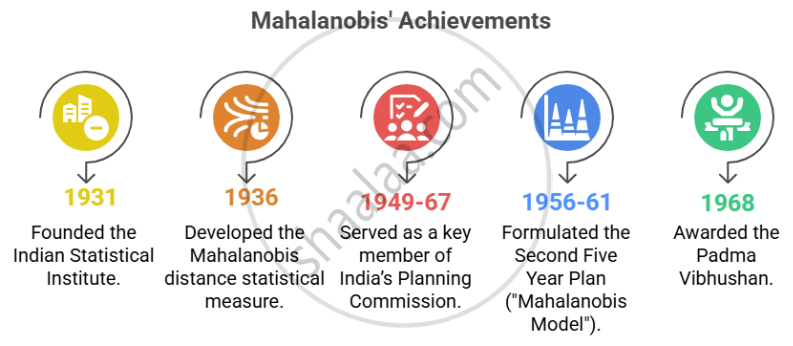
Mahalanobis Achievements
Maharashtra State Board: Class 11
Key Concepts
- Mahalanobis Distance: A tool for comparing two sets of data, now used globally in data science and research.
Analogy: Like using a ruler that adjusts its scale based on what you are measuring! - Fractile Graphical Analysis: A way to compare the socio-economic status of groups.
- Industrialisation Model: Stressed on building large factories and focusing on heavy industries first for India’s progress after independence.
Maharashtra State Board: Class 11
Reason Behind June 29
This date marks Mahalanobis’s birthday. The Government of India declared it “Statistics Day” to celebrate his contributions.
Maharashtra State Board: Class 11
Importance
- Reminds everyone of the role data and measurement play in building a country.
- Inspires students to study statistics and use it for development.
Maharashtra State Board: Class 11
Key Point Summary
- Prof. Mahalanobis shaped India’s economic planning and the science of statistics.
- His methods help India measure and compare growth in real numbers.
- He showed the world how mathematical models can guide a country’s future.
