Topics
Basic Concepts in Economics
- Branches of Science
- Natural Science
- Social Science
- Concept of Economics
- Kautilya's Views on Economics
- Types of Economic Systems
- Capitalism
- Socialism
- Mixed Economy
- Introduction to Microeconomics and Macroeconomics
- Microeconomics
- Basic Concepts of Microeconomics > Want
- Basic Concepts of Microeconomics > Goods and Services
- Basic Concepts of Microeconomics > Utility
- Basic Concepts of Microeconomics > Value
- Basic Concepts of Microeconomics > Wealth
- Microeconomics > Personal Income
- Basic Concepts of Microeconomics > Personal Disposable Income
- Microeconomics > Economic Activity
- Types of Income
- Concept of Economic Good
- Macroeconomics
- Cyclical Unemployment
- Difference Between Economic Growth and Economic Development
Money
Partition Values
The Economy of Maharashtra
- Formation and Economic Progress of Maharashtra
- Administrative Divisions of Maharashtra
- Important Features of the Economy of Maharashtra
- Economic Development of Maharashtra
- Agricultural Sector
- Industrial Growth in Maharashtra
- Service Sector
- Core Areas of Service Sector
- Economic Infrastructure of Maharashtra
- Social Infrastructure of Maharashtra
- Measures for Social Infrastructure: Education
- Measures for Social Infrastructure: Health Services
- Co – operative Movement in Maharashtra
- Symbols of Educational Schemes in India
- Tourism in Maharashtra
- Hospitality
- Entertainment Industry
Rural Development in India
Population in India
- Concept of Population in India
- Trends in Population Growth
- Theories of Population Growth
- Population Explosion in India
- Types of Population Based on Resource Availability
- Birth Rate
- Death Rate
- Survival Rate
- Legal Age of Marriage for Males and Females in Different Countries
- The Population as a Human Resource
- Role of Human Resources in Economic Development
Unemployment in India
- Concept of Unemployment
- Important Terms of Employment and Unemployment
- Types of Unemployment
- Rural Unemployment
- Urban Unemployment
- Extent of Unemployment in India
- State-Wise Unemployment Rates in India
- Causes of Unemployment
- General Measures to Reduce Unemployment
- Effects of Unemployment
- Government Measures for Employment Generation
Poverty in India
- Concept of Poverty in India
- Prof. Amartya Sen’s Views on Poverty
- Multi-dimensional Poverty
- Key Concepts of Poverty
- Countries with Highest Extreme Poverty Rates
- Poverty Line
- Informal Sector and Related Activities
- Income Pyramid
- Types of Poverty
- Extent of Poverty in India
- Estimates of Poverty
- Causes of Poverty
- Effects of Poverty
- Sustainable Development Goals
- Understanding Maharashtra’s Tri Colour Family Ration Cards
- Eradication of Poverty
- Poverty Alleviation Programmes and Their Target Sectors
- Tracking Anti-Poverty Efforts
Economic Policy of India since 1991
- Economic Transition of India
- Main Objectives of the Economic Policy of 1991
- Features of the Economic Policy of 1991
- Public Bank Vs Private Banks Vs Foreign Banks
- Components of New Economic Policy
- Liberalisation
- Privatisation
- Globalisation
- Evaluation of the Economic Policy of 1991
- Corporate Social Responsibility
Economic Planning in India
- India’s Planning Commission
- Economic Planning in India
- Overview of the Bombay, People’s, and Gandhian Plans
- Features of Economic Planning
- Five Year Plans (FYP)
- 12th Five Year Plan (2012-2017)
- Levels of National Family Health Survey (NFHS)
- NITI Aayog (National Institution for Transforming India)
- Planning Commission VS NITI Aayog
- Introduction
- Arthashastra
- Key Ideas
- Key Point Summary
Maharashtra State Board: Class 11
Introduction
|
Kautilya (pronounced: Kau-til-ya) was one of ancient India's greatest thinkers who lived around 321-297 BCE during the Mauryan Empire. He was known by three names:
|
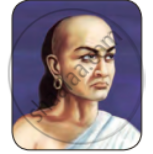 Kautilya Kautilya |
His Multiple Roles:
Royal Advisor – Chief minister to Emperor Chandragupta Maurya.
Philosopher – Deep thinker about politics and society.
Economist – Expert in wealth and resource management.
Statesman – Skilled in government administration.
Maharashtra State Board: Class 11
Arthashastra
The Arthashastra is Kautilya's famous book about how to run a government effectively.
Breaking Down the Name:
- "Artha" = Wealth, prosperity, economic well-being
- "Shastra" = Science, systematic study, guidebook
Complete meaning: The science of acquiring and managing wealth for the welfare of the state.
Maharashtra State Board: Class 11
Key Ideas
- Strong Central Government is Essential
Kautilya believed: "Without a strong government, there will be chaos – like fish eating smaller fish in a pond without a caretaker." - Wealth Creation = Public Welfare
Kautilya's principle: A prosperous state can better serve its people. - Systematic Documentation of Rules
Kautilya's innovation: Writing down all political ideas and governance principles in one comprehensive book. - Efficient Administration is Crucial ️
What this means: Having skilled officials who can implement government policies effectively.
Maharashtra State Board: Class 11
Key Point Summary
- Kautilya was a multi-talented scholar–philosopher, economist, and political advisor.
- Arthashastra = a comprehensive guide to governance and wealth management.
- Four main principles: Strong government, wealth creation, efficient administration, and systematic documentation.
- Historical impact: Influenced Indian political thought for centuries.
- Modern relevance: Many ideas are still applicable in contemporary governance.
- Territorial success: The Mauryan Empire's expansion proved the effectiveness of his theories.
