Advertisements
Chapters
1: Budgeting and Savings
2: Space Organisation in the Kitchen
3: Home Furnishings
UNIT 2: GROWTH AND DEVELOPMENT DURING MIDDLE CHILDHOOD
4: Milestones of Development
5: Role of Family, Peer Group and School
6: Learning Disabilities in Children
UNIT 3: MEAL PLANNING
7: Balanced Diet
8: Meal Planning for the Family
▶ 9: Storage and Preservation of Food
UNIT 4: SELECTION AND CARE OF TEXTILE AND CLOTHING
10: Selection of Fabrics
11: Selection of Readymade Garments
12: Laundry Material
13: Laundering
UNIT 5: COMMUNICATION AND EXTENSION
14: Social and Economic Issues in India
15: Role of Government Towards A Developed India
16: Communication Aids
Advertisements
Solutions for Chapter 9: Storage and Preservation of Food
Below listed, you can find solutions for Chapter 9 of CISCE Dr. Alka Agarwal for Home Science for Class 10th ICSE.
Dr. Alka Agarwal, Urvi Raval solutions for Home Science for Class 10th ICSE 9 Storage and Preservation of Food EXERCISES [Pages 138 - 141]
MULTIPLE CHOICE QUESTIONS Fill in the blanks
Every food has a ______.
Shelf life
Storage life
Preservation life
Healthy life
The label of food that a consumer must check before purchasing is ______.
Freshness
DDT
FPO
None of these
Flesh foods should be stored below ______ temperature.
100°C
40°C
150°C
0°C
State True or False:
Eggs should be washed and preserved in a cool dry place.
State True or False:
Everyone who handles food should follow healthy habits and good personal hygiene food.
State True or False:
Sugar acts as a preservative by enabling the process of osmosis.
Choose the correct option
Action of food enzymes are the major causes of ______.
Contamination of food
Deterioration of food
Preservation of food
Sanitation of food
Foods which undergo processing to increase their shelf life are called ______.
Convenient foods
Non-perishable food
Perishable food
Semi perishable food
The shelf life of food products is affected due to the factors ______.
Humidity
Temperature
Attack by microorganisms
All of these
Factors that affect the safety of food at home are:
Personal Hygiene
Cleanliness in the kitchen
Using proper cooking processes
All of these
The method of preservation depends on ______.
Moisture content of the food
Shelf life of the food
Moisture content of the food and shelf life of the food
The type of food
Identify which is not an example of a sundried product:
Semolina
Cashew nuts
Tomato sauce
Raisins
Eggs are best kept in ______.
Warm place
Humid place
Cool place
Sunny place
Example of a hygroscopic substance:
Oil
Cumin
Turmeric
Salt
Identify the picture
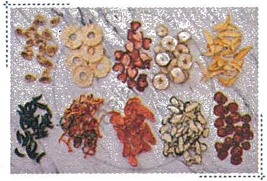 |
Identify the picture and name the type of preservation
Carbonation
Dehydration
Using chemicals
Freezing
Identify the picture.
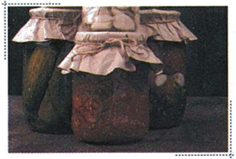 |
Name the type method of preservation technique by observing the picture.
Canning
Refrigeration
Pasteurization
Pickling
Identify the picture.
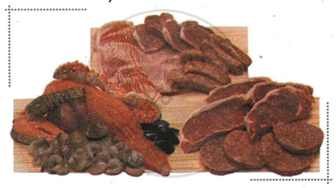 |
Identify the picture and classify the food.
Semi-perishable food
Non-perishable food
Perishable food
Convenience food
Select the odd one.
While handling food the points to remember to handle the food
- Wearing a clean apron while working
- Must have long nails
- Avoid nail paints
- Avoid coughing
Select the odd one.
Convenience foods
- They are perishable
- They are handy during travelling
- They are convenient to use
- They have increased shelf life
Select the odd one.
Oil is a natural preservative because
- Delay moulding
- Increase oxidation
- Delay deterioration
- Isolates food from air
Identify the correct statement:
Assertion (A): Washing hands before handling food is a critical food hygiene practice.
Reason (R): Foodborne illnesses can be caused by the transmission of harmful bacteria from hands to food during preparation.
A is true but R is false.
A is false but R is true.
Both A and R are true and R is the correct explanation of A.
Both A and R are true and R is not the correct explanation of A.
Assertion (A): Refrigerating perishable foods helps slow down the growth of bacteria.
Reason (R): Bacteria thrive in colder temperatures, leading to faster spoilage of refrigerated food.
A is true but R is false.
A is false but R is true.
Both A and R are true and R is the correct explanation of A.
Both A and R are true and R is not the correct explanation of A.
Assertion (A): Canning is an effective method for preserving food by creating a sealed environment.
Reason (R): The sealed environment in canning prevents the growth of bacteria and other microorganisms, preserving the food.
A is true but R is false.
A is false but R is true.
Both A and R are true and R is the correct explanation of A.
Both A and R are true and R is not the correct explanation of A.
Assertion (A): Evaporating moisture from food stuff prevents growth of micro organisms.
Reason (R): Most micro organisms cannot grow without water.
A is true but R is false.
A is false but R is true.
Both A and R are true and R is the correct explanation of A.
Both A and R are true and R is not the correct explanation of A.
Choose the correct pair:
Refrigerating perishable foods - Prevents bacterial growth
Freezing foods - Extends shelf life
Storing dry goods in airtight containers - Protects from moisture and pests
Storing fruits and vegetables together - Promotes ripening and freshness
Choose the correct pair:
40°F or below - Refrigerating foods to slow bacterial growth
0°F or below - Freezing foods to prevent bacterial growth
50°F to 70°F - Room temperature storage for ripe fruits and vegetables
140°F or above - Cooking foods to eliminate harmful bacteria
Select the incorrect pair:
Checking expiry - personal hygiene
Using ice box - perishable food
Handling food - use of nail paints on nails
cleaning utensils - essential for purchasing food
Select the incorrect pair:
Pickles - Freezing
tomatoes – sun drying
benzoic acid - natural preservative
Oil - chemical preservative
Choose the correct pair:
| A. Sun drying | 1. Potatoes, Onions, Yams |
| B. Convenience | 2. Rasin, chips, papad |
| C. Semi-perishable | 3. Meat, fish, chicken |
| D. Perishable | 4. Peas, Jam, Jellies |
A - 2, B - 4, C - 1, D - 3
A - 2, B - 3, C - 1, D - 4
A - 1, B - 2, C - 3, D - 4
A - 3, B - 1, C - 4, D - 2
Choose the correct statement:
Statement I: Regularly cleaning kitchen surfaces, utensils, and appliances helps to prevent the spread of bacteria and reduces the risk of foodborne illnesses.
Statement II: Storing raw meat separately from cooked food in the refrigerator is essential for preventing cross-contamination and ensuring kitchen safety.
Statement I is true and Statement II is false.
Statement I is false and Statement II is true.
Both Statements I and II are true.
Both Statements I and II are false.
Statement I: Convenience foods are always healthier than freshly prepared meals because they are designed to provide all the necessary nutrients.
Statement II: Convenience foods can be high in salt, sugar, and preservatives, which may make them less healthy if consumed frequently.
Statement I is true and Statement II is false.
Statement I is false and Statement II is true.
Both Statements I and II are true.
Both Statements I and II are false.
Choose the correct pair:
| A. | Washing hands before handling food | 1. | Prevents contamination from bacteria or viruses |
| B. | Storing food at the correct temperature | 2. | Slows down bacterial growth |
| C. | Using separate cutting boards for raw meat and vegetables | 3. | Avoids cross-contamination |
| D. | Cooking food thoroughly | 4. | Kills harmful microorganisms |
A - 1, B - 2, C - 3, D - 4
A - 3, B - 4, C - 1, D - 2
A - 2, B - 1, C - 4, D - 3
A - 4, B - 3, C - 2, D - 1
Choose the correct pair:
| A. | Milk | 1. | Store in the refrigerator at 4°C or below |
| B. | Fresh meat | 2. | Keep in the coldest part of the refrigerator |
| C. | Leafy vegetables | 3. | Wrap in a damp cloth and refrigerate |
| D. | Berries | 4. | Store in a breathable container in the fridge |
A - 1, B - 2, C - 3, D - 4
A - 3, B - 4, C - 1, D - 2
A - 2, B - 3, C - 4, D - 1
A - 4, B - 1, C - 2, D - 3
SHORT QUESTIONS
State any two factors affecting the safety of food at home.
Sugar is hygroscopic in nature. Explain.
Why should eggs not be washed before storing?
Differentiate between perishable and non-perishable foods.
Mention two precautions to be taken while refrigerating food at home.
How does pickling help to preserve fruits, vegetables and meat?
What are the two major causes of food spoilage?
What are convenience foods?
Give two examples of foods that are preserved by the addition of sugar.
State the principle behind pickling as a method of preservation.
Why do fruits and vegetables become limp and soggy after freezing?
State the principles of food preservation.
What are the changes that take place in food items due to freezing?
Define food hygiene.
How is radiation effective in food preservation?
Why is it important to preserve meat and its products properly?
LONG QUESTIONS
Explain the classification of food on the basis of moisture content for the purpose of storage. Give two examples of each.
Explain the procedure for preserving foods by the method of dehydration.
How does sugar help in food preservation? Give any two examples of food items preserved by this method.
Enumerate any five uses of preserving food at home.
Describe the method of preserving foods by canning.
Write a short note on ‘storage of vegetables’.
Write short notes on the storage of semi-perishable products. (any five points)
How does pickling help to preserve fruits, vegetables and meat?
Convenience foods are pre-prepared foods designed for ease of consumption and storage. They often have a long shelf life and require minimal preparation.
In this context, answer the following question:
Name two examples of convenience foods.
List any five advantages of using convenience food.
Convenience foods are pre-prepared foods designed for ease of consumption and storage. They often have a long shelf life and require minimal preparation.
In this context, answer the following question:
What are the drawbacks of convenience foods?
Mention any five ways of maintaining hygiene while handling food.
Solutions for 9: Storage and Preservation of Food
Dr. Alka Agarwal solutions for Home Science for Class 10th ICSE chapter 9 - Storage and Preservation of Food
Shaalaa.com has the CISCE Mathematics Home Science for Class 10th ICSE CISCE solutions in a manner that help students grasp basic concepts better and faster. The detailed, step-by-step solutions will help you understand the concepts better and clarify any confusion. Dr. Alka Agarwal solutions for Mathematics Home Science for Class 10th ICSE CISCE 9 (Storage and Preservation of Food) include all questions with answers and detailed explanations. This will clear students' doubts about questions and improve their application skills while preparing for board exams.
Further, we at Shaalaa.com provide such solutions so students can prepare for written exams. Dr. Alka Agarwal textbook solutions can be a core help for self-study and provide excellent self-help guidance for students.
Concepts covered in Home Science for Class 10th ICSE chapter 9 Storage and Preservation of Food are Storage of Food, Household Methods of Preservation of Food, Hygienic Handling.
Using Dr. Alka Agarwal Home Science for Class 10th ICSE solutions Storage and Preservation of Food exercise by students is an easy way to prepare for the exams, as they involve solutions arranged chapter-wise and also page-wise. The questions involved in Dr. Alka Agarwal Solutions are essential questions that can be asked in the final exam. Maximum CISCE Home Science for Class 10th ICSE students prefer Dr. Alka Agarwal Textbook Solutions to score more in exams.
Get the free view of Chapter 9, Storage and Preservation of Food Home Science for Class 10th ICSE additional questions for Mathematics Home Science for Class 10th ICSE CISCE, and you can use Shaalaa.com to keep it handy for your exam preparation.
