Advertisements
Chapters
2: Marketing mix - 4 P's
3: Advertising and Brand Promotion
4: Sales and Selling Process
5: Generally Accepted Accounting Principles (GAAP)
6: Financial Accounting and Reporting
7: Banking and Bank Transactions
8: Fundamental Concepts of Cost
9: Importance of Human Resources
10: Recruitment, Selection and Training
11: Public Relations
12: Issues of the Environment
![Goyal Brothers Prakashan solutions for Commercial Applications [English] Class 10 ICSE chapter 1 - Markets and Marketing - Shaalaa.com](/images/commercial-applications-english-class-10-icse_6:24f6f4a7b9ed4bc7bafe97f5daf365e6.jpg "Goyal Brothers Prakashan solutions for Commercial Applications [English] Class 10 ICSE chapter 1 - Markets and Marketing")
Advertisements
Solutions for Chapter 1: Markets and Marketing
Below listed, you can find solutions for Chapter 1 of CISCE Goyal Brothers Prakashan for Commercial Applications [English] Class 10 ICSE.
Goyal Brothers Prakashan solutions for Commercial Applications [English] Class 10 ICSE 1 Markets and Marketing EXERCISES [Pages 9 - 14]
OBJECTIVE TYPE QUESTIONS.
Which of the following statement(s) is/are correct?
Statement 1: A market refers to a physical place where buyers and sellers meet to exchange goods and services.
Statement 2: A market can also refer to a mechanism through which products and services are exchanged without the necessity of a physical meeting.
Only Statement 1 is correct.
Only Statement 2 is correct.
Both statements are correct.
Both statements are false.
In a consumer’s market, goods are purchased for further production rather than for personal consumption.
True
False
Which is intangible among the following?
Product
Services
Products & services
Sales
Selling involves ______ of goods and services.
Distribution
Exchange
Advertisement
None of these
Which of the following is not the feature of marketing?
Exchange mechanism
Customer value
Corrective action
All of these
Which function of management starts before production and continues even after sale?
Planning
Controlling
Marketing
Directing
______ philosophy suggests, that, the organisation should earn profit through volume of production.
Production concept
Marketing concept
Pricing concept
Societal concept
Which marketing concept places importance to attract and persuade customers to buy the products?
Selling concept
Production concept
Product concept
Societal concept
A place for buying and selling activities is called ______.
Market
Marketing
Market research
Market information
Which of the following is the feature of the marketing?
Needs and wants
Creating a market offering
Customer value
All of these
Below is an image of a product with a clear brand name and packaging. Identify which feature of a product this represents:

Tangibility
Associated Attributes
Life Cycle
Exchange Value
Why might the “Sales-Oriented Stage” be considered less effective in today’s market environment?
It focuses primarily on high production efficiency.
It places customer satisfaction secondary to selling the product.
It emphasizes product quality over marketing.
It relies heavily on network marketing.
The definition of marketing includes only the promotional activities of a product or service, not the distribution.
True
False
“It is a set-off tangible and physical attributes such as material colour, design, size, weight, etc., assembled in an identifiable form better seller offers to customers for sale.” What is it?
Service
Price
Product
Place
If a business is focusing on selling products directly to consumers without the involvement of intermediaries, which type of market would they most likely be operating in?
Producers’ Market
Network Market
Retail Market
Wholesale Market
Bread and milk are which kind of products?
Specialty Products
Convenience products
Shopping products
Unsought products
What is the basic property of a service which makes it different from a product.
Shape
Size
Very expensive
Intangibility
In the Production-Oriented Stage, businesses operated on the assumption that supply would create its own demand.
True
False
Which of the following is not a services?
Insurance
Warehousing
Transportation
None of these
A ______ is technology based whereas a ______ is person-based.
Sales, product
Product, market
Product, promotion
Product, service
These products are used for further production of goods and services.
Consumer products
Industrial products
Financial products
None of these
The asset which can only be perceived indirectly such as an insurance policy is called ______.
Tangible product
Intangible product
Service
None of these
Choose the correct statement.
Marketing is the process of transferring the ownership from producer to buyer.
Selling is a wider term than marketing.
Marketing seeks to create demand, to satisfy the customers, to increase markets shares, etc.
None of the above
Which type of market is most likely to involve face-to-face interaction but does not require a physical retail setting?
Mail Order Market
Catalogue Market
Automatic Vending Machine Market
Direct Sales Market
There are two statements given below, marked as Assertion(A) and Reason (R). Read the statements and choose the correct option.
Assertion (A): A product can be touched, seen, and physically possessed.
Reasoning (R): Tangibility is a key characteristic of a product.
A is true but R is false.
A is false but R is true.
Both A and R are true and R explains A.
Both A and R are true but R does not explain A.
Assertion (A): Services are perishable in nature.
Reasoning (R): Services cannot be stored for future use, unlike physical products.
A is true but R is false.
A is false but R is true.
Both A and R are true and R explains A.
Both A and R are true but R does not explain A.
______ means exchange of a product, or service between a buyer and a seller while ______ means all the activities involved in planning, pricing, promoting and distributing want satisfying products and services.
Sales, selling
Market, marketing
Product, promotion
Cost, pricing
A company must balance profits, consumer satisfaction and public welfare. Which stage of marketing emphasises on the given statement?
Sales-oriented stage
Product-oriented stage
Societal marketing stage
Marketing-oriented stage
During the stage, from 1950-1960; marketers’ focus shifted from promotion to product improvement?
Marketing oriented stage
Product oriented stage
Production oriented stage
Sales oriented stage
______ is the type of market on the basis of nature of goods.
Wholesale market
Retail market
Money market
Consumers’ market
In this type of market, customers select goods by reading the detailed literature and examining the samples:
Mail order market
Tele market
Catalogue market
Online market
In this stage of marketing, the motto was to ‘Sell what can be produced’:
Product oriented stage
Production oriented stage
Marketing oriented stage
Sales oriented stage
The products bought after comparing quality, price, etc of different brands are known as ______.
Shopping products
Speciality products
Industrial products
Convenience products
In which type of market, products are advertised and demonstrated on television?
TV advertisement
Newspaper advertisement
Tele market
Network market
The activity involved in planning, pricing, promoting and distributing products and services is called?
Marketing
Selling
Advertising
Publicity
A market is a mechanism through which ______ are exchanged.
Products and services
Products and capital
Services and brands
Patents and services
Economic, social, legal and other forces influence marketing activities therefore, marketing is ______.
A system
Persuasive
Part of total environment
creative
Modern marketing has created several non-traditional markets’ like ______.
Future market
The international market
Automatic vending machines
The consumers’ market
On the basis of geographical area, market is classified into ______.
In-house market
Regional market
Primary market
Spot market
Marketing was considered to be mere distribution in this stage of Marketing ______.
Production-oriented stage
Sales-oriented stage
Product-oriented stage
Marketing-oriented stage
In non-business organization marketing is necessary for ______.
Creating demand
Facing competition
Spreading socially useful ideas
Widening market
______ is not a concept of market.
Area concept
Demand concept
People concept
Supplier concept
Caveat vendor is a principle of ______.
Marketing
Selling
Personal Selling
Advertising
Which of the follwing is not a feature of service?
Life Cycle
Perishability
Inseparability of buyers and sellers
Variability
Which market provides long-term finance to business enterprises?
Capital market
Commodity market
Primary market
Money market
Standardised products are ______ in nature.
Heterogeneous
Spontaneous
Homogeneous
Extraneous
In ______ stage there was a mass production, supply exceeds demand.
Production-oriented stage
Marketing-oriented stage
Sales-oriented stage
Societal Marketing stage
In ______, the purpose is to make profit out of fluctuation in prices.
Spot market
Future market
Catalogue market
Secondary market
Which stage of marketing is characterised by hard selling?
Production oriented stage
Product oriented stage
Sales oriented stage
Societal marketing stage
Marketing uses ______.
integrated approach
persuasion and promotion
product approach
market approach
Marketing concentrates on ______.
increasing the sales volume
satisfying advertiser
decreasing the sales volume
satisfying the customer
Services can rarely be standardized or made uniform. Which feature of service does it indicate?
Intangibility
Variability
Inseparability
Perishability
The following passage is excerpted from the book ‘MARKETING’:
|
“The success of your business depends on the success of your marketing efforts. If you can identify what customers want, need and can afford- and give it to them- you will achieve outstanding results.” - Marketing by Brian Tracy |
Based on the information provided in the passage, which of the following statement describes Marketing-
Marketing is beneficial for both buyers and sellers.
Marketing focuses on short term maximisation of profit.
Marketing works on the principle of Caveat emptor.
Marketing begins after the goods are produced.
Production-Oriented-Stage was characterised by ______.
the focus on Sales Promotion.
product improvement.
supply creating its own demand.
profits through customer satisfaction.
Identify which products are purchased after a comparative analysis of quality, price, warranty of competitive brands.
Convenience products
Industrial products
Speciality products
Shopping products
In which stage of marketing, manufacturers believed that customers would buy the product if quality was good?
Marketing-oriented stage
Production-oriented stage
Sales-oriented stage
Product-oriented stage
In which stage, importance to consumer satisfaction was recognised and business policies were designed to provide value satisfaction to customers?
Sales-oriented stage
Marketing-oriented stage
Social-marketing stage
Consumer-oriented stage
SHORT-ANSWER QUESTIONS.
Define the term market.
Briefly explain the term ‘Marketing Oriented Stage’.
What is meant by inhouse market?
Give two differences between the production oriented stage and product oriented stage of marketing.
What are convenience products?
Give two examples of convenience products.
Distinguish between capital market and money market.
Give one difference between consumer product and industrial product.
On the basis of ownership, distinguish between a product and a service.
Why is it said that marketing is pervasive?
State and explain any two types of markets on the basis of Nature of Transactions.
“Services are not homogeneous”. Justify with reason.
Mention the main features of services.
State one difference between spot market and future market.
“Today’s Market Concept is known as Consumer Oriented Concept”. Give a reason either for or against this statement.
It is marketing which has converted yesterday’s luxuries into today’s necessities. Justify for or against.
Write a short note on Social Marketing stage.
State any two types of markets on the basis of subject of exchange.
LONG-ANSWER QUESTIONS.
What is meant by the term ‘services’?
Explain the main characteristics of services.
Mention the main features of a product. Explain any two in detail.
Describe the first two stages of marketing.
Why are services becoming important? Give three reasons.
What is the role of marketing in a commercial organisation? Explain with reference to Indian economy.
‘Marketing has gone through three distinct stages.’ Explain them in brief.
‘Marketing has gone through three distinct stages.’ Explain them in brief.
Discuss the Sales Oriented and Product Oriented stages of marketing.
Why is service becoming more important than a product? Give five reasons.
‘Modern marketing has created several non-traditional markets.’ Explain the main types of non-traditional markets.
‘Modern marketing has created several non-traditional markets.’ Explain the main types of non-traditional markets.
Mention the main features of services.
Write a short note on ‘Position of buyers and seller market'.
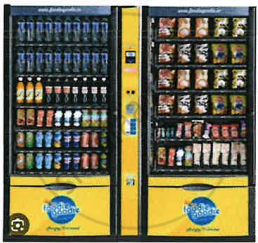
Identify the picture below and explain its features.
CASE STUDY
|
With the advancement in technology and the goal to scale its business, JK Tyre & Industries has been working on a two-pronged strategy to add ‘significant relevance’ to its overall business. Along with the mainstream tyres, the Delhi based company is also running a fleet operating management business and a mobility business vertical. “In the fleet management business, from selling a tyre as a commodity, it becomes a kind of service. We have tied up with 1300 of the 1800 large fleets across India. We provide all the services and the customer pays for the tyre’s upfront cost.” Anuj Kathuria, India President, JK Tyres, said. Any fleet of 100 trucks/buses, or more, is considered a ‘large fleet’. An initiative like the fleet management service also contributes to sustained relationship with customers, leading to repeat purchases of tyres by them. The customer base of 1300 fleet operators hasn’t come easily for JK Tyres, an early mover with such a business intervention in the industry. The customer base has been built over the past two decades. Under the fleet management business, JK Tyres is also offering tyre-as-a-service. It has about 250 pit stops and close to 100 truck wheel centres, where its services are provided. The company, which has also developed a tyre with 80% biodegradable materials, says that the ‘green tyre' is close to a market launch. The tyre major has a target to achieve net zero emissions by 2050. |
With reference to the above case study answer the following question:
Analyse the above case study and give any five differences between Product and Service.
Goyal Brothers Prakashan solutions for Commercial Applications [English] Class 10 ICSE 1 Markets and Marketing QUESTION BANK [Pages 14 - 18]
Describe any two types of non-traditional markets.
Define Marketing.
What is marketing?
Distinguish between market and marketing.
Classify markets on the basis of geographical area.
Classify markets on the basis of subject of exchange.
Give one point of difference between mail order shopping and teleshopping.
Why is marketing considered an integrated process?
In which stage of marketing is the consumer considered the king? Explain this stage briefly.
Explain any two stages of marketing.
Explain various types of services.
Mention the main features of a product.
Differentiate between a product and a service.
Give two differences between the production oriented stage and product oriented stage of marketing.
Distinguish between the following:
Primary market and Secondary market
Distinguish between capital market and money market.
A company wants to launch a new product in the market. Describe the stages it should consider during the marketing process to ensure the product’s success. Include the role of customer satisfaction in your answer.
Mr. Mehta is a marketing in charge of promoting a new service. How would you address the challenges posed by the intangibility and variability of services in your marketing strategy?
“Marketing is wider than the market.” Explain this statement by distinguishing between the concepts of marketing and market.
Analyse the impact of the shift from a production-oriented stage to a marketing-oriented stage on businesses. How did this shift change the way companies approached their customers and competitors?
Justify the following sentence, For or Against and give a reason:
Newspapers and tea are purchased with special efforts.
Justify the following sentence, For or Against and give a reason:
Marketing is a total system consisting of planning, pricing, promotion and distributing products.
Solutions for 1: Markets and Marketing
Goyal Brothers Prakashan solutions for Commercial Applications [English] Class 10 ICSE chapter 1 - Markets and Marketing
Shaalaa.com has the CISCE Mathematics Commercial Applications [English] Class 10 ICSE CISCE solutions in a manner that help students grasp basic concepts better and faster. The detailed, step-by-step solutions will help you understand the concepts better and clarify any confusion. Goyal Brothers Prakashan solutions for Mathematics Commercial Applications [English] Class 10 ICSE CISCE 1 (Markets and Marketing) include all questions with answers and detailed explanations. This will clear students' doubts about questions and improve their application skills while preparing for board exams.
Further, we at Shaalaa.com provide such solutions so students can prepare for written exams. Goyal Brothers Prakashan textbook solutions can be a core help for self-study and provide excellent self-help guidance for students.
Concepts covered in Commercial Applications [English] Class 10 ICSE chapter 1 Markets and Marketing are Concept of Market, Concept of Marketing, Stages of Marketing, Role of Marketing, Meaning and Nature of Product, Meaning and Nature of Service, Difference Between a Product and a Service (With Examples), Reasons for Increasing Importance of Services, Types of Market.
Using Goyal Brothers Prakashan Commercial Applications [English] Class 10 ICSE solutions Markets and Marketing exercise by students is an easy way to prepare for the exams, as they involve solutions arranged chapter-wise and also page-wise. The questions involved in Goyal Brothers Prakashan Solutions are essential questions that can be asked in the final exam. Maximum CISCE Commercial Applications [English] Class 10 ICSE students prefer Goyal Brothers Prakashan Textbook Solutions to score more in exams.
Get the free view of Chapter 1, Markets and Marketing Commercial Applications [English] Class 10 ICSE additional questions for Mathematics Commercial Applications [English] Class 10 ICSE CISCE, and you can use Shaalaa.com to keep it handy for your exam preparation.
