Advertisements
Advertisements
Question
Convert 0.124 torr to the standard atmosphere
Advertisements
Solution
0.124 torr to standard atmosphere:
1 atm = 760 torr
∴ 1 torr = `1/760` atm
∴ 0.124 torr = `0.124xx1/760`
= 1.632 × 10⁻⁴ atm
APPEARS IN
RELATED QUESTIONS
What would be the mass of CO2 occupying a volume of 44 litres at 25°C and 750 mm pressure.
State (i) the three variables for gas laws and (ii) SI units of these variables.
Give reason for the following:
Gases have a lower density compared to solids or liquids.
What is meant by aqueous tension? How is the pressure exerted by a gas corrected to account for aqueous tension?
State the following:
The absolute temperature of a gas at 7°C
Convert the following temperature from degree Celcius to kelvin.
−197° C
Convert the following pressure value into Pascals.
10 atmosphere
Convert the following pressure value into Pascals.
1 atmosphere
Consider a sample of a gas in a cylinder with a movable piston.
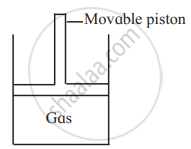
Show diagrammatically the changes in the position of the piston, if the temperature is decreased from 300 K to 150 K at constant pressure.
Write the statement for Boyle’s law
With the help of the graph answer the following -
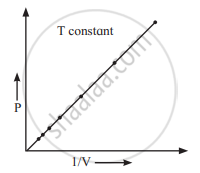
At constant temperature, Identify the law.
Solve the following.
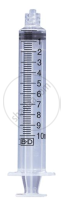
A syringe has a volume of 10.0 cm3 at pressure 1 atm. If you plug the end so that no gas can escape and push the plunger down, what must be the final volume to change the pressure to 3.5 atm?
Solve the following.
The volume of a given mass of a gas at 0°C is 2 dm3. Calculate the new volume of the gas at constant pressure when the temperature is increased by 10°C.
The temperatures at which real gases obey the ideal gas laws over a wide range of pressure is called __________.
Assertion: Critical temperature of CO2 is 304 K, it can be liquefied above 304 K.
Reason: For a given mass of gas, volume is to directly proportional to pressure at constant temperature
State Boyle's law.
A sample of gas at 15°C at 1 atm. has a volume of 2.58 dm3. When the temperature is raised to 38°C at 1 atm does the volume of the gas Increase? If so, calculate the final volume.
Of two samples of nitrogen gas, sample A contains 1.5 moles of nitrogen in a vessel of the volume of 37.6 dm3 at 298 K, and sample B is in a vessel of volume 16.5 dm3 at 298 K. Calculate the number of moles in sample B.
A small bubble rises from the bottom of a lake where the temperature and pressure are 6°C and 4 atm. to the water surface, where the temperature is 25°C and pressure is 1 atm. Calculate the final volume in (mL) of the bubble, if its initial volume is 1.5 mL.
For a given mass of an ideal gas, which of the following statements is CORRECT?
According to Andrews isothermals at what temperature the carbon dioxide gas starts to condense at 73 atmosphere?
A certain mass of a gas occupies a volume of 2 dm3 at STP. At what temperature the volume of gas becomes double, keeping the pressure constant?
Isochor is the graph plotted between ______.
If 2 moles of an ideal gas at 546 K has volume of 44.8 L, then what will be it's pressure? (R = 0.082)
Identify the correct relationship between pressure (P), density (d), molar mass (M) and Temperature (T) for an ideal gas from the following.
