Advertisements
Advertisements
Question
Explain the following observation.
The size of a weather balloon becomes larger and larger as it ascends up to larger altitude
Advertisements
Solution
The volume of the gas is inversely proportional to the pressure at a given temperature according to Boyle’s law. As the weather balloon ascends, the pressure tends to decrease. As a result, the volume of the gas inside the balloon or the size of the balloon is likely to increase.
APPEARS IN
RELATED QUESTIONS
Convert the following temperature from degree Celcius to kelvin.
−15° C
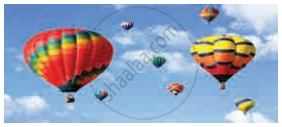
Hot air balloons float in the air because of the low density of the air inside the balloon. Explain this with the help of an appropriate gas law.
Write the statement for Charles’ law
Solve the following.
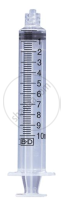
A syringe has a volume of 10.0 cm3 at pressure 1 atm. If you plug the end so that no gas can escape and push the plunger down, what must be the final volume to change the pressure to 3.5 atm?
State Boyle's law.
Give the mathematical expression that relates gas volume and moles.
Isochor is the graph plotted between ______.
If 2 moles of an ideal gas at 546 K has volume of 44.8 L, then what will be it's pressure? (R = 0.082)
10 g of gas at one atomospheric pressure is cooled from 273.15°C to 0°C keeping the volume constant. What is the final pressure?
Identify the correct relationship between pressure (P), density (d), molar mass (M) and Temperature (T) for an ideal gas from the following.
