Advertisements
Advertisements
प्रश्न
What do you infer from Darwin's comment on his indifference to literature as he advanced in years?
Advertisements
उत्तर
Darwin, a great scientist, known for his work On the Origin of Species, enjoyed literature only until he was 30, as he said. He enjoyed poetic works of Byron, Coleridge, Shelley, etc. immensely. Shakespeare's historical plays gave him much pleasure. However, as he advanced in his age to reach the benchmark of 30, the charm faded and he began losing interest in pictures and music that once gave him great delight. He tried reading poetry and Shakespeare; however, he found it so intolerably dull that it nauseated him. It is surprising that the answer to this change is in Darwin's own statement. His mind had become some kind of a grinding machine to process laws out of facts. It caused atrophy of that part of the brain on which higher tastes depended. It was hard for Darwin to infer it as well and, thus, his romance with literature died away.
APPEARS IN
संबंधित प्रश्न
Attempt a character sketch of Otto Frank, Anne's father.
Describe Miss Stapleton's first encounter with Sir Henry in about 125 words
Read the following extract and do the given activities:
B.1) Fill in the Balloons with suitable ideas from the poem:
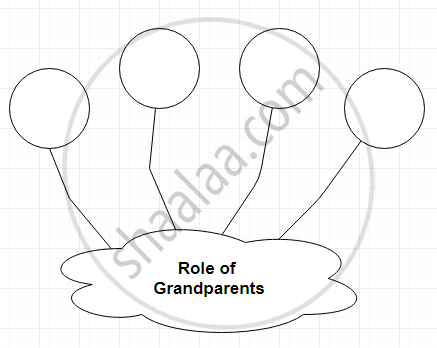 “Oh, the value of the elderly! How could anyone not know?
They hold so many keys, so many things they can show.
We all will read the other side this I firmly believe
And the elderly are closest oh what clues we could retrieve.
For their characters are closest to how we’ll be on high.
They are the ones most developed, you can see it if you try.
They’ve let go of the frivolous and kept things that are dear
The memories of so sweet, of loved ones that were near.
As a nation, we are missing our greatest true resource,
To get to know our elders and let them guide our course.”
B.2) Find Evidence:
Pick out the line from the extract which supports the given ideas:
(i) The elders have many things to share.
(ii) Everybody knows the value of elderly people.
(iii) The elderly people have vast experience.
(iv) The elderly people are a boon to the nation.
B.3) Write a pair from the extract that rhymes with the given word:
| Fear | ........................... | .......................... |
Does the poem have a consistent rhyme scheme?
What has the camera captured?
Tick the item that is closest in meaning to the following phrase.
to meet one's match
Discuss the following in pairs
Empathy and understanding are going out of modern society. The individual experiences intense alienation from the society around him or her.
How do Shahid and the writer react to the knowledge that Shahid is going to die?
'There is no sophistry in my body' – this statement expresses the brutal frankness of the Hawk. Does the poet suggest something through this statement?
How is the idyllic juxtaposed with the pedestrian in the poem?
Fill in the blank.
The author wanted to grow ______________.
Make groups and discuss the following:
What fatal dangers/problems did mankind face centuries ago, but are no longer a threat today?
Say why the speaker of the poem wishes to be a -
watchman
Write the Rhyming word and Scheme of the 2nd stanza.
“Old man,” said a fellow pilgrim near,
“Why waste your time in building here?
Your journey ends with the close of the day You never again will pass this way.
You have crossed the chasm deep and wide Why build ye here at even tide?”
Answer the given question in your own words.
What was the first task given to the Swallow?
Go through the poem and state whether the following statement is true or false.
Planners make tactful changes so that citizens do not recognize familiar landmarks.
Make a list of functions/events/programs/activities organized in your junior college. Choose three events and plan a program schedule of your own. Prepare a script as well to show the associating role of the compere for a particular event. Make your own sequence and design a template for the same.
State whether the following statement is True or False:
Both Demetrius and Lysander fight for Hermia.
Are there any stories/legends about the moon or special names for the moon in your language? Talk to your friends and family members and collect this information.
Enact the ad by playing the roles of Didi and her relatives. One more child acts as the salesman of ‘Hemagauri’ and presents the text given in white letters in pink bubbles.
What do the following events/actions tell us about the characters? Discuss.
Sir Ector asked Sir Kay to show him whether he could draw the sword out of the stone.
How do you behave with your classmates? Write about your attitude and behaviour in the appropriate column.
Some actions:
- Ask others for help
- Refuse help
- Judge others by their appearance
- Judge others by their accent
| Always | Sometimes | Never |
| ____________ | ____________ | ____________ |
| ____________ | ____________ | ____________ |
| ____________ | ____________ | ____________ |
Answer the following question and write in short, why the parody sounds funny.
What does the crocodile stand for?
Fill in the table.
| Period | Way of Addressing a Mother | Boy’s Costume | Lady’s Costume | Daily Chores | Games |
| The 1950s | silk saree | ||||
| 1910 | Kurta pajama and cap | ||||
| The 1800s | |||||
| The 1500s | |||||
| 1000 | |||||
| 100 AD | feed poultry tend sheep keep away birds plaster the yard | ||||
| 3000 BC | Chaupar |
Complete the following diagram.

Find from the Internet and write down.
Which character from the play sings this song?
Form groups of 6-8. One person (leader) chooses one item - a picture, a paragraph, or a lesson from any one of the 9th standard textbooks and writes the reference on a slip of paper, and folds it. Others ask him/her questions and try to guess what it is, from his/her answers. Follow the rules given below.
- The maximum number of questions the rest of the group can ask is 20.
- You cannot ask a direct question like ‘What do you have in mind?’
- You can ask ‘Wh-’ questions or ‘Yes/no’ questions.
- The leader has to give truthful answers.
Find out how the following game is played.
Table Tennis
Write other meaningful words that begin/end with springtime.
List the characters in the story and write a few lines about each of them.
Read the following line from the poem and answer the question that follow.
Not hurrying to, nor turning from the goal; Not mourning for the things that disappear
- Why do you think the poet is not in a hurry?
- What should one not mourn for?
Identify the character or speaker.
He was the chief of all spirits.
Identify the character or speaker.
I will soon move you.
Read the incident again and answer the following question.
Why were the other passengers in the flight gazing at the writer?
Which of these statements do you find in the speech?
- Inclusion is essential for us to do well in life.
- We should neglect others.
- Communicate politely with the less privileged.
- Teachers teach us to communicate well.
- Effective Communication is inessential to excel in life.
We should develop the ability to learn from______
- self
- others
- books
What is inclusion? Why is it important?
Why does the poet tell us to speak gently to young children?
Read the following lines and answer the questions.
It’s part of his hours, his days and his years,
Back of his smiles and behind his tears.
What does ‘tears’ mean?
Work in pairs and answer the following.
Write the rhyme scheme of the poem.
Turtles are sea animals.
Rearrange the following jumbled sentences in the correct order.
- Payal’s house was a home for abandoned animals.
- It was a small ball of brown and grey.
- She found an owlet in one corner.
- Payal’s mother picked her up gently.
- Payal’s mother opened the carton.
- One day they got a carton.
What made Grandfather plant saplings on the rocky island?
Why did Muthu say that he could walk along its side?
Read the lines and answer the question given below.
Each a glimpse and gone forever;
a. What is ‘each’ over here? Why is it gone forever?
In this story, what happened to the Earth?
What happened to the two girls at the end of the war?
Some words sound the same but their spelling and meaning are different. Such words are called homophones. There are many homophones.
Why did she pick up her pace?
Take out the correct rhyming pair from the poem and match with the given word.
| 1. | tall | |
| 2. | light | |
| 3. | might |
Look at the picture and tick choose the correct word.

Choose the best answer.
Suddenly there was a______.
Answer the following yes or no question.
Did Bujju realise his mistake?
Try your own.
Why did Manju’s parents leave the village?
Write the rhyming word.
countries- ______.
The king shouted at Ani.
Write the word with same meaning.

pants- ______
Read the following information given in the table below and answer the questions.
| A nice choice from Chennai to the National capital | |||
| RAJADHANI EXPRESS TIMETABLE | |||
| Shortest Route between Chennai and Hazrat Nizamuddin 8 Halts & 324 intermediate stations in between | |||
| Station Name | Departs | Day | Speed |
| Chennai Central | 06.05 | 1 | 75 |
| Vijayawada | 11.55 | 1 | 76 |
| Warangal | 14.40 | 1 | 77 |
| Balharshah | 18.00 | 1 | 78 |
| Nagpur | 20.45 | 1 | 74 |
| Bhopal | 02.10 | 2 | 89 |
| Jhansi | 05.31 | 2 | 99 |
| Gwalior | 06.32 | 2 | 85 |
| Agra Cantt | 07.57 | 2 | 76 |
| Hazrat Nizamudin | 10.25 | 2 | - |
a) The number of stations between Chennai Central and Hazrat Nizamudin is______.
- five
- ten
- eight
- eleven
b) The train is expected to reach ______ around 8.45 PM
- Warangal
- Vijayawada
- Bhopal
- Nagpur
c) Between ______ the train runs at its maximum speed.
- Bhopal and Gwalior
- Bhopal and Jhansi
- Bhopal and Hazarat Nizamudin
- Bhopal and Agra
d) Almost ______ the train reaches Vijayawada.
- the day after
- around early morning
- late night
- around noon
e) People prefer the Rajadhani Express to travel from Chennai to reach the capital because ______.
- it reaches the destination on the same day
- the charge is reasonable.
- the train halts at ten stations.
- it is the shortest route from Chennai to New Delhi.
f) The destination of Rajadhani express is______.
- Hazarat Nizamudin.
- New Delhi junction.
- Old Delhi.
- Rajkot.
What should parents do to ensure the safety of children in cyber space?
