Advertisements
Advertisements
प्रश्न
Tick the item that is closest in meaning to the following phrase.
to meet one's match
पर्याय
to meet a partner who has similar tastes
to meet an opponent
to meet someone who is equally able as oneself
to meet defeat
Advertisements
उत्तर
to meet one's match - to meet someone who is equally able as oneself
APPEARS IN
संबंधित प्रश्न
Attempt a character sketch of Mrs. Hall.
Examine the communication channels in the story between Paul and Bassett.
Discuss in pairs or groups of four.
It is difficult to part with personal items like a watch which have a sentimental value attached to them.
The peacock is a colourful bird. How does the poem capture the various colours that its plumage displays?
'Trees are sacred my grandmother used to say'– what does the poet imply by this line?
Read the extract and state whether the following statement is true or false. Correct the false statement.
The aroma of the ‘desi’ rice would spread around the village.
Arrange the following set of words in the alphabetical order in your notebook.
ship, small, successful, scoldings, stone, saving, someone, stood, streets, still, screamed, sat, seemed, saint, share.
Pick out words from the poem to fill in the web diagram. They should be related to the theme in the web.
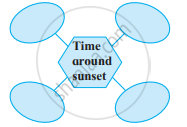
Read the story and complete the following.
Revathi was confident of proving her ownership of her pot of plants because, ____________.
Using a dictionary/internet note down the main difference between self-reliant and self-assured.
State whether the following statement is True or False. Correct the false statement by finding evidence from the poem to support your remark.
The poem has an underlying message about the importance of trees.
Discuss in groups, reasons/ consequences/ effects:
The cherry blossomed.
Make a list of archaic words from the poem and give their modern equivalents.
Justify the verdict delivered in the poem.
I can support my answer with the help of the following suitable arguments:
- _______________________
- _______________________
- _______________________
Write any five illnesses of the animals in the poem that you find most amusing / laughable.
How do we realize that animals are not feeling well?
Read the lesson and name the following.
The First surgeon to perform operations ______
Visit a library: Find the stories of
- Mulla Nasiruddin
- Gopal Bhand and
- Tenali Raman. Share them in the class.
Read the following conversation and complete the activities given below:
| Minnie: | Exams are over. I feel so relaxed! Let us plan something interesting. |
| Ritu: | How about a movie? |
| Paddy: | Great! Let’s go for “Aladdin”! |
| Minnie: | Oh, no! I have seen it. It has only a ‘one star’ rating. |
| Ritu: | How about that new release ummm... yes, “Harry Potter? |
| Della: | It is boring. I have read the review this morning. I don’t want to waste my time. |
| Paddy: | Wait, friends. I will check. Let’s decide later. |
(i) Choose the correct alternative from the following-
From one star given to the movie we conclude that-
- The movie is very short.
- The movie is not worth watching.
- The movie is serious.
- The movie is in black and white.
(ii) Discuss with your teacher how/why are ‘stars’ given to a movie.
(iii) The word ‘Review’ is different from summarizing and appeal writing. Choose the correct statements of the following.
- A film review is an expression of your personal views towards a particular film, documentary or movie.
- A film review gives you an opportunity to express opinions about the movie, including its characters, plot and background.
- A film review gives appealing sentences that make your reader curious or anxious about the film.
- A review means explanation of each and every event of the film.
The word 'Review' is different from summarizing and appeal writing. Choose the correct statements of the following.
What are the clothes compared to? Give two examples.
State the difference between drama and novel.
Define drama.
Choose the odd one out :
Bottom, Moth, Mustardseed, Cobweb.
Prove with the theme of the play/extract that the deeper human emotion which profoundly interested Shakespeare was jealousy.
Think carefully for a minute.
Jog your memory and recall all the things/objects on which you have seen wheels. Write them down
Read the passage and name the following.
He persuaded Helen to elope with him.
Sayali was travelling in space for the first time.
Prepare a ‘PowerPoint’ presentation, using one slide for each of the above points. Present your review in a PPT format in the classroom.
Answer in your own words.
What did Neel realise from his encounter with his ancestors?
Form a group of four to six. As a group activity, write a conversation in which a person/a group of person thanks to someone.
Using the following points frame a character sketch of the narrator. Support each character trait with instances from the lesson.
- Diffident and timid
- Unusual behavior
- Ignorant about banking
- Nervous and careless
- Economical.
Discuss the following in group.
Do’s and Don’ts for young children.
Write in short how the travellers crossed the first ditch.
What did he try to take the milk from?
What is meant by being ‘offline’?
Have you ever been on an adventurous journey? If yes, share your experience.
Identify the character or speaker.
He was the chief of all spirits.
What will happen to the bird in imprisonment?
What is inclusion? Why is it important?
Pick out the rhyming words from the first stanza of the poem.
Read the lines and answer the questions.
And in fighting for their country, faith and king
noble impressions on people’s minds would ring
- What does ‘noble impression’ mean?
- Who can leave a noble impression?
Identify the character/speaker.
You may stay if you answer my riddle.
Activity
It’s fun to help out in the kitchen. You can even practice reading aloud when reading the recipe. And you can learn a little math by figuring out how to measure. Here are a few fun items to make that are “Alice” themed.
The captain presented a gift to Vasantha because ______
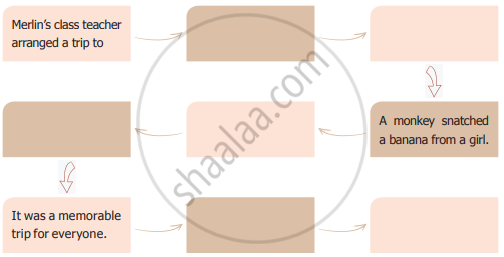
Recall Merlin’s memories and complete the story map.
Who is the wisest of all? Why?
Read scene I of the play carefully and answer the question below.
Whom does Mother Wolf talk about? How does she describe him?
Look at the picture and Choose the correct word.

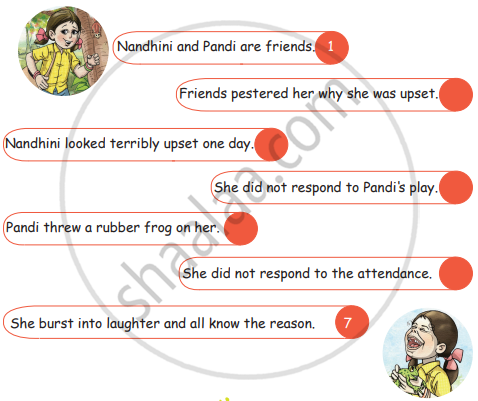
Number the actions of Pandi and Nandhini in order.
Why did Kani run to the kitchen?
Tenzin is from ______.
Where do the crocodiles save?
Every year the children visit the______.
Recite the poem with correct intonation.
While listening to the story, what did Alice see?
Why did the dogs feel scared when they saw the jackal?
Should children be discouraged from playing online games?
Write the compound words from the picture.
 |
 |
| ______ | |
