Advertisements
Advertisements
प्रश्न
What do you infer from Darwin's comment on his indifference to literature as he advanced in years?
Advertisements
उत्तर
Darwin, a great scientist, known for his work On the Origin of Species, enjoyed literature only until he was 30, as he said. He enjoyed poetic works of Byron, Coleridge, Shelley, etc. immensely. Shakespeare's historical plays gave him much pleasure. However, as he advanced in his age to reach the benchmark of 30, the charm faded and he began losing interest in pictures and music that once gave him great delight. He tried reading poetry and Shakespeare; however, he found it so intolerably dull that it nauseated him. It is surprising that the answer to this change is in Darwin's own statement. His mind had become some kind of a grinding machine to process laws out of facts. It caused atrophy of that part of the brain on which higher tastes depended. It was hard for Darwin to infer it as well and, thus, his romance with literature died away.
APPEARS IN
संबंधित प्रश्न
He asked. Boy, did he ask! First he asked me for a chance, then he asked nearly all the people he came across if they wanted to buy a telephone system from him. And his asking paid off. As he likes to put it, “Even a blind hog finds an acorn every once in a while.” That simply means that if you ask enough, eventually someone will say ‘yes’.
He cared. He cared about me and his customers. He discovered that when he cared more about taking care of his customers than he cared about taking care of himself, it wasn’t long before he didn’t have to worry about taking care of himself.
Most of all, Cowboy started every day as a winner! He hit the front door expecting something good to happen. He believed that things were going to go his way regardless of what happened. He had no expectation of failure, only an expectation of success. And I’ve found that when you expect success and take action on that expectation, you almost always get success.
Cowboy has made millions of dollars. He has also lost it all, only to get it all back again. In his life as in mine, it has been that once you know and practice the principles of success, they will work for you again and again.
He can also be an inspiration to you. He is proof that it’s not environment or education or technical skills and ability that make you success. He proves that it takes more: it takes the principles we so often overlook or take for granted. These are the principles of that Ya Gotta’s for success.
Question:
(1) What was the cowboy’s motto?
(2) What did the cowboy learn after he lost millions of dollars?
(3) Why did the cowboy firmly believe that asking would pay off?
(4) When you expect success and take action on that expectation you almost always succeed. [Name the part of speech of the underlined words]
(5)
(a) He cared about me and his customers. [Rewrite using ‘not only ……………….but also’’]
(b) Cowboy has made millions of dollars [Add a question tag]
(6) In what way is the cowboy a source of inspiration for you?
Answer any four of the following in 30 – 40 words each
(a) What precautions were taken for the smooth conduct of Evan's O-Level examination ?
(b) How did Jo want the Roger Skunk story to end ?
(c) What makes human beings love life inspite of all the troubles they face?
(A Thing of Beauty)
(d) What is suggested by the phrase, 'massive weight of Uncle's wedding band' ?
(e) How did Douglas remove his residual doubts about his fear of water ?
(f) Why did M. Hamel write 'Vive La France' on the blackboard ?
The story begins and ends with Iona and his horse. Comment on the significance of this to the plot of the story.
Discuss in pairs or groups of four.
It is difficult to part with personal items like a watch which have a sentimental value attached to them.
How have the three passions contributed to the quality of Russell's life?
What is the emphasis placed by Ruskin on accuracy?
Personification is a figure of speech that attributes human qualities to inanimate things and abstract ideas. How has it been used in the poem?
How is the idyllic juxtaposed with the pedestrian in the poem?
Discuss the following in pairs or in small groups.
Kumudini Lakhia's life is an inspiring illustration of the emancipation of women.
The poem has a literal level and a figurative level. Why has the poet chosen 'tigers' and 'sheep' to convey his message?
Discuss in groups, reasons/ consequences/ effects:
The cherry blossomed.
The two best things the servants brought to God were gold and jewel stones.
Read the lesson and name the following.
The First surgeon to perform operations ______
The whole world is happy because children are going to school. Why is it so? Discuss it in the classroom.
What is described in the poem?
Write the conditions that Portia put down to warn Shylock.
Read the following words. Write the words that are combined to make these words.
- faraway
- nobleman
- whoever
- moneylender
- sometimes
Add ten more words to the list on your own. Each of the component words must be meaningful.
Using your imagination, and information from other sources, describe anyone stalls in detail.
Guess the meaning of the following from the context.
Dawn wakes the starling.
Read the passage and answer the following:
Which book is introduced in the passage?
Prepare similar word chains using the following ideas.
sunshine - warm ________________.
Write the following:
The sights mentioned in the second stanza.
Sayali made a hasty purchase.
The Emperor says he had realised earlier that Abdul has great talent. Does this tally with his actions? Give your opinion.
Write the meaning of doth.
Write in your own words.
What does the poet hope for?
Make groups. One person in the group chooses an announcement. Everyone in the group reads that announcement silently but carefully and closes their books. Then that person presents the announcement, changing one of the details in the announcement. Others spot the change. For example, you might say ‘red’ key chain instead of ‘blue’ in the last announcement.
Write how the travellers crossed the second gulf.
What does the poet want to know from the goldfish?
Find a word that has a similar meaning.
remove
Why did Herman and the author slam the doors?
Identify the speaker/character.
‘ It’s Somu’s thoughtless ways that reduce me to tears’
Answer the following question based on the reading of the story. Do not forget to go back to the passage whenever necessary to find and confirm the answer.
| Action | Effect |
| While you warm yourself | I will prepare the best tea. |
| I saved enough money | |
| Six hundred and two villages were destroyed. | |
| It was a terrible earthquake and it was felt | |
| I ran back to the village | |
| They lifted the door | |
| I went to thank the Army Officer |
What did Granny say about Hamid’s parents?
Read the comic strip and answer the following question.
How do you behave in a virtual platform?
Why does the poet tell us to speak gently to young children?
Identify the character/speaker.
Go to my cottage and fetch my gloves and fan.
He preferred handling mail by himself.
Where did Raj’s mother send him?
Identify the speaker/character.
He felt something moving along his body almost up to his chin.
Where is the poet going in the dream?
What robot will you make? Why?
Write the rhyming word.
face - ______.
What was the lesson learnt by Uthaman?
Match the following.
| pale |  |
| tremble |  |
| fainted |  |
Why did they sail?
What did the five friends call themselves?
Answer the following yes or no question.
Did all visit the waterfall?
Divide the following word.
circle
Circle and write the adverbs.
He laughed merrily ______.
Meena studied in ______ standard.
Who showed love and care to the children?
Who were the friends referred in the story?
Who were the guest to Kani’s home?
Why do the leafcutter ants grow the fungus?
Why it is important for people to live without boundaries?
Match the rhyming words.
| 1. | say | fall |
| 2. | go | day |
| 3. | all | grow |


Bihar people saved trees by______ painting.
The child won’t ______ anything, if he closes his ears.
Match the animals with their sounds.
 |
bray |
 |
croak |
 |
bark |
 |
hum |
 |
neigh |
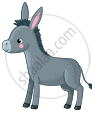 |
mew |
