Advertisements
Advertisements
प्रश्न
What could be the possible outcomes of their travel?
Advertisements
उत्तर
The sailors and Ulysses may be washed down by the gulfs or they could touch Greek paradise and meet their hero Achilles. They may die happily braving the elements of nature.
APPEARS IN
संबंधित प्रश्न
Where were the enemies?
Why were the secret galleries bare?
Underline the alliterated word in the following line.
With our arms and provender, load on load.
Underline the alliterated word in the following line.
The wizened warder let them through.
Identify the figure of speech used in the following line.
How can this shameful tale be told?
Name the bird that sings in the poet’s garden.
What has Wordsworth sanctified in his poem?
Read the line given below and answer the question that follow.
The giant wears the scarf, and flowers are hung
In crimson clusters all the bough among!
- Who is the giant here?
- Why is the scarf colourful?
Read the line given below and answer the question that follow.
“Fear, trembling Hope, and Death, the skeleton,
And Time the shadow”, and though weak the verse
That would thy beauty fain, oh, fain rehearse,
May Love defend thee from oblivion’s curse.
- What does the poet mean by the expression ‘May love defend thee from oblivion’s curse?’
- What does the expression ‘fain’ convey?
- What does the poet convey through the expression ‘Fear, trembling Hope’?
Explain the following line with reference to the context.
It is the tree’s lament, an eerie speech,…
Identify the figure of speech used in each of the extract given below and write down the answer in the space given below.
“A gray baboon sits statue-like alone’’
Identify the figure of speech used in each of the extract given below and write down the answer in the space given below.
“ What is that dirge-like murmur that I hear Like the sea breaking on a shingle -beach?
When does a man become a judge? How?
Explain the following line briefly with reference to the context.
“They have their exits and their entrances;
And one man in his time plays many parts,”
Read the given line and answer the question that follow.
Then a soldier,
full of strange oaths, and bearded like the pard,
Jealous in honour, sudden and quick in quarrel,
Seeking the bubble reputation
Even in the cannon's mouth.
- What is the soldier ready to do?
- Explain ‘bubble reputation’.
- What are the distinguishing features of this stage?
Complete the summary of the poem, choosing words from the list given below. Lines 33 to 42
Ulysses desires to hand over his (1) ______to his son Telemachus, who would fulfil his duties towards his subjects with care and (2) ______. Telemachus possesses patience and has the will to civilise the citizens of Ithaca in a (3) ______way. Ulysses is happy that his son would do his work blamelessly and he would pursue his (4) ______for travel and knowledge.
| prudence, kingdom, quest, tender |
Read the set of line from the poem and answer the question that follow.
Yet all experience is an arch wherethrough
Gleams that untravelled world, whose margin fades
For ever and for ever when I move
- What is experience compared to?
- How do the lines convey that the experience is endless?
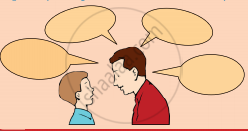
Every parent is anxious about the welfare of his/her children. Parents express their anxiety by advising them almost all the time. What kind of advice do you frequently receive from your parents? Fill in the bubbles. Tick the ones you like to follow implicitly and give reasons for the ones you don’t like to follow.
What has twisted good men into thwarted worms?
How would his being alone help the boy?
Read the line given below and answer the question that follow.
Tell him time as a stuff can be wasted.
Tell him to be a fool every so often
- Why does the poet suggest that time can be wasted?
- Identify the figure of speech in the above line.
Read the line given below and answer the question that follow.
Tell him to be a fool ever so often
and to have no shame over having been a fool
yet learning something out of every folly
hoping to repeat none of the cheap follies
- Is it a shame to be a fool at times?
- What does one learn from every folly?
Explain how the poet guides his son who is at the threshold of manhood, to face the challenges of life.
Who took the city of Ratisbon by storm?
What does the phrase ‘full galloping’ suggest?
When did the narrator find that the boy was badly wounded?
Why did Napoleon’s eyes become soft as a mother eagle’s eyes?
Read the line given below and answer the question that follow.
Legs wide, arms locked behind As if to balance the prone brow Oppressive with its mind.
- Whose action is described here?
- What is meant by prone brow?
- What is his state of mind?
Explain the following line with reference to the context.
To see your flag-bird flap his vans Where I, to heart’s desire, Perched him!’
