Advertisements
Advertisements
प्रश्न
Pick out the lines which convey that his quest for travel is unending.
Advertisements
उत्तर
“How dull it is to pause, to make an end,
To rust unburnished, not to shine in use!
The lines quoted above convey his quest for travel is unending.
APPEARS IN
संबंधित प्रश्न
Where were the enemies?
Bring out the contrasting picture of the castle as depicted in stanzas 3 and 5.
Our gates were strong, our walls were thick,
Describe the garden during the night.
Why is the casuarina tree dear to poet’s heart?
Identify the figure of speech used in each of the extract given below and write down the answer in the space given below.
“A gray baboon sits statue-like alone’’
What is the world compared to?
What is the first stage of a human’s life?
Bring out the features of the fourth stage of a man as described by the poet.
Explain the following line briefly with reference to the context.
“Jealous in honour, sudden and quick in quarrel,
Seeking the bubble reputation”.“They have their exits and their entrances;
Read the poem once again carefully and identify the figure of speech that has been used in each of the following lines from the poem.
“All the world’s a stage,
And all the men and women merely players;
They have their exits and their entrances;
And one man in his time plays many parts,
His acts being seven ages. At first the infant,
Mewling and puking in the nurse’s arms;
Then the whining school-boy, with his satchel
And shining morning face, creeping like snail
Unwillingly to school. And then the lover,
Sighing like furnace, with a woeful ballad
Made to his mistress’ eyebrow. Then a soldier,
Full of strange oaths, and bearded like the pard,
Jealous in honour, sudden and quick in quarrel,
Seeking the bubble reputation
Even in the cannon’s mouth. And then the justice,
In fair round belly with good capon lin’d,
With eyes severe and beard of formal cut,
Full of wise saws and modern instances;
And so he plays his part. The sixth age shifts
Into the lean and slipper’d pantaloon,
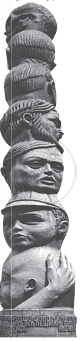
With spectacles on nose and pouch on side;
His youthful hose, well sav’d, a world too wide
For his shrunk shank; and his big manly voice,
Turning again toward childish treble, pipes
And whistles in his sound. Last scene of all,
That ends this strange eventful history,
Is second childishness and mere oblivion;
Sans teeth, sans eyes, sans taste, sans everything.”
- “All the world's a stage”
- “And all the men and women merely players”
- “And shining morning face, creeping like snail”
- “Full of strange oaths, and bearded like the pard,”
- “Seeking the bubble reputation”
- “His youthful hose, well sav’d, a world too wide”
- “and his big manly voice, turning again toward childish treble”
Pick out the word in ‘alliteration’ in the following line.
“Jealous in honour, sudden and quick in quarrel.”
Describe the various stages of a man’s life picturised in the poem “All the World’s a stage."
Complete the summary of the poem, choosing words from the list given below. Lines 33 to 42
Ulysses desires to hand over his (1) ______to his son Telemachus, who would fulfil his duties towards his subjects with care and (2) ______. Telemachus possesses patience and has the will to civilise the citizens of Ithaca in a (3) ______way. Ulysses is happy that his son would do his work blamelessly and he would pursue his (4) ______for travel and knowledge.
| prudence, kingdom, quest, tender |
Complete the summary of the poem, choosing words from the list given below. Lines 44 to 70
Ulysses beckons his sailors to (1) ______at the port where the ship is ready to sail. His companions who have faced both (2) ______and sunshine with a smile, are united by their undying spirit of adventure. Though death would end everything, Ulysses urges his companions to join him and sail beyond the sunset and seek a newer (3) ______, regardless of consequences. These brave hearts who had once moved (4) ______ and earth, may have grown old and weak physically but their spirit is young and (5) ______. His call is an inspiration for all those who seek true knowledge and strive to lead (6) ______ lives.
| world, thunder, meaningful, gather, undaunted, heaven |
Identify the figure of speech employed in the following line.
Thro’ scudding drifts the rainy Hyades Vext the dim sea...
Read the set of line from the poem and answer the question that follow.
That ever with a frolic welcome took
The thunder and the sunshine, and opposed
- What do ‘thunder’ and ‘sunshine’ refer to?
- What do we infer about the attitude of the sailors?
Explain with reference to the context the following line.
We are not now that strength which in old days Moved earth and heaven;
Explain with reference to the context the following line.
To strive, to seek, to find, and not to yield.
What makes Ulysses seek newer adventures?
What are the poet’s thoughts on ‘being different’?
Why does the poet advise his son to have lazy days?
Read the line given below and answer the question that follow.
Tell him time as a stuff can be wasted.
Tell him to be a fool every so often
- Why does the poet suggest that time can be wasted?
- Identify the figure of speech in the above line.
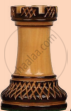
Have you played chess or watched the game carefully?
Now identify the chess pieces and complete the table below. Discuss the role of each piece in the game.
 |
|
 |
|
 |
|
 |
|
 |
|
 |
Who came galloping on a horse to Napoleon?
What did the rider do when he reached Napoleon?
When did the narrator find that the boy was badly wounded?
Literary Devices
Mark the rhyme scheme of the poem. The rhyme scheme for the first stanza is as follows.
| With neck out-thrust, you fancy how, | a |
| Legs wide, arms locked behind, | b |
| As if to balance the prone brow | a |
| Oppressive with its mind. | b |
The young soldier matched his emperor in courage and patriotism. Elucidate your answer.
