Advertisements
Advertisements
प्रश्न
Pick out the lines which convey that his quest for travel is unending.
Advertisements
उत्तर
“How dull it is to pause, to make an end,
To rust unburnished, not to shine in use!
The lines quoted above convey his quest for travel is unending.
APPEARS IN
संबंधित प्रश्न
How long had the soldiers been in the castle?
Why didn’t the narrator want to tell the tale to anybody?
Who was the real enemy?
Read the given line and answer the question that follow in a line or two.
All through the summer at ease we lay,
And daily from the turret wall
We watched the mowers in the hay
- Who does ‘we’ refer to?
- How did the soldiers spend the summer days?
- What could they watch from the turret wall?
Read the given line and answer the question that follow in a line or two.
A foothold there, no clever trick
Could take us dead or quick,
Only a bird could have got in.
- What was challenging?
- Which aspect of the castle’s strength is conveyed by the above line?
Read the poem and complete the table with suitable rhyming words.
All through that summer at ease we lay,
And daily from the turret wall
We watched the mowers in the hay
And the enemy half a mile away
They seemed no threat to us at all.
For what, we thought, had we to fear
With our arms and provender, load on load,
Our towering battlements, tier on tier,
And friendly allies drawing near
On every leafy summer road.
Our gates were strong, our walls were thick,
So smooth and high, no man could win
A foothold there, no clever trick
Could take us dead or quick,
Only a bird could have got in.
What could they offer us for bait?
Our captain was brave and we were true…
There was a little private gate,
A little wicked wicket gate.
The wizened warder let them through.
Oh then our maze of tunneled stone
Grew thin and treacherous as air.
The cause was lost without a groan,
The famous citadel overthrown,
And all its secret galleries bare.
How can this shameful tale be told?
I will maintain until my death
We could do nothing, being sold:
Our only enemy was gold,
And we had no arms to fight it with.
| lay | hay |
Identify the figure of speech used in the following line.
How can this shameful tale be told?
Does nature communicate with human beings?
The casuarina tree will be remembered forever. Why?
Identify the figure of speech used in each of the extract given below and write down the answer in the space given below.
“ LIKE a huge Python, winding round and round
The rugged trunk indented deep with scars”,
Identify the figure of speech used in each of the extract given below and write down the answer in the space given below.
“The water-lilies spring, like snow enmassed.”
Bring out the features of the fourth stage of a man as described by the poet.
Introduction
The poem ‘Ulysses’ is a dramatic monologue that contains 70 lines of blank verse. Ulysses, the King of Ithaca, gathers his men together to prepare for the journey and exhorts them not to waste their time left on earth. Ulysses has grown old, having experienced many adventures at the battle of Troy and in the seas. After returning to Ithaca, he desires to embark upon his next voyage. His inquisitive spirit is always looking forward to more and more of such adventures.
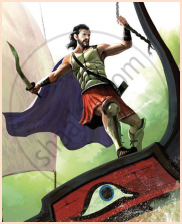
What has Ulysses gained from his travel experiences?
Why did Ulysses want to hand over the kingdom to his son?
Identify the figure of speech employed in the following line.
For always roaming with a hungry heart
Read the set of line from the poem and answer the question that follow.
Yet all experience is an arch wherethrough
Gleams that untravelled world, whose margin fades
For ever and for ever when I move
- What is experience compared to?
- How do the lines convey that the experience is endless?
Read the set of line from the poem and answer the question that follow.
Death closes all: but something ere the end,
Some work of noble note, may yet be done,
Not unbecoming men that strove with Gods.
- The above lines convey the undying spirit of Ulysses. Explain.
- Pick out the words in alliteration in the above lines.
Explain with reference to the context the following line.
To strive, to seek, to find, and not to yield.
What happened to the people who wanted too much money?
The poet says
‘Without rich wanting nothing arrives’ but he condemns ‘the quest of lucre beyond a few easy needs.’ Analyse the difference and write.
Here are a few poetic device used in the poem.
Antithesis- It is a literary device that emphasises the idea of contrast.
Read the line given below and answer the question that follow.
“Life is hard; be steel; be a rock.”
- How should one face life?
- Identify the figure of speech in the above line.
Pick out the alliterated words from the poem and write.
And this might stand him for the storms
Explain the following line with reference to the context.
Brutes have been gentled where lashes failed.
Explain how the poet guides his son who is at the threshold of manhood, to face the challenges of life.
What does the phrase ‘full galloping’ suggest?
Why did the rider keep his lips compressed?
Read the line given below and answer the question that follow.
A film the mother eagles eye When her bruised eaglet breathes
- Who is compared to the mother eagle in the above lines?
- Explain the comparison.
Explain the following line with reference to the context.
To see your flag-bird flap his vans Where I, to heart’s desire, Perched him!’
