Advertisements
Advertisements
प्रश्न
Underline the alliterated word in the following line.
With our arms and provender, load on load.
Advertisements
उत्तर
With our arms and provender, load on load.
APPEARS IN
संबंधित प्रश्न
Fill in the following empty boxes.
| Name | Location |
| Fort St. George | Chennai |
| Gingee Fort | ______ |
| Golconda Fort | ______ |
| Red Fort | ______ |
Who is the narrator in the poem?
Bring out the contrasting picture of the castle as depicted in stanzas 3 and 5.
Human greed led to the mighty fall of the citadel. Explain.
How can this shameful tale be told?
Underline the alliterated word in the following line.
The wizened warder let them through.
Identify the figure of speech used in the following line.
A little wicked wicket gate.
Describe the garden during the night.
Name the bird that sings in the poet’s garden.
The casuarina tree will be remembered forever. Why?
Read the line given below and answer the question that follow.
The giant wears the scarf, and flowers are hung
In crimson clusters all the bough among!
- Who is the giant here?
- Why is the scarf colourful?
Read the given line and answer the question that follow.
Then the whining school-boy, with his satchel
And shining morning face, creeping like snail
Unwillingly to school.
- Which stage of life is being referred to here by the poet?
- What are the characteristics of this stage?
- How does the boy go to school?
- Which figure of speech has been employed in the second line?
Introduction
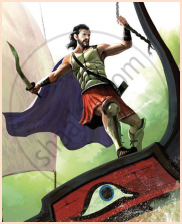
The poem ‘Ulysses’ is a dramatic monologue that contains 70 lines of blank verse. Ulysses, the King of Ithaca, gathers his men together to prepare for the journey and exhorts them not to waste their time left on earth. Ulysses has grown old, having experienced many adventures at the battle of Troy and in the seas. After returning to Ithaca, he desires to embark upon his next voyage. His inquisitive spirit is always looking forward to more and more of such adventures.
What does he think of the people of his kingdom?
Pick out the lines which convey that his quest for travel is unending.
What could be the possible outcomes of their travel?
Identify the figure of speech employed in the following line.
Thro’ scudding drifts the rainy Hyades Vext the dim sea...
Read the set of line from the poem and answer the question that follow.
That ever with a frolic welcome took
The thunder and the sunshine, and opposed
- What do ‘thunder’ and ‘sunshine’ refer to?
- What do we infer about the attitude of the sailors?
Explain with reference to the context the following line.
I am become a name; For always roaming with a hungry heart
Explain with reference to the context the following line.
....you and I are old;
Old age hath yet his honour and his toil;
Explain with reference to the context the following line.
To strive, to seek, to find, and not to yield.
What is Ulysses’ clarion call to his sailors? How does he inspire them?
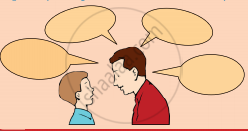
Every parent is anxious about the welfare of his/her children. Parents express their anxiety by advising them almost all the time. What kind of advice do you frequently receive from your parents? Fill in the bubbles. Tick the ones you like to follow implicitly and give reasons for the ones you don’t like to follow.
Fill in the blanks choosing the words from the box given and complete the summary of the poem.
Lines 1-25
The poet Carl Sandburg gives a vivid description of a father’s worldly (1)______ in directing a son who is at the threshold of his (2) ______.
Here the father motivates his son to be like a hard(3) ______and withstand life’s (4)______ and sudden betrayals. (5)______is like a fertile soil. We can make our life fruitful if we are gentle, and take life as it comes. At times(6)______ overtakes harshness. The growth of a (7)______can split a rock. One should have a (8) ______and strong will to achieve. Greed for(9)______has left men dead before they really die. Good men also have fallen prey in quest for (10) ______money. Time for (11)______is not a waste. When you seek knowledge never feel ashamed to be called a(12)______for not knowing, at the same time learn from your (13) ______and never (14)______it.
| deep desire | manhood | gentleness | mistakes | easy |
| leisure | fool | life | money | repeat |
| tender-flower | rock | challenges | wisdom |
Lines 26-44
Do (15)______often, and do not hesitate to accept your shortcomings, avoid(16) ______to protect self against other people. Solitude helps to be (17)______and(18) ______ are taken in silent rooms. Instead of being one among many, be (19)______, if that is your nature. The son may need lazy days to find his (20)______abilities, to seek what he is born for. He will then know how free imaginations bring (21)______to the world, which (22)______ change. During such resentment, let him know that it is time for him to be on his own, and (23)______to achieve like Shakespeare, the Wright brothers, Pasteur, Pavlov, and Michael Faraday.
| changes | introspect | inherent | work | resents |
| white lies | creative | final decisions | different |
How would the poet’s advice help his son who is at the threshold of the manhood?
Why does the poet advise his son to have lazy days?
Here are a few poetic device used in the poem.
Antithesis- It is a literary device that emphasises the idea of contrast.
Explain how the poet guides his son who is at the threshold of manhood, to face the challenges of life.
Who do you think is the narrator of the poem?
Explain the following line with reference to the context.
Then off there flung in smiling joy, And held himself erect
