Advertisements
Advertisements
प्रश्न
Pick out the word in ‘alliteration’ in the following line.
“and all the men and women merely players”
Advertisements
उत्तर
and all the men and women merely players
APPEARS IN
संबंधित प्रश्न
What thoughts come to your mind when you think about a castle? Add your ideas to the list
moat, huge buildings, soldiers, weapons ______,______.
Bring out the contrasting picture of the castle as depicted in stanzas 3 and 5.
Read the given line and answer the question that follow in a line or two.
All through the summer at ease we lay,
And daily from the turret wall
We watched the mowers in the hay
- Who does ‘we’ refer to?
- How did the soldiers spend the summer days?
- What could they watch from the turret wall?
Read the given line and answer the question that follow in a line or two.
Our gates were strong, our walls were thick,
So smooth and high, no man could win.
- How safe was the castle?
- What was the firm belief of the soldiers?
Read the given line and answer the question that follow in a line or two.
We could do nothing, being sold.
- Why couldn’t they do anything?
- Why did they feel helpless?
Our gates were strong, our walls were thick,
Name the bird that sings in the poet’s garden.
What has Wordsworth sanctified in his poem?
To whom does Toru Dutt want to consecrate the tree’s memory?
Read the line given below and answer the question that follow.
A creeper climbs, in whose embraces bound No other tree could live.
- Which tree is referred to in the above lines?
- How does the tree survive the tight hold of the creeper?
- Why does Toru Dutt use the expression ‘a creeper climbs’?
Read the line given below and answer the question that follow.
“Fear, trembling Hope, and Death, the skeleton,
And Time the shadow”, and though weak the verse
That would thy beauty fain, oh, fain rehearse,
May Love defend thee from oblivion’s curse.
- What does the poet mean by the expression ‘May love defend thee from oblivion’s curse?’
- What does the expression ‘fain’ convey?
- What does the poet convey through the expression ‘Fear, trembling Hope’?
Identify the figure of speech used in each of the extract given below and write down the answer in the space given below.
“ LIKE a huge Python, winding round and round
The rugged trunk indented deep with scars”,
Identify the figure of speech used in each of the extract given below and write down the answer in the space given below.
“A gray baboon sits statue-like alone’’
How does a man play a lover’s role?
Shakespeare has skilfully brought out the parallels between the life of man and actors on stage. Elaborate this statement with reference to the poem.
What could be the possible outcomes of their travel?
Identify the figure of speech employed in the following line.
Thro’ scudding drifts the rainy Hyades Vext the dim sea...
Explain with reference to the context the following line.
He works his work, I mine.
Explain with reference to the context the following line.
We are not now that strength which in old days Moved earth and heaven;
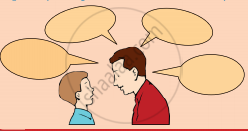
Every parent is anxious about the welfare of his/her children. Parents express their anxiety by advising them almost all the time. What kind of advice do you frequently receive from your parents? Fill in the bubbles. Tick the ones you like to follow implicitly and give reasons for the ones you don’t like to follow.
Fill in the blanks choosing the words from the box given and complete the summary of the poem.
Lines 1-25
The poet Carl Sandburg gives a vivid description of a father’s worldly (1)______ in directing a son who is at the threshold of his (2) ______.
Here the father motivates his son to be like a hard(3) ______and withstand life’s (4)______ and sudden betrayals. (5)______is like a fertile soil. We can make our life fruitful if we are gentle, and take life as it comes. At times(6)______ overtakes harshness. The growth of a (7)______can split a rock. One should have a (8) ______and strong will to achieve. Greed for(9)______has left men dead before they really die. Good men also have fallen prey in quest for (10) ______money. Time for (11)______is not a waste. When you seek knowledge never feel ashamed to be called a(12)______for not knowing, at the same time learn from your (13) ______and never (14)______it.
| deep desire | manhood | gentleness | mistakes | easy |
| leisure | fool | life | money | repeat |
| tender-flower | rock | challenges | wisdom |
Lines 26-44
Do (15)______often, and do not hesitate to accept your shortcomings, avoid(16) ______to protect self against other people. Solitude helps to be (17)______and(18) ______ are taken in silent rooms. Instead of being one among many, be (19)______, if that is your nature. The son may need lazy days to find his (20)______abilities, to seek what he is born for. He will then know how free imaginations bring (21)______to the world, which (22)______ change. During such resentment, let him know that it is time for him to be on his own, and (23)______to achieve like Shakespeare, the Wright brothers, Pasteur, Pavlov, and Michael Faraday.
| changes | introspect | inherent | work | resents |
| white lies | creative | final decisions | different |
What are the poet’s thoughts on ‘being different’?
Here are a few poetic device used in the poem.
Repetition- It is a figure of speech.
Explain the following line with reference to the context.
Yet learning something out of every folly
hoping to repeat none of the cheap follies
How according to the poet is it possible for his son to bring changes into a world that resents change?
Who do you think is the narrator of the poem?
Where was the narrator when the incident happened?
The young soldier matched his emperor in courage and patriotism. Elucidate your answer.
