Advertisements
Advertisements
प्रश्न
Bring out the contrasting picture of the castle as depicted in stanzas 3 and 5.
Advertisements
उत्तर
The gates of the castle were very strong. The walls were high and smooth. No enemy could ever enter it by trick. The soldiers were quite alert to the movement of the enemies. They were proud that only a bird could venture to scale over the castle. But the enemies entered through the wicket gate. The tunneled stone walls became thin and treacherous. The famous citadel ‘ was overthrown without a fight. The cunning enemies, having bribed the aged warder, looted the treasures in the secret galleries. The citadel was lost without a fight and a groan of protest.
APPEARS IN
संबंधित प्रश्न
Why does the narrator say that the enemy was no threat at all?
Who had let the enemies in?
How safe was the castle? How was it conquered?
Our gates were strong, our walls were thick,
Identify the figure of speech used in the following line.
Oh then our maze of tunneled stone
Identify the figure of speech used in the following line.
Grew thin and treacherous as air.
You visit your school after several years. As you cross the banyan tree at the entrance, cheerful memories fi ll your mind. Fill the bubbles with your memories.

Fill in the blanks choosing the words from the box given and complete the summary of the poem.
The casuarina tree is tall and strong, with a creeper winding around it like a (1) ______. The tree stands like a (2) ______with a colourful scarf of flowers. Birds surround the garden and the sweet song of the birds is heard. The poet is delighted to see the casuarina tree through her (3) ______. She sees a grey monkey sitting like a (4) ______on top of the tree, the cows grazing, and the water lilies (5) ______in the pond. The poet feels that the tree is dear to her not for its (6) ______appearance but for the (7) ______memories of her happy childhood that it brings to her. She strongly believes that (8) ______communicates with human beings. The poet could communicate with the tree even when she was in a far-off land as she could hear the tree (9) ______her absence. The poet (10) ______the tree’s memory to her loved ones, who are not alive. She immortalizes the tree through her poem like the poet Wordsworth who (11) ______the yew tree of Borrowdale in verse. She expresses her wish that the tree should be remembered out of love and not just because it cannot be (12) ______.
| python | statue | nature | casement |
| nostalgic | lamenting | impressive | forgotten |
| giant | consecrates | springing | sanctified |
What is the creeper compared to?
Describe the garden during the night.
Why is the casuarina tree dear to poet’s heart?
The casuarina tree will be remembered forever. Why?
Identify the figure of speech used in each of the extract given below and write down the answer in the space given below.
“A gray baboon sits statue-like alone’’
Explain the following line briefly with reference to the context.
“They have their exits and their entrances;
And one man in his time plays many parts,”
Explain the following line briefly with reference to the context.
“Jealous in honour, sudden and quick in quarrel,
Seeking the bubble reputation”.“They have their exits and their entrances;
Shakespeare has skilfully brought out the parallels between the life of man and actors on stage. Elaborate this statement with reference to the poem.
What has Ulysses gained from his travel experiences?
In what ways were Ulysses and his mariners alike?
Identify the figure of speech employed in the following line.
And drunk delight of battle with my peers;
Read the set of line from the poem and answer the question that follow.
… I mete and dole
Unequal laws unto a savage race,
That hoard, and sleep, and feed, and
know not me.
- What does Ulysses do?
- Did he enjoy what he was doing? Give reasons.
What makes Ulysses seek newer adventures?
What are the poet’s thoughts on ‘being different’?
The poet says
‘Without rich wanting nothing arrives’ but he condemns ‘the quest of lucre beyond a few easy needs.’ Analyse the difference and write.
Read the line given below and answer the question that follow.
“Life is hard; be steel; be a rock.”
- How should one face life?
- Identify the figure of speech in the above line.
Explain the following line with reference to the context.
He will be lonely enough
to have time for the work
How according to the poet is it possible for his son to bring changes into a world that resents change?
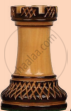
Have you played chess or watched the game carefully?
Now identify the chess pieces and complete the table below. Discuss the role of each piece in the game.
 |
|
 |
|
 |
|
 |
|
 |
|
 |
Read the line given below and answer the question that follow.
‘You’re wounded!’ ‘Nay’, his soldier’s pride Touched to the quick, he said:
- Why did the boy contradict Napoleon’s words?
- Why was his pride touched?
