Advertisements
Advertisements
Question
Bring out the contrasting picture of the castle as depicted in stanzas 3 and 5.
Advertisements
Solution
The gates of the castle were very strong. The walls were high and smooth. No enemy could ever enter it by trick. The soldiers were quite alert to the movement of the enemies. They were proud that only a bird could venture to scale over the castle. But the enemies entered through the wicket gate. The tunneled stone walls became thin and treacherous. The famous citadel ‘ was overthrown without a fight. The cunning enemies, having bribed the aged warder, looted the treasures in the secret galleries. The citadel was lost without a fight and a groan of protest.
APPEARS IN
RELATED QUESTIONS
Fill in the following empty boxes.
| Name | Location |
| Fort St. George | Chennai |
| Gingee Fort | ______ |
| Golconda Fort | ______ |
| Red Fort | ______ |
Who is the narrator in the poem?
Where were the enemies?
Did the soldiers fight with the enemies face to face?
Why were the secret galleries bare?
Human greed led to the mighty fall of the citadel. Explain.
Identify the figure of speech used in the following line.
Grew thin and treacherous as air.
Identify the figure of speech used in the following line.
Our only enemy was gold,
What is the creeper compared to?
How does the poet spend her winter?
Name the bird that sings in the poet’s garden.
What has Wordsworth sanctified in his poem?
To whom does Toru Dutt want to consecrate the tree’s memory?
Read the line given below and answer the question that follow.
“Fear, trembling Hope, and Death, the skeleton,
And Time the shadow”, and though weak the verse
That would thy beauty fain, oh, fain rehearse,
May Love defend thee from oblivion’s curse.
- What does the poet mean by the expression ‘May love defend thee from oblivion’s curse?’
- What does the expression ‘fain’ convey?
- What does the poet convey through the expression ‘Fear, trembling Hope’?
Explain the following line with reference to the context.
It is the tree’s lament, an eerie speech,…
When does a man become a judge? How?
Which stage of man’s life is associated with the ‘shrunk shank’?
Introduction
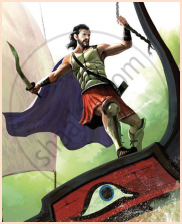
The poem ‘Ulysses’ is a dramatic monologue that contains 70 lines of blank verse. Ulysses, the King of Ithaca, gathers his men together to prepare for the journey and exhorts them not to waste their time left on earth. Ulysses has grown old, having experienced many adventures at the battle of Troy and in the seas. After returning to Ithaca, he desires to embark upon his next voyage. His inquisitive spirit is always looking forward to more and more of such adventures.
‘As tho’ to breathe were life!’ – From the given line what do you understand of Ulysses’ attitude to life?
List the roles and responsibilities Ulysses assigns to his son Telemachus, while he is away.
Where are the final decisions taken?
Read the line given below and answer the question that follow.
“Life is a soft loam; be gentle; go easy.” And this too might serve him.
- Why does the poet suggest to take life easy?
- Identify the figure of speech in the above line.
Explain the following line with reference to the context.
and guide him among sudden betrayals
and tighten him for slack moments.
Explain the following line with reference to the context.
Brutes have been gentled where lashes failed.
How according to the poet is it possible for his son to bring changes into a world that resents change?
Have you played chess or watched the game carefully?
Now identify the chess pieces and complete the table below. Discuss the role of each piece in the game.
 |
|
 |
|
 |
|
 |
|
 |
|
 |
Where was the narrator when the incident happened?
Where was Napoleon standing on the day of attack on the city of Ratisbon?
Read the line given below and answer the question that follow.
‘You’re wounded!’ ‘Nay’, his soldier’s pride Touched to the quick, he said:
- Why did the boy contradict Napoleon’s words?
- Why was his pride touched?
