Advertisements
Advertisements
Question
What are the poet’s thoughts on ‘being different’?
Advertisements
Solution
Instead of being one among many, one can be different if it is one’s nature to be so. One need not take conscious efforts to be different.
APPEARS IN
RELATED QUESTIONS
Why didn’t the narrator want to tell the tale to anybody?
Read the given line and answer the question that follow in a line or two.
All through the summer at ease we lay,
And daily from the turret wall
We watched the mowers in the hay
- Who does ‘we’ refer to?
- How did the soldiers spend the summer days?
- What could they watch from the turret wall?
Our captain was brave and we were true
Read the poem and complete the table with suitable rhyming words.
All through that summer at ease we lay,
And daily from the turret wall
We watched the mowers in the hay
And the enemy half a mile away
They seemed no threat to us at all.
For what, we thought, had we to fear
With our arms and provender, load on load,
Our towering battlements, tier on tier,
And friendly allies drawing near
On every leafy summer road.
Our gates were strong, our walls were thick,
So smooth and high, no man could win
A foothold there, no clever trick
Could take us dead or quick,
Only a bird could have got in.
What could they offer us for bait?
Our captain was brave and we were true…
There was a little private gate,
A little wicked wicket gate.
The wizened warder let them through.
Oh then our maze of tunneled stone
Grew thin and treacherous as air.
The cause was lost without a groan,
The famous citadel overthrown,
And all its secret galleries bare.
How can this shameful tale be told?
I will maintain until my death
We could do nothing, being sold:
Our only enemy was gold,
And we had no arms to fight it with.
| lay | hay |
Underline the alliterated word in the following line.
With our arms and provender, load on load.
Underline the alliterated word in the following line.
A little wicked wicket gate.
Underline the alliterated word in the following line.
The wizened warder let them through.
Identify the figure of speech used in the following line.
Oh then our maze of tunneled stone
Identify the figure of speech used in the following line.
How can this shameful tale be told?
Can you call ‘The Castle’ an allegorical poem? Discuss.
Identify the figure of speech used in each of the extract given below and write down the answer in the space given below.
“A gray baboon sits statue-like alone’’
What is the world compared to?
What is the first stage of a human’s life?
Describe the second stage of life as depicted by Shakespeare.
‘Ulysses is not happy to perform his duties as a king.’ Why?
What does he think of the people of his kingdom?
Why did Ulysses want to hand over the kingdom to his son?
Explain with reference to the context the following line.
I cannot rest from travel: I will drink Life to the lees:
Explain with reference to the context the following line.
To follow knowledge like a sinking star,
Beyond the utmost bound of human thought.
Explain with reference to the context the following line.
The long day wanes: the slow moon climbs:
the deep Moans round with many voices.
‘A tough will counts.’ Explain.
What has twisted good men into thwarted worms?
Here are a few poetic device used in the poem.
Transferred Epithet- It is a figure of speech in which an epithet grammatically qualifies a noun other than the person or a thing, it is actually meant to describe.
Explain the following line with reference to the context.
and guide him among sudden betrayals
and tighten him for slack moments.
Explain how the poet guides his son who is at the threshold of manhood, to face the challenges of life.
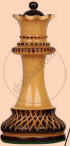
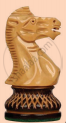
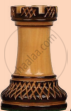
Have you played chess or watched the game carefully?
Now identify the chess pieces and complete the table below. Discuss the role of each piece in the game.
 |
|
 |
|
 |
|
 |
|
 |
|
 |
The young soldier matched his emperor in courage and patriotism. Elucidate your answer.
